


MOTS-C 20mg Peptide
For in-vitro laboratory research only. Not for human or animal administration.
Batch #: VPMC20100
Get Notified When Available
This product is currently out of stock. Enter your email and we'll notify you the moment it's back.
Lab Verified
Certificate of Analysis
MOTS-C 10mg COA, reported September 27, 2026.
Covers the 10mg vial of MOTS-C, not the 20mg.
Lot VPMC10100
Batch Purity (10mg vial)
99.4%
Mass / Quantity
11.45 mg net peptide
Research Use Only
For in-vitro laboratory research by qualified professionals only. Not for human or animal administration. Not a drug, food, cosmetic or dietary supplement. Not intended to diagnose, treat, cure, mitigate or prevent any disease. Batch-specific Certificates of Analysis available for all products.
MOTS-C 20mg: overview
What the vial contains and what the material is, stated as specifications rather than as outcomes.
MOTS-C supplied as a lyophilized powder in a sealed single-use vial containing 20 mg of material. MOTS-C: molecular formula C₁₀₁H₁₅₂N₂₈O₂₂S₂, molecular weight 2,174.6 g/mol, CAS 1627580-64-6. Released to a specification of >99% purity by HPLC. Soluble in bacteriostatic water. Supplied for in-vitro laboratory research only. Not a drug, food or supplement. Not for human or veterinary use.
Volta does not provide dosing, administration or protocol guidance for any material listed.
MOTS-C 20mg specifications
Every field the product record holds. A field with no value is omitted rather than printed as a dash.
- Fill
- 20mg
- Form
- Lyophilized powder
- CAS number
- 1627580-64-6
- Molecular formula
- C₁₀₁H₁₅₂N₂₈O₂₂S₂
- Molecular weight
- 2,174.6 g/mol
- Solubility
- Soluble in bacteriostatic water
- Shelf life
- 24 months from date of manufacture
MOTS-C analytical verification and batch documentation
What the purity figure on this page is, who measured what, and which of the two a reader is looking at.
Specification. Every batch is released to >99% purity by HPLC. That is a threshold Volta sets, and it is a promise rather than a measurement.
Measurement. SideChain Analytics reported 99.4% by HPLC-MS/MS for lot VPMC10100 on September 27, 2026, and confirmed identity at an observed mass of 11.45 mg net peptide. That report covers the 10 mg fill of this compound, not the 20 mg fill. Results on a certificate relate only to the sample the laboratory received.
The certificate can be checked against the laboratory rather than against us: verify on SideChain Analytics.
Checking a certificate. The batch number printed beside the price is derived from the compound code and the vial strength; the lot number on a certificate is transcribed from the document. They are produced independently, so comparing them is a real check. How to read one is set out in the quality and testing methodology page.
For in-vitro laboratory research by qualified professionals only. Not for human or animal administration. Not a drug, food, cosmetic or dietary supplement. Not intended to diagnose, treat, cure, mitigate or prevent any disease.
MOTS-c (amino acid sequence: Met-Arg-Trp-Gln-Glu-Met-Gly-Tyr-Ile-Phe-Tyr-Pro-Arg-Lys-Leu-Arg) is a newly identified MDP that has been found in the nucleus of cells and in the general circulation, making it a bonafide natural hormone. Research demonstrates it reverses age-dependent insulin resistance in muscles by improving skeletal muscle response to AMPK activation independent of the insulin pathway, increases brown fat function while reducing adipose tissue accumulation and inflammation, targets the methionine-folate cycle to activate AMPK for enhanced fat metabolism, promotes osteoblast survival and differentiation for improved bone integrity through the TGF-beta/SMAD pathway, and is associated with exceptional longevity in certain human populations through a specific genetic variant. Research in heart health shows patients with lower MOTS-c levels have higher endothelial cell dysfunction. This 20mg vial supports extended research protocols investigating metabolic homeostasis, exercise biology, and cellular aging.
- Released to a >99% purity specification by HPLC
- Lyophilized powder, 20mg per vial
- Soluble in bacteriostatic water
- For laboratory research use only
Frequently Bought Together

MOTS-C 20mg
20mg
$52 USD
Bundle & Save
$91 USD
Save $4.55 USD
$135 USD
Save $13.50 USD
$219 USD
Save $32.85 USD
$293 USD
Save $58.60 USD
Click any product above to toggle selection
Related research materials


MOTS-C 20mg: what is in the vial
The arithmetic specific to this 20mg vial, and what a milligram of MOTS-C costs in each strength the catalogue carries. Concentrations are stated, not recommended.
Vial contents
20 mg
Lyophilised powder, reconstituted by the buyer
Cost of material
$2.60 / mg USD
CA$3.70 / mg in Canadian dollars
Concentration at each diluent volume
20 mg of dry material reaches these concentrations in the volumes below. A U-100 syringe marking is 0.01 ml by definition, so the last column is a unit conversion at each concentration rather than a quantity to use.
| Diluent added | Concentration | In 0.1 ml | Per U-100 unit |
|---|---|---|---|
| 1 ml | 20 mg/ml | 2 mg | 200 mcg |
| 2 ml | 10 mg/ml | 1 mg | 100 mcg |
| 3 ml | 6.67 mg/ml | 666.7 mcg | 66.7 mcg |
| 5 ml | 4 mg/ml | 400 mcg | 40 mcg |
For a volume this table does not list, the reconstitution calculator takes any vial size and diluent volume.
MOTS-C by the milligram
The same compound in every strength the catalogue carries, priced per milligram of material so the vials are comparable. Larger is not automatically cheaper.
| Vial | Price USD | Per mg USD | Per mg CAD |
|---|---|---|---|
| 10mg | $32 | $3.20 | CA$4.60 |
| 20mgthis pageout of stock | $52 | $2.60 | CA$3.70 |
The 20mg vial is the cheapest material in this range at $2.60 per mg, which is this page.
Per-unit figures are quoted in US and Canadian dollars so the vials stay comparable against each other. The price you are charged is the one in the currency selected at the top of the page, and it is converted from the same US dollar base as the figures here.
MOTS-C purity and identity: how the figure is measured
What >99% (HPLC) means, the masses an identity check has to land on, and the entries that make a certificate of analysis checkable rather than decorative.
Stated purity
>99% (HPLC)
Area percent of the main peak by reversed-phase HPLC
Average mass
2,174.6 g/mol
The figure an identity check has to land on
Detection
280 nm
A 1 mg/ml solution reads about 3.90 AU in a 1 cm cell
Identity by mass: the ions to expect
An electrospray source protonates the molecule rather than weighing it neutral, so a spectrum shows a series of charge states rather than the molecular weight itself. These are the m/z values 2,174.6 g/mol produces, and they are what a mass spectrum on a certificate for MOTS-C has to match.
| Ion | Charge | Expected m/z |
|---|---|---|
| [M+H]+ | 1+ | 2,175.61 |
| [M+2H]2+ | 2+ | 1,088.31 |
A peptide this size is normally reported at its doubly and triply charged states, and the singly charged ion may not appear at usable intensity at all. A spectrum showing only one of these is not a failed identity check.
Why 280 nm
The sequence carries 1 Trp and 2 Tyr, so it absorbs at 280 nm as well as at 214 nm on the peptide bond.
This matters when reading someone else's certificate: a purity figure quoted at 280 nm for a compound with no aromatic residue is measuring an absorbance the molecule does not have.
What a certificate for MOTS-C should carry
A purity percentage on its own is not checkable. These are the entries that make one verifiable, and their absence is the most common weakness in a research-peptide certificate.
The chromatogram, not only the number
A stated area percent with no trace behind it cannot be read for the shape of the main peak or for what eluted beside it. The HPLC interpreter walks through what a trace shows.
Net peptide content, separately from gross mass
A lyophilised peptide is a salt, usually of trifluoroacetic or acetic acid, plus residual water. The vial's stated milligrams are gross; net peptide content is the fraction of that mass which is the molecule. The two differ by ten to twenty percent routinely, and only one of them is what the price is per milligram of. The net peptide content calculator converts between them.
The counterion, named
Which salt form the powder is in changes the net content and the pH the powder dissolves at. A certificate that never names it leaves both unknowable.
Water content, by a stated method
Loss on drying and Karl Fischer titration give different numbers, and a water figure with no method attached cannot be compared with anyone else's.
A laboratory and a report identifier
Without both, nothing on the document can be traced back to the laboratory that issued it. The red flag checker lists the rest.
Batch certificates are published as page images in the certificate library. The source PDFs are never served: a certificate is the most forgeable document a supplier publishes, and an editable copy carrying an accredited laboratory's letterhead is worth more to a counterfeiter than to a customer.
MOTS-C storage and stability
Handling as the product record states it, followed by the degradation chemistry this particular sequence is and is not exposed to.
Handling
Store lyophilized peptide at -20°C in a dry, dark environment. Reconstitute in bacteriostatic water. Once reconstituted, store at 2-8°C and use within 30 days. Avoid repeated freeze-thaw cycles. Lyophilized powder is stable at room temperature for shipping and short-term storage.
What degrades this compound
Each of these follows from the molecule itself rather than from general peptide handling.
Oxidation
2 Met and 1 TrpThese side chains oxidise on contact with dissolved oxygen and with peroxide traces in diluents. Oxidation adds 16 daltons per event, so it shows up on a mass spectrum as a satellite peak above the parent and on a chromatogram as a shoulder ahead of the main peak. Minimise headspace air, and do not use a diluent that has been standing open.
Deamidation
1 GlnAsparagine and glutamine lose their side-chain amide in aqueous solution, becoming aspartate and glutamate. The product is one dalton heavier and one charge more acidic, which moves its retention time without changing its size much, so it reads as an extra peak rather than a smaller one. No asparagine here is followed by glycine, serine or histidine, the three neighbours that accelerate the reaction, so the rate is the slower baseline one.
Light sensitivity
1 Trp and 2 TyrThe aromatic side chains that make this compound visible at 280 nm are the same ones that absorb ultraviolet light and photo-oxidise. This is the residue-level reason behind the instruction to store in the dark, and it is why an amber vial is not decoration.
What holds up
The degradation routes this compound is not exposed to, which is as specific a fact as the ones it is.
Net hydrophilic
GRAVY -0.94A negative grand average of hydropathy means the side chains are on balance polar, which is the profile that stays in solution rather than associating. Freeze-thaw cycles are still worth avoiding, but this compound is not one of the hydrophobic sequences that aggregate irreversibly at an ice front.
Solubility window
calculated pI 10.6, net charge 3 at pH 7A peptide is least soluble within about a pH unit of its isoelectric point, where it carries no net charge. This one is far enough from neutral that it holds a real charge in an ordinary diluent, which is what keeps it dissolved.
Derived from the primary sequence MRWQEMGYIFYPRKLR, calculated isoelectric point 10.59, GRAVY -0.937. Check the arithmetic with the peptide property calculator and the freeze-thaw estimator.
MOTS-C compared with AOD-9604 and Retatrutide
Pharmacological class, half-life, evidence grade, competition status and cost per milligram, side by side.
| Compound | Class | Half-life | Evidence | WADA | Cheapest per mg |
|---|---|---|---|---|---|
| MOTS-cthis page | Metabolic / Mitochondrial | Several hours; tissue effects may persist longer | DPreclinical | Not listed | $3.2010mg vial |
| AOD-9604 | Metabolic / Fat Loss | ~30 minutes | CPhase I–II Clinical Trials | Prohibited | $7.2010mg vial, out of stock |
| Retatrutide | Metabolic / Triple Agonist | ~6 days (allows once-weekly dosing) | BPhase III / NDA Filed | Not prohibited | $4.8520mg vial |
| SLU-PP-332 | Experimental Exercise Mimetic | Unknown in humans (short in mice, necessitating twice-daily dosing) | DAnimal/Preclinical Only | Not listed | $13.605mg vial, out of stock |
| Tesamorelin | Growth Hormone Secretagogue | ~26–38 minutes | AFDA Approved | Prohibited | $7.4010mg vial |
Evidence grades and half-lives are as recorded in the compound database, which cites its own sources on each compound page. Per-milligram prices are the cheapest strength each compound is currently listed at, in US dollars, and an out-of-stock note means that figure is not purchasable today. Cross-trial comparisons of efficacy are not comparisons: no head-to-head trial exists for most of these pairs.
MOTS-C in Canada
Price in Canadian dollars, where the parcel ships from, and how long it takes.
Price in CAD
CA$74
The figure charged, not a converted estimate
Ships from
British Columbia
A domestic parcel, so no import clearance step
Transit
2 to 5 business days
After 1 to 2 business days of handling
Free standard shipping
Over CA$250
A bar set for this market, not converted from the US one
MOTS-C 20mg ships from British Columbia to Canadian addresses, so the parcel never crosses a border. That removes the failure a Canadian buyer of research peptides is usually weighing: an inbound international shipment can be held for import clearance or seized, and a domestic one has no clearance step to be held at.
Shipping is quoted live against the delivery address at checkout rather than estimated here, and both the standard and express tiers show their price and transit window before a payment method is chosen. The figure the page shows is the figure the rail charges: all three settlement rails price shipping through the same functions the quote does.
The Canadian figure above is not a loose conversion. Each product's US dollar base is chosen so that the live conversion lands on the Canadian shelf price set for this market, and the result is pushed up to a whole dollar rather than left carrying cents, so one figure serves the page, the feed and every payment rail. See the shipping policy for carriers and cut-off times, and the legal position on research peptides in Canada for the regulatory picture.
What is MOTS-c?
MOTS-c is a short peptide encoded in the mitochondrial genome, one of a larger group known as mitochondrial-derived peptides, or MDPs. Recent research has established the MDPs as bioactive hormones with real jobs in mitochondrial communication and energy regulation. They were taken at first to be a mitochondrial matter alone; it has since emerged that many are active in the cell nucleus and that some reach the bloodstream and act systemically. MOTS-c is among the more recently identified of them, with reported roles in metabolism, weight regulation, exercise capacity, longevity and in the processes that lead to disease states such as osteoporosis. It has been found in the nucleus of cells and in the general circulation alike, which is what qualifies it as a genuine natural hormone.
MOTS-c Mechanism of Action
MOTS-c is a 16 amino acid peptide encoded not in the nuclear genome but in the mitochondrial one, within the MT-RNR1 gene that also encodes the 12S ribosomal RNA. That origin is the most distinctive thing about it. Mitochondria were long assumed to encode only the thirteen respiratory chain subunits, and the identification of short open reading frames producing biologically active peptides established a class of molecules, the mitochondrial-derived peptides, of which MOTS-c is the most studied.
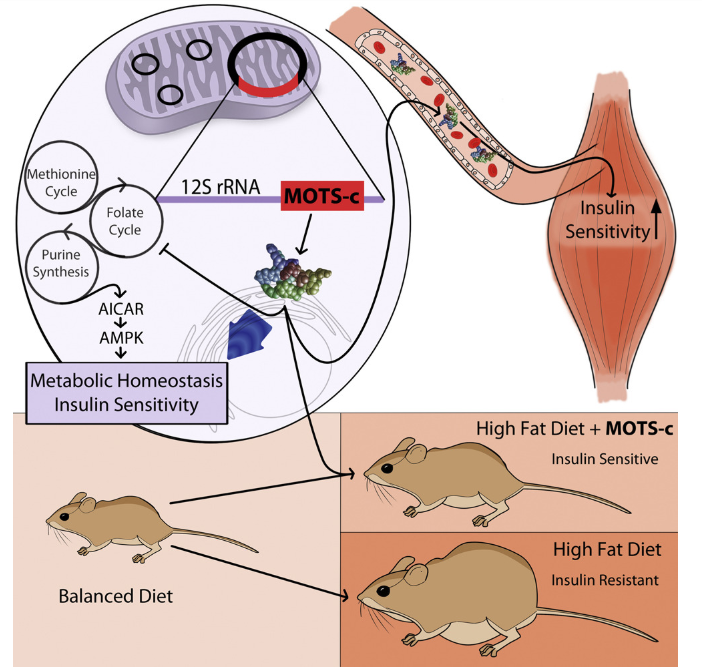
Functionally it is described as a retrograde signal: information travelling from mitochondrion to nucleus rather than the other direction. The original characterisation reported that MOTS-c targets the folate cycle and its tetrahydrofolate-dependent purine biosynthesis pathway, and that inhibition of that pathway leads to accumulation of AICAR, an endogenous activator of AMP-activated protein kinase. Activation of AMPK then produces the metabolic effects observed.
That indirect route matters for interpreting the literature. MOTS-c is not described as an AMPK ligand. It acts upstream, on a metabolic pathway whose intermediate happens to be an AMPK activator, which is a less direct mechanism than a receptor agonist and correspondingly harder to attribute cleanly. Later work has also reported nuclear translocation under metabolic stress and regulation of nuclear gene expression, which describes a second and distinct mode of action.
Mitochondrial origin
Encoded within the MT-RNR1 gene of the mitochondrial genome, in a short open reading frame overlapping the 12S ribosomal RNA sequence.
Folate cycle inhibition
Reported to target the folate cycle and its tetrahydrofolate-dependent de novo purine biosynthesis pathway.
AICAR accumulation
Inhibition of that pathway leads to accumulation of AICAR, an endogenous activator of AMP-activated protein kinase.
AMPK activation
AMPK activation is the proximate driver of the reported metabolic effects, including improved glucose handling in skeletal muscle.
Nuclear translocation
Under metabolic stress MOTS-c has been reported to translocate to the nucleus and influence expression of stress-responsive nuclear genes, a mode of action distinct from the folate cycle route.
MOTS-c Research Findings
The literature is preclinical and mechanistic, with recent work extending into association studies in patient populations. Each entry names its model.
Promotion of metabolic homeostasis and reduced diet-induced obesity
The original characterising study reported that the mitochondrial-derived peptide promotes metabolic homeostasis and reduces obesity and insulin resistance in mice, establishing both the molecule and the folate cycle to AICAR to AMPK mechanism.
Rodent modelProtection against skeletal muscle deterioration in cancer cachexia
In the C26 model of cancer cachexia, MOTS-c partially protected against skeletal muscle deterioration, extending its reported effects from metabolic disease into a wasting model.
Rodent modelPreservation of mitochondrial bioenergetics and genome integrity
Work reported that MOTS-c preserves mitochondrial subpopulation bioenergetics and genome integrity, addressing the mitochondrion itself rather than only downstream metabolic readouts.
In vitroAssociation with oxidative stress and arterial stiffness in a patient population
An observational study in peritoneal dialysis patients reported associations between circulating MOTS-c and measures of oxidative stress and arterial stiffness. This is an association in humans, not an interventional result.
ObservationalProposed role in inflammatory disease reviewed
A translational review examined how the secreted mitochondrial microprotein might become a treatment for inflammatory conditions, collecting the mechanistic strands relevant to that question.
MechanisticApplication in mitochondrial transplantation for cardiac repair
A mitochondria-derived peptide hydrogel was reported to augment mitochondrial transplantation for cardiac repair, an applied use of the peptide as part of a delivery system rather than as a systemic agent.
Rodent modelMOTS-c Structure and Identifiers
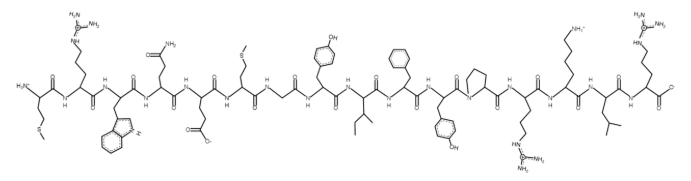
| Sequence | Met-Arg-Trp-Gln-Glu-Met-Gly-Tyr-Ile-Phe-Tyr-Pro-Arg-Lys-Leu-Arg |
| Single-letter Code | MRWQEMGYIFYPRKLR |
| Molecular Weight | 2174.64 g/mol |
| Length | 16 amino acids |
| Encoded By | MT-RNR1, mitochondrial genome, within the 12S rRNA sequence |
| Class | Mitochondrial-derived peptide |
| Full Name | Mitochondrial open reading frame of the 12S rRNA type-c |
| Proposed Target | Folate cycle and de novo purine biosynthesis, upstream of AMPK |
| Oxidation-prone Residues | Two methionines and two tyrosines |
| Appearance | White lyophilised powder |
| Molecular Formula | C101H152N28O22S2 |
| PubChem SID | 255386757 |
| CAS Number | 1627580-64-6 |
Muscle Glucose Uptake
In mice, MOTS-c reverses age-dependent insulin resistance in muscle and so improves how much glucose the muscle takes up. The route is an improved skeletal muscle response to AMPK activation, which in turn raises the expression of glucose transporters[1]. That activation does not run through the insulin pathway, which makes it an alternative way of driving glucose into muscle where insulin is ineffective.
Adipose Tissue and Brown Fat
Mice with low estrogen levels put on fat mass and their adipose tissue stops working normally. Supplementing them with MOTS-c improves brown fat function and reduces how much adipose tissue accumulates. The peptide also appears to head off the adipose dysfunction and inflammation that typically run ahead of insulin resistance[2].
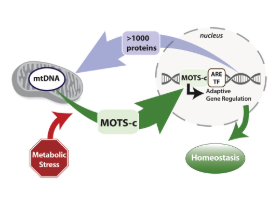
At least part of that influence on fat metabolism is mediated by AMPK activation. MOTS-c targets the methionine-folate cycle, raises AICAR levels and activates AMPK. Newer work suggests it can leave the mitochondria altogether and reach the nucleus, where it acts on nuclear gene expression: following metabolic stress it has been shown to regulate nuclear genes governing glucose restriction and antioxidant responses[3].
Lipid Pathways in Obesity
Evidence from mice makes MOTS-c an important regulator of sphingolipid, monoacylglycerol and dicarboxylate metabolism, particularly where obesity is present. Down-regulating those pathways while increasing beta-oxidation appears to be how it prevents fat accumulation[4].
The work has also produced a new hypothesis about fat deposition and insulin resistance. Where fat metabolism in the mitochondria is dysregulated, fat may go unoxidised; circulating fat then rises, and the body is forced to push insulin levels up in response[5].
MOTS-c as a Marker of Insulin Sensitivity
Measurements taken across insulin sensitive and insulin resistant individuals found that the association with insulin sensitivity holds only in lean people. That has led to the suggestion that the peptide could be a useful way of monitoring lean pre-diabetic individuals, with a change in level acting as an early warning of insulin insensitivity to come[6].
Bone and Osteoblast Function
MOTS-c appears to have a part in how osteoblasts synthesise type I collagen in bone. Work in osteoblast cell lines shows it regulating the TGF-beta/SMAD pathway, which is responsible for the health and survival of those cells[7].
Further research found it promoting the differentiation of bone marrow stem cells through that same TGF-beta/SMAD pathway, which leads directly to increased osteogenesis[8].
A Longevity-Associated Variant
A specific change in the peptide has been linked to longevity in certain human populations, the Japanese among them. It substitutes a glutamate residue for the lysine normally found at position 14, occurs exclusively in people of Northeast Asian ancestry, and is thought to play a part in exceptional longevity[9].
Endothelial and Cardiac Findings
Among patients undergoing coronary angiography, those with lower MOTS-c levels showed more endothelial cell dysfunction. Supplementing rats with the peptide improved endothelial function along with microvascular and epicardial blood vessel function[10].
At least three MDPs are thought to play a part in protecting cardiac cells against stress and inflammation[11].
A Peptide Encoded by the Mitochondrial Genome
The mitochondrial genome is small and was long thought to encode only thirteen proteins, all subunits of the respiratory chain, plus the transfer and ribosomal RNAs needed to make them. MOTS-c does not fit that description. It is encoded within a short open reading frame that overlaps the 12S ribosomal RNA gene, and it acts outside the mitochondrion.
This makes it part of a class rather than a curiosity. Humanin, also in this catalogue, was the first mitochondrial-derived peptide identified, and MOTS-c is the most studied of those that followed. The class matters conceptually because it establishes signalling from mitochondrion to nucleus and to the wider organism, rather than the nucleus-directs-mitochondrion relationship previously assumed.
The name records its origin: mitochondrial open reading frame of the 12S rRNA type-c.
The Mechanism Is Indirect, and That Matters
MOTS-c is frequently described as an AMPK activator, which is a useful shorthand but not what the original work reported. The described sequence is that MOTS-c targets the folate cycle and its tetrahydrofolate-dependent purine biosynthesis pathway; inhibiting that pathway causes AICAR to accumulate; and AICAR is an endogenous AMPK activator.
The distinction is not pedantic. A molecule that binds and activates a kinase has a mechanism that can be tested directly. A molecule that perturbs a metabolic pathway whose intermediate activates a kinase has effects contingent on the state of that pathway, which will vary with cell type, nutrient availability and folate status.
The later reports of nuclear translocation under metabolic stress describe a second mode of action that is not obviously connected to the first. Both are published; neither has been shown to account for the full range of reported effects.
Exercise, Ageing and the Limits of Association
Much of the interest in MOTS-c comes from reports that circulating concentrations rise with exercise and decline with age, which has led to it being described as an exercise mimetic. Those are associations, and the direction of causation is not established by them.
A peptide whose concentration rises during exercise may be mediating a benefit of exercise, may be a marker of a process that mediates it, or may be responding to metabolic stress without contributing to the adaptation. The mouse intervention studies address this more directly than the correlational human data do, and they remain animal work.
The human data available so far are observational, including the association study in dialysis patients. There is no approved product and no interventional human trial of consequence. Material supplied for research is for in-vitro laboratory use only.
Handling and Analytical Considerations
MOTS-c contains two methionines and two tyrosines, making it more oxidation-prone than most peptides of similar length. Methionine oxidation adds 16 daltons per residue, so partially oxidised species are a realistic related substance and appear as a series rather than a single satellite peak.
That composition makes storage conditions and buffer oxygenation more consequential here than for simpler sequences, and it makes the analytical method behind a purity figure worth reading, since a method that does not resolve oxidised forms will report them as parent.
MOTS-c Research FAQ
MOTS-c Research Summary
The findings above were observed in cell culture and in rodents, and the exposures used in those studies do not scale to humans. MOTS-c supplied by Volta Peptides is for in-vitro laboratory research only and is not for human or animal administration.
Article Author
Marcus Hopkin, PhD, is Director of Research and Development at Volta Peptides. He has more than 12 years of analytical chemistry experience, including peptide synthesis, characterization, purity testing and stability assessment.
Scientific Journal Author
Dr. Changhan David Lee is a researcher at the School of Gerontology at USC Leonard Davis. Dr. Pinchas Cohen is the dean of the USC Leonard Davis School of Gerontology and an expert in mitochondrial peptides including humanin, MOTS-c, and SHLP2.
Scientific References
Primary literature and public trial registries only. No supplier or retailer pages are cited.
- 1The mitochondrial-derived peptide MOTS-c promotes metabolic homeostasis and reduces obesity and insulin resistanceLee C, Zeng J, Drew BG, et al. · Cell Metabolism · 2015
- 2MOTS-c partially protects against skeletal muscle deterioration in C26 cachexiaJamnick NA, Livingston PD, et al. · Frontiers in Medicine · 2026
- 3MOTS-c preserves mitochondrial subpopulation bioenergetics and genome integritySanthanam SS, Jayaraman S, et al. · Molecular Biology Reports · 2026
- 4MOTS-c: How a secreted mitochondrial microprotein may become a potential treatment for inflammatory conditionsAmado CA, Agüero J, et al. · Journal of Translational Medicine · 2026
- 5MOTS-c is associated with oxidative stress and arterial stiffness in peritoneal dialysis patientsMusolino M, Roumeliotis A, et al. · International Urology and Nephrology · 2026
- 6Mitochondria-derived peptide hydrogel augments mitochondrial transplantation for promoting cardiac repairLi H, Zhang Y, et al. · Bioactive Materials · 2027
Referenced Citations
- 1C. Lee, K. H. Kim, and P. Cohen, "MOTS-c: A novel mitochondrial-derived peptide regulating muscle and fat metabolism," Free Radic. Biol. Med., vol. 100, pp. 182-187, Nov. 2016.
- 2H. Lu et al., "MOTS-c peptide regulates adipose homeostasis to prevent ovariectomy-induced metabolic dysfunction," J. Mol. Med., vol. 97, no. 4, pp. 473-485, Apr. 2019.
- 3K. H. Kim et al., "The Mitochondrial-Encoded Peptide MOTS-c Translocates to the Nucleus to Regulate Nuclear Gene Expression in Response to Metabolic Stress," Cell Metab., vol. 28, no. 3, pp. 516-524.e7, Sep. 2018.
- 4S.-J. Kim et al., "The mitochondrial-derived peptide MOTS-c is a regulator of plasma metabolites and enhances insulin sensitivity," Physiol. Rep., vol. 7, no. 13, p. e14171, Jul. 2019.
- 5R. Crescenzo et al., "A possible link between hepatic mitochondrial dysfunction and diet-induced insulin resistance," Eur. J. Nutr., vol. 55, no. 1, pp. 1-6, Feb. 2016.
- 6L. R. Cataldo et al., "Plasma MOTS-c levels are associated with insulin sensitivity in lean but not in obese individuals," J. Investig. Med., vol. 66, no. 6, pp. 1019-1022, Aug. 2018.
- 7N. Che et al., "MOTS-c improves osteoporosis by promoting the synthesis of type I collagen in osteoblasts via TGF-beta/SMAD signaling pathway," Eur. Rev. Med. Pharmacol. Sci., vol. 23, no. 8, pp. 3183-3189, Apr. 2019.
- 8B.-T. Hu and W.-Z. Chen, "MOTS-c improves osteoporosis by promoting osteogenic differentiation of bone marrow mesenchymal stem cells via TGF-beta/Smad pathway," Eur. Rev. Med. Pharmacol. Sci., vol. 22, no. 21, pp. 7156-7163, Nov. 2018.
- 9N. Fuku et al., "The mitochondrial-derived peptide MOTS-c: A player in exceptional longevity?," Aging Cell, vol. 14, Aug. 2015.
- 10Q. Qin et al., "Downregulation of circulating MOTS-c levels in patients with coronary endothelial dysfunction," Int. J. Cardiol., vol. 254, pp. 23-27, 2018.
- 11Y. Yang et al., "The role of mitochondria-derived peptides in cardiovascular disease: Recent updates," Biomed. Pharmacother., vol. 117, p. 109075, Jun. 2019.
Disclaimer
All articles and product information provided on this website are for informational and educational purposes only. The products offered on this website are furnished for in-vitro studies only. These products are not medicines or drugs and have not been approved by the FDA to prevent, treat or cure any medical condition, ailment or disease.
MOTS-C 20mg: frequently asked questions
Answered from the product record and the certificate file. Volta does not answer questions about administration, dosing or protocols.
What is supplied in a 20 mg vial of MOTS-C?
A sealed single-use vial containing 20 mg of MOTS-C as a lyophilized powder. Soluble in bacteriostatic water. No diluent, syringe or other supply is included.
Is MOTS-C supplied for human use?
No. For in-vitro laboratory research by qualified professionals only. Not for human or animal administration. Not a drug, food, cosmetic or dietary supplement. Not intended to diagnose, treat, cure, mitigate or prevent any disease. Volta does not provide dosing, administration or protocol guidance for any material listed.
What purity is this MOTS-C released to?
>99% by HPLC is the specification every batch is released to. That is a threshold Volta sets, not a measurement. SideChain Analytics separately reported 99.4% by HPLC-MS/MS for lot VPMC10100 on September 27, 2026, which covers the 10mg vial of the same compound.
Is there a certificate of analysis for this MOTS-C vial?
Yes. The certificate is shown on this page as page images and states the laboratory, the lot number, the method and the date. The laboratory publishes its own verification page for the report, so it can be checked against SideChain Analytics rather than against us. The certificate on file covers the 10mg fill of this compound rather than the 20 mg fill.
How is MOTS-C identified?
CAS 1627580-64-6, molecular formula C₁₀₁H₁₅₂N₂₈O₂₂S₂, molecular weight 2,174.6 g/mol. Those identifiers are what an incoming-goods check compares a certificate against, and they are stated here so the comparison can be made before ordering.
How should MOTS-C be stored before reconstitution?
Store lyophilized peptide at -20°C in a dry, dark environment. Reconstitute in bacteriostatic water. Once reconstituted, store at 2-8°C and use within 30 days. Avoid repeated freeze-thaw cycles. Lyophilized powder is stable at room temperature for shipping and short-term storage.
Does Volta list other vial sizes of MOTS-C?
Yes: 10 mg. Each size is a separate listing with its own price, batch number and certificate status.
Where does this ship from?
British Columbia, Canada. Canadian orders are domestic, so they clear no customs and pay no import duty. International orders ship from the same facility.
Related Research News
MOTS-c: A Mitochondrial-Derived Peptide in Metabolic Regulation, Aging, and Physical Decline
Explore MOTS-c, a mitochondrial-derived peptide regulating metabolism, aging, and physical decline. Research findings for scientific study.
MOTS-c Half-Life: What Studies Show and What Remains Unknown
This reference clarifies what primary studies have established about MOTS-c half-life and stability, and identifies the pharmacokinetic questions that remain unanswered in humans.
MOTS-C and Metabolism: How Does MOTS-C Improve Endurance and Bone Strength?
Explore the preclinical science behind MOTS-C, a mitochondrial peptide investigated for its effects on metabolism, endurance, and bone strength.
Explore Research
Peptide Tools
MOTS-c research
MOTS-c is a 16-amino-acid mitochondrial-derived peptide encoded within the mitochondrial 12S rRNA gene, described in 2015 and studied as an AMPK-activating metabolic regulator, almost entirely in rodent models. Everything Volta publishes on this compound, across every vial size, is collected on MOTS-c handling, evidence and certificates.
Vial sizes of this compound
- MOTS-c 10mg
- 20mg(this page)
Research on MOTS-c
Handling and documentation
MOTS-c is one of the compounds in Volta's wellness research peptides catalogue, which collects the rest of the range studied in this area alongside the comparisons and guides that cover it.
More from the research catalogue
Every compound below has its own specification, batch number and certificate page, whether or not a vial is in stock today. Supplied for laboratory research use only.
Other vial sizes
Related research compounds
- Oxytocin Acetate 10mgrestocking
- P21 (P021) 5mgrestocking
- PE 22-28 10mgrestocking
- Pinealon 10mgrestocking
- Thymosin Alpha-1 10mgrestocking