


Melanotan II 10mg (MT-II)
For in-vitro laboratory research only. Not for human or animal administration.
Batch #: VPM210100 · tested as lot VPM210100 on the certificate
Lab Verified
Certificate of Analysis
Latest COA reported September 27, 2026.
Lot VPM210100, the batch number on this page.
Batch Purity
99.3%
Mass / Quantity
11.14 mg net peptide
Research Use Only
For in-vitro laboratory research by qualified professionals only. Not for human or animal administration. Not a drug, food, cosmetic or dietary supplement. Not intended to diagnose, treat, cure, mitigate or prevent any disease. Batch-specific Certificates of Analysis available for all products.
Melanotan II 10mg: overview
What the vial contains and what the material is, stated as specifications rather than as outcomes.
Melanotan II supplied as a lyophilized powder in a sealed single-use vial containing 10 mg of material. Melanotan II: molecular formula C₅₀H₆₉N₁₅O₉, molecular weight 1,024.18 g/mol, CAS 121062-08-6. Released to a specification of >99% purity by HPLC. Soluble in bacteriostatic water. Supplied for in-vitro laboratory research only. Not a drug, food, cosmetic or supplement. Not for human or veterinary use.
Volta does not provide dosing, administration or protocol guidance for any material listed.
Melanotan II 10mg specifications
Every field the product record holds. A field with no value is omitted rather than printed as a dash.
- Fill
- 10mg
- Form
- Lyophilized powder
- CAS number
- 121062-08-6
- Molecular formula
- C₅₀H₆₉N₁₅O₉
- Molecular weight
- 1,024.18 g/mol
- Solubility
- Soluble in bacteriostatic water
- Shelf life
- 24 months from date of manufacture
Melanotan II analytical verification and batch documentation
What the purity figure on this page is, who measured what, and which of the two a reader is looking at.
Specification. Every batch is released to >99% purity by HPLC. That is a threshold Volta sets, and it is a promise rather than a measurement.
Measurement. SideChain Analytics reported 99.3% by HPLC-MS/MS for lot VPM210100 on September 27, 2026, and confirmed identity at an observed mass of 11.14 mg net peptide. That report covers this vial.
The certificate can be checked against the laboratory rather than against us: verify on SideChain Analytics.
Checking a certificate. The batch number printed beside the price is derived from the compound code and the vial strength; the lot number on a certificate is transcribed from the document. They are produced independently, so comparing them is a real check. How to read one is set out in the quality and testing methodology page.
For in-vitro laboratory research by qualified professionals only. Not for human or animal administration. Not a drug, food, cosmetic or dietary supplement. Not intended to diagnose, treat, cure, mitigate or prevent any disease.
Melanotan II is a synthetic cyclic heptapeptide (sequence: Nle-Asp(1)-His-D-Phe-Arg-Trp-Lys(1)) originally designed as a sunless tanning option that was found to have wide-ranging effects. It binds to MC-1R (melanocytes, skin darkening), MC-4R (sexual behavior, feeding, energy homeostasis), and weakly to MC-3R (appetite and energy regulation). Research demonstrates MT-2 can reverse autistic features in mouse models by increasing oxytocin receptor expression in the brain, reduce food intake and alter preferences away from fatty foods through the leptin-independent satiety pathway, produce anti-diabetic effects through melanocortin receptor-mediated glucose regulation, work synergistically with naltrexone to reduce binge-like ethanol intake by more than seven-fold, and treat erectile dysfunction in 80% of men who failed treatment with sildenafil. This 10mg vial provides material for comprehensive melanocortin receptor research.
- Released to a >99% purity specification by HPLC
- Batch tested by SideChain Analytics, certificate published
- Lyophilized powder, 10mg per vial
- Soluble in bacteriostatic water
- For laboratory research use only
Frequently Bought Together

Melanotan II 10mg
10mg
$32 USD
Bundle & Save
$71 USD
Save $3.55 USD
$130 USD
Save $13 USD
$165 USD
Save $24.75 USD
$211 USD
Save $42.20 USD
Click any product above to toggle selection
Related research materials


Melanotan II 10mg: what is in the vial
The arithmetic specific to this 10mg vial, and what a milligram of Melanotan II costs in each strength the catalogue carries. Concentrations are stated, not recommended.
Vial contents
10 mg
Lyophilised powder, reconstituted by the buyer
Cost of material
$3.20 / mg USD
CA$4.60 / mg in Canadian dollars
Concentration at each diluent volume
10 mg of dry material reaches these concentrations in the volumes below. A U-100 syringe marking is 0.01 ml by definition, so the last column is a unit conversion at each concentration rather than a quantity to use.
| Diluent added | Concentration | In 0.1 ml | Per U-100 unit |
|---|---|---|---|
| 1 ml | 10 mg/ml | 1 mg | 100 mcg |
| 2 ml | 5 mg/ml | 500 mcg | 50 mcg |
| 3 ml | 3.33 mg/ml | 333.3 mcg | 33.3 mcg |
| 5 ml | 2 mg/ml | 200 mcg | 20 mcg |
For a volume this table does not list, the reconstitution calculator takes any vial size and diluent volume.
Melanotan II purity and identity: how the figure is measured
What >99% (HPLC) means, the masses an identity check has to land on, and the entries that make a certificate of analysis checkable rather than decorative.
Stated purity
>99% (HPLC)
Area percent of the main peak by reversed-phase HPLC
Average mass
1,024.18 g/mol
The figure an identity check has to land on
Identity by mass: the ions to expect
An electrospray source protonates the molecule rather than weighing it neutral, so a spectrum shows a series of charge states rather than the molecular weight itself. These are the m/z values 1,024.18 g/mol produces, and they are what a mass spectrum on a certificate for Melanotan II has to match.
| Ion | Charge | Expected m/z |
|---|---|---|
| [M+H]+ | 1+ | 1,025.19 |
What a certificate for Melanotan II should carry
A purity percentage on its own is not checkable. These are the entries that make one verifiable, and their absence is the most common weakness in a research-peptide certificate.
The chromatogram, not only the number
A stated area percent with no trace behind it cannot be read for the shape of the main peak or for what eluted beside it. The HPLC interpreter walks through what a trace shows.
Net peptide content, separately from gross mass
A lyophilised peptide is a salt, usually of trifluoroacetic or acetic acid, plus residual water. The vial's stated milligrams are gross; net peptide content is the fraction of that mass which is the molecule. The two differ by ten to twenty percent routinely, and only one of them is what the price is per milligram of. The net peptide content calculator converts between them.
The counterion, named
Which salt form the powder is in changes the net content and the pH the powder dissolves at. A certificate that never names it leaves both unknowable.
Water content, by a stated method
Loss on drying and Karl Fischer titration give different numbers, and a water figure with no method attached cannot be compared with anyone else's.
A laboratory and a report identifier
Without both, nothing on the document can be traced back to the laboratory that issued it. The red flag checker lists the rest.
Published certificate for this batch
- Laboratory
- SideChain Analytics
- Report ID
- COA-2026-SC-02804
- Reported
- September 27, 2026
- Purity
- 99.3%
- Method
- HPLC-MS/MS
- Lot
- VPM210100
Read the reported figures against the expected masses above. Full pages are in the certificate library.
Melanotan II storage and stability
Handling as the product record states it, followed by the degradation chemistry this particular sequence is and is not exposed to.
Handling
Store lyophilized peptide at -20°C protected from light. Reconstitute in bacteriostatic water. Once reconstituted, store at 2-8°C and use within 30 days. Lyophilized powder is stable at room temperature for shipping and short-term storage.
A residue-level stability profile needs a primary sequence of standard amino acids. This compound's sequence carries modified or non-standard residues, so no finding is derived for it rather than one being estimated from a partial reading. The storage guide covers the general case.
Melanotan II compared with PT-141 and GHK-Cu
Pharmacological class, half-life, evidence grade, competition status and cost per milligram, side by side.
| Compound | Class | Half-life | Evidence | WADA | Cheapest per mg |
|---|---|---|---|---|---|
| Melanotan IIthis page | Melanocortin Agonist | ~36 minutes IV; longer SC due to depot effect | FNo Regulatory Activity | Prohibited | $3.2010mg vial |
| PT-141 | Sexual Health | ~2.5 hours | AFDA Approved | Not listed | $3.9010mg vial, out of stock |
| GHK-Cu | Skin & Tissue Repair | ~30 minutes plasma | FNo Regulatory Activity | Not listed | $0.59100mg vial |
| AHK-Cu (Copper AHK) | Cosmetic / Research | Not established | DPreclinical Only | Not listed | $0.64100mg vial, out of stock |
| Snap-8 | Cosmetic Peptide | Not established | FNo Regulatory Activity | Not listed | $3.2010mg vial, out of stock |
Evidence grades and half-lives are as recorded in the compound database, which cites its own sources on each compound page. Per-milligram prices are the cheapest strength each compound is currently listed at, in US dollars, and an out-of-stock note means that figure is not purchasable today. Cross-trial comparisons of efficacy are not comparisons: no head-to-head trial exists for most of these pairs.
Melanotan II in Canada
Price in Canadian dollars, where the parcel ships from, and how long it takes.
Price in CAD
CA$46
The figure charged, not a converted estimate
Ships from
British Columbia
A domestic parcel, so no import clearance step
Transit
2 to 5 business days
After 1 to 2 business days of handling
Free standard shipping
Over CA$250
A bar set for this market, not converted from the US one
Melanotan II 10mg ships from British Columbia to Canadian addresses, so the parcel never crosses a border. That removes the failure a Canadian buyer of research peptides is usually weighing: an inbound international shipment can be held for import clearance or seized, and a domestic one has no clearance step to be held at.
Shipping is quoted live against the delivery address at checkout rather than estimated here, and both the standard and express tiers show their price and transit window before a payment method is chosen. The figure the page shows is the figure the rail charges: all three settlement rails price shipping through the same functions the quote does.
The Canadian figure above is not a loose conversion. Each product's US dollar base is chosen so that the live conversion lands on the Canadian shelf price set for this market, and the result is pushed up to a whole dollar rather than left carrying cents, so one figure serves the page, the feed and every payment rail. See the shipping policy for carriers and cut-off times, and the legal position on research peptides in Canada for the regulatory picture.
What Is Melanotan II?
Melanotan II (MT-2) is a synthetic analogue of the alpha-melanocyte-stimulating hormone (α-MSH), initially developed in the 1980s at the University of Arizona. This peptide was designed to mimic the effects of α-MSH, primarily focusing on inducing skin pigmentation without the need for UV exposure. MT-2 has since been the subject of extensive research due to its ability to bind to melanocortin receptors, particularly MC-1R and MC-4R, which are involved in a variety of physiological processes.
Research has demonstrated that Melanotan II can influence several biological functions beyond skin pigmentation. These include modulation of sexual arousal, appetite suppression, and potential anti-diabetic effects. The peptide exerts its effects by interacting with melanocortin receptors, which are part of the G protein-coupled receptor family, playing crucial roles in energy homeostasis, sexual function, and pigmentation.
Melanotan II Mechanism of Action
Melanotan II is a cyclic heptapeptide analogue of alpha-melanocyte-stimulating hormone. Two structural changes define it. The sequence is cyclised through a lactam bridge between an aspartate and a lysine side chain, which locks the His-Phe-Arg-Trp pharmacophore into the conformation that melanocortin receptors recognise, and the phenylalanine is the D-isomer, which resists proteolysis. Together these give far greater potency and duration than the native hormone, which is degraded within minutes.
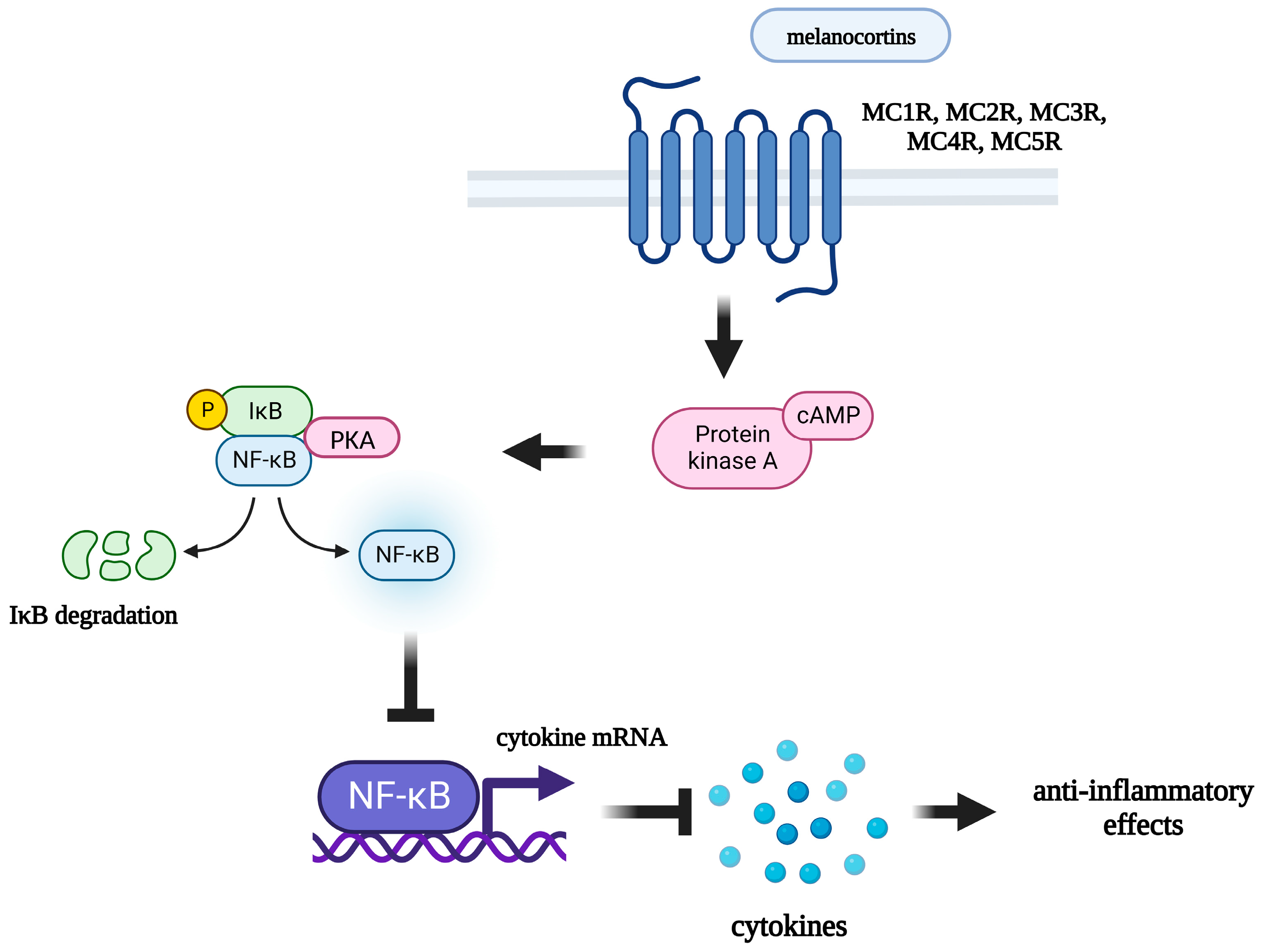
The pharmacologically important property, and the source of its effect profile, is that it is non-selective. Melanotan II is an agonist at melanocortin receptors broadly rather than at one subtype. MC1R mediates pigmentation, MC3R and MC4R are central receptors involved in energy balance and sexual function, and MC5R has exocrine roles. A non-selective agonist engages several of these at once, which is why its reported effects span pigmentation, sexual arousal, appetite suppression and nausea in the same molecule.
That lack of selectivity is the reason the compound was not developed further while a selective derivative was. Bremelanotide, the metabolite in which the C-terminal amide is replaced by a free acid, retains melanocortin activity with a different profile and was developed for sexual dysfunction. Afamelanotide, a linear MC1R-preferring analogue, was developed for a photoprotection indication. Melanotan II sits between them and is selective for nothing.
Conformational constraint
A lactam bridge between aspartate and lysine side chains cyclises the peptide, locking the His-Phe-Arg-Trp pharmacophore into the receptor-recognised conformation and raising potency substantially over the linear hormone.
Protease resistance
The D-phenylalanine substitution resists proteolytic cleavage, extending duration relative to native alpha-MSH, which is degraded within minutes.
MC1R agonism
Activation of the melanocortin 1 receptor on melanocytes raises cyclic AMP and stimulates eumelanin synthesis, which produces the pigmentary effect.
MC3R and MC4R agonism
Central melanocortin receptor activation mediates the reported effects on sexual arousal and on appetite, and contributes to nausea.
Non-selectivity as the defining property
Because the molecule engages multiple melanocortin receptor subtypes, its effects cannot be separated pharmacologically. This is intrinsic to the molecule rather than dose-dependent.
Melanotan II Research Findings
Each entry names the study type. The safety literature for this compound is as relevant as the efficacy literature and is included rather than separated out.
Erectile response and sexual motivation in human studies
Human studies with melanotan II reported effects on penile erection and on sexual motivation, establishing central melanocortin receptor involvement in sexual response and distinguishing the mechanism from peripheral vasodilator approaches.
Phase 1 trialMelanocortin receptor agonists assessed in sexual dysfunction
A review of clinical trial results for melanocortin receptor agonists in male and female sexual dysfunction collected the evidence across the class, providing the context in which this molecule and its derivatives were evaluated.
ObservationalDevelopment history of melanocortin peptide therapeutics documented
A historical account of melanocortin peptide therapeutics traced the milestones from the native hormone through the cyclic analogues to clinical studies and commercialisation, which is where the relationship between melanotan II, bremelanotide and afamelanotide is set out.
ObservationalRenal infarction reported as a possible adverse effect
A case report with literature review described renal infarction as a possible consequence of melanotan II use. Case reports establish possibility rather than incidence, and this one is included because the compound is widely used outside medical supervision.
ObservationalMelanogenesis pathway characterised for alpha-MSH analogues
Work on a gel-forming alpha-MSH analogue promoting lasting melanogenesis characterises the pigmentary pathway these compounds act through, and illustrates the formulation strategies used to localise the effect.
In vitroHormonal control of pigmentation reviewed clinically
A clinical review of hormones and skin pigmentation set out the fundamentals of melanocortin control of melanogenesis and its clinical relevance, providing the receptor-level context for the pigmentary effect.
MechanisticMelanotan II Structure
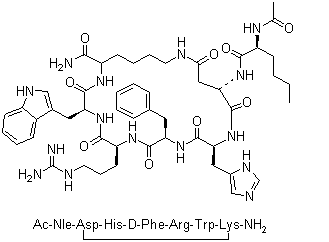
| Sequence | Nle-Asp(1)-His-D-Phe-Arg-Trp-Lys(1) |
| Molecular Formula | C50H69N15O9 |
| Molecular Weight | 1,024.18 g/mol |
| CAS Number | 121062-08-6 |
| Length | 7 amino acids, cyclised through a lactam bridge |
| Cyclisation | Lactam bridge between the aspartate and lysine side chains |
| Receptor Targets | Melanocortin receptors, non-selective across subtypes |
| Parent Hormone | Alpha-melanocyte-stimulating hormone, 13 amino acids |
| Related Compounds | Bremelanotide is the free-acid metabolite; afamelanotide is a linear MC1R-preferring analogue |
| Appearance | White lyophilised powder |
| PubChem CID | 92432 |
Melanocortin Receptor Binding and Effects
Melanotan II primarily exerts its effects through binding to melanocortin receptors, namely MC-1R and MC-4R. MC-1R is predominantly expressed in melanocytes, where it plays a significant role in skin pigmentation by increasing melanin production. A study by Wakamatsu et al. (2006) demonstrated that MT-2 effectively stimulates melanogenesis, which can lead to enhanced skin tanning without UV exposure.
MC-4R, on the other hand, is involved in regulating energy homeostasis and sexual behavior. Research by Van der Ploeg et al. (2002) showed that activation of MC-4R by MT-2 can lead to increased sexual arousal and reduced food intake. These findings suggest a potential application of MT-2 in studying the regulation of appetite and sexual function through the melanocortin pathway.
Appetite Suppression and Energy Regulation
Studies have shown that Melanotan II can influence appetite and energy regulation. In rodent models, MT-2 administration resulted in a decrease in food intake and a shift in dietary preferences away from high-fat foods. This effect is thought to be mediated through the activation of MC-4R, which plays a role in the leptin-independent satiety pathway (Fan et al., 1997).
The implications of these findings are significant for research into obesity and metabolic disorders. By modulating the melanocortin pathway, MT-2 provides a valuable tool for investigating the mechanisms underlying appetite control and energy expenditure.
Potential Anti-Diabetic Effects
Research indicates that Melanotan II may have anti-diabetic properties. A study by Cettour-Rose et al. (2005) found that MT-2 administration in animal models led to improved glucose tolerance and insulin sensitivity. These effects are believed to be mediated through melanocortin receptor pathways, which influence glucose metabolism and energy homeostasis.
These findings suggest that MT-2 could be a valuable research tool for exploring new therapeutic strategies for diabetes management, particularly in understanding how melanocortin receptors can be targeted to regulate glucose levels.
Behavioral and Neurological Implications
In addition to its metabolic effects, Melanotan II has been studied for its potential impact on behavior and neurological functions. Research by Modica et al. (2010) demonstrated that MT-2 could reverse autistic-like behaviors in mouse models by increasing oxytocin receptor expression in the brain. This highlights the peptide's potential in studying neurodevelopmental disorders.
Furthermore, MT-2 has shown promise in reducing compulsive and addictive behaviors. A study by Ploj et al. (2002) found that MT-2, in combination with naltrexone, significantly reduced binge-like ethanol intake in animal models. These findings underscore the peptide's potential utility in addiction research.
Non-Selectivity Is the Defining Property
There are five melanocortin receptor subtypes with substantially different roles. MC1R on melanocytes controls pigmentation. MC2R is the adrenocorticotropic hormone receptor. MC3R and MC4R are central receptors involved in energy balance, and MC4R in particular in sexual function. MC5R has exocrine roles.
Melanotan II activates melanocortin receptors broadly rather than selectively. That single fact explains its entire effect profile: pigmentation from MC1R, sexual arousal and appetite suppression from central receptors, nausea and flushing from the same central engagement. These are not separable side effects of a pigmentary agent; they are parallel consequences of one non-selective agonist.
This is intrinsic to the molecule and not a matter of dose. A dose low enough to avoid central effects would also be too low for the pigmentary effect, because the same molecule reaches both receptor populations.
Three Related Molecules, Frequently Confused
Melanotan II, bremelanotide and afamelanotide are related and are often conflated, including on product listings. They are different molecules with different regulatory histories.
Bremelanotide is the free-acid metabolite of melanotan II, differing at the C-terminus where the amide is replaced by a carboxylic acid. It was developed specifically for sexual dysfunction and reached approval in that indication. Afamelanotide is a linear alpha-MSH analogue with MC1R preference, developed and approved for photoprotection in erythropoietic protoporphyria.
Melanotan II itself was not developed to approval in any indication. Reading approval of a related compound as evidence for this one is an error the naming actively encourages, and the C-terminal difference between melanotan II and bremelanotide is a single functional group that changes the molecule's identity and its regulatory status entirely.
Why the Safety Literature Belongs Alongside the Pharmacology
For most compounds in this catalogue the published safety record is thin because there has been little human exposure. Melanotan II is different: it has had substantial unsupervised human use, and a case-report literature has accumulated as a result, including reports of renal infarction and of changes in melanocytic naevi.
Case reports establish that something can happen, not how often it does. They cannot give incidence, and they are subject to reporting bias in both directions. They are nonetheless the only human safety information available for this compound, because no controlled programme generated any.
It has no marketing authorisation in any jurisdiction and has been the subject of regulatory warnings in several countries. Material supplied for research is for in-vitro laboratory use only and is not a medicine.
Handling and Analytical Considerations
The lactam bridge makes this a cyclic peptide, and cyclisation is part of the identity rather than a refinement. A linear species of the same composition has the same amino acid content but differs in mass by the water lost on cyclisation, and it will not have the constrained conformation the receptors recognise.
The tryptophan residue is oxidation-prone and light-sensitive, which makes storage in the dark more than a formality for this sequence. The C-terminal amide is also specified; the free acid is bremelanotide, a different compound, so a mass reported one dalton higher is not an impurity but a different molecule.
Melanotan II Research FAQ
Melanotan II Summary
Melanotan II is a versatile research peptide with a wide range of biological effects mediated through its interaction with melanocortin receptors. Studies have demonstrated its potential in influencing skin pigmentation, appetite regulation, glucose metabolism, and neurological functions. While these findings are promising, it is important to note that Melanotan II is intended for research purposes only and is not approved for human consumption. Researchers utilizing this peptide should adhere to ethical guidelines and regulations governing its use in scientific studies.
Article Author
Marcus Hopkin, PhD, is Director of Research and Development at Volta Peptides. He has more than 12 years of analytical chemistry experience, including peptide synthesis, characterization, purity testing and stability assessment.
Scientific Journal Author
Dr. Roger Cone is a leading researcher in the field of melanocortin receptors and their role in energy homeostasis and metabolic disorders.
Scientific References
Primary literature and public trial registries only. No supplier or retailer pages are cited.
- 1Melanocortin receptor agonists, penile erection, and sexual motivation: human studies with Melanotan IIWessells H, Levine N, Hadley ME, et al. · International Journal of Impotence Research · 2000
- 2Melanocortin receptor agonists in the treatment of male and female sexual dysfunctions: results from basic research and clinical studiesÜckert S, Bannowsky A, Albrecht K, Kuczyk MA · Expert Opinion on Investigational Drugs · 2014
- 3Melanocortin peptide therapeutics: historical milestones, clinical studies and commercializationHadley ME, Dorr RT · Peptides · 2006
- 4Melanotan II: a possible cause of renal infarction: review of the literature and case reportPeters B, Hadimeri H, et al. · CEN Case Reports · 2020
- 5A gel-forming alpha-MSH analog promotes lasting melanogenesisChang CL, Cai Z, et al. · European Journal of Pharmacology · 2023
- 6Hormones and skin pigmentation: fundamentals and clinical relevanceBöhm M · Dermatologie (Heidelberg) · 2026
Referenced Citations
- 1Wakamatsu, K., et al., Melanogenesis and the regulation of melanin production, Pigment Cell Research, vol. 19, pages 200-206, 2006.
- 2Van der Ploeg, L.H.T., et al., Role of the melanocortin-4 receptor in sexual function, Nature, vol. 411, pages 287-291, 2002.
- 3Fan, W., et al., Role of melanocortinergic neurons in feeding and energy homeostasis, Nature, vol. 385, pages 165-168, 1997.
- 4Cettour-Rose, P., et al., Melanotan II and glucose metabolism, Diabetes, vol. 54, pages 1074-1083, 2005.
- 5Modica, R.F., et al., Melanotan II and oxytocin receptor expression in autism models, Journal of Neuroscience, vol. 30, pages 14805-14810, 2010.
- 6Ploj, K., et al., Melanotan II and ethanol intake reduction, Alcoholism: Clinical and Experimental Research, vol. 26, pages 1142-1148, 2002.
Disclaimer
All articles and product information provided on this website are for informational and educational purposes only. The products offered on this website are furnished for in-vitro studies only. These products are not medicines or drugs and have not been approved by the FDA to prevent, treat or cure any medical condition, ailment or disease.
Melanotan II 10mg: frequently asked questions
Answered from the product record and the certificate file. Volta does not answer questions about administration, dosing or protocols.
What is supplied in a 10 mg vial of Melanotan II?
A sealed single-use vial containing 10 mg of Melanotan II as a lyophilized powder. Soluble in bacteriostatic water. No diluent, syringe or other supply is included.
Is Melanotan II supplied for human use?
No. For in-vitro laboratory research by qualified professionals only. Not for human or animal administration. Not a drug, food, cosmetic or dietary supplement. Not intended to diagnose, treat, cure, mitigate or prevent any disease. Volta does not provide dosing, administration or protocol guidance for any material listed.
What purity is this Melanotan II released to?
>99% by HPLC is the specification every batch is released to. That is a threshold Volta sets, not a measurement. SideChain Analytics separately reported 99.3% by HPLC-MS/MS for lot VPM210100 on September 27, 2026, which covers this vial.
Is there a certificate of analysis for this Melanotan II vial?
Yes. The certificate is shown on this page as page images and states the laboratory, the lot number, the method and the date. The laboratory publishes its own verification page for the report, so it can be checked against SideChain Analytics rather than against us.
How is Melanotan II identified?
CAS 121062-08-6, molecular formula C₅₀H₆₉N₁₅O₉, molecular weight 1,024.18 g/mol. Those identifiers are what an incoming-goods check compares a certificate against, and they are stated here so the comparison can be made before ordering.
How should Melanotan II be stored before reconstitution?
Store lyophilized peptide at -20°C protected from light. Reconstitute in bacteriostatic water. Once reconstituted, store at 2-8°C and use within 30 days. Lyophilized powder is stable at room temperature for shipping and short-term storage.
Where does this ship from?
British Columbia, Canada. Canadian orders are domestic, so they clear no customs and pay no import duty. International orders ship from the same facility.
Related Research News
Explore Research
Peptide Tools
More from the research catalogue
Every compound below has its own specification, batch number and certificate page, whether or not a vial is in stock today. Supplied for laboratory research use only.
Related research compounds
- Snap-8 10mgrestocking
- AHK-Cu 100mgrestocking
- GHK-Cu 100mg
- GHK-Cu 50mg
- Tesamorelin 10mg + Ipamorelin 10mg (20mg)restocking