


HCG 5,000iu (Human Chorionic Gonadotropin)
For in-vitro laboratory research only. Not for human or animal administration.
Batch #: VPHC5000100
Research Use Only
For in-vitro laboratory research by qualified professionals only. Not for human or animal administration. Not a drug, food, cosmetic or dietary supplement. Not intended to diagnose, treat, cure, mitigate or prevent any disease. Batch-specific Certificates of Analysis available for all products.
HCG 5,000iu: overview
What the vial contains and what the material is, stated as specifications rather than as outcomes.
HCG supplied as a lyophilized powder in a sealed single-use vial containing 5,000 IU of material. HCG is human chorionic gonadotropin, a glycoprotein hormone of approximately 36,700 g/mol, CAS 9002-61-3. Purity greater than 99%. Soluble in bacteriostatic water or sterile saline. Supplied for in-vitro laboratory research only. Not a drug, food or supplement. Not for human or veterinary use.
Volta does not provide dosing, administration or protocol guidance for any material listed.
HCG 5,000iu specifications
Every field the product record holds. A field with no value is omitted rather than printed as a dash.
- Fill
- 5,000iu
- Form
- Lyophilized powder
- CAS number
- 9002-61-3
- Molecular weight
- ~36,700 g/mol
- Solubility
- Soluble in bacteriostatic water, sterile saline
- Shelf life
- 24 months from date of manufacture
HCG analytical verification and batch documentation
What the purity figure on this page is, who measured what, and which of the two a reader is looking at.
Specification. Every batch is released to >99% purity by HPLC. That is a threshold Volta sets, and it is a promise rather than a measurement.
Measurement. No certificate for this compound is published on the site yet. A batch-specific Certificate of Analysis is available on request, and the batch history lists the ones already published. Until one is published for this material, the figure above is the release specification and nothing on this page is a laboratory result.
Checking a certificate. The batch number printed beside the price is derived from the compound code and the vial strength; the lot number on a certificate is transcribed from the document. They are produced independently, so comparing them is a real check. How to read one is set out in the quality and testing methodology page.
For in-vitro laboratory research by qualified professionals only. Not for human or animal administration. Not a drug, food, cosmetic or dietary supplement. Not intended to diagnose, treat, cure, mitigate or prevent any disease.
Human Chorionic Gonadotropin (HCG) is a glycoprotein hormone used extensively in reproductive biology and endocrine research. This 5,000 IU vial is manufactured to high purity standards for reliable in vitro research applications.
- Released to a >99% purity specification by HPLC
- Lyophilized powder, 5,000iu per vial
- Soluble in bacteriostatic water, sterile saline
- For laboratory research use only
Frequently Bought Together

HCG 5,000iu
5,000iu
$44 USD
Bundle & Save
$128 USD
Save $6.40 USD
$167 USD
Save $16.70 USD
$199 USD
Save $29.85 USD
$273 USD
Save $54.60 USD
Click any product above to toggle selection
Related research materials


HCG 5,000iu: what is in the vial
The arithmetic specific to this 5,000iu vial, and what a milligram of HCG costs in each strength the catalogue carries. Concentrations are stated, not recommended.
Vial contents
5,000 IU
Lyophilised powder, reconstituted by the buyer
Cost of material
$0.01 / IU USD
CA$0.01 / IU in Canadian dollars
Concentration at each diluent volume
5,000 IU of dry material reaches these concentrations in the volumes below. A U-100 syringe marking is 0.01 ml by definition, so the last column is a unit conversion at each concentration rather than a quantity to use.
| Diluent added | Concentration | In 0.1 ml | Per U-100 unit |
|---|---|---|---|
| 1 ml | 5,000 IU/ml | 500 IU | 50 IU |
| 2 ml | 2,500 IU/ml | 250 IU | 25 IU |
| 3 ml | 1,666.67 IU/ml | 166.67 IU | 16.67 IU |
| 5 ml | 1,000 IU/ml | 100 IU | 10 IU |
For a volume this table does not list, the reconstitution calculator takes any vial size and diluent volume.
HCG purity and identity: how the figure is measured
What >99% (HPLC) means, the masses an identity check has to land on, and the entries that make a certificate of analysis checkable rather than decorative.
Stated purity
>99% (HPLC)
Area percent of the main peak by reversed-phase HPLC
What a certificate for HCG should carry
A purity percentage on its own is not checkable. These are the entries that make one verifiable, and their absence is the most common weakness in a research-peptide certificate.
The chromatogram, not only the number
A stated area percent with no trace behind it cannot be read for the shape of the main peak or for what eluted beside it. The HPLC interpreter walks through what a trace shows.
Net peptide content, separately from gross mass
A lyophilised peptide is a salt, usually of trifluoroacetic or acetic acid, plus residual water. The vial's stated milligrams are gross; net peptide content is the fraction of that mass which is the molecule. The two differ by ten to twenty percent routinely, and only one of them is what the price is per milligram of. The net peptide content calculator converts between them.
The counterion, named
Which salt form the powder is in changes the net content and the pH the powder dissolves at. A certificate that never names it leaves both unknowable.
Water content, by a stated method
Loss on drying and Karl Fischer titration give different numbers, and a water figure with no method attached cannot be compared with anyone else's.
A laboratory and a report identifier
Without both, nothing on the document can be traced back to the laboratory that issued it. The red flag checker lists the rest.
Batch certificates are published as page images in the certificate library. The source PDFs are never served: a certificate is the most forgeable document a supplier publishes, and an editable copy carrying an accredited laboratory's letterhead is worth more to a counterfeiter than to a customer.
HCG storage and stability
Handling as the product record states it, followed by the degradation chemistry this particular sequence is and is not exposed to.
Handling
Store at 2-8°C before reconstitution. After reconstitution, store at 2-8°C and use within 30 days.
A residue-level stability profile needs a primary sequence of standard amino acids. This compound's sequence carries modified or non-standard residues, so no finding is derived for it rather than one being estimated from a partial reading. The storage guide covers the general case.
HCG compared with Kisspeptin-10 and DSIP
Pharmacological class, half-life, evidence grade, competition status and cost per milligram, side by side.
| Compound | Class | Half-life | Evidence | WADA | Cheapest per mg |
|---|---|---|---|---|---|
| HCGthis page | Hormonal / Reproductive | ~24-36 hours | AFDA Approved | Not listed | — |
| Kisspeptin-10 | Hormonal & Reproductive | ~4 minutes (IV) | BPhase II Clinical Data | — | $4.2010mg vial, out of stock |
| DSIP | Sleep / Neuropeptide | ~7–8 minutes IV; longer SC | DPreclinical | Not listed | $4.6710mg vial |
| Epithalon | Anti-Aging / Telomere | Several hours | DPreclinical | Not listed | $3.4010mg vial |
| KPV | Anti-Inflammatory / Immune | ~2 hours (SC); shorter oral due to GI degradation | DPreclinical | Not listed | $3.9010mg vial |
Evidence grades and half-lives are as recorded in the compound database, which cites its own sources on each compound page. Per-milligram prices are the cheapest strength each compound is currently listed at, in US dollars, and an out-of-stock note means that figure is not purchasable today. Cross-trial comparisons of efficacy are not comparisons: no head-to-head trial exists for most of these pairs.
HCG in Canada
Price in Canadian dollars, where the parcel ships from, and how long it takes.
Price in CAD
CA$63
The figure charged, not a converted estimate
Ships from
British Columbia
A domestic parcel, so no import clearance step
Transit
2 to 5 business days
After 1 to 2 business days of handling
Free standard shipping
Over CA$250
A bar set for this market, not converted from the US one
HCG 5,000iu ships from British Columbia to Canadian addresses, so the parcel never crosses a border. That removes the failure a Canadian buyer of research peptides is usually weighing: an inbound international shipment can be held for import clearance or seized, and a domestic one has no clearance step to be held at.
Shipping is quoted live against the delivery address at checkout rather than estimated here, and both the standard and express tiers show their price and transit window before a payment method is chosen. The figure the page shows is the figure the rail charges: all three settlement rails price shipping through the same functions the quote does.
The Canadian figure above is not a loose conversion. Each product's US dollar base is chosen so that the live conversion lands on the Canadian shelf price set for this market, and the result is pushed up to a whole dollar rather than left carrying cents, so one figure serves the page, the feed and every payment rail. See the shipping policy for carriers and cut-off times, and the legal position on research peptides in Canada for the regulatory picture.
What Is HCG 5,000iu?
Human Chorionic Gonadotropin (HCG) is a glycoprotein hormone that plays a pivotal role in reproductive and endocrine research. It is primarily known for its function in pregnancy, where it supports the corpus luteum and stimulates the production of progesterone, essential for maintaining the uterine lining. HCG is also utilized in various research contexts to study its effects on reproductive tissues and its potential in modulating endocrine pathways.
The 5,000 IU preparation of HCG is manufactured to meet high purity standards, ensuring reliable results in in vitro research applications. This preparation is specifically designed for research purposes and is not intended for human consumption. Volta Peptides provides HCG for research use, allowing scientists to explore its biological functions and potential applications in reproductive biology.
hCG Mechanism of Action
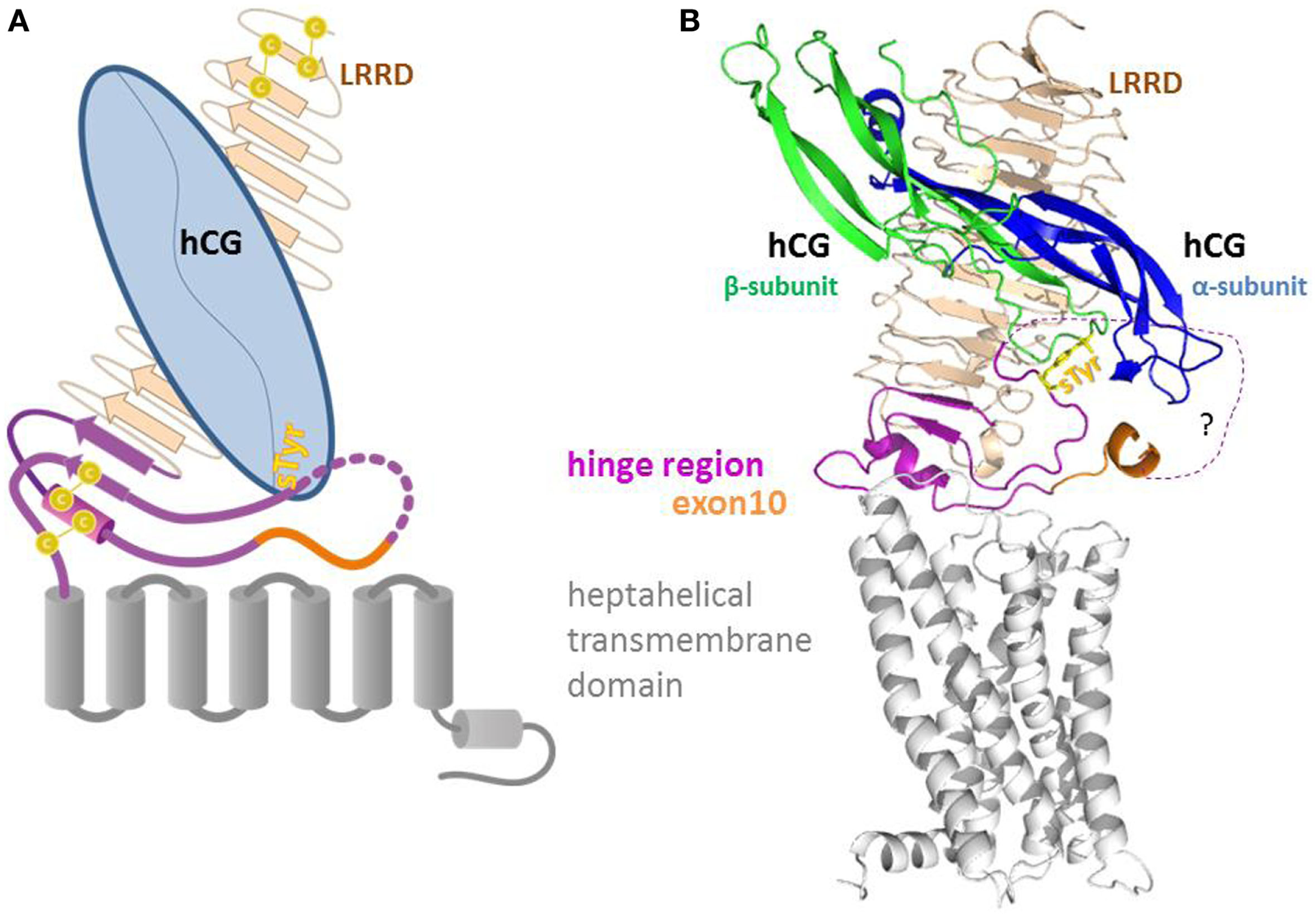
Human chorionic gonadotropin is not a peptide in the sense that the rest of this catalogue uses the word. It is a heterodimeric glycoprotein hormone of roughly 36.7 kilodaltons, built from two non-covalently associated subunits, and about a third of its mass is carbohydrate rather than protein. That composition is not incidental packaging: the sugar chains determine how long the hormone survives in circulation and how it behaves at its receptor.
The alpha subunit is 92 amino acids and is shared identically with luteinising hormone, follicle-stimulating hormone and thyroid-stimulating hormone. All the specificity lives in the beta subunit, 145 amino acids, whose C-terminal extension is what distinguishes hCG from luteinising hormone. That extension carries additional O-linked glycosylation and is the main reason hCG persists far longer in circulation than LH does.
Both hormones act at the same receptor, the luteinising hormone and choriogonadotropin receptor, LHCGR. It is a class A G protein-coupled receptor signalling principally through Gs and cyclic AMP, and in the gonads that drives steroidogenesis: testosterone production by testicular Leydig cells, and in the ovary the events of follicular maturation and luteinisation. Because hCG and LH share the receptor but differ in duration, hCG behaves as a long-acting LH surrogate rather than as a distinct signal.
Heterodimer assembly
A 92 residue alpha subunit shared with LH, FSH and TSH associates non-covalently with a 145 residue beta subunit that carries all the specificity.
Glycosylation
Roughly a third of the molecule's mass is carbohydrate. N-linked and O-linked chains, including those on the beta subunit C-terminal extension, govern circulating half-life and receptor behaviour.
LHCGR binding
Binds the luteinising hormone and choriogonadotropin receptor, the same receptor LH uses, signalling principally through Gs and cyclic AMP.
Gonadal steroidogenesis
In testicular Leydig cells the signal drives testosterone production; in the ovary it drives follicular maturation and luteinisation.
Duration as the distinguishing property
The beta subunit C-terminal extension and its glycosylation give hCG a far longer circulating half-life than LH, so it acts as a sustained rather than pulsatile signal at a shared receptor.
hCG Research Findings
hCG has decades of established clinical use, so its literature is unusually solid for this catalogue. Each entry names the setting.
Leydig cell activity assessed by hCG stimulation testing
Single-dose hCG stimulation is an established diagnostic method for evaluating Leydig cell activity, including in prepubertal children, where the testosterone response distinguishes functioning testicular tissue from its absence.
ObservationalHormonal optimisation before sperm retrieval in non-obstructive azoospermia
Reviews of hormonal therapy before sperm retrieval examine gonadotropin regimens including hCG in men with non-obstructive azoospermia, an area where the evidence is actively contested rather than settled.
ObservationalRole as a triggering agent in assisted reproduction
Work on empty follicle syndrome examines the role of triggering agents in assisted reproduction, where hCG is used to substitute for the endogenous luteinising hormone surge because of its longer duration of action.
ObservationalLHCGR pharmacodynamics during follicular maturation
Recent work characterises the pharmacodynamic effects at the luteinising hormone and choriogonadotropin receptor during follicular maturation, which is the receptor-level basis for the hormone's reproductive applications.
MechanisticReceptor expression outside the classical gonadal targets
The LHCGR has been shown to be expressed and functional in human endometrium, indicating that receptor distribution is broader than the gonadal picture implies and that effects need not be confined to the gonads.
In vitroBiological activity depends on the glycoform, not only the sequence
Work on hCG glycoforms established that different sources produce molecules with the same amino acid sequence but different carbohydrate structures and different biological activity, which is central to how the hormone must be characterised and measured.
In vitroUnconventional actions of free glycoprotein hormone subunits
A comprehensive review of glycoprotein hormone subunits examined actions of free subunits distinct from those of the assembled heterodimer, which matters because preparations can contain free subunits alongside intact hormone.
MechanisticHCG Structure
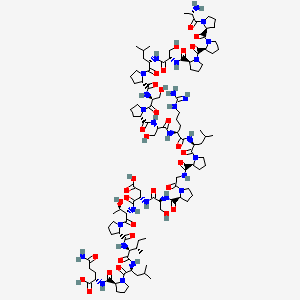
| Class | Heterodimeric glycoprotein hormone, not a synthetic peptide |
| Molecular Weight | ~36,700 g/mol |
| Carbohydrate Content | Roughly 30 percent of total mass |
| Alpha Subunit | 92 amino acids, identical to that of LH, FSH and TSH |
| Beta Subunit | 145 amino acids, carrying all specificity and a glycosylated C-terminal extension |
| Subunit Association | Non-covalent. The subunits are not held together by a disulfide bond between them |
| CAS Number | 9002-61-3 |
| Receptor Target | Luteinising hormone and choriogonadotropin receptor (LHCGR) |
| Potency Unit | International Units of biological activity, not milligrams of mass |
| Appearance | White lyophilised powder |
| Sequence | Not applicable for glycoprotein |
| Molecular Formula | Glycoprotein |
| PubChem CID | 16132329 |
Role of HCG in Reproductive Biology
Research has extensively documented the role of HCG in reproductive biology, particularly in its capacity to support the corpus luteum during early pregnancy. HCG is secreted by the syncytiotrophoblast cells of the placenta and is crucial for the maintenance of progesterone production by the corpus luteum, which is necessary for a successful pregnancy (Cole, L.A., 'Biological functions of hCG and hCG-related molecules', Reproductive Biology and Endocrinology, vol. 8, 2010).
In addition to its role in pregnancy, HCG is also studied for its effects on male fertility. Studies in animal models have demonstrated that HCG can stimulate the production of testosterone by the Leydig cells in the testes, thereby influencing spermatogenesis (Veldhuis, J.D., 'Regulation of pulsatile testosterone secretion: physiological and clinical implications', Endocrine Reviews, vol. 11, no. 1, 1990).
HCG and Endocrine Research
HCG is a valuable tool in endocrine research due to its ability to interact with the luteinizing hormone/chorionic gonadotropin receptor (LHCGR). This interaction is crucial for stimulating steroidogenesis in gonadal tissues, making it a subject of interest for studies on hormonal regulation and endocrine disorders (Ascoli, M., 'The gonadotropin receptors', Endocrine Reviews, vol. 23, no. 2, 2002).
Research has also explored the potential of HCG in modulating the immune response during pregnancy. Studies suggest that HCG may play a role in immune tolerance, which is essential for preventing the maternal immune system from rejecting the fetal allograft (Arck, P.C., 'Stress and immune mediators in miscarriage', Human Reproduction Update, vol. 7, no. 4, 2001).
HCG in Cancer Research
HCG has been studied in the context of cancer research, particularly for its role in trophoblastic diseases and certain types of testicular cancer. Elevated levels of HCG are often used as a biomarker for these conditions, aiding in diagnosis and monitoring of treatment efficacy (Stenman, U.H., 'Tumor markers in clinical practice: a review focusing on common solid cancers', Medical Principles and Practice, vol. 12, 2003).
Research has also investigated the potential of HCG in influencing tumor growth and progression. Some studies suggest that HCG may have an inhibitory effect on certain cancer cell lines, although the mechanisms remain to be fully elucidated (Cole, L.A., 'hCG, the wonder of today's science', Reproductive Biology and Endocrinology, vol. 8, 2010).
HCG in Metabolic Studies
Beyond its reproductive functions, HCG has been explored in metabolic research. Studies have investigated its influence on fat metabolism, particularly in the context of weight regulation and obesity research. However, findings are mixed, and further research is needed to clarify its role and efficacy in metabolic pathways (Greenway, F.L., 'Physiological adaptations to weight loss and factors favouring weight regain', International Journal of Obesity, vol. 39, 2015).
Animal studies have also examined the effects of HCG on energy expenditure and appetite regulation, providing insights into its potential mechanisms of action in metabolic processes (Roth, J., 'The Obesity Epidemic: A Challenge for the Future', Frontiers in Endocrinology, vol. 1, 2010).
Why This Product Is Labelled in IU and Not in Milligrams
Every other vial in this catalogue is sold by mass, because a synthetic peptide is one molecule and a milligram of it is a defined quantity. hCG is sold in International Units, and the difference is not a labelling convention. It reflects what the material actually is.
hCG is a glycoprotein, and its carbohydrate chains vary. Preparations from different sources contain mixtures of glycoforms: identical amino acid sequence, different sugar structures, and different biological activity per unit mass. A milligram of one preparation and a milligram of another are not equivalent, so mass is the wrong unit for potency.
An International Unit is defined by biological activity measured against a reference standard, which is the only unit that means the same thing across preparations. That is why a certificate for this product should report a bioassay or an activity determination, not only a purity percentage, and why a certificate quoting only milligrams is describing the wrong property.
Purity Means Something Different for a Glycoprotein
For a synthetic peptide, high performance liquid chromatography purity answers a clean question: what proportion of the material is the single intended molecule. For a glycoprotein, the intended material is itself a distribution of glycoforms, so a single sharp peak is not necessarily the goal and a broadened one is not necessarily a defect.
The realistic impurities are also different in kind. Free alpha and free beta subunits can be present alongside the assembled heterodimer, and the alpha subunit is identical to that of three other hormones. Since the subunits are held together non-covalently rather than by a disulfide bridge between them, dissociation is a genuine failure mode rather than a theoretical one.
Reviews of glycoprotein hormone subunits describe free subunits as having actions of their own, distinct from those of the intact dimer. A preparation containing appreciable free subunit is therefore not simply a diluted one.
The Same Receptor as Luteinising Hormone, With a Longer Reach
hCG and luteinising hormone bind the same receptor. What separates them is duration: the beta subunit C-terminal extension and its glycosylation give hCG a substantially longer circulating half-life, so it produces a sustained signal where the endogenous hormone is pulsatile.
That property is exactly why it is used to substitute for the endogenous luteinising hormone surge in assisted reproduction, and why hCG stimulation testing works as a diagnostic probe of Leydig cell function: a single administration produces a measurable, prolonged steroidogenic response.
It also means the pharmacology cannot be inferred from LH physiology alone. A sustained agonist at a receptor normally exposed to pulses is a different intervention from more of the natural signal, which is the same distinction that separates the DAC and no-DAC GHRH analogues elsewhere in this catalogue.
Handling and Regulatory Status
hCG is a genuine medicine with approved indications in reproductive endocrinology, unlike most compounds in this catalogue. It is also a large, non-covalently assembled glycoprotein and is correspondingly more fragile than a short synthetic peptide: dissociation of the subunits and loss of activity are realistic outcomes of poor handling, and neither necessarily shows up as a change in mass.
Because potency is a biological property rather than a mass, degradation can occur without the material looking different by simple analysis. Activity determination is what detects it.
Material supplied for research is for in-vitro laboratory use only. Nothing summarised here is guidance for use in humans or animals, and its approved clinical uses are not the context in which research material is supplied.
hCG Research FAQ
HCG Summary
HCG is a versatile glycoprotein hormone extensively utilized in reproductive and endocrine research. Its roles in supporting pregnancy, influencing fertility, and interacting with endocrine pathways make it a valuable tool in scientific studies. While research has explored its potential in various fields, including cancer and metabolic studies, HCG remains a subject of ongoing investigation. Volta Peptides provides HCG for research purposes only, and it is not intended for human consumption.
Article Author
Marcus Hopkin, PhD, is Director of Research and Development at Volta Peptides. He has more than 12 years of analytical chemistry experience, including peptide synthesis, characterization, purity testing and stability assessment.
Scientific Journal Author
Dr. Laurence A. Cole is a renowned researcher in the field of reproductive biology, known for his work on the biological functions of HCG and its related molecules.
Scientific References
Primary literature and public trial registries only. No supplier or retailer pages are cited.
- 1Human chorionic gonadotropin: Different glycoforms and biological activity depending on its source of productionFournier T · Annales d'Endocrinologie · 2016
- 2Unconventional Actions of Glycoprotein Hormone Subunits: A Comprehensive ReviewQuerat B · Frontiers in Endocrinology · 2021
- 3LHCGR pharmacodynamic effects during follicular maturationPerri C, Casarini L, et al. · Frontiers in Endocrinology · 2026
- 4Evaluation of Leydig cell activity using single-dose hCG stimulation in prepubertal childrenManohar RO, Nagarajappa VH, et al. · Annals of Pediatric Endocrinology and Metabolism · 2026
- 5Expression and function of the luteinizing hormone choriogonadotropin receptor in human endometriumMann ON, Kong CS, et al. · Scientific Reports · 2022
- 6Hormonal Therapy Before Sperm Retrieval in Men With Non-Obstructive AzoospermiaEsteves SC · Reproductive Medicine and Biology · 2026
- 7Empty Follicle Syndrome: Current Therapeutic Approaches and the Role of Triggering Agents in Assisted ReproductionStavros S, Zikopoulos A, et al. · Medical Sciences (Basel) · 2026
Referenced Citations
- 1Cole, L.A., Biological functions of hCG and hCG-related molecules, Reproductive Biology and Endocrinology, vol. 8, 2010.
- 2Veldhuis, J.D., Regulation of pulsatile testosterone secretion: physiological and clinical implications, Endocrine Reviews, vol. 11, no. 1, 1990.
- 3Ascoli, M., The gonadotropin receptors, Endocrine Reviews, vol. 23, no. 2, 2002.
- 4Arck, P.C., Stress and immune mediators in miscarriage, Human Reproduction Update, vol. 7, no. 4, 2001.
- 5Stenman, U.H., Tumor markers in clinical practice: a review focusing on common solid cancers, Medical Principles and Practice, vol. 12, 2003.
- 6Greenway, F.L., Physiological adaptations to weight loss and factors favouring weight regain, International Journal of Obesity, vol. 39, 2015.
- 7Roth, J., The Obesity Epidemic: A Challenge for the Future, Frontiers in Endocrinology, vol. 1, 2010.
Disclaimer
All articles and product information provided on this website are for informational and educational purposes only. The products offered on this website are furnished for in-vitro studies only. These products are not medicines or drugs and have not been approved by the FDA to prevent, treat or cure any medical condition, ailment or disease.
HCG 5,000iu: frequently asked questions
Answered from the product record and the certificate file. Volta does not answer questions about administration, dosing or protocols.
What is supplied in a 5,000 iu vial of HCG?
A sealed single-use vial containing 5,000 iu of HCG as a lyophilized powder. Soluble in bacteriostatic water, sterile saline. No diluent, syringe or other supply is included.
Is HCG supplied for human use?
No. For in-vitro laboratory research by qualified professionals only. Not for human or animal administration. Not a drug, food, cosmetic or dietary supplement. Not intended to diagnose, treat, cure, mitigate or prevent any disease. Volta does not provide dosing, administration or protocol guidance for any material listed.
What purity is this HCG released to?
>99% by HPLC. That figure is a release specification, a threshold Volta sets for every batch, and it is not the same kind of statement as a purity measured by a named laboratory for a named lot.
Is there a certificate of analysis for this HCG vial?
A batch-specific Certificate of Analysis is available for this product on request. It is not published on the site yet: the batch history on the quality page lists the certificates already published, and this vial is covered by the release specification until its own is added there.
How is HCG identified?
CAS 9002-61-3, molecular weight ~36,700 g/mol. Those identifiers are what an incoming-goods check compares a certificate against, and they are stated here so the comparison can be made before ordering.
How should HCG be stored before reconstitution?
Store at 2-8°C before reconstitution. After reconstitution, store at 2-8°C and use within 30 days.
Where does this ship from?
British Columbia, Canada. Canadian orders are domestic, so they clear no customs and pay no import duty. International orders ship from the same facility.
Related Research News
Explore Research
Peptide Tools
HCG research
Human chorionic gonadotropin is a two-subunit glycoprotein hormone that binds the LH/CG receptor, and is an approved medicine for several reproductive indications. Everything Volta publishes on this compound, across every vial size, is collected on HCG research hub.
Research on HCG
Handling and documentation
HCG is one of the compounds in Volta's wellness research peptides catalogue, which collects the rest of the range studied in this area alongside the comparisons and guides that cover it.
More from the research catalogue
Every compound below has its own specification, batch number and certificate page, whether or not a vial is in stock today. Supplied for laboratory research use only.