


Tesamorelin 10mg (Egrifta)
For in-vitro laboratory research only. Not for human or animal administration.
Batch #: VPTS10100 · tested as lot VPTS10100 on the certificate
Lab Verified
Certificate of Analysis
Latest COA reported September 27, 2026.
Lot VPTS10100, the batch number on this page.
Batch Purity
99.5%
Mass / Quantity
13.27 mg net peptide
Research Use Only
For in-vitro laboratory research by qualified professionals only. Not for human or animal administration. Not a drug, food, cosmetic or dietary supplement. Not intended to diagnose, treat, cure, mitigate or prevent any disease. Batch-specific Certificates of Analysis available for all products.
Tesamorelin 10mg: overview
What the vial contains and what the material is, stated as specifications rather than as outcomes.
Tesamorelin supplied as a lyophilized powder in a sealed single-use vial containing 10 mg of material. Tesamorelin is a synthetic 44-amino-acid analogue of growth-hormone-releasing hormone carrying a trans-3-hexenoyl group at the N-terminus, CAS 218949-48-5. Purity greater than 99% by HPLC. Soluble in bacteriostatic water. Supplied for in-vitro laboratory research only. Not a drug, food or supplement. Not for human or veterinary use.
Volta does not provide dosing, administration or protocol guidance for any material listed.
Tesamorelin 10mg specifications
Every field the product record holds. A field with no value is omitted rather than printed as a dash.
- Fill
- 10mg
- Form
- Lyophilized powder
- CAS number
- 218949-48-5
- Molecular formula
- C₂₂₃H₃₇₀N₇₂O₆₉S
- Molecular weight
- 5,195.9 g/mol
- Solubility
- Soluble in bacteriostatic water
- Shelf life
- 24 months from date of manufacture
Tesamorelin analytical verification and batch documentation
What the purity figure on this page is, who measured what, and which of the two a reader is looking at.
Specification. Every batch is released to >99% purity by HPLC. That is a threshold Volta sets, and it is a promise rather than a measurement.
Measurement. SideChain Analytics reported 99.5% by HPLC-MS/MS for lot VPTS10100 on September 27, 2026, and confirmed identity at an observed mass of 13.27 mg net peptide. That report covers this vial.
The certificate can be checked against the laboratory rather than against us: verify on SideChain Analytics.
Checking a certificate. The batch number printed beside the price is derived from the compound code and the vial strength; the lot number on a certificate is transcribed from the document. They are produced independently, so comparing them is a real check. How to read one is set out in the quality and testing methodology page.
For in-vitro laboratory research by qualified professionals only. Not for human or animal administration. Not a drug, food, cosmetic or dietary supplement. Not intended to diagnose, treat, cure, mitigate or prevent any disease.
In 2010 tesamorelin became the newest peptide to win FDA approval, in its case for HIV-associated lipodystrophy, where it reduces adiposity by nearly 20%. Its reported effects extend past that indication to lower triglyceride levels, total cholesterol and non-HDL-C. It is under investigation for peripheral nerve regeneration, where manipulating growth hormone may increase both the rate and the extent of healing. A large randomized, double-blind, placebo-controlled study suggests it enhances cognition in patients with early-stage dementia by raising GABA levels and lowering myo-inositol in the brain. This 10mg vial provides extended material for comprehensive GH-axis modulation research.
- Released to a >99% purity specification by HPLC
- Batch tested by SideChain Analytics, certificate published
- Lyophilized powder, 10mg per vial
- Soluble in bacteriostatic water
- For laboratory research use only
Frequently Bought Together

Tesamorelin 10mg
10mg
$74 USD
Bundle & Save
$123 USD
Save $6.15 USD
$159 USD
Save $15.90 USD
$187 USD
Save $28.05 USD
$222 USD
Save $44.40 USD
Click any product above to toggle selection
Related research materials


Tesamorelin 10mg: what is in the vial
The arithmetic specific to this 10mg vial, and what a milligram of Tesamorelin costs in each strength the catalogue carries. Concentrations are stated, not recommended.
Vial contents
10 mg
Lyophilised powder, reconstituted by the buyer
Cost of material
$7.40 / mg USD
CA$10.50 / mg in Canadian dollars
Concentration at each diluent volume
10 mg of dry material reaches these concentrations in the volumes below. A U-100 syringe marking is 0.01 ml by definition, so the last column is a unit conversion at each concentration rather than a quantity to use.
| Diluent added | Concentration | In 0.1 ml | Per U-100 unit |
|---|---|---|---|
| 1 ml | 10 mg/ml | 1 mg | 100 mcg |
| 2 ml | 5 mg/ml | 500 mcg | 50 mcg |
| 3 ml | 3.33 mg/ml | 333.3 mcg | 33.3 mcg |
| 5 ml | 2 mg/ml | 200 mcg | 20 mcg |
For a volume this table does not list, the reconstitution calculator takes any vial size and diluent volume.
Tesamorelin purity and identity: how the figure is measured
What >99% (HPLC) means, the masses an identity check has to land on, and the entries that make a certificate of analysis checkable rather than decorative.
Stated purity
>99% (HPLC)
Area percent of the main peak by reversed-phase HPLC
Average mass
5,195.9 g/mol
The figure an identity check has to land on
Identity by mass: the ions to expect
An electrospray source protonates the molecule rather than weighing it neutral, so a spectrum shows a series of charge states rather than the molecular weight itself. These are the m/z values 5,195.9 g/mol produces, and they are what a mass spectrum on a certificate for Tesamorelin has to match.
| Ion | Charge | Expected m/z |
|---|---|---|
| [M+H]+ | 1+ | 5,196.91 |
| [M+2H]2+ | 2+ | 2,598.96 |
| [M+3H]3+ | 3+ | 1,732.97 |
A peptide this size is normally reported at its doubly and triply charged states, and the singly charged ion may not appear at usable intensity at all. A spectrum showing only one of these is not a failed identity check.
What a certificate for Tesamorelin should carry
A purity percentage on its own is not checkable. These are the entries that make one verifiable, and their absence is the most common weakness in a research-peptide certificate.
The chromatogram, not only the number
A stated area percent with no trace behind it cannot be read for the shape of the main peak or for what eluted beside it. The HPLC interpreter walks through what a trace shows.
Net peptide content, separately from gross mass
A lyophilised peptide is a salt, usually of trifluoroacetic or acetic acid, plus residual water. The vial's stated milligrams are gross; net peptide content is the fraction of that mass which is the molecule. The two differ by ten to twenty percent routinely, and only one of them is what the price is per milligram of. The net peptide content calculator converts between them.
The counterion, named
Which salt form the powder is in changes the net content and the pH the powder dissolves at. A certificate that never names it leaves both unknowable.
Water content, by a stated method
Loss on drying and Karl Fischer titration give different numbers, and a water figure with no method attached cannot be compared with anyone else's.
A laboratory and a report identifier
Without both, nothing on the document can be traced back to the laboratory that issued it. The red flag checker lists the rest.
Published certificate for this batch
- Laboratory
- SideChain Analytics
- Report ID
- COA-2026-SC-02808
- Reported
- September 27, 2026
- Purity
- 99.5%
- Method
- HPLC-MS/MS
- Lot
- VPTS10100
Read the reported figures against the expected masses above. Full pages are in the certificate library.
Tesamorelin storage and stability
Handling as the product record states it, followed by the degradation chemistry this particular sequence is and is not exposed to.
Handling
Store lyophilized peptide at -20°C protected from light. Reconstitute in bacteriostatic water. Once reconstituted, store at 2-8°C and use within 30 days. Lyophilized powder is stable at room temperature for shipping and short-term storage.
What degrades this compound
Each of these follows from the molecule itself rather than from general peptide handling.
Interfacial and surface loss
5,195.9 g/mol, above the 3,500 g/mol range where this dominatesA peptide this size unfolds at boundaries. It adsorbs to glass and to polypropylene, and it denatures at the air-water interface that shaking creates, which is why a vial is swirled rather than vortexed and why the diluent is run down the vial wall instead of squirted onto the powder. The failure is quiet: interfacial loss removes material without changing what is left behind, so the solution still assays clean at a concentration lower than the arithmetic says.
Tesamorelin compared with Sermorelin and AOD-9604
Pharmacological class, half-life, evidence grade, competition status and cost per milligram, side by side.
| Compound | Class | Half-life | Evidence | WADA | Cheapest per mg |
|---|---|---|---|---|---|
| Tesamorelinthis page | Growth Hormone Secretagogue | ~26–38 minutes | AFDA Approved | Prohibited | $7.4010mg vial |
| Sermorelin | Growth Hormone Secretagogue | ~10–20 minutes | CPhase I–II Clinical Trials | Prohibited | $6.9010mg vial |
| AOD-9604 | Metabolic / Fat Loss | ~30 minutes | CPhase I–II Clinical Trials | Prohibited | $7.2010mg vial, out of stock |
| Tirzepatide | Metabolic / Dual GIP-GLP-1 Agonist | ~5 days (116 hours) | AFDA Approved | Not prohibited | $2.9730mg vial |
| MOTS-c | Metabolic / Mitochondrial | Several hours; tissue effects may persist longer | DPreclinical | Not listed | $3.2010mg vial |
Evidence grades and half-lives are as recorded in the compound database, which cites its own sources on each compound page. Per-milligram prices are the cheapest strength each compound is currently listed at, in US dollars, and an out-of-stock note means that figure is not purchasable today. Cross-trial comparisons of efficacy are not comparisons: no head-to-head trial exists for most of these pairs.
Tesamorelin in Canada
Price in Canadian dollars, where the parcel ships from, and how long it takes.
Price in CAD
CA$105
The figure charged, not a converted estimate
Ships from
British Columbia
A domestic parcel, so no import clearance step
Transit
2 to 5 business days
After 1 to 2 business days of handling
Free standard shipping
Over CA$250
A bar set for this market, not converted from the US one
Tesamorelin 10mg ships from British Columbia to Canadian addresses, so the parcel never crosses a border. That removes the failure a Canadian buyer of research peptides is usually weighing: an inbound international shipment can be held for import clearance or seized, and a domestic one has no clearance step to be held at.
Shipping is quoted live against the delivery address at checkout rather than estimated here, and both the standard and express tiers show their price and transit window before a payment method is chosen. The figure the page shows is the figure the rail charges: all three settlement rails price shipping through the same functions the quote does.
The Canadian figure above is not a loose conversion. Each product's US dollar base is chosen so that the live conversion lands on the Canadian shelf price set for this market, and the result is pushed up to a whole dollar rather than left carrying cents, so one figure serves the page, the feed and every payment rail. See the shipping policy for carriers and cut-off times, and the legal position on research peptides in Canada for the regulatory picture.
What Is Tesamorelin?
Tesamorelin is a growth hormone releasing hormone (GHRH) analogue: standard GHRH carrying an additional trans-3-hexanoic acid group. In 2010 it became the newest peptide to win FDA approval, in its case for use in HIV-associated lipodystrophy. Beyond that indication it has been investigated for its ability to improve peripheral nerve regeneration and as a potential intervention in mild cognitive impairment (MCI), the state that precedes dementia.
Tesamorelin Mechanism of Action
Tesamorelin is a stabilised analogue of human growth hormone releasing hormone, built on the full 44 residue sequence rather than the 29 residue fragment used by sermorelin, and carrying a trans-3-hexenoyl group attached at the N-terminus. That acyl group is the defining modification: it protects the vulnerable N-terminal region from dipeptidyl peptidase-4, which cleaves native GHRH near position 2 and destroys the determinant required for receptor activation.
At the receptor it is a full agonist at the GHRH receptor on pituitary somatotrophs, signalling through Gs and cyclic AMP to trigger both release and synthesis of growth hormone. Because it works through the physiological pathway, secretion remains pulsatile and remains subject to somatostatin tone and to negative feedback from circulating insulin-like growth factor 1, which is the pharmacological distinction from administering growth hormone itself.
The reason it became an approved medicine rather than a research compound is a specific downstream observation. Growth hormone has a preferential lipolytic effect on visceral adipose tissue, and raising endogenous growth hormone through the GHRH receptor reduced visceral fat in people with HIV-associated lipodystrophy while leaving subcutaneous fat comparatively less affected. That selectivity between fat compartments, rather than weight reduction as such, is what the approved indication rests on.
N-terminal protection
A trans-3-hexenoyl group at the N-terminus blocks dipeptidyl peptidase-4 cleavage of the region required for receptor activation, which is what native GHRH lacks.
Receptor activation
Full agonism at the GHRH receptor on pituitary somatotrophs, signalling through Gs and cyclic AMP.
Growth hormone release and synthesis
Cyclic AMP both triggers release of the stored pool and stimulates synthesis, so the effect is not limited to depleting existing stores.
Feedback preserved
Somatostatin tone and IGF-1 negative feedback remain intact, keeping secretion pulsatile and self-limiting in a way exogenous growth hormone is not.
Preferential visceral lipolysis
Growth hormone acts preferentially on visceral adipose tissue, which is the basis for the compartment-selective fat reduction reported in the clinical programme.
Tesamorelin Research Findings
Tesamorelin has an approved indication and a correspondingly substantial clinical literature. Each entry names the population studied.
Reduction of visceral adipose tissue in HIV-associated lipodystrophy
The clinical programme established reduction of excess visceral adipose tissue in people with HIV and lipodystrophy, which is the basis of its approved indication. The effect is compartment-selective rather than general weight reduction.
Phase 3 trialVisceral fat reduction associated with improved metabolic profile
Analysis of the trial population reported that reduction in visceral adiposity was associated with an improved metabolic profile, including lipid measures, linking the anatomical change to a metabolic one rather than treating it as cosmetic.
Phase 3 trialPredictors of treatment response identified
A prospective analysis identified baseline characteristics predicting response to treatment, which is a more demanding analysis than reporting mean effects because it addresses who responds rather than whether a group mean moves.
ObservationalSystematic review of efficacy and safety in people living with HIV
A systematic review of tesamorelin in people living with HIV with lipodystrophy collected efficacy and safety findings across the available trials, providing a synthesis rather than a single-study view.
ObservationalBody composition and hepatic fat outcomes assessed beyond the original indication
Later work examined body composition, hepatic fat, metabolic and safety outcomes for the GHRH analogue, extending assessment past the visceral adipose endpoint on which approval was based.
ObservationalRegulatory and pharmacological profile reviewed at approval
A drug review published at the time of approval documented the pharmacology, clinical efficacy and tolerability profile supporting its use in HIV-associated lipodystrophy.
ObservationalTesamorelin Structure and Identifiers
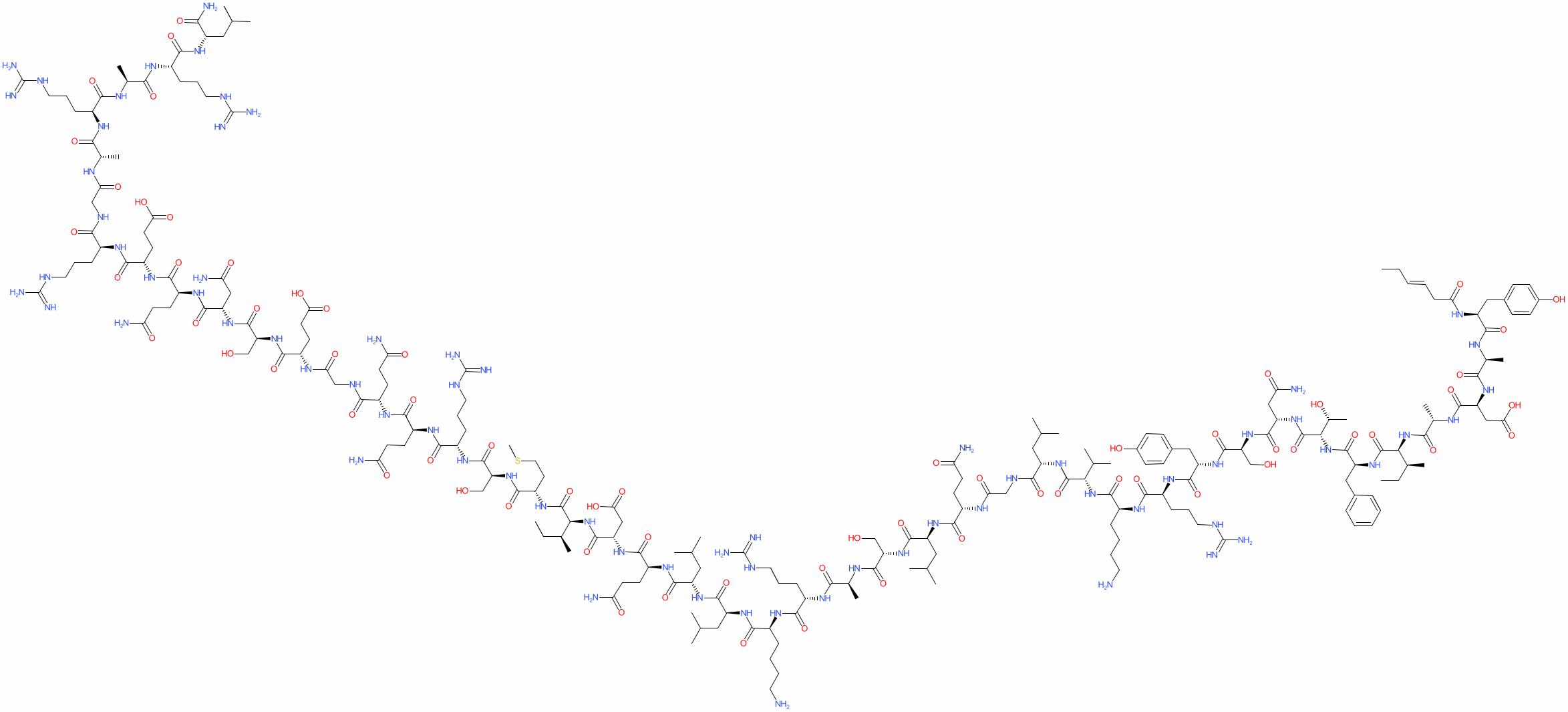
| Sequence | trans-3-hexenoyl-modified human GHRH(1-44) amide |
| Molecular Formula | C223H370N72O69S |
| Molecular Weight | 5195.908 g/mol |
| CAS Number | 901758-09-6 |
| Length | 44 amino acids plus an N-terminal acyl group |
| Key Modification | trans-3-hexenoyl group at the N-terminus, blocking DPP-4 cleavage |
| Receptor Target | GHRH receptor on pituitary somatotrophs |
| Also Known As | TH9507, tesamorelin acetate |
| Regulatory Status | Approved for HIV-associated lipodystrophy in the United States |
| Appearance | White lyophilised powder |
| PubChem CID | 44147413 |
HIV-Associated Lipodystrophy
Treating HIV-associated lipodystrophy is the primary use, and the FDA approval granted in 2010 was specific to that condition. The peptide has been found to reduce adiposity by close to 20%[1]. Research puts it at roughly four times more effective at reducing adiposity than all other available therapies combined[2].
Lipids and Cardiovascular Risk
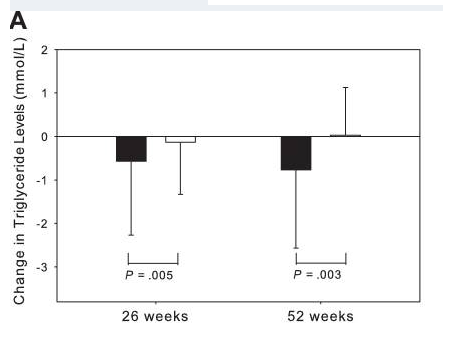
People with HIV carry an increased risk of developing cardiovascular disease. Tesamorelin has been shown to reduce triglyceride levels, total cholesterol and non-HDL-C. A 15% reduction in visceral adipose tissue achieved with tesamorelin correlates with a 50 mg fall in triglyceride levels[3], [4].
GH Deficiency Under HAART
Recent evidence associates HAART with growth hormone deficiency: roughly one third of HIV patients taking HAART are GH deficient[5]. Raising GH levels with tesamorelin is both safer and more effective than administering exogenous GH.
Peripheral Nerve Injury
Peripheral nerve damage can follow injury, diabetes or surgical intervention. Research suggests that therapies built on manipulating growth hormone may improve the outcome of such injuries[6]. Tesamorelin is currently the leading candidate among them, partly because the FDA approval is already in hand.
Mild Cognitive Impairment
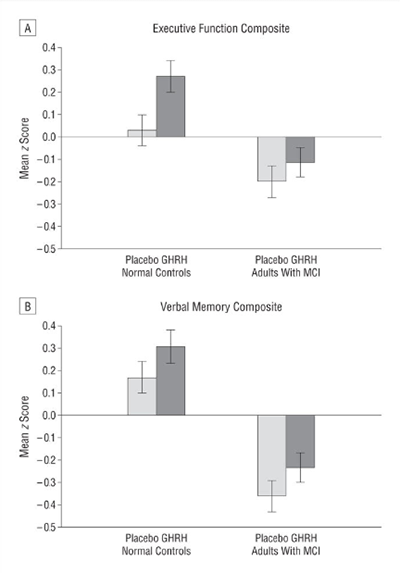
A large randomized, double-blind, placebo-controlled study at the University of Washington School of Medicine suggests that tesamorelin and other GHRH analogues may act on dementia by raising GABA levels in the brain and lowering myo-inositol levels[7].
Why the Whole 44 Residues, Not the 29 Residue Fragment
Sermorelin demonstrated that the first 29 residues of GHRH carry essentially full receptor activity, so a shorter peptide is sufficient for agonism. Tesamorelin nonetheless uses the full 44 residue sequence.
The choice reflects a different design goal. Sermorelin was developed principally as a short-acting diagnostic and paediatric therapeutic, where rapid clearance is acceptable or even useful. Tesamorelin was developed for sustained daily use in a chronic metabolic indication, where stability and a well-characterised full-length molecule mattered more than synthetic economy.
The functional modification is at the N-terminus in both cases, because that is where the enzymatic vulnerability lies. Sermorelin leaves it unprotected. Tesamorelin caps it with an acyl group, and the modified GRF and CJC-1295 constructs protect it with amino acid substitutions instead.
Compartment Selectivity Is the Whole Clinical Argument
Visceral adipose tissue and subcutaneous adipose tissue are metabolically different. Visceral fat drains to the portal circulation and is more strongly associated with metabolic and cardiovascular risk, which is why a treatment that reduces it preferentially is of clinical interest independently of total weight.
Growth hormone is preferentially lipolytic at visceral depots, and raising endogenous growth hormone through the GHRH receptor exploits that selectivity. The approved indication rests on this compartment-specific effect rather than on weight reduction, which is a materially different claim from the one made for incretin agents.
Reading across from tesamorelin to weight-loss compounds, or the reverse, therefore misrepresents both. They act on different tissue compartments through unrelated mechanisms.
An Approved Medicine With a Narrow Indication
Tesamorelin is approved in the United States for reduction of excess visceral abdominal fat in people with HIV and lipodystrophy. That indication is narrow and specific, and the trial populations that supported it were correspondingly specific.
Approval for one indication in one population is not evidence for use in others. Later work has examined hepatic fat and broader body composition endpoints, but these extend the evidence base rather than extending the approval.
Material supplied for laboratory work is for in-vitro research use only, is not a medicine, and nothing summarised here is guidance for use in humans or animals.
Handling and Analytical Considerations
At 44 residues plus an acyl modification, tesamorelin is a large peptide by the standards of this catalogue, and its size makes full sequence confirmation more demanding than mass confirmation alone. It contains a methionine, so oxidised variants adding 16 daltons are a plausible related substance.
The N-terminal hexenoyl group is the defining feature of the molecule. A des-acyl species is unmodified GHRH(1-44), which is a different and far less stable molecule, and the mass difference makes the two distinguishable on a certificate that reports it.
Tesamorelin Research FAQ
Tesamorelin Summary
Tesamorelin is the active ingredient of Egrifta, a finished drug product approved by the FDA for HIV-associated lipodystrophy. That approval covers one manufacturer's finished product, its formulation and its labelled indication. It does not extend to research material supplied by anyone else, and it is not a statement about the material listed on this page. Tesamorelin supplied by Volta Peptides is for in-vitro laboratory research only and is not for human or animal administration.
Article Author
Marcus Hopkin, PhD, is Director of Research and Development at Volta Peptides. He has more than 12 years of analytical chemistry experience, including peptide synthesis, characterization, purity testing and stability assessment.
Scientific References
Primary literature and public trial registries only. No supplier or retailer pages are cited.
- 1Tesamorelin: a review of its use in the management of HIV-associated lipodystrophyDhillon S · Drugs · 2011
- 2Reduction in visceral adiposity is associated with an improved metabolic profile in HIV-infected patients receiving tesamorelinStanley TL, Falutz J, Marsolais C, et al. · Clinical Infectious Diseases · 2012
- 3Predictors of Treatment Response to Tesamorelin, a Growth Hormone-Releasing Factor Analog, in HIV-Infected Patients with Excess Abdominal FatMangili A, Falutz J, Mamputu JC, et al. · PLoS One · 2015
- 4Efficacy and Safety of Tesamorelin in People Living With HIV With Lipodystrophy: A Systematic ReviewDitta AM, Naeem RM, et al. · Journal of the International Association of Providers of AIDS Care · 2026
- 5Body composition, hepatic fat, metabolic, and safety outcomes of tesamorelin, a GHRH analogueBadran AS, Helal A, et al. · Obesity Research and Clinical Practice · 2026
- 6The emerging landscape of performance-enhancing peptides modulating the GH-IGF1 axisDominikowski A, Rękoś Z, et al. · Frontiers in Endocrinology · 2026
Referenced Citations
- 1Clinical Review Report: Tesamorelin (Egrifta). Ottawa (ON): Canadian Agency for Drugs and Technologies in Health, 2016.
- 2A. Mangili et al., "Predictors of Treatment Response to Tesamorelin in HIV-Infected Patients with Excess Abdominal Fat," PloS One, vol. 10, no. 10, p. e0140358, 2015.
- 3J. Falutz et al., "Metabolic effects of a growth hormone-releasing factor in patients with HIV," N. Engl. J. Med., vol. 357, no. 23, pp. 2359-2370, Dec. 2007.
- 4T. L. Stanley et al., "Reduction in visceral adiposity is associated with an improved metabolic profile in HIV-infected patients receiving tesamorelin," Clin. Infect. Dis., vol. 54, no. 11, pp. 1642-1651, Jun. 2012.
- 5V. Rochira and G. Guaraldi, "Growth hormone deficiency and human immunodeficiency virus," Best Pract. Res. Clin. Endocrinol. Metab., vol. 31, no. 1, pp. 91-111, 2017.
- 6S. H. Tuffaha et al., "Therapeutic augmentation of the growth hormone axis to improve outcomes following peripheral nerve injury," Expert Opin. Ther. Targets, vol. 20, no. 10, pp. 1259-1265, Oct. 2016.
- 7S. D. Friedman et al., "Growth hormone-releasing hormone effects on brain GABA levels in mild cognitive impairment and healthy aging," JAMA Neurol., vol. 70, no. 7, pp. 883-890, Jul. 2013.
Disclaimer
All articles and product information provided on this website are for informational and educational purposes only. The products offered on this website are furnished for in-vitro studies only. These products are not medicines or drugs and have not been approved by the FDA to prevent, treat or cure any medical condition, ailment or disease.
Tesamorelin 10mg: frequently asked questions
Answered from the product record and the certificate file. Volta does not answer questions about administration, dosing or protocols.
What is supplied in a 10 mg vial of Tesamorelin?
A sealed single-use vial containing 10 mg of Tesamorelin as a lyophilized powder. Soluble in bacteriostatic water. No diluent, syringe or other supply is included.
Is Tesamorelin supplied for human use?
No. For in-vitro laboratory research by qualified professionals only. Not for human or animal administration. Not a drug, food, cosmetic or dietary supplement. Not intended to diagnose, treat, cure, mitigate or prevent any disease. Volta does not provide dosing, administration or protocol guidance for any material listed.
What purity is this Tesamorelin released to?
>99% by HPLC is the specification every batch is released to. That is a threshold Volta sets, not a measurement. SideChain Analytics separately reported 99.5% by HPLC-MS/MS for lot VPTS10100 on September 27, 2026, which covers this vial.
Is there a certificate of analysis for this Tesamorelin vial?
Yes. The certificate is shown on this page as page images and states the laboratory, the lot number, the method and the date. The laboratory publishes its own verification page for the report, so it can be checked against SideChain Analytics rather than against us.
How is Tesamorelin identified?
CAS 218949-48-5, molecular formula C₂₂₃H₃₇₀N₇₂O₆₉S, molecular weight 5,195.9 g/mol. Those identifiers are what an incoming-goods check compares a certificate against, and they are stated here so the comparison can be made before ordering.
How should Tesamorelin be stored before reconstitution?
Store lyophilized peptide at -20°C protected from light. Reconstitute in bacteriostatic water. Once reconstituted, store at 2-8°C and use within 30 days. Lyophilized powder is stable at room temperature for shipping and short-term storage.
Where does this ship from?
British Columbia, Canada. Canadian orders are domestic, so they clear no customs and pay no import duty. International orders ship from the same facility.
Related Research News
Tesamorelin vs Ipamorelin: Human Evidence, Doses, Safety
Tesamorelin holds FDA approval for HIV-associated lipodystrophy; ipamorelin has none. This page maps the published human dosing data for each and marks the gaps.
Tesamorelin vs CJC-1295: Evidence Gaps and Data
No head-to-head trial compares tesamorelin and CJC-1295. Existing evidence is analytical, not clinical, leaving efficacy claims unsupported.
Tesamorelin vs Ipamorelin: Evidence, Uses, Risks
This article compares tesamorelin and ipamorelin based on published human evidence, highlighting what is known about their uses and risks and where direct comparative data is missing.
Explore Research
Peptide Tools
Tesamorelin research
Tesamorelin is a trans-3-hexenoyl GHRH(1-44) analogue, and the only growth-hormone-releasing peptide in this catalogue with a completed phase 3 programme behind an approved indication. Everything Volta publishes on this compound, across every vial size, is collected on Tesamorelin research hub.
Research on Tesamorelin
Handling and documentation
Tesamorelin is one of the compounds in Volta's growth hormone research peptides catalogue, which collects the rest of the range studied in this area alongside the comparisons and guides that cover it.
More from the research catalogue
Every compound below has its own specification, batch number and certificate page, whether or not a vial is in stock today. Supplied for laboratory research use only.
Related research compounds
- Tesamorelin 5mg + Ipamorelin 5mg (10mg)restocking
- Tesamorelin 10mg + Ipamorelin 10mg (20mg)restocking
- ACE-031 1mgrestocking
- CJC-1295 DAC 5mgrestocking
- Eloralintide 10mgrestocking