


TB-500 5mg Peptide
For in-vitro laboratory research only. Not for human or animal administration.
Batch #: VPTB5100
Get Notified When Available
This product is currently out of stock. Enter your email and we'll notify you the moment it's back.
Lab Verified
Certificate of Analysis
TB-500 10mg COA, reported September 27, 2026.
Covers the 10mg vial of TB-500, not the 5mg.
Lot VPTB10100
Batch Purity (10mg vial)
99.5%
Mass / Quantity
11.19 mg net peptide
Research Use Only
For in-vitro laboratory research by qualified professionals only. Not for human or animal administration. Not a drug, food, cosmetic or dietary supplement. Not intended to diagnose, treat, cure, mitigate or prevent any disease. Batch-specific Certificates of Analysis available for all products.
TB-500 5mg: overview
What the vial contains and what the material is, stated as specifications rather than as outcomes.
TB-500 supplied as a lyophilized powder in a sealed single-use vial containing 5 mg of material. TB-500: molecular formula C₂₁₂H₃₅₀N₅₆O₇₈S, molecular weight 4,963.4 g/mol, CAS 77591-33-4. Released to a specification of >99% purity by HPLC. Soluble in bacteriostatic water. Supplied for in-vitro laboratory research only. Not a drug, food or supplement. Not for human or veterinary use.
Volta does not provide dosing, administration or protocol guidance for any material listed.
TB-500 5mg specifications
Every field the product record holds. A field with no value is omitted rather than printed as a dash.
- Fill
- 5mg
- Form
- Lyophilized powder
- CAS number
- 77591-33-4
- Molecular formula
- C₂₁₂H₃₅₀N₅₆O₇₈S
- Molecular weight
- 4,963.4 g/mol
- Solubility
- Soluble in bacteriostatic water
- Shelf life
- 24 months from date of manufacture
TB-500 analytical verification and batch documentation
What the purity figure on this page is, who measured what, and which of the two a reader is looking at.
Specification. Every batch is released to >99% purity by HPLC. That is a threshold Volta sets, and it is a promise rather than a measurement.
Measurement. SideChain Analytics reported 99.5% by HPLC-MS/MS for lot VPTB10100 on September 27, 2026, and confirmed identity at an observed mass of 11.19 mg net peptide. That report covers the 10 mg fill of this compound, not the 5 mg fill. Results on a certificate relate only to the sample the laboratory received.
The certificate can be checked against the laboratory rather than against us: verify on SideChain Analytics.
Checking a certificate. The batch number printed beside the price is derived from the compound code and the vial strength; the lot number on a certificate is transcribed from the document. They are produced independently, so comparing them is a real check. How to read one is set out in the quality and testing methodology page.
For in-vitro laboratory research by qualified professionals only. Not for human or animal administration. Not a drug, food, cosmetic or dietary supplement. Not intended to diagnose, treat, cure, mitigate or prevent any disease.
TB-500 is the active domain of Thymosin Beta-4 (TB-4), with a primary role as an actin binding protein. Its amino acid sequence is Ac-Ser-Asp-Lys-Pro-Asp-Met-Ala-Glu-Ile-Glu-Lys-Phe-Asp-Lys-Ser-Lys-Leu-Lys-Lys-Thr-Glu-Thr-Gln-Glu-Lys-Asn-Pro-Leu-Pro-Ser-Lys-Glu-Thr-Ile-Glu-Gln-Glu-Lys-Gln-Ala-Gly-Glu-Ser. Research demonstrates TB-500 encourages nervous system tissue repair and remodeling by activating oligodendrocytes, is a potent stimulator of VEGF expression for capillary growth, promotes hair growth through increased hair follicle numbers and grouping, enhances antibiotic effects synergistically when combined with ciprofloxacin, promotes cardiovascular recovery through collateral blood vessel growth and reduced fibrosis following heart attack, and enhances autophagy as a protective mechanism against neurodegenerative diseases. This 5mg vial provides material for tissue repair and regenerative biology research.
- Released to a >99% purity specification by HPLC
- Lyophilized powder, 5mg per vial
- Soluble in bacteriostatic water
- For laboratory research use only
Frequently Bought Together

TB-500 5mg
5mg
$39 USD
Bundle & Save
$74 USD
Save $3.70 USD
$120 USD
Save $12 USD
$189 USD
Save $28.35 USD
$263 USD
Save $52.60 USD
Click any product above to toggle selection
Related research materials


TB-500 5mg: what is in the vial
The arithmetic specific to this 5mg vial, and what a milligram of TB-500 costs in each strength the catalogue carries. Concentrations are stated, not recommended.
Vial contents
5 mg
Lyophilised powder, reconstituted by the buyer
Cost of material
$7.80 / mg USD
CA$11.20 / mg in Canadian dollars
Concentration at each diluent volume
5 mg of dry material reaches these concentrations in the volumes below. A U-100 syringe marking is 0.01 ml by definition, so the last column is a unit conversion at each concentration rather than a quantity to use.
| Diluent added | Concentration | In 0.1 ml | Per U-100 unit |
|---|---|---|---|
| 1 ml | 5 mg/ml | 500 mcg | 50 mcg |
| 2 ml | 2.5 mg/ml | 250 mcg | 25 mcg |
| 3 ml | 1.67 mg/ml | 166.7 mcg | 16.7 mcg |
| 5 ml | 1 mg/ml | 100 mcg | 10 mcg |
For a volume this table does not list, the reconstitution calculator takes any vial size and diluent volume.
TB-500 by the milligram
The same compound in every strength the catalogue carries, priced per milligram of material so the vials are comparable. Larger is not automatically cheaper.
| Vial | Price USD | Per mg USD | Per mg CAD |
|---|---|---|---|
| 5mgthis pageout of stock | $39 | $7.80 | CA$11.20 |
| 10mg | $69 | $6.90 | CA$9.80 |
The 10mg vial is the cheapest material in this range at $6.90 per mg.
Per-unit figures are quoted in US and Canadian dollars so the vials stay comparable against each other. The price you are charged is the one in the currency selected at the top of the page, and it is converted from the same US dollar base as the figures here.
TB-500 purity and identity: how the figure is measured
What >99% (HPLC) means, the masses an identity check has to land on, and the entries that make a certificate of analysis checkable rather than decorative.
Stated purity
>99% (HPLC)
Area percent of the main peak by reversed-phase HPLC
Average mass
4,963.4 g/mol
The figure an identity check has to land on
Identity by mass: the ions to expect
An electrospray source protonates the molecule rather than weighing it neutral, so a spectrum shows a series of charge states rather than the molecular weight itself. These are the m/z values 4,963.4 g/mol produces, and they are what a mass spectrum on a certificate for TB-500 has to match.
| Ion | Charge | Expected m/z |
|---|---|---|
| [M+H]+ | 1+ | 4,964.41 |
| [M+2H]2+ | 2+ | 2,482.71 |
| [M+3H]3+ | 3+ | 1,655.47 |
A peptide this size is normally reported at its doubly and triply charged states, and the singly charged ion may not appear at usable intensity at all. A spectrum showing only one of these is not a failed identity check.
What a certificate for TB-500 should carry
A purity percentage on its own is not checkable. These are the entries that make one verifiable, and their absence is the most common weakness in a research-peptide certificate.
The chromatogram, not only the number
A stated area percent with no trace behind it cannot be read for the shape of the main peak or for what eluted beside it. The HPLC interpreter walks through what a trace shows.
Net peptide content, separately from gross mass
A lyophilised peptide is a salt, usually of trifluoroacetic or acetic acid, plus residual water. The vial's stated milligrams are gross; net peptide content is the fraction of that mass which is the molecule. The two differ by ten to twenty percent routinely, and only one of them is what the price is per milligram of. The net peptide content calculator converts between them.
The counterion, named
Which salt form the powder is in changes the net content and the pH the powder dissolves at. A certificate that never names it leaves both unknowable.
Water content, by a stated method
Loss on drying and Karl Fischer titration give different numbers, and a water figure with no method attached cannot be compared with anyone else's.
A laboratory and a report identifier
Without both, nothing on the document can be traced back to the laboratory that issued it. The red flag checker lists the rest.
Batch certificates are published as page images in the certificate library. The source PDFs are never served: a certificate is the most forgeable document a supplier publishes, and an editable copy carrying an accredited laboratory's letterhead is worth more to a counterfeiter than to a customer.
TB-500 storage and stability
Handling as the product record states it, followed by the degradation chemistry this particular sequence is and is not exposed to.
Handling
Store lyophilized peptide at -20°C in a dry, dark environment. Reconstitute in bacteriostatic water. Once reconstituted, store at 2-8°C and use within 30 days. Lyophilized powder is stable at room temperature for shipping and short-term storage.
What degrades this compound
Each of these follows from the molecule itself rather than from general peptide handling.
Interfacial and surface loss
4,963.4 g/mol, above the 3,500 g/mol range where this dominatesA peptide this size unfolds at boundaries. It adsorbs to glass and to polypropylene, and it denatures at the air-water interface that shaking creates, which is why a vial is swirled rather than vortexed and why the diluent is run down the vial wall instead of squirted onto the powder. The failure is quiet: interfacial loss removes material without changing what is left behind, so the solution still assays clean at a concentration lower than the arithmetic says.
TB-500 compared with BPC-157 and GHK-Cu
Pharmacological class, half-life, evidence grade, competition status and cost per milligram, side by side.
| Compound | Class | Half-life | Evidence | WADA | Cheapest per mg |
|---|---|---|---|---|---|
| TB-500this page | Healing & Recovery | <2 hours plasma half-life; tissue effects persist 2–3 days | DPreclinical | Prohibited | $6.9010mg vial |
| BPC-157 | Healing & Recovery | ~15 min IV (animal data); oral activity persists 24+ hours | CPhase I–II Clinical Trials | Prohibited | $4.6010mg vial |
| GHK-Cu | Skin & Tissue Repair | ~30 minutes plasma | FNo Regulatory Activity | Not listed | $0.59100mg vial |
| SS-31 | Metabolic / Mitochondrial | ~4 hours | AFDA Approved | Not listed | $4.9010mg vial |
| ARA-290 (Cibinetide) | Tissue Repair / Neuropathic Pain | ~2 minutes (plasma); tissue-level effects persist 24–72 hours | CPhase I–II Clinical Trials | Not listed | $4.9010mg vial, out of stock |
Evidence grades and half-lives are as recorded in the compound database, which cites its own sources on each compound page. Per-milligram prices are the cheapest strength each compound is currently listed at, in US dollars, and an out-of-stock note means that figure is not purchasable today. Cross-trial comparisons of efficacy are not comparisons: no head-to-head trial exists for most of these pairs.
TB-500 in Canada
Price in Canadian dollars, where the parcel ships from, and how long it takes.
Price in CAD
CA$56
The figure charged, not a converted estimate
Ships from
British Columbia
A domestic parcel, so no import clearance step
Transit
2 to 5 business days
After 1 to 2 business days of handling
Free standard shipping
Over CA$250
A bar set for this market, not converted from the US one
TB-500 5mg ships from British Columbia to Canadian addresses, so the parcel never crosses a border. That removes the failure a Canadian buyer of research peptides is usually weighing: an inbound international shipment can be held for import clearance or seized, and a domestic one has no clearance step to be held at.
Shipping is quoted live against the delivery address at checkout rather than estimated here, and both the standard and express tiers show their price and transit window before a payment method is chosen. The figure the page shows is the figure the rail charges: all three settlement rails price shipping through the same functions the quote does.
The Canadian figure above is not a loose conversion. Each product's US dollar base is chosen so that the live conversion lands on the Canadian shelf price set for this market, and the result is pushed up to a whole dollar rather than left carrying cents, so one figure serves the page, the feed and every payment rail. See the shipping policy for carriers and cut-off times, and the legal position on research peptides in Canada for the regulatory picture.
What Is TB-500?
TB-500 is a 43 amino acid synthetic analogue of thymosin beta-4 (TB-4), a protein found naturally in nearly all mammalian cells. What it is known for is its effect on actin protein, on cell migration and on wound healing. Animal models and in vitro studies report improved blood vessel growth, accelerated wound healing, decreased inflammation and increased extracellular matrix production. The peptide is under current investigation for its ability to reduce oxidative stress in spinal cord injury, to improve recovery following a heart attack, and for its many anti-ageing effects.
TB-500 Mechanism of Action
TB-500 is the synthetic N-acetylated heptapeptide Ac-Leu-Lys-Lys-Thr-Glu-Thr-Gln, corresponding to residues 17 to 23 of thymosin beta-4. It is not thymosin beta-4 itself. Thymosin beta-4 is a 43 residue protein and one of the most abundant intracellular proteins in mammalian cells; TB-500 is the short fragment containing the actin-binding motif that carries much of the extracellular activity.
The parent protein's primary intracellular role is sequestering monomeric G-actin, holding a reserve pool that can be released for filament assembly when a cell needs to move or remodel. The LKKTET motif is the part of the sequence responsible for that actin interaction, and work defining the biological activities of thymosin beta-4 by short peptide sequences established that fragments containing this motif reproduce several of the parent protein's extracellular effects.
Extracellularly, thymosin beta-4 has been reported to promote endothelial cell migration and angiogenesis, to reduce inflammatory signalling, and in cardiac work to activate integrin-linked kinase and Akt signalling with improved cardiomyocyte survival and migration after injury. Whether the heptapeptide fully reproduces each of these is not uniformly established, which is the central caveat of the fragment approach.
Actin monomer binding
The LKKTET motif binds monomeric G-actin, which in the parent protein maintains a sequestered reserve available for rapid filament assembly during migration and remodelling.
Cell migration
By influencing actin dynamics, the peptide is reported to promote migration of endothelial, epithelial and other cell types, which is the proposed basis for its wound repair effects.
Angiogenic signalling
Thymosin beta-4 promotes endothelial cell migration and tube formation, contributing to new vessel formation in injury models.
Integrin-linked kinase and Akt activation
Cardiac work reports that thymosin beta-4 activates integrin-linked kinase and downstream Akt signalling, associated with improved cardiomyocyte survival after ischaemic injury.
Anti-inflammatory and repair signalling
Reported reductions in inflammatory mediators, and in one model promotion of autophagy through HIF-1 alpha stabilisation, describe a repair-permissive rather than purely structural role.
TB-500 and Thymosin Beta-4 Research Findings
Most of the strongest evidence concerns the full 43 residue protein rather than the heptapeptide sold as TB-500. Each entry names both the model and, where it matters, which molecule was studied.
Cardiac cell survival and migration after injury
Work in mouse cardiac models reported that thymosin beta-4 activates integrin-linked kinase and promotes cardiac cell migration and survival, with improved outcomes after coronary artery ligation. This is one of the most cited findings for the parent protein.
Rodent modelActivity localised to short peptide sequences
Systematic work defining the biological activities of thymosin beta-4 by short peptide sequences established that fragments containing the actin-binding motif reproduce several extracellular activities of the parent protein. This is the evidential basis for using a heptapeptide at all.
In vitroImprovement in signs and symptoms of severe dry eye
A randomised, placebo-controlled phase 2 clinical trial of thymosin beta-4 ophthalmic solution reported significant improvement in both signs and symptoms of severe dry eye. This is among the few controlled human trials of this molecule in any indication.
Phase 2 trialCorneal wound healing
Ophthalmic work reports promotion of corneal epithelial wound healing, and more recent engineered tandem thymosin peptides have been developed specifically to improve on the parent molecule's activity in this setting.
In vitroEnhancement of stem cell therapeutic efficacy in limb ischaemia
In a mouse hindlimb ischaemia model, thymosin beta-4 enhanced the therapeutic efficacy of human adipose-derived stem cells, indicating a role in supporting rather than replacing cell-based repair.
Rodent modelPromotion of autophagy and repair through HIF-1 alpha stabilisation
In a model of chronic granulomatous disease, thymosin beta-4 promoted autophagy and tissue repair through stabilisation of HIF-1 alpha, describing a mechanism distinct from its actin-sequestering role.
Rodent modelTB-500 Structure and Identifiers
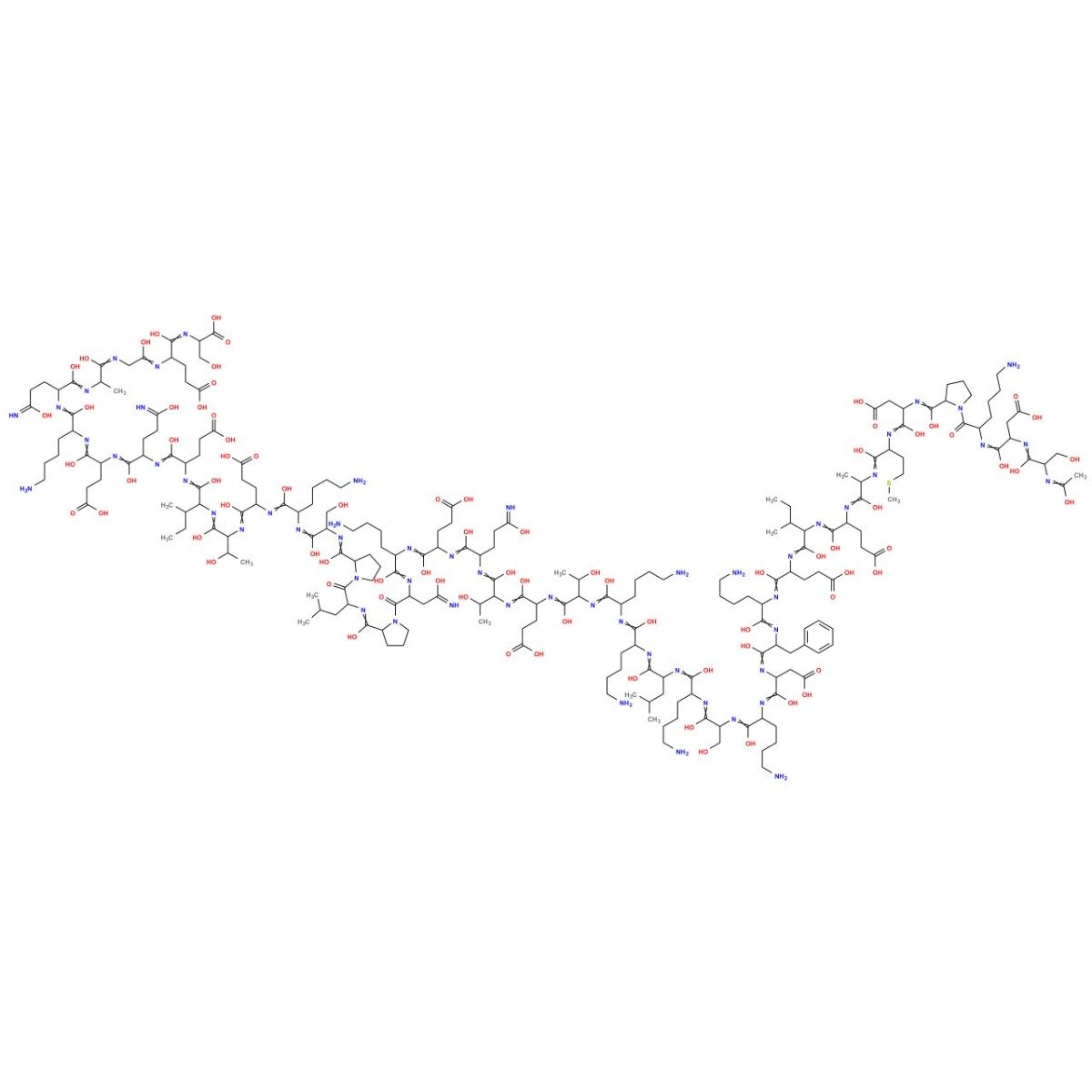
| Sequence | Ac-Ser-Asp-Lys-Pro-Asp-Met-Ala-Glu-Ile-Glu-Lys-Phe-Asp-Lys-Ser-Lys-Leu-Lys-Lys-Thr-Glu-Thr-Gln-Glu-Lys-Asn-Pro-Leu-Pro-Ser-Lys-Glu-Thr-Ile-Glu-Gln-Glu-Lys-Gln-Ala-Gly-Glu-Ser |
| Single-letter Code | Ac-LKKTETQ |
| Molecular Weight | 4963.44 g/mol |
| Length | 7 amino acids, N-terminally acetylated |
| Corresponds To | Residues 17 to 23 of thymosin beta-4 |
| Parent Protein | Thymosin beta-4, 43 amino acids, PubChem CID 45382195 |
| Parent Protein Formula | C212H350N56O78S |
| Parent CAS Number | 77591-33-4 designates thymosin beta-4, the full-length protein |
| Active Motif | LKKTET, the actin-binding sequence |
| Appearance | White lyophilised powder |
| Molecular Formula | C212H350N56O78S |
| CAS Number | 77591-33-4 |
| PubChem CID | 16132341 |
Actin Binding and the Mechanism
TB-500 is the active domain of TB-4, whose primary role is as an actin binding protein. Actin is a critical component of cell structure and is what microfilaments are made of. Microfilaments give cells their shape, protect the integrity of cell membranes, allow cells to move and migrate, and carry out certain steps in cellular reproduction. Actin is also one of the primary components of muscle protein; without it, muscles could not contract. Actin binding proteins such as TB-4 sequester actin monomers, the individual units of actin, which protects them from degradation and keeps them available for polymerization into microfilaments when they are needed.
Nervous System Repair
Research in rats has found that TB-500 encourages central and peripheral nervous system tissues to repair and remodel following injury. The exact mechanism has yet to be elucidated, but the research indicates that the peptide activates the cells that support neurons. Those cells, called oligodendrocytes, keep neurons healthy, and boosting their activity improves both blood vessel and neuron growth in brain regions that have been damaged. That significant laboratory result is reflected in clinically significant improvements in behavior, motor control and cognitive measurements.
Recent research shows that TB-500 can reduce oxidative stress following spinal cord injury and help transplanted neural stem and progenitor cells (NSPCs) survive long enough to enhance spinal regeneration. Findings like these could make TB-500 and other TB-4 derivatives of great use in treating severe spinal cord injury, and may offer critical insight into the kind of spinal recovery that would allow paralyzed individuals to regain use of affected body regions.
VEGF and Vessel Formation
TB-500 and TB-4 are both potent stimulators of VEGF expression. VEGF is an important signalling molecule in the growth of capillaries, the small blood vessels that everything from wound healing to hair growth depends on. The role of TB-500 is thought to be more complicated than that alone. It likely underpins a number of steps in the process of blood vessel growth, including extracellular matrix remodeling, vasculogenesis, angiogenesis, and the transition of more primitive mesenchymal tissue into the specialized endothelial tissue that lines blood vessels. That speculation rests on something concrete: loss of TB-4 has been shown to interfere with blood vessel growth and stability, while exogenous administration improves capillary formation and the recruitment of pericytes following injury.
Hair Growth, Found by Accident
The discovery that TB-500 improves hair growth happened by accident. Mice genetically deficient in TB-4 were shaved for laboratory experiments, and their hair was observed to grow back much more slowly than that of wild-type animals. When the same scientists investigated hair growth in mice genetically modified to produce increased levels of TB-4, they found that their hair grew back much faster than normal. Under the microscope, those mice show increased numbers of hair shafts and grouped hair follicles.
Working Alongside an Antibiotic
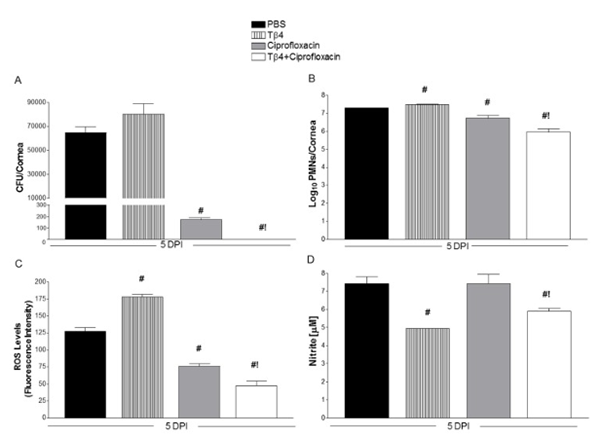
Multi-drug resistance is becoming increasingly common across a number of infections, rendering current therapy ineffective. There are very few new antibiotics in the pipeline and the process of drug development can take upwards of twenty years on average, so a recent study on the effects of TB-4 and its adjuvants provides some hope. In mice suffering a Pseudomonas aeruginosa infection of the eye, TB-4 combined with ciprofloxacin, the standard antibiotic for treating that organism, increased the effects of the antibiotic, improved healing, reduced inflammation and promoted faster recovery. Just five days of combined therapy showed decreased numbers of colony forming units (CFUs), a decreased neutrophil count and decreased levels of inflammatory reactive oxygen species. It is the first study to demonstrate that TB-500 and similar peptides might be used to promote and enhance the effects of antibiotics.
Cardiovascular and Renal Effects
Two decades of research have shown a number of beneficial effects for TB-4 and its derivatives in the cardiovascular and renal systems, though the exact mechanisms behind those contributions are not clearly understood. Several appear to be at work at once. TB-500 promotes the growth of collateral blood vessels, which is useful both as a preventative and in restoring function following disease. It encourages endothelial cell migration and myocyte survival following a heart attack. And it appears to work in concert with other natural signalling molecules to reduce inflammation and reduce fibrosis, meaning scar formation.
More recently, research into hydrogels containing a combination of collagen and TB-4 has shown the peptide promoting angiogenesis and epicardial heart cell migration, which boosts rates of recovery following ischemia and helps prevent long-term complications by reducing scarring.
Autophagy and Neurodegeneration
Progress in finding a treatment for neurodegenerative diseases like Alzheimer's and prion disease has been slow at best. A recent study into the effects of TB-4 on the immune system's ability to deal with prion protein has shown that the peptide enhances autophagy. Autophagy is the central nervous system's primary protective mechanism against neurodegenerative disease, and the ability of TB-4 to enhance that natural immunity is the first progression toward real treatment of these debilitating diseases in a long time.
TB-500 Is Not Thymosin Beta-4, and Certificates Often Blur the Two
This is the single most important thing to establish before reading anything else about this compound. Thymosin beta-4 is a 43 residue protein of about 4963 daltons. TB-500 as supplied is normally the acetylated heptapeptide Ac-LKKTETQ, roughly 889 daltons. They are different molecules with a fivefold difference in mass.
The confusion is compounded by CAS numbering. CAS 77591-33-4 designates thymosin beta-4, the full-length protein. A certificate that quotes that CAS number alongside a mass near 889 daltons is internally inconsistent: it names one molecule and reports another. That inconsistency is checkable in seconds and is one of the most common documentation errors in this corner of the market.
The practical rule is to read the reported mass rather than the name. A mass spectrum is the fastest way to establish which of the two molecules is actually present, because the two cannot be confused on mass.
Most of the Evidence Concerns the Parent Protein
The cardiac work, the ophthalmic clinical trials and the stem cell and autophagy studies were conducted with thymosin beta-4, not with the heptapeptide. That matters because the fragment was chosen on the basis that the LKKTET motif carries the actin-binding activity, and work on short peptide sequences supports the idea that fragments reproduce several of the parent's extracellular effects.
Supports is not the same as establishes for every effect. Some activities of the parent protein depend on regions outside residues 17 to 23, and the assumption that a heptapeptide reproduces the full pharmacology of a 43 residue protein is an inference rather than a demonstrated equivalence.
Reading the literature accurately therefore means noting, for each finding, which molecule was actually administered. A result obtained with the full protein is evidence about the full protein first and about the fragment only by extrapolation.
Human Evidence and Regulatory Status
The strongest human evidence for this molecular family is ophthalmic. Randomised, placebo-controlled phase 2 trials of thymosin beta-4 ophthalmic solution reported improvement in signs and symptoms of severe dry eye. Those trials used a topical formulation of the full-length protein in an eye indication.
There is no approved product containing either molecule in any jurisdiction, and no adequately powered human trial supporting the musculoskeletal repair uses most often discussed for TB-500. Material supplied for research is for in-vitro laboratory use only and is not a medicine.
Handling and Analytical Considerations
The heptapeptide is short, highly charged from two lysines and a glutamate, and freely water-soluble. Its small size makes mass confirmation straightforward, which is precisely why the mass on a certificate is the most useful single field for this compound.
The N-terminal acetylation is part of the specification rather than an optional detail: the free-amine heptapeptide is a different molecule with a mass 42 daltons lower. A certificate reporting the unacetylated mass is describing an impurity or a different product, not the intended one.
TB-500 Research FAQ
TB-500 Summary
The findings above were observed in cell culture and in rodents, and the exposures used in those studies do not scale to humans. TB-500 supplied by Volta Peptides is for in-vitro laboratory research only and is not for human or animal administration.
Article Author
Marcus Hopkin, PhD, is Director of Research and Development at Volta Peptides. He has more than 12 years of analytical chemistry experience, including peptide synthesis, characterization, purity testing and stability assessment.
Scientific Journal Author
Co-discoverer of the thymosins. Author of over 400 scientific articles, inventor on more than 15 U.S. Patents. Chairman of the Board of RegeneRx Biopharmaceuticals. B.S. from Wagner College (1959), M.S. and Ph.D. from Rutgers University (1964).
Scientific References
Primary literature and public trial registries only. No supplier or retailer pages are cited.
- 1Thymosin beta4 activates integrin-linked kinase and promotes cardiac cell migration, survival and cardiac repairBock-Marquette I, Saxena A, White MD, et al. · Nature · 2004
- 2Biological activities of thymosin beta4 defined by active sites in short peptide sequencesSosne G, Qiu P, Goldstein AL, Wheater M · FASEB Journal · 2010
- 3Thymosin beta 4 significantly improves signs and symptoms of severe dry eye in a phase 2 randomized trialSosne G, Dunn SP, Kim C · Cornea · 2015
- 4Thymosin beta 4 ophthalmic solution for dry eye: a randomized, placebo-controlled, Phase II clinical trialSosne G, Ousler GW · Clinical Ophthalmology · 2015
- 5Thymosin beta4-Enhancing Therapeutic Efficacy of Human Adipose-Derived Stem Cells in Mouse Ischemic Hindlimb ModelKim JH, Lim IR, Joo HJ, et al. · International Journal of Molecular Sciences · 2020
- 6Thymosin beta4 promotes autophagy and repair via HIF-1 alpha stabilization in chronic granulomatous diseaseRenga G, Oikonomou V, Stincardini C, et al. · Life Science Alliance · 2019
- 7Engineered Tandem Thymosin Peptide Promotes Corneal Wound HealingNguyen J, Verma S, et al. · Investigative Ophthalmology and Visual Science · 2025
Referenced Citations
- 1P. Cheng, F. Kuang, H. Zhang, G. Ju, and J. Wang, "Beneficial effects of thymosin beta-4 on spinal cord injury in the rat," Neuropharmacology, vol. 85, pp. 408-416, Oct. 2014.
- 2M. Chopp and Z. G. Zhang, "Thymosin beta-4 as a restorative/regenerative therapy for neurological injury and neurodegenerative diseases," Expert Opin. Biol. Ther., vol. 15 Suppl 1, pp. S9-12, 2015.
- 3H. Li, Y. Wang, X. Hu, B. Ma, and H. Zhang, "Thymosin beta 4 attenuates oxidative stress-induced injury of spinal cord-derived neural stem/progenitor cells through the TLR4/MyD88 pathway," Gene, vol. 707, pp. 136-142, May 2019.
- 4K. N. Dube and N. Smart, "Thymosin beta-4 and the vasculature: multiple roles in development, repair and protection against disease," Expert Opin. Biol. Ther., vol. 18, no. sup1, pp. 131-139, 2018.
- 5D. Philp et al., "Thymosin beta 4 induces hair growth via stem cell migration and differentiation," Ann. N. Y. Acad. Sci., vol. 1112, pp. 95-103, Sep. 2007.
- 6T. W. Carion et al., "Thymosin Beta-4 and Ciprofloxacin Adjunctive Therapy Improves Pseudomonas aeruginosa-Induced Keratitis," Cells, vol. 7, no. 10, Sep. 2018.
- 7K. M. Kassem, S. Vaid, H. Peng, S. Sarkar, and N.-E. Rhaleb, "Tbeta-4-Ac-SDKP pathway: Any relevance for the cardiovascular system?," Can. J. Physiol. Pharmacol., pp. 1-11, Mar. 2019.
- 8A. D. Shaghiera, P. Widiyanti, and H. Yusuf, "Synthesis and Characterization of Injectable Hydrogels with Varying Collagen-Chitosan-Thymosin beta-4 Composition for Myocardial Infarction Therapy," J. Funct. Biomater., vol. 9, no. 2, Mar. 2018.
- 9H.-J. Han, S. Kim, and J. Kwon, "Thymosin beta 4-Induced Autophagy Increases Cholinergic Signaling in PrP (106-126)-Treated HT22 Cells," Neurotox. Res., Dec. 2018.
- 10Song, Ran et al., "Association between serum thymosin beta-4 levels of rheumatoid arthritis patients and disease activity and response to therapy," Clinical rheumatology, vol. 31, pp. 1253-8, 2012.
- 11Philp, D., et al. "Thymosin beta-4 Promotes Angiogenesis, Wound Healing, and Hair Follicle Development." Mechanisms of Ageing and Development, vol. 125, no. 2, Feb. 2004, pp. 113-115.
Disclaimer
All articles and product information provided on this website are for informational and educational purposes only. The products offered on this website are furnished for in-vitro studies only. These products are not medicines or drugs and have not been approved by the FDA to prevent, treat or cure any medical condition, ailment or disease.
TB-500 5mg: frequently asked questions
Answered from the product record and the certificate file. Volta does not answer questions about administration, dosing or protocols.
What is supplied in a 5 mg vial of TB-500?
A sealed single-use vial containing 5 mg of TB-500 as a lyophilized powder. Soluble in bacteriostatic water. No diluent, syringe or other supply is included.
Is TB-500 supplied for human use?
No. For in-vitro laboratory research by qualified professionals only. Not for human or animal administration. Not a drug, food, cosmetic or dietary supplement. Not intended to diagnose, treat, cure, mitigate or prevent any disease. Volta does not provide dosing, administration or protocol guidance for any material listed.
What purity is this TB-500 released to?
>99% by HPLC is the specification every batch is released to. That is a threshold Volta sets, not a measurement. SideChain Analytics separately reported 99.5% by HPLC-MS/MS for lot VPTB10100 on September 27, 2026, which covers the 10mg vial of the same compound.
Is there a certificate of analysis for this TB-500 vial?
Yes. The certificate is shown on this page as page images and states the laboratory, the lot number, the method and the date. The laboratory publishes its own verification page for the report, so it can be checked against SideChain Analytics rather than against us. The certificate on file covers the 10mg fill of this compound rather than the 5 mg fill.
How is TB-500 identified?
CAS 77591-33-4, molecular formula C₂₁₂H₃₅₀N₅₆O₇₈S, molecular weight 4,963.4 g/mol. Those identifiers are what an incoming-goods check compares a certificate against, and they are stated here so the comparison can be made before ordering.
How should TB-500 be stored before reconstitution?
Store lyophilized peptide at -20°C in a dry, dark environment. Reconstitute in bacteriostatic water. Once reconstituted, store at 2-8°C and use within 30 days. Lyophilized powder is stable at room temperature for shipping and short-term storage.
Does Volta list other vial sizes of TB-500?
Yes: 10 mg. Each size is a separate listing with its own price, batch number and certificate status.
Where does this ship from?
British Columbia, Canada. Canadian orders are domestic, so they clear no customs and pay no import duty. International orders ship from the same facility.
Related Research News
TB-500 and the Brain: Thymosin Beta-4 in Neurological Research
Explore the preclinical evidence for TB-500 (Thymosin Beta-4) in neurological research, including mechanisms, limitations, and safety.
TB-500 vs BPC-157: Evidence, Dosing, Safety Compared
This reference compares TB-500 and BPC-157 across mechanism, dosing, evidence, safety, and pharmacokinetics, highlighting the thin comparative evidence and the need for further study.
Identity Is the Test Almost Nobody Runs
Rearrange TB-500's seven residues and there are 1,260 arrangements that all weigh exactly the same. Purity gets reported constantly and identity almost never, so here is what each method can and cannot establish about whether a vial holds the sequence on the label.
Explore Research
Peptide Tools
TB-500 research
TB-500 is a synthetic fragment of thymosin beta-4 covering the actin-binding region, studied in preclinical tissue-repair and angiogenesis models. Everything Volta publishes on this compound, across every vial size, is collected on what the thymosin beta-4 fragment is.
Vial sizes of this compound
- TB-500 10mg
- 5mg(this page)
Research on TB-500
Handling and documentation
TB-500 is one of the compounds in Volta's healing & recovery research peptides catalogue, which collects the rest of the range studied in this area alongside the comparisons and guides that cover it.
More from the research catalogue
Every compound below has its own specification, batch number and certificate page, whether or not a vial is in stock today. Supplied for laboratory research use only.
Other vial sizes
Related research compounds
- Thymalin 10mgrestocking
- Thymosin Alpha-1 10mgrestocking
- Vesugen 20mgrestocking
- ARA-290 10mgrestocking
- DSIP 10mg