


BPC-157 10mg (Body Protection Compound-157)
For in-vitro laboratory research only. Not for human or animal administration.
Batch #: VPBP10100 · tested as lot VPBP10100 on the certificate
Lab Verified
Certificate of Analysis
Latest COA reported September 16, 2026.
Lot VPBP10100, the batch number on this page.
Batch Purity
99.9%
Mass / Quantity
12.58 mg net peptide
Research Use Only
For in-vitro laboratory research by qualified professionals only. Not for human or animal administration. Not a drug, food, cosmetic or dietary supplement. Not intended to diagnose, treat, cure, mitigate or prevent any disease. Batch-specific Certificates of Analysis available for all products.
BPC-157 10mg: overview
What the vial contains and what the material is, stated as specifications rather than as outcomes.
BPC-157 supplied as a lyophilized powder in a sealed single-use vial containing 10 mg of material. BPC-157: molecular formula C₆₂H₉₈N₁₆O₂₂, molecular weight 1,419.5 g/mol, CAS 137525-51-0. Released to a specification of >99% purity by HPLC. Soluble in water, bacteriostatic water. Supplied for in-vitro laboratory research only. Not a drug, food or supplement. Not for human or veterinary use.
Volta does not provide dosing, administration or protocol guidance for any material listed.
BPC-157 10mg specifications
Every field the product record holds. A field with no value is omitted rather than printed as a dash.
- Fill
- 10mg
- Form
- Lyophilized powder
- CAS number
- 137525-51-0
- Molecular formula
- C₆₂H₉₈N₁₆O₂₂
- Molecular weight
- 1,419.5 g/mol
- Solubility
- Soluble in water, bacteriostatic water
- Shelf life
- 24 months from date of manufacture
BPC-157 analytical verification and batch documentation
What the purity figure on this page is, who measured what, and which of the two a reader is looking at.
Specification. Every batch is released to >99% purity by HPLC. That is a threshold Volta sets, and it is a promise rather than a measurement.
Measurement. SideChain Analytics reported 99.9% by HPLC-MS/MS for lot VPBP10100 on September 16, 2026, and confirmed identity at an observed mass of 12.58 mg net peptide. That report covers this vial.
The certificate can be checked against the laboratory rather than against us: verify on SideChain Analytics.
Checking a certificate. The batch number printed beside the price is derived from the compound code and the vial strength; the lot number on a certificate is transcribed from the document. They are produced independently, so comparing them is a real check. How to read one is set out in the quality and testing methodology page.
For in-vitro laboratory research by qualified professionals only. Not for human or animal administration. Not a drug, food, cosmetic or dietary supplement. Not intended to diagnose, treat, cure, mitigate or prevent any disease.
BPC-157 derives from body protection compound (BPC), a protein occurring naturally in the human digestive tract where it protects the gastrointestinal lining. The synthetic version is a pentadecapeptide of 15 amino acids (sequence: Gly-Glu-Pro-Pro-Pro-Gly-Lys-Pro-Ala-Asp-Asp-Ala-Gly-Leu-Val), and it carries over much of the parent molecule's repair activity. Published work reports wound healing through fibroblast recruitment, vascular growth by way of VEGFR2 stimulation, tendon healing through increased collateralization and fibroblast density, antioxidant activity through the neutralisation of oxidative stress markers, and protection against side effects of NSAIDs and psychiatric medications. This 10mg vial provides extended material for longer-duration tissue repair and gastrointestinal healing research protocols.
- Released to a >99% purity specification by HPLC
- Batch tested by SideChain Analytics, certificate published
- Lyophilized powder, 10mg per vial
- Soluble in water, bacteriostatic water
- For laboratory research use only
Frequently Bought Together

BPC-157 10mg
10mg
$46 USD
Bundle & Save
$81 USD
Save $4.05 USD
$150 USD
Save $15 USD
$199 USD
Save $29.85 USD
$273 USD
Save $54.60 USD
Click any product above to toggle selection
Related research materials


BPC-157 10mg: what is in the vial
The arithmetic specific to this 10mg vial, and what a milligram of BPC-157 costs in each strength the catalogue carries. Concentrations are stated, not recommended.
Vial contents
10 mg
Lyophilised powder, reconstituted by the buyer
Cost of material
$4.60 / mg USD
CA$6.60 / mg in Canadian dollars
Concentration at each diluent volume
10 mg of dry material reaches these concentrations in the volumes below. A U-100 syringe marking is 0.01 ml by definition, so the last column is a unit conversion at each concentration rather than a quantity to use.
| Diluent added | Concentration | In 0.1 ml | Per U-100 unit |
|---|---|---|---|
| 1 ml | 10 mg/ml | 1 mg | 100 mcg |
| 2 ml | 5 mg/ml | 500 mcg | 50 mcg |
| 3 ml | 3.33 mg/ml | 333.3 mcg | 33.3 mcg |
| 5 ml | 2 mg/ml | 200 mcg | 20 mcg |
For a volume this table does not list, the reconstitution calculator takes any vial size and diluent volume.
BPC-157 by the milligram
The same compound in every strength the catalogue carries, priced per milligram of material so the vials are comparable. Larger is not automatically cheaper.
| Vial | Price USD | Per mg USD | Per mg CAD |
|---|---|---|---|
| 5mg | $35 | $7 | CA$10 |
| 10mgthis page | $46 | $4.60 | CA$6.60 |
The 10mg vial is the cheapest material in this range at $4.60 per mg, which is this page.
Per-unit figures are quoted in US and Canadian dollars so the vials stay comparable against each other. The price you are charged is the one in the currency selected at the top of the page, and it is converted from the same US dollar base as the figures here.
BPC-157 purity and identity: how the figure is measured
What >99% (HPLC) means, the masses an identity check has to land on, and the entries that make a certificate of analysis checkable rather than decorative.
Stated purity
>99% (HPLC)
Area percent of the main peak by reversed-phase HPLC
Average mass
1,419.5 g/mol
The figure an identity check has to land on
Detection
214 nm
Identity by mass: the ions to expect
An electrospray source protonates the molecule rather than weighing it neutral, so a spectrum shows a series of charge states rather than the molecular weight itself. These are the m/z values 1,419.5 g/mol produces, and they are what a mass spectrum on a certificate for BPC-157 has to match.
| Ion | Charge | Expected m/z |
|---|---|---|
| [M+H]+ | 1+ | 1,420.51 |
Why 214 nm
The sequence carries neither tryptophan nor tyrosine, so it has no absorbance at 280 nm. Detection is at 214 nm, on the peptide bond itself.
This matters when reading someone else's certificate: a purity figure quoted at 280 nm for a compound with no aromatic residue is measuring an absorbance the molecule does not have.
What a certificate for BPC-157 should carry
A purity percentage on its own is not checkable. These are the entries that make one verifiable, and their absence is the most common weakness in a research-peptide certificate.
The chromatogram, not only the number
A stated area percent with no trace behind it cannot be read for the shape of the main peak or for what eluted beside it. The HPLC interpreter walks through what a trace shows.
Net peptide content, separately from gross mass
A lyophilised peptide is a salt, usually of trifluoroacetic or acetic acid, plus residual water. The vial's stated milligrams are gross; net peptide content is the fraction of that mass which is the molecule. The two differ by ten to twenty percent routinely, and only one of them is what the price is per milligram of. The net peptide content calculator converts between them.
The counterion, named
Which salt form the powder is in changes the net content and the pH the powder dissolves at. A certificate that never names it leaves both unknowable.
Water content, by a stated method
Loss on drying and Karl Fischer titration give different numbers, and a water figure with no method attached cannot be compared with anyone else's.
A laboratory and a report identifier
Without both, nothing on the document can be traced back to the laboratory that issued it. The red flag checker lists the rest.
Published certificate for this batch
- Laboratory
- SideChain Analytics
- Report ID
- COA-2026-SC-02083
- Reported
- September 16, 2026
- Purity
- 99.9%
- Method
- HPLC-MS/MS
- Lot
- VPBP10100
Read the reported figures against the expected masses above. Full pages are in the certificate library.
BPC-157 storage and stability
Handling as the product record states it, followed by the degradation chemistry this particular sequence is and is not exposed to.
Handling
Store lyophilized peptide at -20°C in a dry, dark environment. Reconstitute in bacteriostatic water. Once reconstituted, store at 2-8°C and use within 30 days. Lyophilized powder is stable at room temperature for shipping and short-term storage.
What holds up
The degradation routes this compound is not exposed to, which is as specific a fact as the ones it is.
No oxidation-labile side chain
no Met, Cys or Trp in the sequenceThe three residues that oxidise readily are all absent, so the most common degradation route for a research peptide does not apply to this one. Air in the vial headspace is not the risk here that it is for a methionine-containing compound.
No deamidation site
no Asn or Gln in the sequenceDeamidation is the slow clock on most reconstituted peptides, and it needs an asparagine or a glutamine to run. This sequence has neither, so time in solution does not convert it to a one-dalton-heavier, more acidic relative.
No ultraviolet chromophore
no Trp or Tyr in the sequencePhoto-oxidation of peptides runs mainly through the aromatic side chains, and this sequence has none. Storing in the dark remains good practice for the excipients and the diluent, but the molecule itself has no strong absorber for ultraviolet light to act on.
Net hydrophilic
GRAVY -0.69A negative grand average of hydropathy means the side chains are on balance polar, which is the profile that stays in solution rather than associating. Freeze-thaw cycles are still worth avoiding, but this compound is not one of the hydrophobic sequences that aggregate irreversibly at an ice front.
Solubility window
calculated pI 3.6, net charge -2 at pH 7A peptide is least soluble within about a pH unit of its isoelectric point, where it carries no net charge. This one is far enough from neutral that it holds a real charge in an ordinary diluent, which is what keeps it dissolved.
Proline-rich backbone
4 Pro across 15 residues, 27%Proline's ring locks the backbone angle and gives it no amide hydrogen to donate, so a proline-rich chain is conformationally rigid and a poor substrate for the proteases that cut ordinary sequences. That rigidity is the structural reason this class of compound survives conditions that degrade a comparable peptide of the same length.
Derived from the primary sequence GEPPPGKPADDAGLV, calculated isoelectric point 3.55, GRAVY -0.693. Check the arithmetic with the peptide property calculator and the freeze-thaw estimator.
BPC-157 compared with TB-500 and GHK-Cu
Pharmacological class, half-life, evidence grade, competition status and cost per milligram, side by side.
| Compound | Class | Half-life | Evidence | WADA | Cheapest per mg |
|---|---|---|---|---|---|
| BPC-157this page | Healing & Recovery | ~15 min IV (animal data); oral activity persists 24+ hours | CPhase I–II Clinical Trials | Prohibited | $4.6010mg vial |
| TB-500 | Healing & Recovery | <2 hours plasma half-life; tissue effects persist 2–3 days | DPreclinical | Prohibited | $6.9010mg vial |
| GHK-Cu | Skin & Tissue Repair | ~30 minutes plasma | FNo Regulatory Activity | Not listed | $0.59100mg vial |
| LL-37 | Antimicrobial / Immune | Minutes in plasma; tissue activity persists longer | DPreclinical | Not listed | $11.405mg vial, out of stock |
| KPV | Anti-Inflammatory / Immune | ~2 hours (SC); shorter oral due to GI degradation | DPreclinical | Not listed | $3.9010mg vial |
Evidence grades and half-lives are as recorded in the compound database, which cites its own sources on each compound page. Per-milligram prices are the cheapest strength each compound is currently listed at, in US dollars, and an out-of-stock note means that figure is not purchasable today. Cross-trial comparisons of efficacy are not comparisons: no head-to-head trial exists for most of these pairs.
BPC-157 in Canada
Price in Canadian dollars, where the parcel ships from, and how long it takes.
Price in CAD
CA$66
The figure charged, not a converted estimate
Ships from
British Columbia
A domestic parcel, so no import clearance step
Transit
2 to 5 business days
After 1 to 2 business days of handling
Free standard shipping
Over CA$250
A bar set for this market, not converted from the US one
BPC-157 10mg ships from British Columbia to Canadian addresses, so the parcel never crosses a border. That removes the failure a Canadian buyer of research peptides is usually weighing: an inbound international shipment can be held for import clearance or seized, and a domestic one has no clearance step to be held at.
Shipping is quoted live against the delivery address at checkout rather than estimated here, and both the standard and express tiers show their price and transit window before a payment method is chosen. The figure the page shows is the figure the rail charges: all three settlement rails price shipping through the same functions the quote does.
The Canadian figure above is not a loose conversion. Each product's US dollar base is chosen so that the live conversion lands on the Canadian shelf price set for this market, and the result is pushed up to a whole dollar rather than left carrying cents, so one figure serves the page, the feed and every payment rail. See the shipping policy for carriers and cut-off times, and the legal position on research peptides in Canada for the regulatory picture.
What is BPC-157?
The name is short for Body Protection Compound-157. The parent molecule, body protection compound or BPC, occurs naturally in the human digestive tract, where it keeps the lining of the gastrointestinal tract intact, supports repair once that lining has been damaged, and encourages the growth of new blood vessels.
BPC-157 itself is a pentadecapeptide: a 15 amino acid stretch isolated from that much larger protein and then made synthetically. For its size it carries over a good deal of the parent molecule's repair activity. Published work reports effects on:
Wound healing, blood vessel growth, the coagulation cascade, nitric oxide generation, immune system function, gene expression, and hormone regulation, the last of these particularly within the gastrointestinal nervous system.
BPC-157 Mechanism of Action
BPC-157 is a synthetic 15 amino acid sequence, GEPPPGKPADDAGLV, derived from a region of a protein found in human gastric juice. It is described in the literature as a stable gastric pentadecapeptide, and the stability claim is specific rather than promotional: the peptide resists degradation in human gastric juice for hours, which is unusual for a peptide of this size and is the property that permitted the oral and intragastric routes used across the rodent literature.
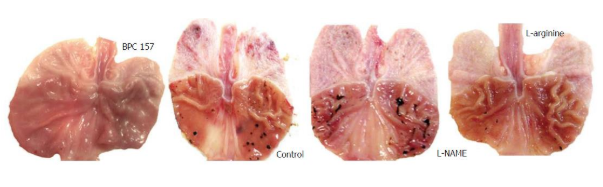
No single receptor has been identified for it. That absence is the central fact of its pharmacology and the main reason the mechanism remains contested. What the published work describes instead is modulation of several systems at once, with the nitric oxide system appearing most consistently: BPC-157 interacts with both the L-arginine to nitric oxide pathway and its inhibition, and much of the animal work is designed around counteracting the effects of nitric oxide synthase blockade or of excess nitric oxide donors.
The second recurring theme is angiogenesis. Studies report upregulation of vascular endothelial growth factor receptor 2 signalling and accelerated formation of collateral vessels, which is the proposed basis for the healing effects described across widely different tissues. A third strand concerns growth factor receptor expression, including increased growth hormone receptor expression in tendon fibroblasts, offering a route by which a systemic peptide could influence a local repair process.
Resistance to gastric degradation
The sequence remains intact in human gastric juice for hours without a protective carrier, which is what allows the oral and intragastric administration used throughout the rodent literature.
Nitric oxide system interaction
The most consistently reported interaction. Effects are described both against nitric oxide synthase inhibition and against excess nitric oxide, which is why the literature frames it as modulation rather than agonism or antagonism.
Angiogenic signalling
Upregulation of VEGFR2 signalling and accelerated collateral vessel formation are reported as the proposed basis for tissue repair effects across dissimilar tissue types.
Growth factor receptor expression
Increased growth hormone receptor expression has been reported in tendon fibroblasts, offering a local mechanism for the tendon and ligament findings.
No identified receptor
No specific BPC-157 receptor has been cloned or characterised. This is a genuine gap and the principal reason the mechanistic account remains a set of observed associations rather than a pathway.
BPC-157 Research Findings
Almost the entire evidence base is rodent work from a small number of research groups. Every entry names its model. There are no adequately powered human trials, and nothing below is a clinical claim.
Tendon and ligament healing in rat injury models
Multiple rat studies report accelerated recovery of transected or damaged tendon and ligament, with reported improvements in biomechanical and functional measures alongside histological findings. The work spans several injury models rather than a single preparation.
Rodent modelMuscle and myotendinous junction repair
Rat studies of injured myotendinous junctions and of striated, smooth and cardiac muscle report improved healing and functional recovery relative to untreated controls, forming one of the more developed strands of the literature.
Rodent modelGastrointestinal mucosal protection
The original context for the peptide. Rodent studies report protection against a range of induced gastrointestinal lesions, which is where the cytoprotection framing and the term gastric pentadecapeptide originate.
Rodent modelEffects in central nervous system injury models
Rodent work reports effects in models of central nervous system injury and in behavioural paradigms, with proposed involvement of dopaminergic and serotonergic systems. This strand is less developed than the musculoskeletal and gastrointestinal work.
Rodent modelInteraction with the nitric oxide system
Studies designed around nitric oxide synthase inhibition report that BPC-157 counteracts the resulting effects, and separate work reports protection against nitric oxide-mediated damage. Taken together these describe modulation in both directions rather than a single-direction effect.
Rodent modelIncreased growth hormone receptor expression in tendon fibroblasts
Cell-based work reports increased growth hormone receptor expression in tendon fibroblasts following exposure, which provides a candidate local mechanism for the tendon findings observed in whole animals.
In vitroBPC-157 Structure and Identifiers
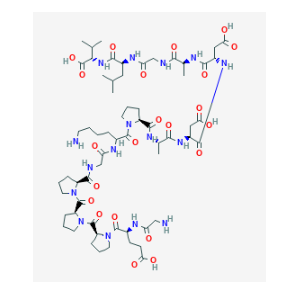
| Sequence | Gly-Glu-Pro-Pro-Pro-Gly-Lys-Pro-Ala-Asp-Asp-Ala-Gly-Leu-Val |
| Single-letter Code | GEPPPGKPADDAGLV |
| Molecular Formula | C62H98N16O22 |
| Molecular Weight | 1419.556 g/mol |
| CAS Number | 137525-51-0 |
| Length | 15 amino acids |
| Parent Protein | Partial sequence of body protection compound found in human gastric juice |
| Also Known As | PL 14736, PL-10, Bepecin, pentadecapeptide BPC 157 |
| Notable Property | Stable in human gastric juice for hours without a carrier |
| Identified Receptor | None characterised to date |
| Appearance | White lyophilised powder |
| PubChem CID | 108101 |
Wound Healing and Fibroblast Recruitment
In the gut, the job of BPC is to keep the mucosal barrier sound. That barrier shields the tissue beneath it from gastric acid, bile and the other aggressive compounds that digestion and nutrient absorption depend on. Recruitment of fibroblasts accounts for at least part of how it does so.
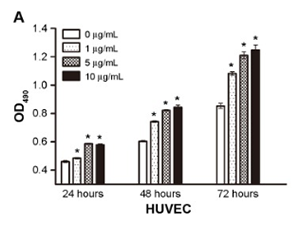
The effect on fibroblast spread is dose-dependent, in culture and in vivo alike, with the cells both proliferating and migrating faster[1]. That is what ties the peptide to wound closure: fibroblasts are the cells that lay down the extracellular matrix, meaning collagen, fibrin, elastin and the rest.
Angiogenesis and Collateral Vessel Growth
BPC-157 behaves as a potent angiogenic factor, raising the rate at which endothelial cells, the lining cells of blood vessels, proliferate and grow[1]-[3]. In rats it substantially increases collateral vessel growth where tissue has been made ischemic[4]. Most of that work was done in the GI tract, but comparable results have been reported in cardiovascular, neurological and muscle tissue, which is why the peptide is discussed both as a candidate therapy after stroke or heart attack and as a probe for working out how ischemic tissue can be brought to repair itself[5], [6].
Chicken embryo studies point to VEGFR2 as at least part of the route by which it does this. VEGFR2 is a cell surface receptor active in the nitric oxide signalling pathway, and it is thought to govern endothelial cell growth, proliferation and longevity[4], [7], [8]. Vascular "running" following administration of the peptide has been demonstrated directly in cell culture[9].
If that activity holds up, it opens a route toward an orally available treatment for the slow-forming arterial occlusions seen in atherosclerotic heart disease.
Tendon, Ligament and Bone Injury Models
Fibroblast recruitment and new vessel growth are the two things connective tissue repair is short of, so the positive findings in animal models of tendon, ligament, bone and other connective tissue injury follow fairly directly. Injuries to tendon and ligament heal slowly in large part because the blood supply to those tissues is poor.
Rat tendon work, both in vitro and in vivo, reports increased collateralization and higher fibroblast density after tendon, ligament and bone injury. In those comparisons BPC-157 promoted healing more effectively than the bFGF, EGF and VEGF hormones[10].
FITC-phalloidin staining shows it to be a strong stimulator of F-actin formation in fibroblasts[11]. F-actin underpins cell structure and function and is central to how a cell migrates. Western blotting adds a second step in the same pathway: increased phosphorylation of paxillin and FAK, two proteins the cell migration pathway cannot do without[12].
Antioxidant Activity
In rats, BPC-157 neutralises certain markers of oxidative stress, among them nitric oxide and malondialdehyde (MDA)[3]. Separate work showing reduced production of reactive oxygen species in the gastrointestinal tract is what makes a reading of powerful antioxidant activity defensible rather than an artefact of one assay.
One line of work has asked whether modified Lactococcus lactis bacteria could deliver the peptide to the GI system directly. In cell culture the engineered bacteria raised peptide levels dramatically[13].
Counteracting Drug Side Effects
What limits how long a pharmaceutical can be given is usually its side effects rather than its efficacy. Ibuprofen and the other NSAIDs are the familiar case: they cannot be taken for long stretches because they raise the risk of gastric bleeding and of heart attack. BPC-157 has been found to counteract side effects from NSAIDs, from medications used in psychiatric conditions, and from a number of heart medications.
Protection against the gastrointestinal side effects is the expected half, given where the parent protein does its work. Less intuitive is that it reaches the brain, the heart and other tissues as well. In rats the peptide protected against QTc prolongation, a change in cardiac conduction that can lead to serious and even fatal arrhythmias and that is caused by drugs used to treat diabetes, schizophrenia and other psychiatric conditions[14].
Other side effects of psychiatric medication were prevented in the same way, the severe ones among them, including catalepsy and somatosensory disturbance[15].
Field Work in Honeybee Colonies
Colony collapse disorder, or CCD, is a syndrome in which an entire honey bee colony declines rapidly and is eventually destroyed outright. Supplementing the bees' feed with BPC-157 reduced the damage the fungus Nosema ceranae does to their GI tracts, and hive survival rates rose alongside that[16].
Those trials were run in natural field settings rather than a laboratory, and they represent the first oral treatment of any significance for limiting the impact of CCD on the insect that pollinates most food crops.
The Evidence Base Is Narrow in a Way That Matters
BPC-157 has a large literature by publication count and a narrow one by independent replication. A substantial share of the primary work originates from a small number of collaborating groups, largely in Croatia, and much of it appears in a limited set of journals.
This is not an accusation of error. It is a statement about how evidence accumulates. A finding reproduced by groups with different assumptions, reagents and incentives is more robust than the same finding repeated within one programme, however carefully that programme is run.
The practical consequence for a researcher is that effect sizes from this literature should be treated as provisional, and that independent replication in a new laboratory is a meaningful contribution rather than a redundant one.
No Receptor Has Been Identified
For most peptides discussed on this catalogue, the mechanism begins with a named receptor. For BPC-157 there is no such starting point. No specific receptor has been cloned or characterised, and the mechanistic literature consists of observed interactions with systems, principally nitric oxide signalling and angiogenic pathways, rather than a defined ligand-receptor event.
That gap explains the unusual shape of the claims made for it. A compound acting at a known receptor produces effects predictable from that receptor's distribution. A compound with no identified receptor, reported to help in tendon, gut, brain and vessel alike, is either acting on something very general or is being over-attributed. The literature does not currently distinguish those possibilities.
Treating the absence of a receptor as an open question rather than an inconvenience is the honest reading, and it is the reason this compound sits differently from the incretin analogues elsewhere in this catalogue.
Human Data and Regulatory Status
There is no approved BPC-157 product in any jurisdiction. Early clinical work was conducted under the code PL 14736 for inflammatory bowel indications and did not produce an approved medicine. There are no adequately powered, independently replicated human efficacy trials for the musculoskeletal uses most often discussed.
The gap between the volume of rodent literature and the near-absence of human trial data is the single most important thing to hold in view when reading about this peptide. Animal healing models are informative about mechanism and poorly predictive of human clinical outcomes.
Material supplied for research is for in-vitro laboratory use only. It is not a medicine and none of the work summarised here constitutes guidance for use in humans or animals.
Handling and Analytical Considerations
BPC-157 is a short, highly proline-rich sequence containing three consecutive prolines. That composition makes it conformationally constrained and contributes to its resistance to proteolysis, and it also affects chromatographic behaviour, since proline-rich peptides can show cis-trans isomerism that broadens or splits peaks.
A broadened or split peak on an HPLC trace for a proline-rich peptide is therefore not automatically evidence of an impurity. Interpreting a purity figure for this sequence requires knowing the method conditions, which is one more reason the stated method on a certificate matters as much as the percentage.
BPC-157 Research FAQ
BPC-157 Summary
BPC-157 is under active investigation in cell culture and animal models. The published work concerns wound closure, fibroblast behaviour and vascular growth, and in most of it the peptide is used as a tool for probing those pathways. No regulator has approved BPC-157 for any use, and the evidence base is preclinical.
The findings above were observed in cell culture and in rodents, and the exposures used in those studies do not scale to humans. BPC-157 supplied by Volta Peptides is for in-vitro laboratory research only and is not for human or animal administration.
Article Author
Marcus Hopkin, PhD, is Director of Research and Development at Volta Peptides. He has more than 12 years of analytical chemistry experience, including peptide synthesis, characterization, purity testing and stability assessment.
Scientific Journal Author
Lead author of "Novel Cytoprotective Mediator, Stable Gastric Pentadecapeptide BPC 157. Vascular Recruitment and Gastrointestinal Tract Healing", and co-author of "Stable gastric pentadecapeptide BPC 157 in honeybee (Apis mellifera) therapy."
Scientific References
Primary literature and public trial registries only. No supplier or retailer pages are cited.
- 1Stable Gastric Pentadecapeptide BPC 157 and Wound HealingSeiwerth S, Milavic M, Vukojevic J, et al. · Frontiers in Pharmacology · 2021
- 2Stable Gastric Pentadecapeptide BPC 157 and Striated, Smooth, and Heart MuscleStaresinic M, Japjec M, Vranes H, et al. · Biomedicines · 2022
- 3Stable Gastric Pentadecapeptide BPC 157 as a Therapy for the Disable Myotendinous Junctions in RatsJapjec M, Horvat Pavlov K, Petrovic A, et al. · Biomedicines · 2021
- 4Pentadecapeptide BPC 157 and the central nervous systemVukojevic J, Milavić M, Perovic D, et al. · Neural Regeneration Research · 2022
- 5BPC 157 Therapy: Targeting Angiogenesis and Nitric Oxide's Cytotoxic and Damaging ActionsSikiric P, Seiwerth S, Sikiric S, et al. · Pharmaceuticals (Basel) · 2025
- 6Stable Gastric Pentadecapeptide BPC 157 as a Therapy and Safety Key: A Special Beneficial Pleiotropic ProfileSikiric P, Seiwerth S, Sikiric S, et al. · Pharmaceuticals (Basel) · 2025
- 7New studies with stable gastric pentadecapeptide protecting gastrointestinal tractSikiric P, Sever M, Krezic I, et al. · Inflammopharmacology · 2024
- 8Stable Gastric Pentadecapeptide BPC 157 as Therapy After Surgical Detachment of the Quadriceps Muscle in RatsMatek D, Matek I, Staresinic M, et al. · Pharmaceutics · 2025
Referenced Citations
- 1T. Huang et al., "Body protective compound-157 enhances alkali-burn wound healing in vivo and promotes proliferation, migration, and angiogenesis in vitro," Drug Des. Devel. Ther., vol. 9, pp. 2485-2499, 2015.
- 2D. Drmic et al., "Counteraction of perforated cecum lesions in rats: Effects of pentadecapeptide BPC 157, L-NAME and L-arginine," World J. Gastroenterol., vol. 24, no. 48, pp. 5462-5476, Dec. 2018.
- 3F. Amic et al., "Bypassing major venous occlusion and duodenal lesions in rats, and therapy with the stable gastric pentadecapeptide BPC 157, L-NAME and L-arginine," World J. Gastroenterol., vol. 24, no. 47, pp. 5366-5378, Dec. 2018.
- 4A. Duzel et al., "Stable gastric pentadecapeptide BPC 157 in the treatment of colitis and ischemia and reperfusion in rats: New insights," World J. Gastroenterol., vol. 23, no. 48, pp. 8465-8488, Dec. 2017.
- 5J. Vukojevic et al., "Rat inferior caval vein (ICV) ligature and particular new insights with the stable gastric pentadecapeptide BPC 157," Vascul. Pharmacol., vol. 106, pp. 54-66, 2018.
- 6D. Drmic et al., "Celecoxib-induced gastrointestinal, liver and brain lesions in rats, counteraction by BPC 157 or L-arginine, aggravation by L-NAME," World J. Gastroenterol., vol. 23, no. 29, pp. 5304-5312, Aug. 2017.
- 7M.-J. Hsieh et al., "Therapeutic potential of pro-angiogenic BPC157 is associated with VEGFR2 activation and up-regulation," J. Mol. Med. Berl. Ger., vol. 95, no. 3, pp. 323-333, 2017.
- 8Z. Grabarevic et al., "The influence of BPC 157 on nitric oxide agonist and antagonist induced lesions in broiler chicks," J. Physiol. Paris, vol. 91, no. 3-5, pp. 139-149, Oct. 1997.
- 9P. Sikiric et al., "Novel Cytoprotective Mediator, Stable Gastric Pentadecapeptide BPC 157. Vascular Recruitment and Gastrointestinal Tract Healing," Curr. Pharm. Des., vol. 24, no. 18, pp. 1990-2001, 2018.
- 10S. Seiwerth et al., "BPC 157 and Standard Angiogenic Growth Factors. Gastrointestinal Tract Healing, Lessons from Tendon, Ligament, Muscle and Bone Healing," Curr. Pharm. Des., vol. 24, no. 18, pp. 1972-1989, 2018.
- 11C.-H. Chang, W.-C. Tsai, M.-S. Lin, Y.-H. Hsu, and J.-H. S. Pang, "The promoting effect of pentadecapeptide BPC 157 on tendon healing involves tendon outgrowth, cell survival, and cell migration," J. Appl. Physiol., vol. 110, no. 3, pp. 774-780, Oct. 2010.
- 12Y.-L. Hu et al., "FAK and paxillin dynamics at focal adhesions in the protrusions of migrating cells," Sci. Rep., vol. 4, p. 6024, Aug. 2014.
- 13K. Skrlec et al., "Engineering recombinant Lactococcus lactis as a delivery vehicle for BPC-157 peptide with antioxidant activities," Appl. Microbiol. Biotechnol., vol. 102, no. 23, pp. 10103-10117, Dec. 2018.
- 14D. Strinic et al., "BPC 157 counteracts QTc prolongation induced by haloperidol, fluphenazine, clozapine, olanzapine, quetiapine, sulpiride, and metoclopramide in rats," Life Sci., vol. 186, pp. 66-79, Oct. 2017.
- 15N. Jelovac et al., "Pentadecapeptide BPC 157 attenuates disturbances induced by neuroleptics: the effect on catalepsy and gastric ulcers in mice and rats," Eur. J. Pharmacol., vol. 379, no. 1, pp. 19-31, Aug. 1999.
- 16I. Tlak Gajger, J. Ribaric, M. Smodis Skerl, J. Vlainic, and P. Sikiric, "Stable gastric pentadecapeptide BPC 157 in honeybee (Apis mellifera) therapy, to control Nosema ceranae invasions in apiary conditions," J. Vet. Pharmacol. Ther., vol. 41, no. 4, pp. 614-621, Aug. 2018.
Disclaimer
All articles and product information provided on this website are for informational and educational purposes only. The products offered on this website are furnished for in-vitro studies only. These products are not medicines or drugs and have not been approved by the FDA to prevent, treat or cure any medical condition, ailment or disease.
BPC-157 10mg: frequently asked questions
Answered from the product record and the certificate file. Volta does not answer questions about administration, dosing or protocols.
What is supplied in a 10 mg vial of BPC-157?
A sealed single-use vial containing 10 mg of BPC-157 as a lyophilized powder. Soluble in water, bacteriostatic water. No diluent, syringe or other supply is included.
Is BPC-157 supplied for human use?
No. For in-vitro laboratory research by qualified professionals only. Not for human or animal administration. Not a drug, food, cosmetic or dietary supplement. Not intended to diagnose, treat, cure, mitigate or prevent any disease. Volta does not provide dosing, administration or protocol guidance for any material listed.
What purity is this BPC-157 released to?
>99% by HPLC is the specification every batch is released to. That is a threshold Volta sets, not a measurement. SideChain Analytics separately reported 99.9% by HPLC-MS/MS for lot VPBP10100 on September 16, 2026, which covers this vial.
Is there a certificate of analysis for this BPC-157 vial?
Yes. The certificate is shown on this page as page images and states the laboratory, the lot number, the method and the date. The laboratory publishes its own verification page for the report, so it can be checked against SideChain Analytics rather than against us.
How is BPC-157 identified?
CAS 137525-51-0, molecular formula C₆₂H₉₈N₁₆O₂₂, molecular weight 1,419.5 g/mol. Those identifiers are what an incoming-goods check compares a certificate against, and they are stated here so the comparison can be made before ordering.
How should BPC-157 be stored before reconstitution?
Store lyophilized peptide at -20°C in a dry, dark environment. Reconstitute in bacteriostatic water. Once reconstituted, store at 2-8°C and use within 30 days. Lyophilized powder is stable at room temperature for shipping and short-term storage.
Does Volta list other vial sizes of BPC-157?
Yes: 5 mg. Each size is a separate listing with its own price, batch number and certificate status.
Where does this ship from?
British Columbia, Canada. Canadian orders are domestic, so they clear no customs and pay no import duty. International orders ship from the same facility.
Related Research News
BPC-157 for Dogs: Benefits, Research and the Two Canine Studies
Go through the BPC-157 literature looking for studies that involved dogs and you find two: one toxicology, one pharmacokinetics. Neither asks whether it heals anything. What the canine evidence actually contains, why the published dosing charts disagree by more than 20-fold, and what the 2026 reviews concluded.
TB-500 vs BPC-157: Evidence, Dosing, Safety Compared
This reference compares TB-500 and BPC-157 across mechanism, dosing, evidence, safety, and pharmacokinetics, highlighting the thin comparative evidence and the need for further study.
BPC-157 News: FDA Advisers Weigh Easing Restrictions on Six Peptides
FDA advisers have reportedly supported easing restrictions on six peptides, a move that could reshape the peptide research landscape. While BPC-157 and TB-500 were not explicitly named, the decision signals growing regulatory attention. Here's what researchers and industry professionals should know.
Explore Research
Peptide Tools
BPC-157 research
BPC-157 is a synthetic 15-amino-acid pentadecapeptide derived from a sequence in human gastric juice, characterised almost entirely in rodent tissue-repair models. Everything Volta publishes on this compound, across every vial size, is collected on BPC-157 vials, evidence and certificates.
Vial sizes of this compound
- 10mg(this page)
- BPC-157 5mg
Research on BPC-157
Handling and documentation
BPC-157 is one of the compounds in Volta's healing & recovery research peptides catalogue, which collects the rest of the range studied in this area alongside the comparisons and guides that cover it.
More from the research catalogue
Every compound below has its own specification, batch number and certificate page, whether or not a vial is in stock today. Supplied for laboratory research use only.
Other vial sizes
Related research compounds
- BPC-157 + TB-500 Wolverine 10mg (5+5)restocking
- Cardiogen 20mgrestocking
- Cortagen 20mgrestocking
- Humanin 10mgrestocking