Key Takeaways
- •Thymosin Beta-4 (TB-500) is a synthetic version of a naturally occurring actin-binding peptide investigated for its role in cell migration, survival, and tissue repair, including in the central nervous system.
- •Preclinical research, primarily in rodent models, has explored TB-500 for neuroprotection, neuroinflammation modulation, and functional recovery after stroke and traumatic brain injury.
- •The primary proposed mechanism involves binding to G-actin and promoting cell motility, but effects on angiogenesis and inflammation have also been reported in vitro and in vivo.
- •Evidence is limited to preclinical studies; as of July 2026, no registered human clinical trials for TB-500 in neurological conditions were identified.
- •Some foundational studies on Thymosin Beta-4 have been subject to retractions or expressions of concern, requiring cautious interpretation of the literature.
- •TB-500 is sold for laboratory research purposes only and is not approved for human consumption or therapeutic use.
Evidence Quality Summary
| Evidence Area | Strength | Notes |
|---|---|---|
| Neuroprotection (stroke models) | Low to moderate | Several rodent studies report reduced infarct size and improved functional outcomes; replication by independent labs is limited. |
| Traumatic brain injury (TBI) | Low | A small number of rodent studies suggest improved cognitive recovery; human data absent. |
| Neuroinflammation modulation | Very low | In vitro and limited in vivo data suggest anti-inflammatory cytokine shifts; no consistent replication. |
| Mechanism of action (actin binding) | Moderate | Well-characterized in cell biology; neurological-specific mechanisms are less established. |
| Human clinical trials | Very low | No registered trials for neurological indications as of July 2026. |
| Safety in neurological context | Very low | No systematic toxicology studies in CNS models; safety profile extrapolated from non-CNS animal studies. |
| Question | Current Evidence | |
| Are there human clinical trials? | No registered human clinical trials for neurological conditions were identified. | |
| What is the main mechanism? | Reported to bind G-actin, promoting cell migration and survival; also implicated in angiogenesis. | |
| What type of evidence exists? | Primarily in vitro (cell culture) and in vivo (rodent models of stroke and TBI). | |
| Is safety established for human use? | No; safety data are limited to animal studies, and human safety is not established. | |
| Is it approved for human use? | No; TB-500 is not FDA-approved or approved by any regulatory agency for human consumption. |
What Is TB-500?
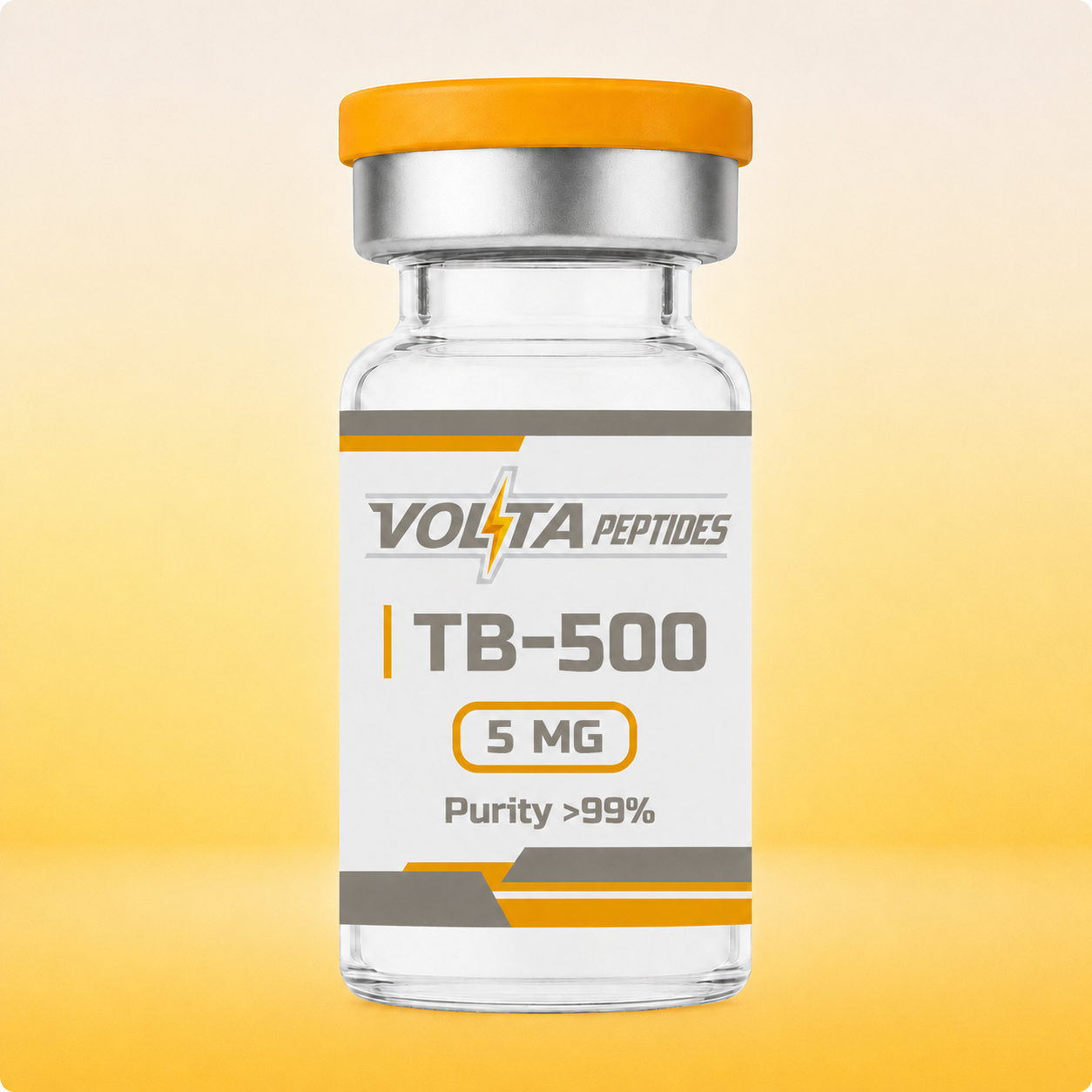
TB-500 is a synthetic, acetylated peptide fragment corresponding to the N-terminal 1–4 amino acids (Ac-Ser-Asp-Lys-Pro) of the naturally occurring protein Thymosin Beta-4 (Tβ4). The full-length Tβ4 is a 43-amino acid peptide encoded by the TMSB4X gene. Its molecular formula is C₁₉H₃₂N₄O₈. While Tβ4 is found in nearly all human cells, TB-500 is a shorter synthetic analog designed to retain key biological activities, particularly actin binding and cell motility promotion. It is supplied as a lyophilized peptide for research purposes, such as TB-500 5mg.
Proposed Mechanism of Action
Thymosin Beta-4 has been reported to bind to monomeric G-actin, sequestering it and preventing polymerization into F-actin filaments. This interaction is critical for regulating the actin cytoskeleton, which in turn influences cell migration, adhesion, and survival. In the context of neurological research, TB-500 has been proposed to:
- Promote endothelial cell migration and angiogenesis, potentially aiding revascularization after ischemic injury.
- Modulate inflammatory signaling, with some studies reporting reduced expression of pro-inflammatory cytokines (e.g., TNF-α, IL-1β) in microglial cell cultures.
- Reduce apoptosis in neuronal and glial cells following hypoxic or traumatic insult.
Note: Some foundational studies on Thymosin Beta-4’s role in cardiac and wound healing have been subject to retractions or expressions of concern (see Evidence Limitations and Retractions section). The neurological-specific mechanism literature remains largely preclinical and should be interpreted cautiously.
Preclinical Research Findings
Stroke and Ischemia Models:
Several rodent studies have investigated TB-500 in models of middle cerebral artery occlusion (MCAO). Research in this area suggests that systemic or intracerebroventricular administration of Tβ4 or its fragments can reduce infarct volume and improve sensorimotor function. For example, a study by Morris et al. (2010) in Stroke (41, 1455–1460) reported that Tβ4 treatment reduced blood-brain barrier disruption and edema in a rat MCAO model. Other groups have observed increased angiogenesis and neurogenesis in the peri-infarct region after treatment.
Traumatic Brain Injury (TBI):
In rodent controlled cortical impact models, TB-500 has been reported to improve cognitive outcomes on Morris water maze testing and reduce lesion size. A study by Xiong et al. (2011) in Journal of Neurotrauma (28, 1867–1876) found that Tβ4 treatment decreased microglial activation and promoted white matter integrity after TBI. However, these findings come from a limited number of labs, and replication efforts are sparse.
Neuroinflammation and Microglial Modulation:
In vitro studies using lipopolysaccharide (LPS)-stimulated microglial cell lines have shown that Tβ4 can shift microglial polarization from a pro-inflammatory (M1) to an anti-inflammatory (M2) phenotype. Preliminary evidence suggests this may involve downregulation of NF-κB signaling. These findings are based on cell culture work and have not been consistently replicated in vivo.
Spinal Cord Injury:
A small number of rodent studies have explored TB-500 in spinal cord contusion models. Results indicate improved locomotor recovery (Basso-Beattie-Bresnahan score) and reduced cavitation at the injury site. The evidence base remains limited, with no independent replication published to date.
Evidence Limitations and Retractions
The literature on Thymosin Beta-4 has been affected by retractions and expressions of concern. Notably, several high-profile papers from the lab of Dr. Piero Anversa (Harvard/Brigham and Women’s Hospital) on Tβ4’s role in cardiac regeneration were retracted due to data fabrication. While these retractions involve cardiac studies, they raise concerns about the reliability of Tβ4 research broadly, including neurological work from overlapping research groups.
Specific issues include:
- Retractions of papers claiming Tβ4 activates cardiac stem cells (e.g., Boni et al., Circulation Research, 2018, retracted 2020).
- Expressions of concern on papers examining Tβ4 in stroke models from the same lab.
As a result, the neurological evidence base for TB-500 should be considered preliminary and not independently validated. As of July 2026, no registered human clinical trials for TB-500 in neurological conditions were identified on ClinicalTrials.gov.


Safety Considerations
Safety data for TB-500 in the context of neurological research are extremely limited. Most toxicology studies have been conducted in non-CNS contexts (e.g., wound healing in rodents). Potential concerns include:
- Angiogenesis risk: Promotion of new blood vessel growth could theoretically support tumor growth or exacerbate vascular malformations in the brain.
- Immunogenicity: As a synthetic peptide, TB-500 may elicit an immune response in vivo, though this has not been systematically studied in CNS models.
- Lack of pharmacokinetic data: How TB-500 crosses the blood-brain barrier (if at all) is not well characterized. Some studies suggest it may enter the CNS after systemic administration, but data are inconsistent.
TB-500 is not approved for human use by the FDA, EMA, or any other regulatory body. All available data are from laboratory research.
Current Research Status
Research on TB-500 in neurological applications remains at an early preclinical stage. Current efforts are focused on:
- Elucidating the molecular pathways downstream of actin binding in neurons and glia.
- Developing more stable analogs with improved CNS penetration.
- Exploring combination therapies (e.g., with stem cells or other peptides).
No clinical trials are registered for TB-500 in stroke, TBI, or neurodegenerative diseases. The peptide is available for research purposes from suppliers like Volta Peptides, where it is sold for laboratory investigation only. For more background on peptide terminology, see the Peptide Glossary. For details on product purity and testing, refer to Quality & Testing.
Frequently Asked Questions
How does TB-500 differ from full-length Thymosin Beta-4?
TB-500 is a synthetic tetrapeptide (Ac-SDKP) that corresponds to the N-terminal active sequence of full-length Thymosin Beta-4. It is designed to be more stable and easier to synthesize, but it may not replicate all functions of the full-length protein, particularly those involving C-terminal domains.
Has TB-500 been studied in human neurological conditions?
No. As of July 2026, there are no published human clinical trials or registered studies investigating TB-500 for any neurological condition. All evidence comes from in vitro and rodent models.
What are the main limitations of the current evidence?
The evidence is limited by small sample sizes, lack of independent replication, retractions in the broader Tβ4 literature, and absence of human data. Most studies come from a single research group, and the mechanisms proposed are not fully validated in vivo.
Is TB-500 considered safe for research use?
In laboratory settings, TB-500 is handled as a research chemical with standard precautions. However, its safety profile in the CNS is not established, and no long-term toxicology studies have been performed in neurological models.
References
Morris, D. C., et al. (2010). "Thymosin beta-4 improves functional neurological outcome in a rat model of embolic stroke." Stroke, 41, 1455–1460.
Xiong, Y., et al. (2011). "Thymosin beta-4 treatment improves cognitive function and reduces neuroinflammation after traumatic brain injury in mice." Journal of Neurotrauma, 28, 1867–1876.
Boni, A., et al. (2018). "Thymosin beta-4 activates cardiac stem cells and promotes myocardial repair." Circulation Research, 123, 1041–1053. [RETRACTED]
Research-Only Disclaimer
TB-500 is sold for laboratory research purposes only. It is not approved for human consumption, medical treatment, or veterinary use. No claims of therapeutic efficacy are made. Researchers should consult their institution’s safety and ethics guidelines before use. For full terms, see the Research Disclaimer.
Reviewed by the Volta Peptides Research Team


