


Ipamorelin 10mg Peptide
For in-vitro laboratory research only. Not for human or animal administration.
Batch #: VPIP10100
Get Notified When Available
This product is currently out of stock. Enter your email and we'll notify you the moment it's back.
Lab Verified
Certificate of Analysis
Ipamorelin 5mg COA, reported September 27, 2026.
Covers the 5mg vial of Ipamorelin, not the 10mg.
Lot VPIP5100
Batch Purity (5mg vial)
99.5%
Mass / Quantity
5.71 mg net peptide
Research Use Only
For in-vitro laboratory research by qualified professionals only. Not for human or animal administration. Not a drug, food, cosmetic or dietary supplement. Not intended to diagnose, treat, cure, mitigate or prevent any disease. Batch-specific Certificates of Analysis available for all products.
Ipamorelin 10mg: overview
What the vial contains and what the material is, stated as specifications rather than as outcomes.
Ipamorelin supplied as a lyophilized powder in a sealed single-use vial containing 10 mg of material. Ipamorelin: molecular formula C₃₈H₄₉N₉O₅, molecular weight 711.85 g/mol, CAS 170851-70-4. Released to a specification of >99% purity by HPLC. Soluble in bacteriostatic water. Supplied for in-vitro laboratory research only. Not a drug, food or supplement. Not for human or veterinary use.
Volta does not provide dosing, administration or protocol guidance for any material listed.
Ipamorelin 10mg specifications
Every field the product record holds. A field with no value is omitted rather than printed as a dash.
- Fill
- 10mg
- Form
- Lyophilized powder
- CAS number
- 170851-70-4
- Molecular formula
- C₃₈H₄₉N₉O₅
- Molecular weight
- 711.85 g/mol
- Solubility
- Soluble in bacteriostatic water
- Shelf life
- 24 months from date of manufacture
Ipamorelin analytical verification and batch documentation
What the purity figure on this page is, who measured what, and which of the two a reader is looking at.
Specification. Every batch is released to >99% purity by HPLC. That is a threshold Volta sets, and it is a promise rather than a measurement.
Measurement. SideChain Analytics reported 99.5% by HPLC-MS/MS for lot VPIP5100 on September 27, 2026, and confirmed identity at an observed mass of 5.71 mg net peptide. That report covers the 5 mg fill of this compound, not the 10 mg fill. Results on a certificate relate only to the sample the laboratory received.
The certificate can be checked against the laboratory rather than against us: verify on SideChain Analytics.
Checking a certificate. The batch number printed beside the price is derived from the compound code and the vial strength; the lot number on a certificate is transcribed from the document. They are produced independently, so comparing them is a real check. How to read one is set out in the quality and testing methodology page.
For in-vitro laboratory research by qualified professionals only. Not for human or animal administration. Not a drug, food, cosmetic or dietary supplement. Not intended to diagnose, treat, cure, mitigate or prevent any disease.
Ipamorelin is a short peptide that binds the ghrelin, or growth hormone secretagogue, receptor with exceptional selectivity. Research records it halting corticosteroid-driven bone loss entirely and producing a four-fold increase in bone formation, alongside a systemic rise in bone mineral density. It reduces nitrogen wasting in the liver and improves nitrogen balance, which counteracts the catabolic effect glucocorticoids have on muscle. It also potentiates insulin release, by indirect stimulation of the calcium channels on pancreatic islet cells. Further work covers its effect on post-operative ileus, where it shortens time to first meal by approximately 12 hours, and its promise as a PET probe for diagnosing cancers and heart failure by way of that same ghrelin receptor binding. This 10mg vial provides ample material for comprehensive GH-axis modulation research.
- Released to a >99% purity specification by HPLC
- Lyophilized powder, 10mg per vial
- Soluble in bacteriostatic water
- For laboratory research use only
Frequently Bought Together

Ipamorelin 10mg
10mg
$49 USD
Bundle & Save
$123 USD
Save $6.15 USD
$172 USD
Save $17.20 USD
$208 USD
Save $31.20 USD
$243 USD
Save $48.60 USD
Click any product above to toggle selection
Related research materials


Ipamorelin 10mg: what is in the vial
The arithmetic specific to this 10mg vial, and what a milligram of Ipamorelin costs in each strength the catalogue carries. Concentrations are stated, not recommended.
Vial contents
10 mg
Lyophilised powder, reconstituted by the buyer
Cost of material
$4.90 / mg USD
CA$7 / mg in Canadian dollars
Concentration at each diluent volume
10 mg of dry material reaches these concentrations in the volumes below. A U-100 syringe marking is 0.01 ml by definition, so the last column is a unit conversion at each concentration rather than a quantity to use.
| Diluent added | Concentration | In 0.1 ml | Per U-100 unit |
|---|---|---|---|
| 1 ml | 10 mg/ml | 1 mg | 100 mcg |
| 2 ml | 5 mg/ml | 500 mcg | 50 mcg |
| 3 ml | 3.33 mg/ml | 333.3 mcg | 33.3 mcg |
| 5 ml | 2 mg/ml | 200 mcg | 20 mcg |
For a volume this table does not list, the reconstitution calculator takes any vial size and diluent volume.
Ipamorelin by the milligram
The same compound in every strength the catalogue carries, priced per milligram of material so the vials are comparable. Larger is not automatically cheaper.
| Vial | Price USD | Per mg USD | Per mg CAD |
|---|---|---|---|
| 5mg | $36 | $7.20 | CA$10.40 |
| 10mgthis pageout of stock | $49 | $4.90 | CA$7 |
The 10mg vial is the cheapest material in this range at $4.90 per mg, which is this page.
Per-unit figures are quoted in US and Canadian dollars so the vials stay comparable against each other. The price you are charged is the one in the currency selected at the top of the page, and it is converted from the same US dollar base as the figures here.
Ipamorelin purity and identity: how the figure is measured
What >99% (HPLC) means, the masses an identity check has to land on, and the entries that make a certificate of analysis checkable rather than decorative.
Stated purity
>99% (HPLC)
Area percent of the main peak by reversed-phase HPLC
Average mass
711.85 g/mol
The figure an identity check has to land on
Identity by mass: the ions to expect
An electrospray source protonates the molecule rather than weighing it neutral, so a spectrum shows a series of charge states rather than the molecular weight itself. These are the m/z values 711.85 g/mol produces, and they are what a mass spectrum on a certificate for Ipamorelin has to match.
| Ion | Charge | Expected m/z |
|---|---|---|
| [M+H]+ | 1+ | 712.86 |
What a certificate for Ipamorelin should carry
A purity percentage on its own is not checkable. These are the entries that make one verifiable, and their absence is the most common weakness in a research-peptide certificate.
The chromatogram, not only the number
A stated area percent with no trace behind it cannot be read for the shape of the main peak or for what eluted beside it. The HPLC interpreter walks through what a trace shows.
Net peptide content, separately from gross mass
A lyophilised peptide is a salt, usually of trifluoroacetic or acetic acid, plus residual water. The vial's stated milligrams are gross; net peptide content is the fraction of that mass which is the molecule. The two differ by ten to twenty percent routinely, and only one of them is what the price is per milligram of. The net peptide content calculator converts between them.
The counterion, named
Which salt form the powder is in changes the net content and the pH the powder dissolves at. A certificate that never names it leaves both unknowable.
Water content, by a stated method
Loss on drying and Karl Fischer titration give different numbers, and a water figure with no method attached cannot be compared with anyone else's.
A laboratory and a report identifier
Without both, nothing on the document can be traced back to the laboratory that issued it. The red flag checker lists the rest.
Batch certificates are published as page images in the certificate library. The source PDFs are never served: a certificate is the most forgeable document a supplier publishes, and an editable copy carrying an accredited laboratory's letterhead is worth more to a counterfeiter than to a customer.
Ipamorelin storage and stability
Handling as the product record states it, followed by the degradation chemistry this particular sequence is and is not exposed to.
Handling
Store lyophilized peptide at -20°C in a dry, dark environment. Reconstitute in bacteriostatic water. Once reconstituted, store at 2-8°C and use within 30 days. Avoid repeated freeze-thaw cycles. Lyophilized powder is stable at room temperature for shipping and short-term storage.
A residue-level stability profile needs a primary sequence of standard amino acids. This compound's sequence carries modified or non-standard residues, so no finding is derived for it rather than one being estimated from a partial reading. The storage guide covers the general case.
Ipamorelin compared with GHRP-6 and Sermorelin
Pharmacological class, half-life, evidence grade, competition status and cost per milligram, side by side.
| Compound | Class | Half-life | Evidence | WADA | Cheapest per mg |
|---|---|---|---|---|---|
| Ipamorelinthis page | Growth Hormone Secretagogue | ~2 hours | DPreclinical | Prohibited | $7.205mg vial |
| GHRP-6 | Growth Hormone Secretagogue | ~15–60 minutes | DPreclinical | Prohibited | $6.635mg vial |
| Sermorelin | Growth Hormone Secretagogue | ~10–20 minutes | CPhase I–II Clinical Trials | Prohibited | $6.9010mg vial |
| GHRP-2 | Growth Hormone Secretagogue | ~15–60 minutes | CPhase I–II Clinical Trials | Prohibited | $5.605mg vial |
| Tesamorelin | Growth Hormone Secretagogue | ~26–38 minutes | AFDA Approved | Prohibited | $7.4010mg vial |
Evidence grades and half-lives are as recorded in the compound database, which cites its own sources on each compound page. Per-milligram prices are the cheapest strength each compound is currently listed at, in US dollars, and an out-of-stock note means that figure is not purchasable today. Cross-trial comparisons of efficacy are not comparisons: no head-to-head trial exists for most of these pairs.
Ipamorelin in Canada
Price in Canadian dollars, where the parcel ships from, and how long it takes.
Price in CAD
CA$70
The figure charged, not a converted estimate
Ships from
British Columbia
A domestic parcel, so no import clearance step
Transit
2 to 5 business days
After 1 to 2 business days of handling
Free standard shipping
Over CA$250
A bar set for this market, not converted from the US one
Ipamorelin 10mg ships from British Columbia to Canadian addresses, so the parcel never crosses a border. That removes the failure a Canadian buyer of research peptides is usually weighing: an inbound international shipment can be held for import clearance or seized, and a domestic one has no clearance step to be held at.
Shipping is quoted live against the delivery address at checkout rather than estimated here, and both the standard and express tiers show their price and transit window before a payment method is chosen. The figure the page shows is the figure the rail charges: all three settlement rails price shipping through the same functions the quote does.
The Canadian figure above is not a loose conversion. Each product's US dollar base is chosen so that the live conversion lands on the Canadian shelf price set for this market, and the result is pushed up to a whole dollar rather than left carrying cents, so one figure serves the page, the feed and every payment rail. See the shipping policy for carriers and cut-off times, and the legal position on research peptides in Canada for the regulatory picture.
What Is Ipamorelin?
Ipamorelin is a short peptide sequence that binds the ghrelin, or growth hormone secretagogue, receptor. It is among the most selective growth hormone (GH) secretagogues known: laboratory studies record no effect at all on ACTH, prolactin, follicle-stimulating hormone, luteinizing hormone, thyroid-stimulating hormone or cortisol release[1]. That degree of specificity is why it draws research interest on two fronts, as a therapeutic in its own right and as a model peptide for working out how selectivity in receptor binding is achieved.
Ipamorelin Mechanism of Action
Ipamorelin is a synthetic pentapeptide agonist at the growth hormone secretagogue receptor type 1a, the receptor whose endogenous ligand is ghrelin. It is not a growth hormone releasing hormone analogue and does not act at the GHRH receptor, which is the distinction that separates it from sermorelin, tesamorelin and the CJC-1295 family. The two receptor systems converge on the somatotroph but arrive by different routes.
The property that defined it on introduction was selectivity. The paper describing it characterised ipamorelin as the first selective growth hormone secretagogue: it released growth hormone with potency comparable to earlier secretagogues of the GHRP series, but without the accompanying release of adrenocorticotropic hormone and cortisol that those compounds produced. Earlier growth hormone secretagogues raised several pituitary axes at once, and separating growth hormone release from the corticotropic response was the advance.
Mechanistically, receptor activation on the pituitary somatotroph signals through Gq and phospholipase C, raising intracellular calcium and triggering release of stored growth hormone. Because the mechanism acts on release of an existing pool and works alongside endogenous GHRH tone rather than replacing it, the resulting secretion retains a pulsatile character rather than producing a sustained elevation.
Receptor binding
Agonism at the growth hormone secretagogue receptor 1a, the ghrelin receptor, expressed on pituitary somatotrophs and at hypothalamic sites.
Intracellular signalling
Signalling through Gq and phospholipase C raises intracellular calcium in the somatotroph, which is the proximal trigger for release of stored growth hormone.
Growth hormone release
Release of an existing stored pool rather than stimulation of synthesis, which is why the response is pulsatile and why it interacts with rather than overrides endogenous GHRH tone.
Selectivity
The defining feature. Growth hormone release occurs without the accompanying rise in adrenocorticotropic hormone and cortisol that the earlier GHRP series produced.
Downstream IGF-1
Sustained growth hormone elevation raises hepatic insulin-like growth factor 1, which mediates much of the downstream anabolic signalling attributed to the axis.
Ipamorelin Research Findings
Each entry names its model. The foundational pharmacology is well characterised; the human clinical literature for the uses most often discussed is thin.
Selective growth hormone release without corticotropic activation
The characterising study reported growth hormone release comparable in potency to GHRP-6 and GHRP-2 but without the accompanying release of adrenocorticotropic hormone and cortisol seen with those compounds, establishing it as the first selective growth hormone secretagogue.
Rodent modelDistinct receptor pathway from GHRH analogues
Ipamorelin acts at the growth hormone secretagogue receptor rather than the GHRH receptor. Reviews of the GH and IGF-1 axis describe this as the basis for combining a secretagogue with a GHRH analogue, since the two act on the same cell by different routes.
MechanisticPulsatile rather than sustained secretion
Because the mechanism releases a stored pool and works alongside endogenous GHRH tone, the secretory pattern retains pulsatility. Reviews contrast this with approaches producing a sustained elevation, which differ in their downstream receptor desensitisation profile.
MechanisticPosition within the peptide landscape assessed in recent reviews
Structured reviews of injectable peptides in sports medicine and orthopaedics have assessed ipamorelin among compounds used without approval, consistently reporting an absence of adequately powered human efficacy trials for musculoskeletal indications.
ObservationalEndocrine and metabolic context described in clinical reviews
Reviews of therapeutic peptides in endocrine and metabolic settings place ipamorelin within the growth hormone secretagogue class and summarise what is and is not established about its clinical use.
ObservationalAbsence of approved indications noted consistently
Safety and efficacy reviews of approved and unapproved peptide therapies note that ipamorelin has no marketing authorisation in any jurisdiction and that its use outside research settings is not supported by controlled trial evidence.
ObservationalIpamorelin Structure and Identifiers
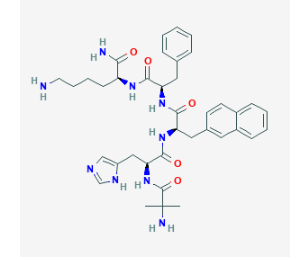
| Sequence | Aib-His-D-2Nal-D-Phe-Lys |
| Molecular Formula | C38H49N9O5 |
| Molecular Weight | 711.868 g/mol |
| CAS Number | 170851-70-4 |
| Length | 5 amino acids, C-terminally amidated |
| Receptor Target | Growth hormone secretagogue receptor 1a (ghrelin receptor) |
| Developer Code | NNC 26-0161 |
| Non-natural Residues | Aib at position 1, D-2-naphthylalanine and D-phenylalanine |
| Class | Selective growth hormone secretagogue |
| Appearance | White lyophilised powder |
| PubChem CID | 9831659 |
Offsetting Glucocorticoid Side Effects
Glucocorticoids are the class of corticosteroids used to treat inflammation across conditions ranging from cancer to autoimmune disease, and they carry a host of serious side effects that frequently limits how useful they can be. Blunting those side effects would allow higher doses and longer courses, each of which could have positive benefits on morbidity and mortality. Several studies show ipamorelin reducing, and in some cases reversing, the side effects of glucocorticoid use.
Bone Density and Bone Formation
Loss of bone density, and the fracture risk that follows it, is among the most profound problems associated with long-term glucocorticoid use. The current answers are bisphosphonates, hormone therapies and the newer monoclonal antibodies; each is an effective treatment in its own right, and each comes with side effects, limited efficacy or high cost. Ipamorelin, by contrast, is relatively inexpensive to produce and carries a very limited number of side effects.
Studies in rats show it stopping corticosteroid-driven bone loss altogether, and producing a four-fold increase in bone formation in animals exposed to those drugs[2]. Further studies find it raising bone mineral density systemically, which increases the strength of existing bone and newly formed bone alike[3]. It also offsets some of the other side effects of steroids along the way, muscle wasting and increased visceral fat deposition among them.
Muscle Catabolism and Nitrogen Balance
There is evidence to suggest that GH, and growth hormone secretagogues such as ipamorelin, reduce the catabolic effects glucocorticoids have on muscle. Rats given glucocorticoids showed a decrease in nitrogen wasting in the liver and improved nitrogen balance once ipamorelin was administered[4]. Muscle wasting is one of the primary side effects of glucocorticoid use and a common reason treatment has to stop, so countering muscle catabolism and bone-density loss with a single drug could be hugely beneficial to patients who require glucocorticoids.
Insulin Release in Diabetic Rats
Research in diabetic rats has revealed that ipamorelin can potentiate insulin release. The most likely route is indirect stimulation of the calcium channel found on the pancreatic islet cells where insulin is made and stored[5]. What the peptide does to the pancreas may sharpen understanding of the functional limitations of type 2 diabetes and lead toward novel therapeutics or even preventative measures.
Post-Operative Ileus
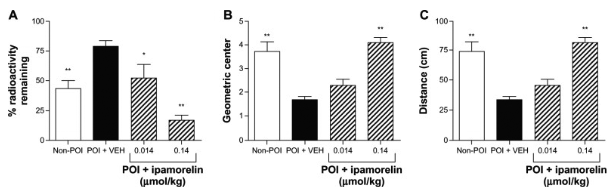
Post-operative ileus (POI) is a common condition that follows certain types of surgery, and it is particularly common after abdominal procedures. The GI system ceases to function and the patient cannot take oral nutrition as a result. Pain can be part of the picture, but the primary problem with POI is that it slows discharge from hospital and lengthens overall recovery time.
Ipamorelin has been investigated in several proof-of-concept clinical trials to determine whether administering it can reduce POI. The research suggests that it does shorten time to first meal, by approximately 12 hours[6], [7].
A Candidate PET Imaging Probe
Ipamorelin is a selective ghrelin receptor agonist and binds strongly to that receptor. The ghrelin receptor is known to increase in abundance in certain types of cancer, human carcinomas among them, and in heart failure. Putting those facts together, researchers recently speculated that ipamorelin could be used as a probe in positron emission tomography (PET) as an aid to diagnosis.
Basic in vitro studies have demonstrated the feasibility of that approach and have confirmed that ipamorelin[8], which is easy to synthesize in a lab, could theoretically be used as a PET probe.
Two Receptors, One Cell: Why the Distinction Matters
Growth hormone release from the pituitary somatotroph is controlled by at least two separate receptor systems. The GHRH receptor responds to growth hormone releasing hormone from the hypothalamus. The growth hormone secretagogue receptor responds to ghrelin. Both converge on release of growth hormone, but they are pharmacologically distinct targets.
Ipamorelin acts only at the second. Sermorelin, tesamorelin and the CJC-1295 family act at the first. This is why the two classes are frequently discussed together and why combining them is common in the literature: they are not redundant, because they engage different receptors on the same cell.
It also means results from one class should not be read across to the other. A finding about a GHRH analogue is not evidence about a secretagogue, and the two differ in their dependence on intact endogenous signalling.
What Selectivity Actually Meant Here
The earlier growth hormone releasing peptides, GHRP-6 and GHRP-2, raised growth hormone but also raised adrenocorticotropic hormone, cortisol and prolactin. That lack of specificity limited their usefulness as tools, because any observed effect could be attributed to several simultaneously altered axes.
Ipamorelin was characterised as producing comparable growth hormone release without those accompanying rises. That is what the word selective denotes in its original description, and it is a claim about specificity across pituitary axes rather than about receptor subtype selectivity in the usual pharmacological sense.
For laboratory work this matters directly: it is the property that makes ipamorelin a cleaner probe of growth hormone secretion than the compounds that preceded it.
Human Evidence and Regulatory Status
Ipamorelin has no marketing authorisation in any jurisdiction. It was investigated clinically, including for postoperative gastrointestinal indications, and did not progress to approval. There are no adequately powered, replicated human efficacy trials supporting the musculoskeletal or body composition uses most often discussed for it.
Recent structured reviews of peptides in sports medicine and orthopaedics reach the same conclusion consistently, and note in addition that it appears on prohibited lists in competitive sport. Material supplied for research is for in-vitro laboratory use only and is not a medicine.
Handling and Analytical Considerations
Ipamorelin contains three non-proteinogenic residues: alpha-aminoisobutyric acid at position one, D-2-naphthylalanine and D-phenylalanine. Those substitutions are deliberate, conferring protease resistance and receptor selectivity, and they also mean that standard enzymatic sequencing approaches behave unusually on this molecule.
The C-terminal amide is part of the specification. A free-acid version has a mass one dalton higher and is a different molecule, so the reported mass on a certificate distinguishes the intended product from a common synthesis-related variant.
Ipamorelin Research FAQ
Ipamorelin Research Summary
The findings above were observed in cell culture and in rodents, and the exposures used in those studies do not scale to humans. Ipamorelin supplied by Volta Peptides is for in-vitro laboratory research only and is not for human or animal administration.
Article Author
Marcus Hopkin, PhD, is Director of Research and Development at Volta Peptides. He has more than 12 years of analytical chemistry experience, including peptide synthesis, characterization, purity testing and stability assessment.
Scientific Journal Author
David E. Beck, MD is the co-author of "Prospective, randomized, controlled, proof-of-concept study of the Ghrelin mimetic ipamorelin for the management of postoperative ileus in bowel resection patients." He specializes in colon and rectal surgery and has contributed extensively to research on gastrointestinal recovery following surgical procedures.
Scientific References
Primary literature and public trial registries only. No supplier or retailer pages are cited.
- 1Ipamorelin, the first selective growth hormone secretagogueRaun K, Hansen BS, Johansen NL, et al. · European Journal of Endocrinology · 1998
- 2The emerging landscape of performance-enhancing peptides modulating the GH-IGF1 axisDominikowski A, Rękoś Z, et al. · Frontiers in Endocrinology · 2026
- 3Safety and Efficacy of Approved and Unapproved Peptide Therapies for Musculoskeletal InjuriesMendias CL, Awan TM, et al. · Sports Medicine · 2026
- 4Injectable Peptides in Sports Medicine: A Structured Narrative Review of Evidence and SafetyVillegas Meza AD, Nocek M, et al. · JBJS Reviews · 2026
- 5Peptide Supplements and Their Therapeutic Applications in Sports MedicineTewari K, Liu TP, et al. · American Journal of Sports Medicine · 2026
- 6Therapeutic Peptides in Aesthetic, Metabolic and Endocrine Conditions: Effects, Safety and Clinical ApplicationsRenke G, Chinellato L, et al. · International Journal of Molecular Sciences · 2026
Referenced Citations
- 1K. Raun et al., "Ipamorelin, the first selective growth hormone secretagogue," Eur. J. Endocrinol., vol. 139, no. 5, pp. 552-561, Nov. 1998.
- 2N. B. Andersen et al., "The growth hormone secretagogue ipamorelin counteracts glucocorticoid-induced decrease in bone formation of adult rats," Growth Horm. IGF Res., vol. 11, no. 5, pp. 266-272, Oct. 2001.
- 3J. Svensson et al., "The GH secretagogues ipamorelin and GH-releasing peptide-6 increase bone mineral content in adult female rats," J. Endocrinol., vol. 165, no. 3, pp. 569-577, Jun. 2000.
- 4N. K. Aagaard et al., "Growth hormone and growth hormone secretagogue effects on nitrogen balance and urea synthesis in steroid treated rats," Growth Horm. IGF Res., vol. 19, no. 5, pp. 426-431, Oct. 2009.
- 5E. Adeghate and A. S. Ponery, "Mechanism of ipamorelin-evoked insulin release from the pancreas of normal and diabetic rats," Neuro Endocrinol. Lett., vol. 25, no. 6, pp. 403-406, Dec. 2004.
- 6D. E. Beck et al., "Prospective, randomized, controlled, proof-of-concept study of the Ghrelin mimetic ipamorelin for the management of postoperative ileus in bowel resection patients," Int. J. Colorectal Dis., vol. 29, no. 12, pp. 1527-1534, Dec. 2014.
- 7B. Greenwood-Van Meerveld et al., "Efficacy of ipamorelin, a ghrelin mimetic, on gastric dysmotility in a rodent model of postoperative ileus," J. Exp. Pharmacol., vol. 4, pp. 149-155, Oct. 2012.
- 8M. M. Fowkes et al., "Peptidomimetic growth hormone secretagogue derivatives for positron emission tomography imaging of the ghrelin receptor," Eur. J. Med. Chem., vol. 157, pp. 1500-1511, Sep. 2018.
Disclaimer
All articles and product information provided on this website are for informational and educational purposes only. The products offered on this website are furnished for in-vitro studies only. These products are not medicines or drugs and have not been approved by the FDA to prevent, treat or cure any medical condition, ailment or disease.
Ipamorelin 10mg: frequently asked questions
Answered from the product record and the certificate file. Volta does not answer questions about administration, dosing or protocols.
What is supplied in a 10 mg vial of Ipamorelin?
A sealed single-use vial containing 10 mg of Ipamorelin as a lyophilized powder. Soluble in bacteriostatic water. No diluent, syringe or other supply is included.
Is Ipamorelin supplied for human use?
No. For in-vitro laboratory research by qualified professionals only. Not for human or animal administration. Not a drug, food, cosmetic or dietary supplement. Not intended to diagnose, treat, cure, mitigate or prevent any disease. Volta does not provide dosing, administration or protocol guidance for any material listed.
What purity is this Ipamorelin released to?
>99% by HPLC is the specification every batch is released to. That is a threshold Volta sets, not a measurement. SideChain Analytics separately reported 99.5% by HPLC-MS/MS for lot VPIP5100 on September 27, 2026, which covers the 5mg vial of the same compound.
Is there a certificate of analysis for this Ipamorelin vial?
Yes. The certificate is shown on this page as page images and states the laboratory, the lot number, the method and the date. The laboratory publishes its own verification page for the report, so it can be checked against SideChain Analytics rather than against us. The certificate on file covers the 5mg fill of this compound rather than the 10 mg fill.
How is Ipamorelin identified?
CAS 170851-70-4, molecular formula C₃₈H₄₉N₉O₅, molecular weight 711.85 g/mol. Those identifiers are what an incoming-goods check compares a certificate against, and they are stated here so the comparison can be made before ordering.
How should Ipamorelin be stored before reconstitution?
Store lyophilized peptide at -20°C in a dry, dark environment. Reconstitute in bacteriostatic water. Once reconstituted, store at 2-8°C and use within 30 days. Avoid repeated freeze-thaw cycles. Lyophilized powder is stable at room temperature for shipping and short-term storage.
Does Volta list other vial sizes of Ipamorelin?
Yes: 5 mg. Each size is a separate listing with its own price, batch number and certificate status.
Where does this ship from?
British Columbia, Canada. Canadian orders are domestic, so they clear no customs and pay no import duty. International orders ship from the same facility.
Related Research News
Tesamorelin vs Ipamorelin: Human Evidence, Doses, Safety
Tesamorelin holds FDA approval for HIV-associated lipodystrophy; ipamorelin has none. This page maps the published human dosing data for each and marks the gaps.
Tesamorelin vs Ipamorelin: Evidence, Uses, Risks
This article compares tesamorelin and ipamorelin based on published human evidence, highlighting what is known about their uses and risks and where direct comparative data is missing.
CJC-1295 and Ipamorelin: Human Evidence and Limits
This reference separates what human trials, animal models, and analytical chemistry show about CJC-1295 and ipamorelin from vendor marketing, assessing the strength of the human evidence base and combination-specific safety data.
Explore Research
Peptide Tools
Ipamorelin research
Ipamorelin is a pentapeptide agonist at the growth hormone secretagogue receptor, selected in the original work for releasing growth hormone without the cortisol and prolactin rise seen with earlier GHRPs. Everything Volta publishes on this compound, across every vial size, is collected on the ipamorelin selectivity evidence.
Vial sizes of this compound
- Ipamorelin 5mg
- 10mg(this page)
Research on Ipamorelin
Handling and documentation
Ipamorelin is one of the compounds in Volta's growth hormone research peptides catalogue, which collects the rest of the range studied in this area alongside the comparisons and guides that cover it.
More from the research catalogue
Every compound below has its own specification, batch number and certificate page, whether or not a vial is in stock today. Supplied for laboratory research use only.
Other vial sizes
Related research compounds
- PEG-MGF 2mgrestocking
- Sermorelin 10mg
- Sermorelin 5mgrestocking
- Semax 10mgrestocking