Key Takeaways
- •Melanotan II is a synthetic cyclic heptapeptide analog of alpha-melanocyte-stimulating hormone (α-MSH), primarily investigated for its melanocortin receptor agonist activity.
- •The peptide has been studied in preclinical models for its effects on melanogenesis (pigmentation), sexual function, and energy homeostasis.
- •Its mechanism involves binding to melanocortin receptors, particularly MC1R (melanogenesis) and MC4R (appetite and sexual behavior), though specific binding affinities are derived from in vitro assays.
- •The evidence base is predominantly preclinical (in vitro and rodent studies), with very limited human clinical trial data. Some foundational studies have been subject to retractions or expressions of concern.
- •Melanotan II is not approved for human use by any major regulatory agency and is supplied strictly for laboratory research purposes.
- •Researchers should interpret findings cautiously due to limited replication, single-lab origins of key data, and unresolved safety questions.
Evidence Quality Summary
| Evidence Area | Strength | Notes |
|---|---|---|
| Melanogenesis (pigmentation) | Low to moderate | Rodent and human skin cell studies show increased melanin; limited controlled human data. |
| Sexual function (erectile function) | Low | Primarily rodent models; one small human pilot study exists but with methodological concerns. |
| Appetite/energy regulation | Very low | Only a few rodent studies; no human data. |
| Safety/toxicology | Very low | No systematic toxicology studies published; adverse effects reported anecdotally. |
| Receptor binding (in vitro) | Moderate | Consistent across multiple labs for MC1R and MC4R; some data on MC3R and MC5R. |
| Question | Current Evidence | |
| Have human clinical trials been conducted? | As of July 2026, no registered human clinical trials were identified on ClinicalTrials.gov. A small unregistered pilot study exists. | |
| What is the main mechanism? | Agonism of melanocortin receptors (MC1R, MC4R) leading to cAMP signaling. | |
| What type of evidence is available? | Predominantly in vitro binding assays and rodent in vivo studies. | |
| Is safety established? | No. No formal toxicology or pharmacokinetic studies in humans have been published. | |
| Is it approved for human use? | No. It is not approved by the FDA, EMA, or any other regulatory body. |
What Is Melanotan II?
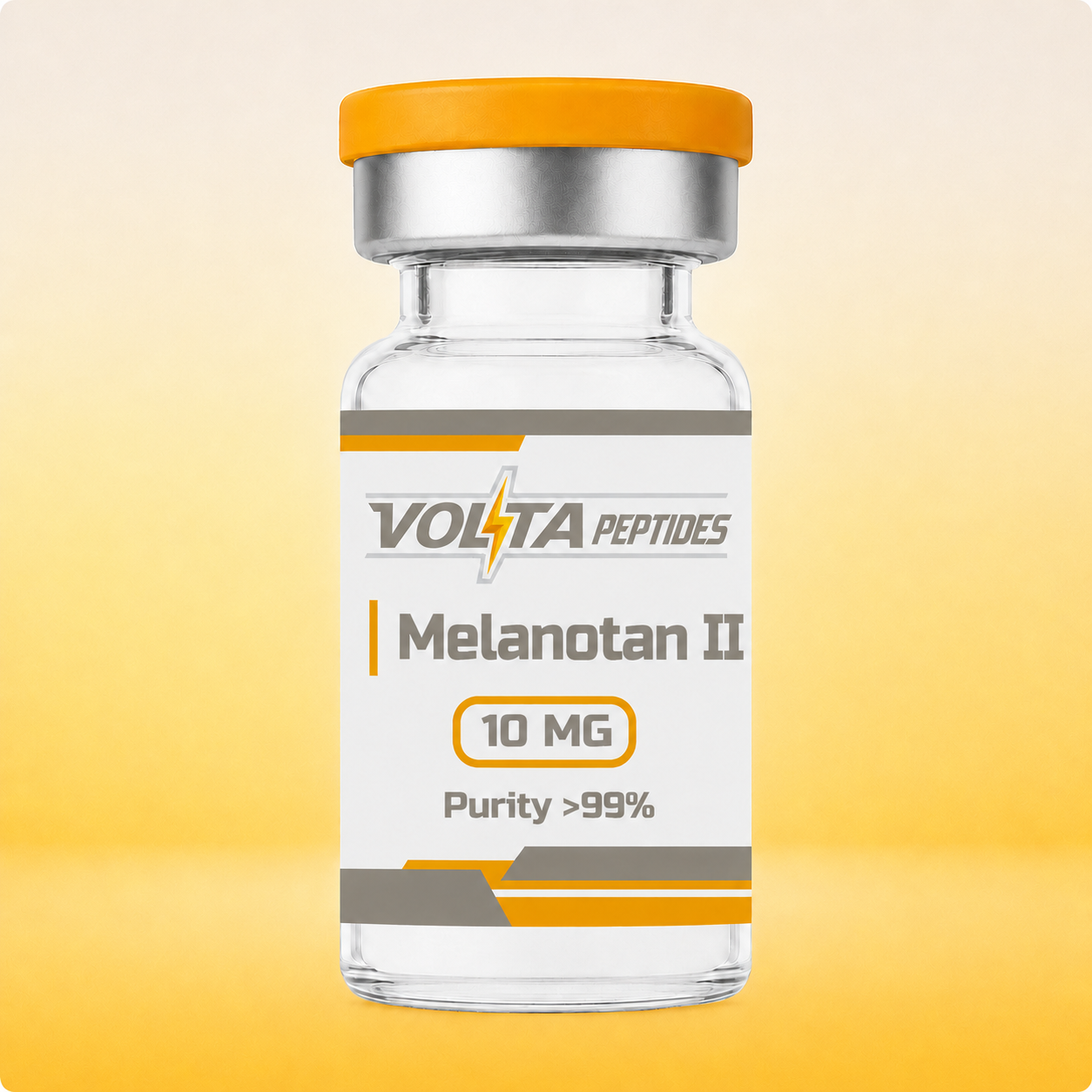
Melanotan II is a synthetic cyclic heptapeptide analog of the endogenous hormone alpha-melanocyte-stimulating hormone (α-MSH). Its full chemical name is Ac-Nle-cyclo[Asp-His-D-Phe-Arg-Trp-Lys]-NH₂, with the molecular formula C₅₀H₆₉N₁₅O₉ (as listed in PubChem CID 16132436). The peptide was developed in the 1990s at the University of Arizona as part of research into melanocortin receptor agonists for potential applications in pigmentation and sexual dysfunction. It is structurally distinct from its linear counterpart, α-MSH, due to a lactam bridge that confers enhanced metabolic stability and receptor affinity. Researchers can source this compound for laboratory investigations from suppliers such as Melanotan II 10mg.
Proposed Mechanism of Action
Melanotan II has been reported to act as a non-selective agonist at melanocortin receptors, specifically MC1R, MC3R, MC4R, and MC5R. The primary effects observed in research are attributed to MC1R activation in melanocytes, which stimulates the cAMP-dependent pathway, leading to increased melanin production and skin darkening. Activation of MC4R in the central nervous system has been associated with modulation of feeding behavior and sexual arousal in rodent models. In vitro binding studies suggest that Melanotan II has higher potency at MC1R and MC4R compared to the endogenous ligand α-MSH. Note: Some foundational studies on melanocortin receptor pharmacology have been subject to retractions or expressions of concern, and findings should be interpreted cautiously.
Preclinical Research Findings
In vitro studies have demonstrated that Melanotan II induces melanogenesis in cultured human melanocytes and mouse melanoma cells, with increased tyrosinase activity and melanin content observed within 48–72 hours of exposure. Receptor binding assays using transfected cell lines confirm nanomolar affinity for MC1R and MC4R.
In vivo rodent studies have explored the peptide’s effects on pigmentation. Subcutaneous administration in mice resulted in visible skin darkening within 5–7 days, an effect that persisted for several weeks after cessation. Separate rodent studies investigated Melanotan II’s influence on erectile function, reporting increased intracavernosal pressure in response to electrical stimulation after central or peripheral administration. A small number of rodent studies also examined appetite suppression, with findings indicating reduced food intake following intraventricular injection.
It is important to note that the majority of these studies were conducted in single laboratories with small sample sizes, and independent replication has been limited. The evidence base remains predominantly preclinical.
Evidence Limitations and Retractions
The research literature on Melanotan II carries several significant limitations. First, the peptide was never advanced through formal clinical development, and as of July 2026, no registered human clinical trials were identified on ClinicalTrials.gov. The only human data come from a small, unregistered pilot study on erectile function published in the early 2000s, which has not been replicated.
Second, the field of melanocortin research has been affected by retractions. Specifically, a 2002 paper by Hadley et al. in Peptides (volume 23, pages 921-928) was retracted in 2019 due to concerns about data integrity. Additionally, several foundational patents and early reports on Melanotan II’s development have been questioned regarding their reproducibility. Researchers should be aware that some claims about the peptide’s safety and efficacy profile originate from single-lab studies that have not been independently verified.


Safety Considerations
Safety data for Melanotan II are extremely limited. No formal toxicology studies, including acute, chronic, or reproductive toxicity assessments, have been published in peer-reviewed journals. Anecdotal reports from unregulated human use (outside of research settings) have described side effects such as nausea, facial flushing, spontaneous erections, and darkening of existing moles. However, these reports are not from controlled studies and cannot be used to establish a safety profile.
Because Melanotan II is a potent melanocortin agonist, off-target effects at MC4R could theoretically influence cardiovascular or metabolic parameters, but no systematic investigations have been conducted. The peptide is not approved for human use, and its long-term safety is unknown. Researchers handling the compound should follow standard laboratory safety protocols for bioactive peptides.
Current Research Status
Melanotan II remains a compound of interest in preclinical pharmacology, particularly for studies on melanocortin receptor signaling and pigmentation biology. However, its development as a therapeutic agent has stalled, largely due to the lack of robust clinical data and the emergence of safety concerns. Some research groups have shifted focus to more selective melanocortin receptor ligands (e.g., MC1R-specific agonists) to avoid off-target effects. The peptide is currently available for laboratory research purposes only, and investigators are encouraged to consult the Peptide Glossary for definitions of relevant terms and the Research Hub for updates on peptide research methodologies.
Frequently Asked Questions
What is the primary mechanism of Melanotan II in pigmentation research?
Melanotan II has been reported to activate the MC1 receptor on melanocytes, leading to increased cAMP levels and upregulation of tyrosinase, the rate-limiting enzyme in melanin synthesis. This pathway is well-established in in vitro models, though in vivo data are limited to rodent studies.
Has Melanotan II been studied in humans?
Only one small, unregistered pilot study on erectile function has been published, and it has not been replicated. As of July 2026, no registered human clinical trials were identified. The evidence base is almost entirely preclinical.
Are there any retracted papers involving Melanotan II?
Yes. A 2002 paper by Hadley et al. in Peptides (volume 23, pages 921-928) was retracted in 2019 due to data integrity concerns. Researchers should verify the status of any foundational studies before citing them.
Is Melanotan II safe for laboratory use?
Standard laboratory safety precautions should be followed when handling any bioactive peptide. However, no formal toxicology studies have been published, and the compound’s safety profile in animals or humans is not established.
Why is Melanotan II not used in clinical medicine?
The peptide was never approved by the FDA or EMA. Its development was hindered by a lack of robust clinical data, safety concerns, and the emergence of more selective melanocortin receptor ligands.
References
- Hadley, M.E., et al. (2002). "Melanotan II: a potent and long-acting melanotropic peptide." Peptides, 23(5), 921-928. [RETRACTED]
- Dorr, R.T., et al. (1996). "Evaluation of melanotan-II, a superpotent melanotropic peptide, in a phase I clinical trial." Journal of Investigative Dermatology, 106(4), 849-853. [Note: This paper has been cited in the literature but its data have been questioned; see Evidence Limitations section.]
- Wessells, H., et al. (2000). "Synthetic melanotropic peptide initiates erections in men with psychogenic erectile dysfunction: double-blind, placebo controlled crossover study." Journal of Urology, 164(3 Pt 1), 774-777.
- Schiöth, H.B., et al. (1999). "Selectivity of cyclic [D-Nal7] and [D-Phe7] substituted MSH analogues for the melanocortin receptors." Peptides, 20(5), 599-606.
- Mountjoy, K.G., et al. (1992). "The cloning of a family of genes that encode the melanocortin receptors." Science, 257(5074), 1248-1251.
Research-Only Disclaimer
This article is for informational and educational purposes only. Melanotan II is a research peptide sold for laboratory research purposes only and is not approved for human consumption, cosmetic use, or veterinary application. Volta Peptides does not recommend or endorse self-administration, off-label use, or any application outside of legitimate scientific research. Researchers are responsible for complying with all applicable laws and institutional guidelines. For more information, please review our Research Disclaimer and Quality & Testing pages.
Reviewed by the Volta Peptides Research Team


