
Key Takeaways
- •Collagen remodeling in skin and tendon models
- •Antioxidant defense mechanisms in oxidative stress assays
- •Cell migration and proliferation in fibroblast cultures
- •Angiogenic signaling in endothelial cell lines
GHK-Cu, also known as copper peptide or copper tripeptide, is a naturally occurring compound that has drawn significant attention in preclinical research for its effects on tissue repair and cellular regeneration. First characterized by Dr. Loren Pickart, this peptide is studied for its ability to stimulate collagen synthesis, upregulate antioxidant genes, and accelerate wound healing in experimental models.
What Does GHK-Cu Mean in Peptide Research?
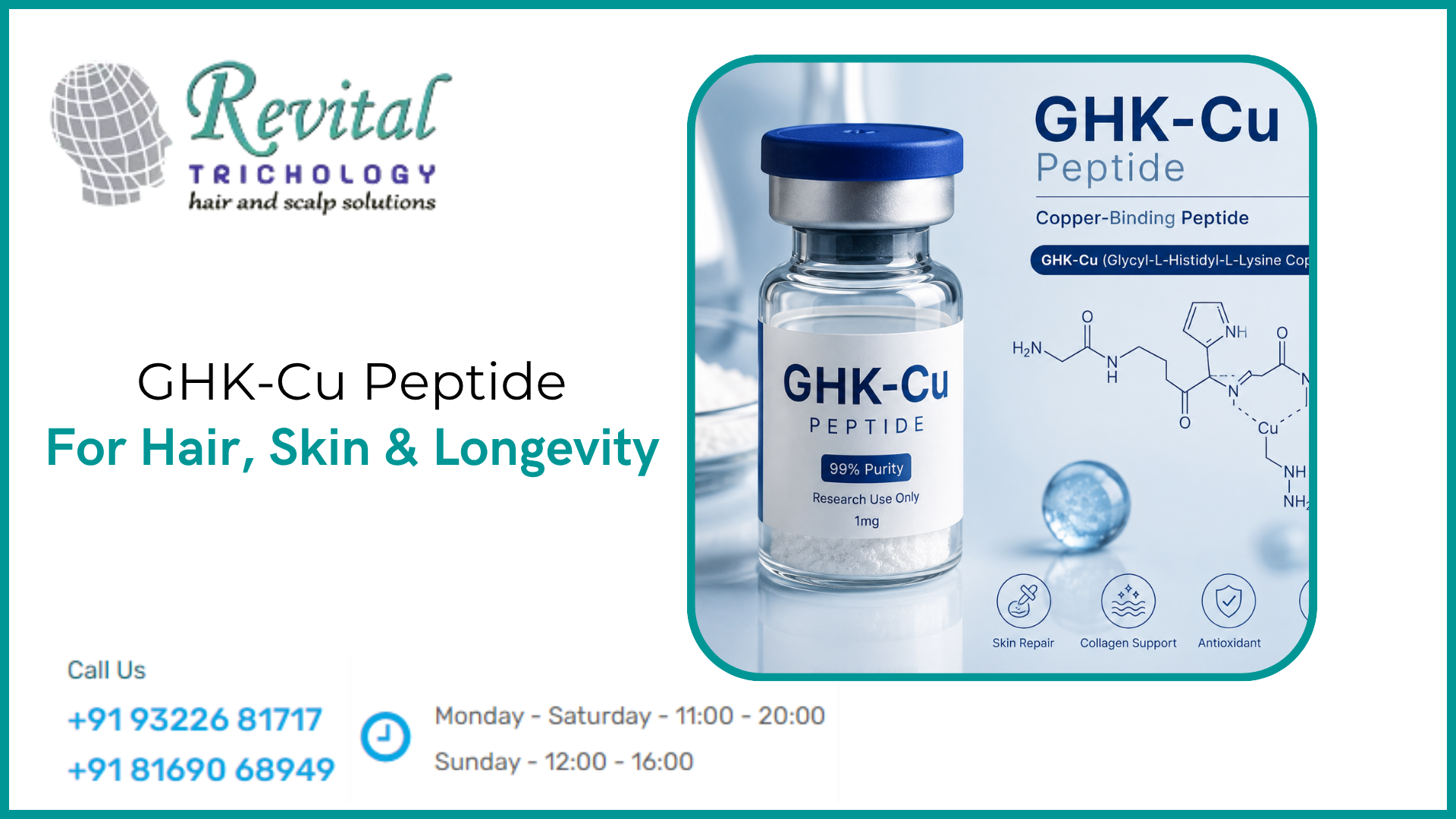
GHK-Cu stands for glycyl-L-histidyl-L-lysine, a tripeptide that binds copper ions. In research settings, GHK-Cu is classified as a copper peptide and is investigated for its broad transcriptional effects across tissue repair pathways. According to Pickart's documented research, GHK-Cu influences multiple biological processes including cell migration, angiogenesis, and extracellular matrix remodeling.
The compound is frequently examined alongside other repair-focused peptides such as BPC-157 and TB-500, though GHK-Cu's mechanism centers on copper-dependent enzyme activation and gene expression changes. Researchers use GHK-Cu to probe how copper availability affects wound healing and dermal regeneration at the molecular level.
Mechanisms of Action in Cellular Repair
GHK-Cu's primary research applications involve collagen synthesis stimulation and antioxidant gene upregulation. In preclinical models, the peptide has been shown to increase the production of collagen types I and III, which are critical for structural integrity in connective tissues. Additionally, GHK-Cu modulates the expression of superoxide dismutase and other antioxidant enzymes, reducing oxidative stress in damaged cells.
Cell migration and angiogenesis are also key areas of study. GHK-Cu appears to promote endothelial cell proliferation and tube formation, suggesting a role in revascularization during tissue repair. These effects make it a candidate for research into chronic wounds, skin aging, and fibrotic conditions.
Research Applications and Models
GHK-Cu is most commonly studied in models of dermal wound healing, but its applications extend to other tissue types. Researchers have investigated its effects on:
- Collagen remodeling in skin and tendon models
- Antioxidant defense mechanisms in oxidative stress assays
- Cell migration and proliferation in fibroblast cultures
- Angiogenic signaling in endothelial cell lines
The compound is typically administered in controlled laboratory settings, with doses and protocols varying by study design. For researchers planning experiments, using a reconstitution calculator ensures accurate preparation and dosing.


Practical Validation Criteria for Researchers
When sourcing GHK-Cu for research, purity and documentation are critical. All research-grade compounds should be verified with published certificates of analysis (COA). For GHK-Cu, a minimum purity of 99% as verified by HPLC is standard in preclinical studies.
Volta Peptides provides GHK-Cu 50mg with full COA documentation, allowing researchers to confirm peptide identity and purity before use. Additional tools such as the peptide glossary and stability calculator support proper handling and storage.
Related Research Compounds
Looking for high-purity research peptides? Browse our catalog for HPLC-verified compounds.
| Compound | Purity | Size | Price |
|---|---|---|---|
| BPC-157 5mg | >99% | 5mg | $34.00 |
| TB-500 5mg | >99% | 5mg | $29.00 |
| GHK-Cu 50mg | >99% | 50mg | $24.00 |
| BPC-157 10mg | >99% | 10mg | $44.00 |
Frequently Asked Questions
What does GHK-Cu mean in peptide research?
GHK-Cu refers to the copper-binding tripeptide glycyl-L-histidyl-L-lysine, studied for its roles in collagen synthesis, antioxidant regulation, and wound healing in preclinical models.
Which Volta resources help verify GHK-Cu?
Volta Peptides offers a peptide purity analyzer and published COAs for all compounds, including GHK-Cu. Researchers can also use the interaction checker to assess potential combinations with other peptides in repair-focused protocols.
Conclusion
GHK-Cu remains a valuable tool for researchers investigating copper-dependent repair mechanisms, collagen synthesis, and antioxidant pathways. By understanding its documented effects and using validated research compounds, scientists can design strong experiments in tissue repair and regeneration. For further reading, explore the BPC-157 research guide and TB-500 research guide for complementary peptide studies.


