
Key Takeaways
- •BPC-157 and GHK-Cu rank among the most researched peptides.
- •This comparison draws from published preclinical and clinical studies.
- •BPC-157 consists of 15 amino acids.
BPC-157 vs GHK-Cu: Comparing Top Research Peptides
BPC-157 and GHK-Cu rank among the most researched peptides. They appear often in scientific literature and research protocols. Although sometimes paired together, these peptides differ in structure, action, and uses.
This comparison draws from published preclinical and clinical studies. It covers research observations only, without therapeutic advice. Check the BPC-157 Research Guide for detailed coverage of BPC-157.
Core Profiles
BPC-157 consists of 15 amino acids. It comes from a protective protein in human gastric juice. Studies examine its roles in tissue repair, new blood vessel formation, and growth factor pathways.
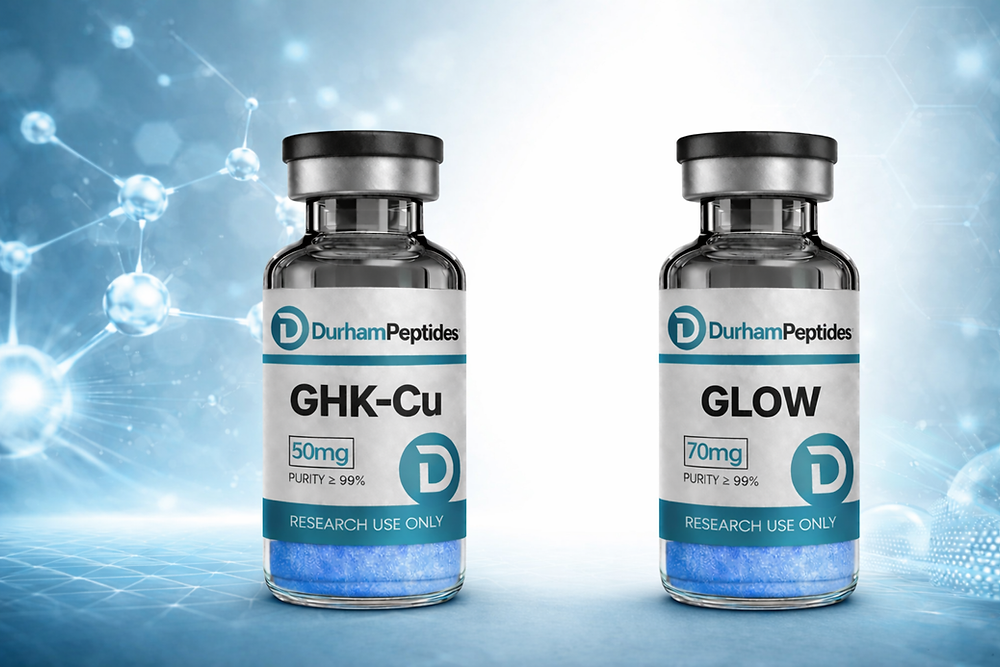
GHK-Cu contains three amino acids bound to copper. Glycine, histidine, and lysine form this tripeptide found in human plasma, saliva, and urine. Research highlights its effects on gene activity, skin repair, and anti-aging processes.
These peptides target separate pathways. They serve as tools for distinct research goals rather than substitutes.
Structural Details
BPC-157 features 15 amino acids in a linear synthetic chain. Its molecular weight reaches about 1419 daltons. It lacks metal binding.
GHK-Cu uses just three amino acids plus a copper(II) ion. The peptide portion weighs around 340 daltons. This basic design lowers production demands compared to longer peptides.
The size gap affects synthesis. Simpler structures like GHK-Cu generally cost less to make. Use the Peptide Glossary to understand terms like daltons and synthesis.
Action Mechanisms
BPC-157 research covers several areas. Studies note new blood vessel growth in injured areas, changes in VEGFR2 activity, increased growth factors, protection for gut, blood vessels, and muscles, plus wound repair across tissues.
GHK-Cu studies show broad gene changes in microarray data, boosted collagen production, skin restructuring, antioxidant protection via copper, wound healing in skin, and aging-related cell functions.
No major overlap exists. BPC-157 acts locally on blood vessels and growth signals. GHK-Cu influences genes widely with copper support.
Research Foundations
BPC-157 draws from many preclinical studies in rats and mice. Work spans tendons, ligaments, muscles, gut, and vessels. Clinical data lags behind some peptides, but it leads discussions in research circles.
GHK-Cu boasts over 100 studies across five decades. These include cell cultures, animals, and human trials, especially in skin and wounds. It holds one of the biggest literature sets among peptides.
Both bases support ongoing work. GHK-Cu's history provides a strong start for skin-focused projects.
Cost Factors
Manufacturing drives prices. GHK-Cu's short chain keeps it among lower-cost options per milligram.
BPC-157 sits in the middle range. It costs more per mg than GHK-Cu but less than complex modified peptides.
Structural needs explain these patterns. Researchers can use tools like the Cost Per Dose Calculator for planning.


Pairing in Protocols
Distinct actions make these peptides suitable partners. They join other compounds like TB-500 in multi-peptide setups for varied pathways: gene shifts, vessel growth, and cell movement.
Adding agents like KPV brings anti-inflammatory effects. Such stacks aim for combined results beyond single peptides.
Research supports these mixes for broader outcomes. See the TB-500 Research Guide for details on that peptide.
Selection Guide
Pick BPC-157 for tissue repair, vessel growth, or growth factor studies. It fits gut, vessel, or muscle work and builds on its preclinical data.
Select GHK-Cu for gene modulation, skin collagen, or anti-aging. Its vast studies aid skin and wound projects.
Use both for projects needing repair plus gene effects. Multi-pathway goals benefit from combinations.
Quality Benchmarks
Both follow standard production via solid-phase peptide synthesis with synthetic amino acids. No animal materials appear.
Expect at least 99% purity by HPLC. Mass spectrometry verifies identity.
Third-party tests confirm these traits. Tools like the Purity Analyzer help assess batches. Visit Free peptide tools for more options.
Key Questions
Main difference? BPC-157 uses local vessel and growth signals. GHK-Cu alters gene expression. Separate paths for unique questions.
Bigger research base? GHK-Cu, with over 100 studies over five decades. BPC-157 offers solid preclinical work.
Cheaper option? GHK-Cu, thanks to its three-amino-acid build. BPC-157 ranks mid-tier.
Combine them? Yes, complementary actions suit joint use in multi-peptide research.
One superior? No universal winner. Choices match specific research needs.
BPC-157 and GHK-Cu complement each other in peptide research. Their differences enable targeted or combined studies. Researchers gain from understanding these profiles for precise applications.
Related Research Compounds
Looking for high-purity research peptides? Browse our catalog for HPLC-verified compounds.
| Compound | Purity | Size | Price |
|---|---|---|---|
| BPC-157 5mg | >99% | 5mg | $34.00 |
| TB-500 5mg | >99% | 5mg | $29.00 |
| BPC-157 10mg | >99% | 10mg | $44.00 |
| GHK-Cu 50mg | >99% | 50mg | $24.00 |


