bpc-157
25 articles tagged with ‘bpc-157’

What Is Deadpool Peptide Blend?
At least three different vials are sold as "Deadpool blend", sharing only BPC-157, TB-500 and a Marvel character. What each version actually contains, why a large share of Cartalax listings print Bronchogen's sequence instead, what the published literature does and does not support for each component, and why a purity figure on a four-peptide certificate has stopped meaning what it means on a single-peptide one.
TB-500 vs BPC-157: Evidence, Dosing, Safety Compared
This reference compares TB-500 and BPC-157 across mechanism, dosing, evidence, safety, and pharmacokinetics, highlighting the thin comparative evidence and the need for further study.
Peptides Studied for Hair Follicle Regeneration: A Research Overview
Research on peptides for hair health focuses on compounds like GHK-Cu, BPC-157, TB-500, and zinc thymulin. Preclinical studies explore follicle regeneration, hair cycle regulation, and scalp tissue repair. This guide summarizes the mechanisms and findings from recent laboratory research.
BPC-157 10mg Research: Preclinical Evidence, Molecular Profile & Quality Standards
BPC-157 10mg research overview covering preclinical evidence, molecular profile, storage, and quality documentation for laboratory use.
Research Peptides: Classification, Applications, and Regulatory Framework
A comprehensive review of research peptide classification, mechanisms, preclinical evidence, regulatory frameworks, and safety considerations for laboratory use.
Premium Research Peptides: What Defines Research-Grade Quality
Explore what defines research-grade peptide quality, from purity and characterization to evidence standards and safety considerations.
How Does BPC-157 Protect Organs During Infection? A Review of Cytoprotective Research
Explore BPC-157's cytoprotective mechanisms during infection in preclinical research. A review of evidence, limitations, and safety considerations.
Peptides vs SARMs: Key Differences in Research Applications
Compare peptides vs SARMs for research: mechanisms, evidence quality, safety profiles, and key differences in preclinical applications.
Peptide Research Guide 2026: Key Developments and Trends
Explore key peptide research trends for 2026, including emerging compounds, evidence quality, safety considerations, and preclinical findings.
What Are Peptides? Part 2: Advanced Concepts in Peptide Science
Explore advanced peptide science concepts including mechanisms, preclinical evidence, research limitations, and safety considerations for laboratory research.
Synergistic Regeneration: BPC-157, Thymosin Beta-4, and GHK-Cu in Healing Research
Explore the synergistic potential of BPC-157, Thymosin Beta-4, and GHK-Cu in regenerative research. Preclinical evidence and mechanisms reviewed.
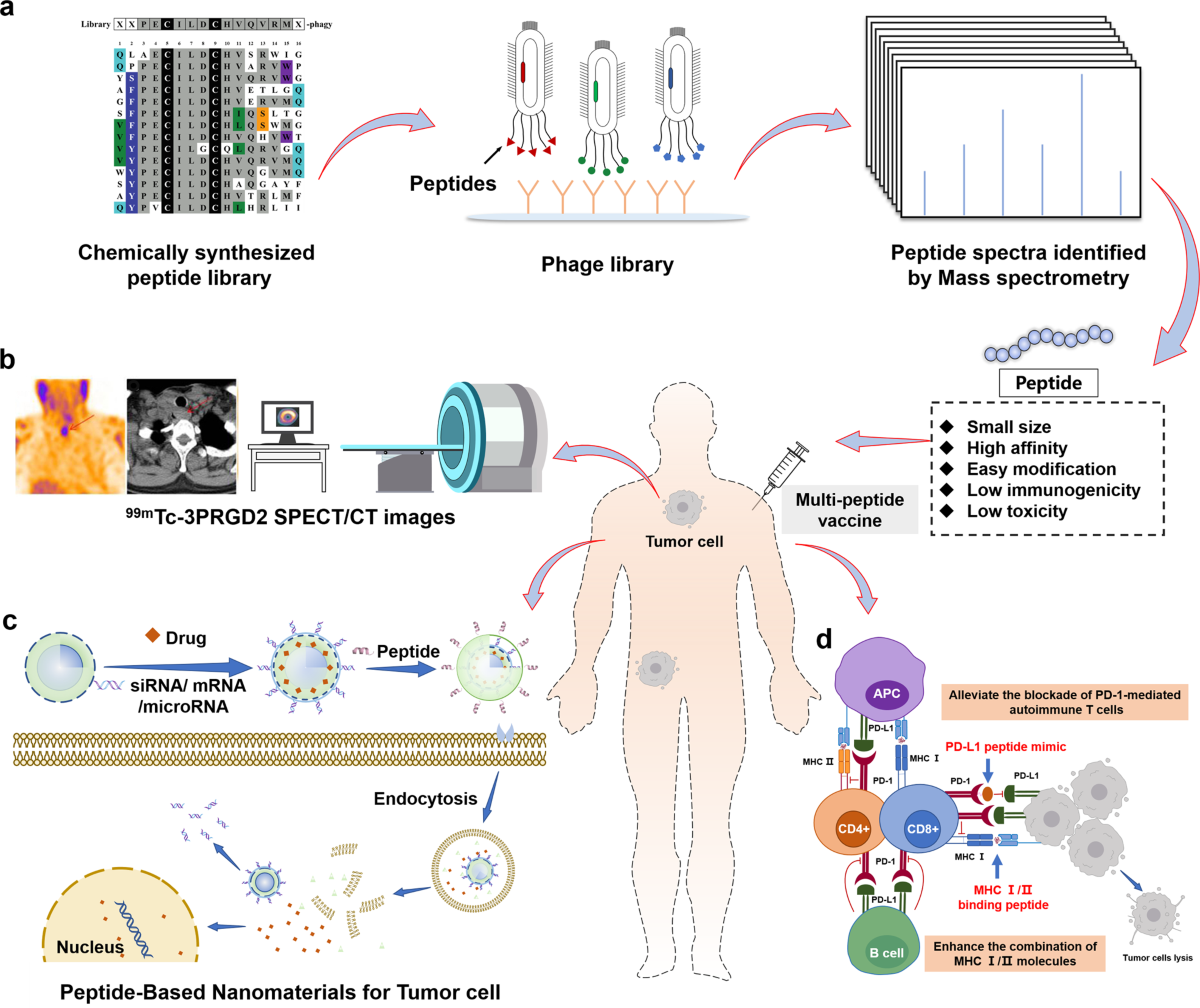
Understanding Peptide Research: Mechanisms, Classifications, and Scientific Applications
Explore peptide biochemistry, classifications, and research applications for immune modulation, wound healing, and longevity.
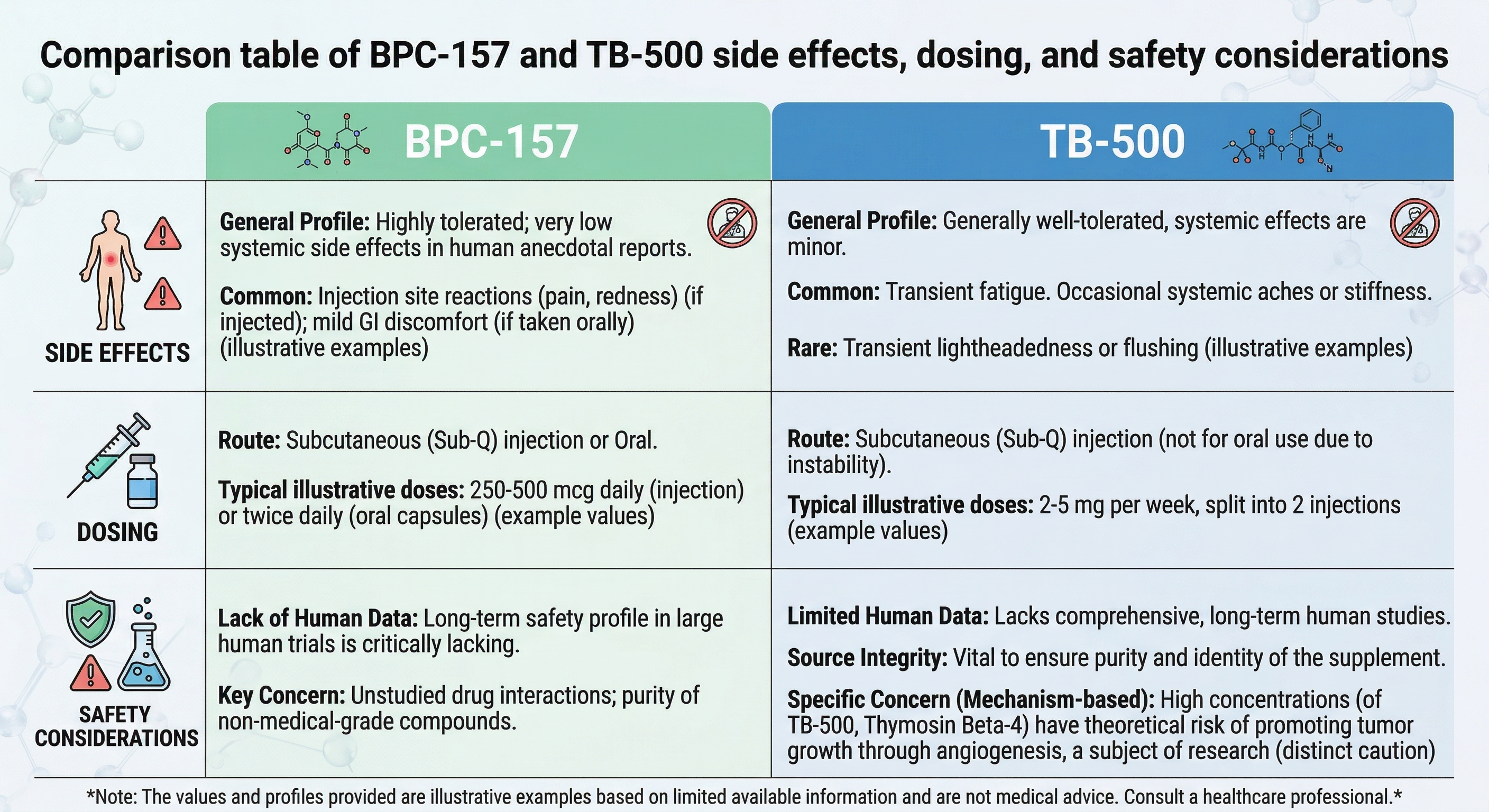
BPC-157 vs TB-500: A Comparative Research Analysis of Two Leading Healing Peptides
Compare BPC-157 vs TB-500 for research: mechanisms, wound healing, cardiovascular & GI effects. Scientific analysis for lab use.

What Does BPC-157 Stand For? A Research Guide
BPC-157 stands for Body Protection Compound 157, a synthetic peptide derived from a protein found in human gastric juice. This guide explains the acronym, its discovery, research applications, and how to verify peptide quality for laboratory studies.

Anti-Aging Peptides: Research Compounds for Metabolism, Muscle, and Tissue Health
Explore a curated selection of anti-aging research peptides including BPC-157, GHK-CU, KPV, MOTS-C, NAD+, Retatrutide, SS-31, TB-500, and others. These compounds are studied for their potential roles in metabolism support, muscle growth, weight loss, and skin, tissue, and bone health. Average purity across products is 99.77%.
What Is BPC-157? Mechanism, Research & Purity Standards
A comprehensive overview of Body Protection Compound-157, its mechanism of action in preclinical models, key research findings, and what to look for in purity documentation.
BPC-157 Gut Health: Gastric Cytoprotection Studies
Research on BPC-157 began with gastric cytoprotection in the early 1990s, led by Sikiric and colleagues at the University of Zagreb. Studies show it protects against ethanol-induced lesions and NSAID damage in rat models, with effects linked to angiogenesis, prostaglandins, nitric oxide, and gut-brain signaling. This body of work highlights its stability for oral use and broad preclinical applications in GI models.

Peptides 101: Key Facts Before You Start
Peptides have moved from niche use to mainstream attention, driven by GLP-1 agonists like semaglutide and tirzepatide that achieved 15 to 20% body weight loss in clinical trials with thousands of patients. Options exist for recovery, skin health, cognition, and immunity, with peptides like BPC-157 and TB-500 aiding tissue repair. This guide covers categories, starting steps, common errors, and timelines to set realistic expectations.

6 Peptides Leading Current Research Discussions
Research highlights six peptides gaining attention for roles in tissue repair, growth hormone signaling, metabolism, and regeneration. From BPC-157's focus on recovery to MOTS-c's mitochondrial origins, these compounds reveal diverse biological pathways. Preclinical studies support their prominence, though human data varies.

BPC-157 Shelf Life: Lyophilized vs Reconstituted Stability Guide
BPC-157 has a finite shelf life that varies by form and storage. Lyophilized powder lasts 12-18 months refrigerated or 24+ months frozen, while reconstituted solution holds for about 28 days under refrigeration. Factors like temperature, light, and handling influence stability, and researchers should watch for signs of degradation to ensure reliable results.
BPC-157 + TB-500 Peptide Blend: Research on Healing and Repair
The BPC-157 and TB-500 peptide blend draws attention in research for potential synergy in tissue repair, angiogenesis, and reducing inflammation. BPC-157, a 15-amino-acid synthetic peptide, interacts with growth factors in preclinical models. TB-500, a 43-amino-acid analog of Thymosin Beta-4, supports cell migration and regeneration. Studies explore their roles in wound healing, tendon recovery, and more.
BPC-157 and TB-500: Synergy in Tissue Repair Research
Researchers frequently examine BPC-157 and TB-500 together due to their potential complementary effects on tissue repair and recovery. BPC-157 supports blood vessel formation and gut integrity, while TB-500 aids cell migration and reduces inflammation. This combination targets multiple healing stages, though evidence remains mostly from preclinical studies.

High-Purity Research Peptides for Lab Use
Laboratories require high-purity research peptides for accurate investigations. This overview lists compounds like BPC-157 10mg at $85.50 - $95.00 and TB-500 capsules, along with prices and key details. All items serve research, laboratory, or analytical purposes only, not human consumption.
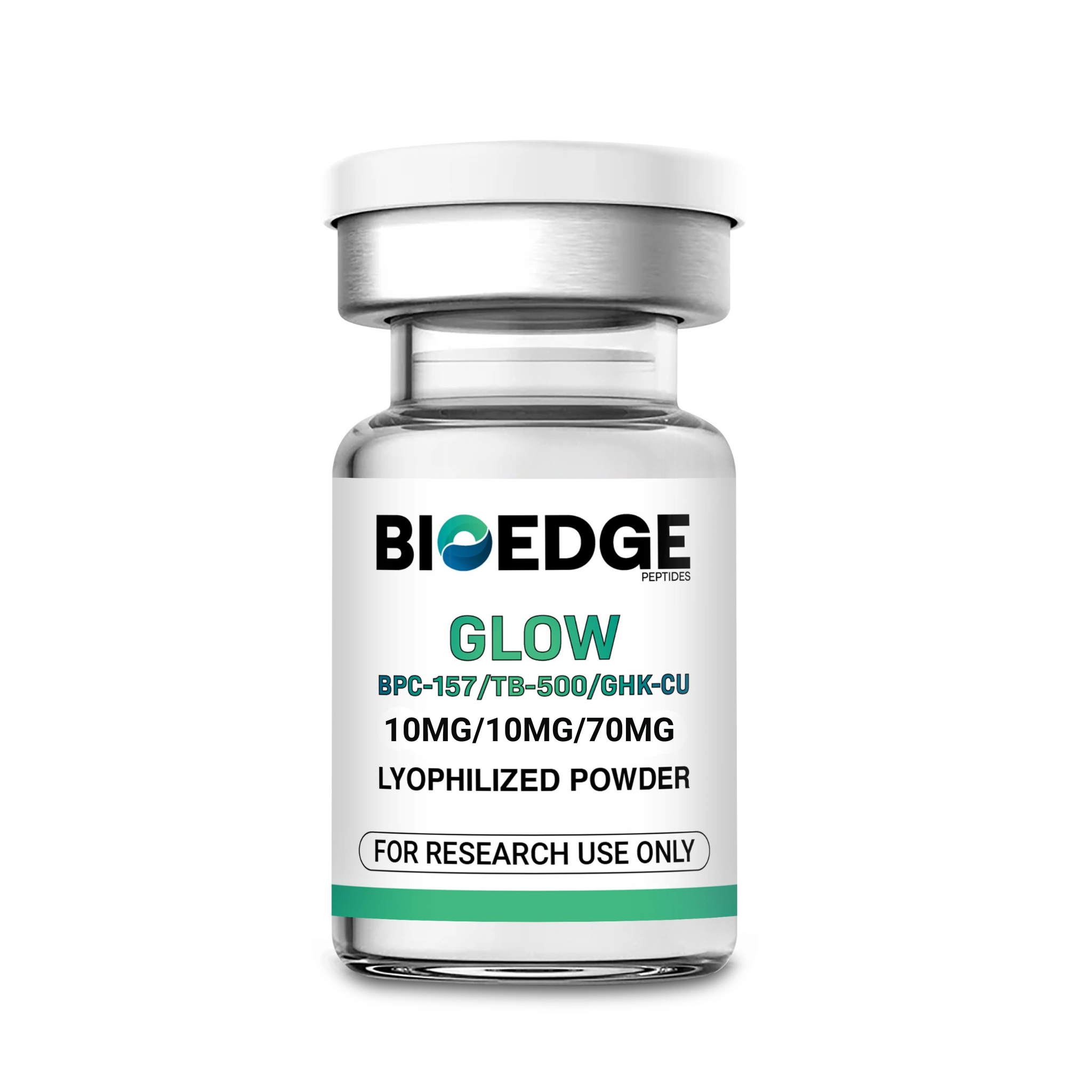
Glow Blend: GHK-Cu, BPC-157 & TB-500 Peptide Research
Glow Blend combines GHK-Cu, BPC-157, and TB-500 in a 70mg multi-peptide formulation studied for skin biology, tissue repair, and cellular processes. Each component targets overlapping areas like collagen pathways, connective tissue response, and cell migration. This guide explains their research roles, molecular details, and why they pair together in regenerative studies.
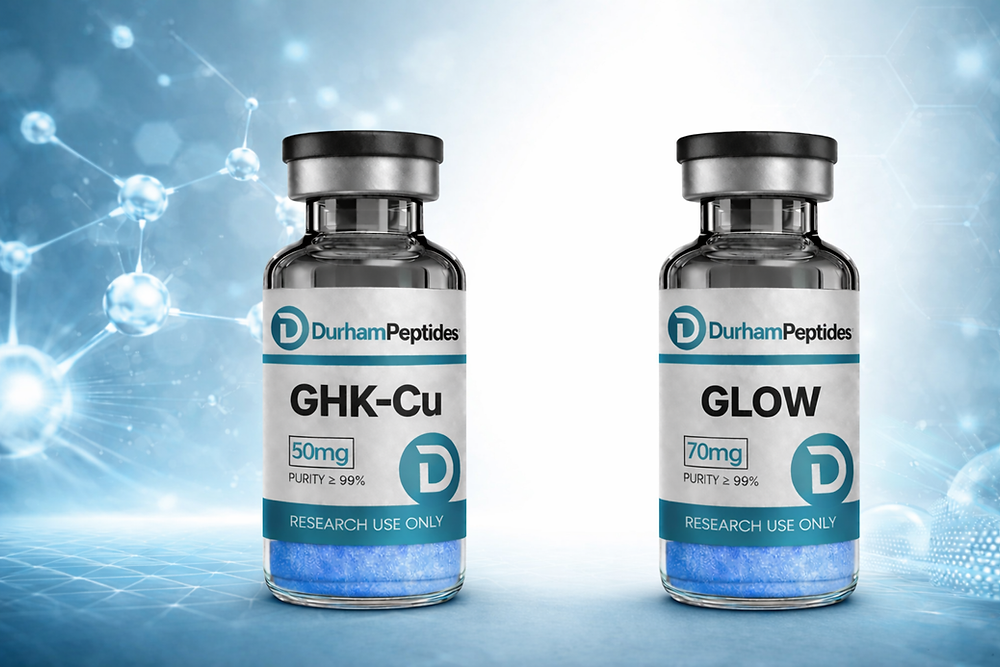
BPC-157 vs GHK-Cu: Comparing Top Research Peptides
BPC-157 and GHK-Cu stand out among research peptides for their extensive studies in tissue repair and anti-aging. BPC-157, a 15-amino-acid peptide from human gastric juice, focuses on angiogenesis and wound healing. GHK-Cu, a copper-bound tripeptide from human plasma, targets gene expression and skin remodeling, with over 100 published studies.