


Semaglutide 10mg (Ozempic)
For in-vitro laboratory research only. Not for human or animal administration.
Batch #: VPSG10100
Research Use Only
For in-vitro laboratory research by qualified professionals only. Not for human or animal administration. Not a drug, food, cosmetic or dietary supplement. Not intended to diagnose, treat, cure, mitigate or prevent any disease. Batch-specific Certificates of Analysis available for all products.
Semaglutide 10mg: overview
What the vial contains and what the material is, stated as specifications rather than as outcomes.
Semaglutide supplied as a lyophilized powder in a sealed single-use vial containing 10 mg of material. Semaglutide: molecular formula C₁₈₇H₂₉₁N₄₅O₅₉, molecular weight 4,113.6 g/mol, CAS 910463-68-2. Released to a specification of >99% purity by HPLC. Soluble in bacteriostatic water. Supplied for in-vitro laboratory research only. Not a drug, food or supplement. Not for human or veterinary use.
Volta does not provide dosing, administration or protocol guidance for any material listed.
Semaglutide 10mg specifications
Every field the product record holds. A field with no value is omitted rather than printed as a dash.
- Fill
- 10mg
- Form
- Lyophilized powder
- CAS number
- 910463-68-2
- Molecular formula
- C₁₈₇H₂₉₁N₄₅O₅₉
- Molecular weight
- 4,113.6 g/mol
- Solubility
- Soluble in bacteriostatic water
- Shelf life
- 24 months from date of manufacture
Semaglutide analytical verification and batch documentation
What the purity figure on this page is, who measured what, and which of the two a reader is looking at.
Specification. Every batch is released to >99% purity by HPLC. That is a threshold Volta sets, and it is a promise rather than a measurement.
Measurement. No certificate for this compound is published on the site yet. A batch-specific Certificate of Analysis is available on request, and the batch history lists the ones already published. Until one is published for this material, the figure above is the release specification and nothing on this page is a laboratory result.
Checking a certificate. The batch number printed beside the price is derived from the compound code and the vial strength; the lot number on a certificate is transcribed from the document. They are produced independently, so comparing them is a real check. How to read one is set out in the quality and testing methodology page.
For in-vitro laboratory research by qualified professionals only. Not for human or animal administration. Not a drug, food, cosmetic or dietary supplement. Not intended to diagnose, treat, cure, mitigate or prevent any disease.
GLP-1 (glucagon-like peptide-1) is a naturally occurring peptide hormone 30-31 amino acids in length whose primary function is to lower blood sugar by enhancing insulin secretion. Semaglutide is a long-acting synthetic analogue with the sequence HXEGTFTSDVSSYLEGQAAKEFIAWLVRGRG modified with a steric diacid for extended stability. Research demonstrates multiple benefits: the incretin effect stimulating pancreatic beta cell insulin exocytosis, beta cell protection by inhibiting apoptosis and promoting proliferation, appetite suppression through delayed gastric emptying and enhanced satiety, cardiovascular protection by improving cardiac muscle glucose uptake and reducing left ventricular end-diastolic pressure, and neuroprotective effects including reduction of amyloid-beta accumulation associated with Alzheimer's disease. This 10mg vial provides material for comprehensive metabolic and neurological research protocols.
- Released to a >99% purity specification by HPLC
- Lyophilized powder, 10mg per vial
- Soluble in bacteriostatic water
- For laboratory research use only
Frequently Bought Together

Semaglutide 10mg
10mg
$49 USD
Bundle & Save
$146 USD
Save $7.30 USD
$209 USD
Save $20.90 USD
$266 USD
Save $39.90 USD
$350 USD
Save $70 USD
Click any product above to toggle selection
Related research materials


Semaglutide 10mg: what is in the vial
The arithmetic specific to this 10mg vial, and what a milligram of Semaglutide costs in each strength the catalogue carries. Concentrations are stated, not recommended.
Vial contents
10 mg
Lyophilised powder, reconstituted by the buyer
Cost of material
$4.90 / mg USD
CA$7 / mg in Canadian dollars
Concentration at each diluent volume
10 mg of dry material reaches these concentrations in the volumes below. A U-100 syringe marking is 0.01 ml by definition, so the last column is a unit conversion at each concentration rather than a quantity to use.
| Diluent added | Concentration | In 0.1 ml | Per U-100 unit |
|---|---|---|---|
| 1 ml | 10 mg/ml | 1 mg | 100 mcg |
| 2 ml | 5 mg/ml | 500 mcg | 50 mcg |
| 3 ml | 3.33 mg/ml | 333.3 mcg | 33.3 mcg |
| 5 ml | 2 mg/ml | 200 mcg | 20 mcg |
For a volume this table does not list, the reconstitution calculator takes any vial size and diluent volume.
Semaglutide by the milligram
The same compound in every strength the catalogue carries, priced per milligram of material so the vials are comparable. Larger is not automatically cheaper.
| Vial | Price USD | Per mg USD | Per mg CAD |
|---|---|---|---|
| 10mgthis page | $49 | $4.90 | CA$7 |
| 20mg | $84 | $4.20 | CA$6 |
The 20mg vial is the cheapest material in this range at $4.20 per mg.
Per-unit figures are quoted in US and Canadian dollars so the vials stay comparable against each other. The price you are charged is the one in the currency selected at the top of the page, and it is converted from the same US dollar base as the figures here.
Semaglutide purity and identity: how the figure is measured
What >99% (HPLC) means, the masses an identity check has to land on, and the entries that make a certificate of analysis checkable rather than decorative.
Stated purity
>99% (HPLC)
Area percent of the main peak by reversed-phase HPLC
Average mass
4,113.6 g/mol
The figure an identity check has to land on
Identity by mass: the ions to expect
An electrospray source protonates the molecule rather than weighing it neutral, so a spectrum shows a series of charge states rather than the molecular weight itself. These are the m/z values 4,113.6 g/mol produces, and they are what a mass spectrum on a certificate for Semaglutide has to match.
| Ion | Charge | Expected m/z |
|---|---|---|
| [M+H]+ | 1+ | 4,114.61 |
| [M+2H]2+ | 2+ | 2,057.81 |
| [M+3H]3+ | 3+ | 1,372.21 |
A peptide this size is normally reported at its doubly and triply charged states, and the singly charged ion may not appear at usable intensity at all. A spectrum showing only one of these is not a failed identity check.
What a certificate for Semaglutide should carry
A purity percentage on its own is not checkable. These are the entries that make one verifiable, and their absence is the most common weakness in a research-peptide certificate.
The chromatogram, not only the number
A stated area percent with no trace behind it cannot be read for the shape of the main peak or for what eluted beside it. The HPLC interpreter walks through what a trace shows.
Net peptide content, separately from gross mass
A lyophilised peptide is a salt, usually of trifluoroacetic or acetic acid, plus residual water. The vial's stated milligrams are gross; net peptide content is the fraction of that mass which is the molecule. The two differ by ten to twenty percent routinely, and only one of them is what the price is per milligram of. The net peptide content calculator converts between them.
The counterion, named
Which salt form the powder is in changes the net content and the pH the powder dissolves at. A certificate that never names it leaves both unknowable.
Water content, by a stated method
Loss on drying and Karl Fischer titration give different numbers, and a water figure with no method attached cannot be compared with anyone else's.
A laboratory and a report identifier
Without both, nothing on the document can be traced back to the laboratory that issued it. The red flag checker lists the rest.
Batch certificates are published as page images in the certificate library. The source PDFs are never served: a certificate is the most forgeable document a supplier publishes, and an editable copy carrying an accredited laboratory's letterhead is worth more to a counterfeiter than to a customer.
Semaglutide storage and stability
Handling as the product record states it, followed by the degradation chemistry this particular sequence is and is not exposed to.
Handling
Store lyophilized peptide at -20°C in a dry, dark environment. Reconstitute in bacteriostatic water. Once reconstituted, store at 2-8°C and use within 30 days. Lyophilized powder is stable at room temperature for shipping and short-term storage.
What degrades this compound
Each of these follows from the molecule itself rather than from general peptide handling.
Interfacial and surface loss
4,113.6 g/mol, above the 3,500 g/mol range where this dominatesA peptide this size unfolds at boundaries. It adsorbs to glass and to polypropylene, and it denatures at the air-water interface that shaking creates, which is why a vial is swirled rather than vortexed and why the diluent is run down the vial wall instead of squirted onto the powder. The failure is quiet: interfacial loss removes material without changing what is left behind, so the solution still assays clean at a concentration lower than the arithmetic says.
Semaglutide compared with Tirzepatide and Retatrutide
Pharmacological class, half-life, evidence grade, competition status and cost per milligram, side by side.
| Compound | Class | Half-life | Evidence | WADA | Cheapest per mg |
|---|---|---|---|---|---|
| Semaglutidethis page | Metabolic / GLP-1 Agonist | ~160–168 hours (~7 days) | AFDA Approved | Not prohibited | $4.2020mg vial |
| Tirzepatide | Metabolic / Dual GIP-GLP-1 Agonist | ~5 days (116 hours) | AFDA Approved | Not prohibited | $2.9730mg vial |
| Retatrutide | Metabolic / Triple Agonist | ~6 days (allows once-weekly dosing) | BPhase III / NDA Filed | Not prohibited | $4.8520mg vial |
| Mazdutide | Metabolic / Dual GLP-1/Glucagon Agonist | Suitable for once-weekly dosing (exact value not fully published) | CPhase I–II Clinical Trials | Not listed | $6.4010mg vial, out of stock |
| Survodutide | Metabolic / Dual Agonist | ~5-6 days (allows once-weekly dosing) | BPhase III / NDA Filed | Not listed | $9.9010mg vial, out of stock |
Evidence grades and half-lives are as recorded in the compound database, which cites its own sources on each compound page. Per-milligram prices are the cheapest strength each compound is currently listed at, in US dollars, and an out-of-stock note means that figure is not purchasable today. Cross-trial comparisons of efficacy are not comparisons: no head-to-head trial exists for most of these pairs.
Semaglutide in Canada
Price in Canadian dollars, where the parcel ships from, and how long it takes.
Price in CAD
CA$70
The figure charged, not a converted estimate
Ships from
British Columbia
A domestic parcel, so no import clearance step
Transit
2 to 5 business days
After 1 to 2 business days of handling
Free standard shipping
Over CA$250
A bar set for this market, not converted from the US one
Semaglutide 10mg ships from British Columbia to Canadian addresses, so the parcel never crosses a border. That removes the failure a Canadian buyer of research peptides is usually weighing: an inbound international shipment can be held for import clearance or seized, and a domestic one has no clearance step to be held at.
Shipping is quoted live against the delivery address at checkout rather than estimated here, and both the standard and express tiers show their price and transit window before a payment method is chosen. The figure the page shows is the figure the rail charges: all three settlement rails price shipping through the same functions the quote does.
The Canadian figure above is not a loose conversion. Each product's US dollar base is chosen so that the live conversion lands on the Canadian shelf price set for this market, and the result is pushed up to a whole dollar rather than left carrying cents, so one figure serves the page, the feed and every payment rail. See the shipping policy for carriers and cut-off times, and the legal position on research peptides in Canada for the regulatory picture.
Semaglutide and the GLP-1 Hormone
GLP-1, short for glucagon-like peptide-1, is a short, naturally occurring peptide hormone of just 30 to 31 amino acids. Its primary physiologic function is to lower blood sugar levels by naturally enhancing insulin secretion. It also helps protect beta cell insulin stores by promoting insulin gene transcription, and it has been linked with neurotrophic effects in the brain and central nervous system. In the GI system it significantly decreases appetite, by delaying gastric emptying and reducing intestinal motility. Preliminary research reports effects in the heart, fat, muscles, bones, liver, lungs and kidneys as well.
Most GLP-1 research has concerned the treatment and prevention of diabetes along with appetite suppression. A second strand looks at the potential cardiovascular benefits of the peptide. Newer work, and therefore less robust work, asks whether GLP-1 can stave off neurodegenerative disease. That strand is the youngest and also the fastest growing, following the finding that the peptide slows or prevents the accumulation of amyloid beta plaques in Alzheimer's disease.
Semaglutide Mechanism of Action
Semaglutide is a 31 amino acid analogue of human glucagon-like peptide-1, an incretin hormone released from intestinal L cells after a meal. Native GLP-1 is destroyed within about two minutes by dipeptidyl peptidase-4, which cleaves it at the alanine in position 8. Semaglutide substitutes that residue with alpha-aminoisobutyric acid, a non-proteinogenic amino acid the enzyme cannot cut, and that single change is the foundation of the molecule.
Resisting DPP-4 alone would still leave rapid renal clearance. The second design element addresses that: a C18 fatty diacid is attached through a gamma-glutamate and two short polyethylene glycol spacers at position 26. The fatty acid binds albumin reversibly with high affinity, so most of the circulating drug travels bound to a protein too large to filter at the glomerulus, and it is released slowly as free drug is consumed. The result is a half-life of about a week rather than minutes.
At the receptor, semaglutide is a full agonist at the GLP-1 receptor, a class B G protein-coupled receptor. Signalling is predominantly through Gs and cyclic AMP. In pancreatic beta cells that potentiates glucose-stimulated insulin secretion, which is why the effect is glucose-dependent and does not drive insulin release when glucose is low. In the hypothalamus and hindbrain, receptor activation reduces appetite and food intake, and in the stomach it slows gastric emptying.
DPP-4 resistance
Alanine at position 8 is replaced by alpha-aminoisobutyric acid, which dipeptidyl peptidase-4 cannot cleave. Native GLP-1 has a half-life near two minutes; this substitution removes the primary route of destruction.
Albumin binding
A C18 diacid attached via a gamma-glutamate and PEG spacers at position 26 binds albumin reversibly, protecting the peptide from renal filtration and acting as a slow-release depot.
Receptor engagement
Full agonism at the GLP-1 receptor, signalling largely through Gs and cyclic AMP accumulation.
Islet effect
Potentiation of glucose-stimulated insulin secretion and suppression of inappropriate glucagon release, both glucose-dependent, which is why the mechanism does not itself drive low blood glucose.
Central effect
Receptor activation in hypothalamic and hindbrain appetite circuits reduces food intake, which is the dominant contributor to weight change rather than the peripheral effects.
Semaglutide Research Findings
Each entry names the model and study type it came from. Findings are reported as what was observed in a named trial population, not as outcomes any individual should expect.
Weight reduction in adults with overweight or obesity
In the STEP 1 trial, a 68 week randomised, double-blind, placebo-controlled study in adults with overweight or obesity without diabetes, once-weekly treatment alongside lifestyle intervention produced a substantially greater mean reduction in body weight than placebo.
Phase 3 trialWeight reduction in adults who also have type 2 diabetes
STEP 2 examined the same question in adults with overweight or obesity and type 2 diabetes and reported significant weight reduction against placebo, with a smaller effect size than in the non-diabetic population, a difference consistently observed across this drug class.
Phase 3 trialReduction in major adverse cardiovascular events in type 2 diabetes
SUSTAIN-6 was a cardiovascular safety trial in people with type 2 diabetes at high cardiovascular risk. It reported a lower rate of the composite of cardiovascular death, non-fatal myocardial infarction and non-fatal stroke than placebo over just over two years.
Phase 3 trialCardiovascular event reduction in obesity without diabetes
The SELECT trial extended the cardiovascular question to adults with overweight or obesity and established cardiovascular disease but without diabetes, and reported a reduction in the primary cardiovascular composite endpoint against placebo. This separated the cardiovascular signal from glycaemic control.
Phase 3 trialGreater weight effect than the daily comparator in a head-to-head design
A randomised trial comparing semaglutide with liraglutide and placebo in adults with obesity reported dose-dependent weight reduction and greater effect than the daily GLP-1 comparator, establishing the once-weekly molecule as more effective within its own class.
Phase 2 trialMolecular basis of the extended half-life
The discovery paper characterised the structural changes responsible for the pharmacokinetics: DPP-4 resistance from the position 8 substitution, and albumin binding from the position 26 acylation, together producing a half-life compatible with weekly administration.
In vitroSemaglutide Structure and Identifiers
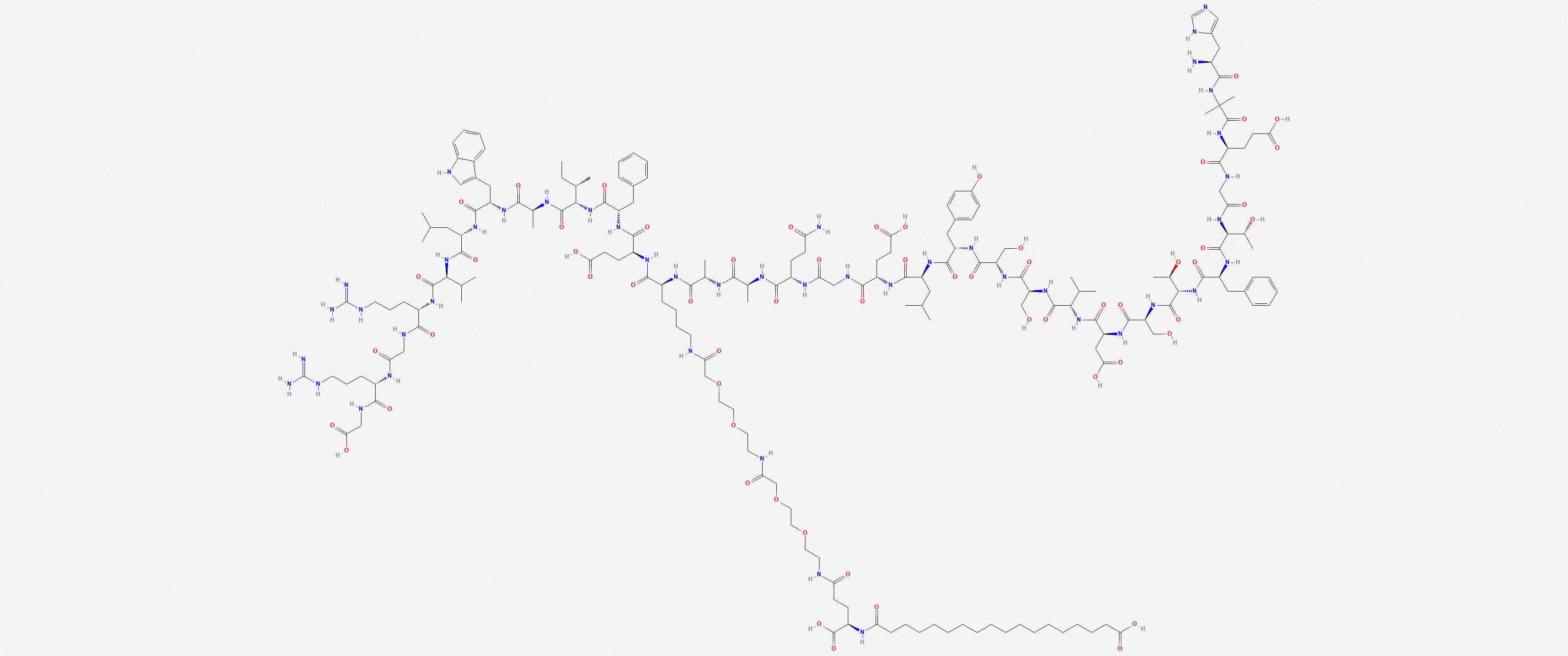
| Class | Acylated 31 amino acid GLP-1 receptor agonist |
| Molecular Formula | C187H291N45O59 |
| Molecular Weight | 4113.58 g/mol |
| CAS Number | 910463-68-2 |
| Developer Code | NN9535 |
| Receptor Target | GLP-1 receptor (class B GPCR) |
| Key Substitution | Aib at position 8, conferring dipeptidyl peptidase-4 resistance |
| Acylation | C18 fatty diacid at position 26 via gamma-glutamate and two PEG spacers |
| Half-life | Approximately 7 days |
| Homology to Native GLP-1 | 94 percent |
| Appearance | White lyophilised powder |
| Sequence | HXEGTFTSDVSSYLEGQAAK-OH.steric diacid-EFIAWLVRGRG |
| PubChem CID | 56843331 |
| Synonyms | Ozempic, Rybelsus, NN9535 |
The Incretin Effect
The most important thing GLP-1 does is probably what is referred to as the "incretin effect". Incretins are a group of metabolic hormones, released by the GI tract, which cause a decrease in blood glucose levels. In rodent models, GLP-1 is one of the two hormones that matter most in stimulating that effect; the other is GIP.
GIP circulates at levels roughly 10 times higher than GLP-1, yet the evidence makes GLP-1 the more potent of the two molecules, particularly where blood glucose is quite high. A GLP-1 receptor has been identified on the surface of pancreatic beta cells, which establishes that GLP-1 directly stimulates the exocytosis of insulin from the pancreas. Combined with sulfonylurea drugs, GLP-1 boosts insulin secretion enough to cause mild hypoglycemia in up to 40% of subjects[1].
Beta Cell Growth and Survival
Research in animal models suggests that GLP-1 stimulates the growth and proliferation of pancreatic beta cells, and that it may drive the differentiation of new beta cells from progenitors in the pancreatic duct epithelium. It has also been shown to inhibit beta cell apoptosis[1]. Taken in sum, those effects tip the usual balance of beta cell growth and death toward growth, which is what suggests the peptide may be useful in treating diabetes and in protecting the pancreas against insult that harms beta cells.
In one particularly compelling trial, GLP-1 inhibited the beta cell death caused by enhanced levels of inflammatory cytokines. Mouse models of type 1 diabetes go further still: GLP-1 protects islet cells from destruction there, and may in fact be a useful means of preventing the onset of type 1 diabetes[2].
Appetite and Satiety
Research in mouse models suggests that delivering GLP-1 into the brain reduces the drive to eat and inhibits food intake[3]. The peptide appears to enhance feelings of satiety, so that the animal feels fuller and hunger falls indirectly.
Clinical studies have shown that twice daily administration of GLP-1 receptor agonists causes gradual, linear weight loss. Sustained over a long period, that weight loss is associated with significant improvement in cardiovascular risk factors and a reduction in hemoglobin A1c, the latter of these being a proxy marker for the severity of diabetes and the quality of blood sugar control attained via treatment[4].
Cardiac Function and Ischemia
GLP-1 receptors are distributed throughout the heart, where in certain settings they improve cardiac function by boosting heart rate and reducing left ventricular end-diastolic pressure[5]. More recent evidence has suggested the peptide could also play a role in decreasing the overall damage caused by a heart attack.
It appears to improve glucose uptake by cardiac muscle, which gives struggling ischemic heart muscle cells the nutrition they need to keep functioning and to avoid programmed cell death. That increase in glucose uptake appears to be independent of insulin[6]. Large infusions of GLP-1 into dogs improved left ventricular performance and reduced systemic vascular resistance[7].

Learning and Neuroprotection
There is some evidence to suggest that GLP-1 can improve learning and help protect neurons against neurodegenerative diseases such as Alzheimer's disease. In one study it enhanced associative and spatial learning in mice, and improved learning deficits in mice carrying specific gene defects[8].
Further rodent research shows GLP-1 protecting against excitotoxic neuron damage, giving complete protection to rat models of neurodegeneration against glutamate-induced apoptosis. The peptide can even stimulate neurite outgrowth in cultured cells[9].
In mouse models, GLP-1 and its analogue exendin-4 both reduce levels of amyloid-beta in the brain along with the beta-amyloid precursor protein found in neurons. Amyloid beta is the primary component of the plaques observed in Alzheimer's disease[10].
The Two Modifications That Define the Molecule
Native GLP-1 would be a useless drug. It is cleared in about two minutes, cut by dipeptidyl peptidase-4 at the alanine in position 8 and then filtered rapidly by the kidney. Any therapeutic GLP-1 analogue is fundamentally an answer to those two problems, and semaglutide answers them separately.
The first answer is chemical. Alpha-aminoisobutyric acid at position 8 is not a natural amino acid and DPP-4 does not recognise it as a substrate. Enzymatic destruction stops being the rate-limiting step.
The second answer is physical rather than chemical. The C18 diacid at position 26 does not change how the peptide signals; it changes where the peptide is. Bound to albumin, the molecule is too large to be filtered at the glomerulus, and the binding is reversible, so the albumin pool behaves as a slow-release reservoir. Together the two changes take the half-life from minutes to about a week.
Why the Glucose Dependence Matters Mechanistically
The insulin secretion that GLP-1 receptor agonism produces is potentiation rather than initiation. The receptor raises cyclic AMP in the beta cell, which amplifies the secretory response to glucose, but it does not by itself trigger release when glucose is low.
That is a property of the mechanism rather than of the dose, and it is why the pharmacology of this class differs fundamentally from agents that drive insulin release regardless of glucose. It also explains why the appetite and gastric emptying effects, which are receptor-mediated at other sites, do not share the same self-limiting property.
What Separates the Cardiovascular Evidence From the Weight Evidence
SUSTAIN-6 reported cardiovascular benefit in people with type 2 diabetes, which left open whether the effect followed from better glycaemic control or from something else. SELECT was designed to answer that: it enrolled people with overweight or obesity and established cardiovascular disease but without diabetes, and still reported a reduction in the cardiovascular composite endpoint.
That design difference is what makes the two trials complementary rather than repetitive. Neither establishes a mechanism for the cardiovascular effect, which remains debated and is not fully explained by weight change or by glucose lowering alone.
Both are outcome trials in defined populations under protocol. Nothing in either is a statement about what happens outside those populations.
Handling and Analytical Considerations
Semaglutide is supplied for laboratory work as a lyophilised powder and is markedly more stable dry than in solution. The acylation makes it more hydrophobic than native GLP-1, which affects its chromatographic retention and is worth accounting for when interpreting an HPLC trace against a reference.
Because the molecule carries a fatty acid chain, related-substance profiles can include des-acyl and mis-acylated species that a purity figure alone will not distinguish from the intended product. The analytical method stated on a certificate therefore matters as much as the percentage it reports.
Semaglutide Research FAQ
Semaglutide Research Summary
Semaglutide is the active ingredient of finished drug products approved for type 2 diabetes and for chronic weight management. Those approvals cover one manufacturer's finished products and do not extend to research material supplied by anyone else. Semaglutide supplied by Volta Peptides is for in-vitro laboratory research only and is not for human or animal administration.
Article Author
Marcus Hopkin, PhD, is Director of Research and Development at Volta Peptides. He has more than 12 years of analytical chemistry experience, including peptide synthesis, characterization, purity testing and stability assessment.
Scientific Journal Author
In 1986 Professor Jens Juul Holst discovered the GLP-1 hormone in connection with his work on stomach ulcer surgery. He is one of the most cited researchers in Europe, with over 1,200 published articles and citations in over 3,500 articles annually. In 2015, he received the prestigious international Fernstrom prize for his research on GLP-1.
Scientific References
Primary literature and public trial registries only. No supplier or retailer pages are cited.
- 1Discovery of the Once-Weekly Glucagon-Like Peptide-1 (GLP-1) Analogue SemaglutideLau J, Bloch P, Schäffer L, et al. · Journal of Medicinal Chemistry · 2015
- 2Once-Weekly Semaglutide in Adults with Overweight or ObesityWilding JPH, Batterham RL, Calanna S, et al. · New England Journal of Medicine · 2021
- 3Semaglutide 2.4 mg once a week in adults with overweight or obesity, and type 2 diabetes (STEP 2): a randomised, double-blind, double-dummy, placebo-controlled, phase 3 trialDavies M, Færch L, Jeppesen OK, et al. · The Lancet · 2021
- 4Semaglutide and Cardiovascular Outcomes in Patients with Type 2 DiabetesMarso SP, Bain SC, Consoli A, et al. · New England Journal of Medicine · 2016
- 5Semaglutide and Cardiovascular Outcomes in Obesity without DiabetesLincoff AM, Brown-Frandsen K, Colhoun HM, et al. · New England Journal of Medicine · 2023
- 6Efficacy and safety of semaglutide compared with liraglutide and placebo for weight loss in patients with obesity: a randomised, double-blind, placebo and active controlled, dose-ranging, phase 2 trialO'Neil PM, Birkenfeld AL, McGowan B, et al. · The Lancet · 2018
- 7Wegovy (semaglutide): a new weight loss drug for chronic weight managementSingh G, Krauthamer M, Bjalme-Evans M · Journal of Investigative Medicine · 2022
Referenced Citations
- 1"The Physiology of Glucagon-like Peptide 1," Physiological Reviews.
- 2"Combined treatment with lisofylline and exendin-4 reverses autoimmune diabetes," PubMed.
- 3"The proglucagon-derived peptide, glucagon-like peptide-2, is a neurotransmitter involved in the regulation of food intake," PubMed.
- 4"Interim analysis of the effects of exenatide treatment on A1C, weight and cardiovascular risk factors over 82 weeks in 314 overweight patients," PubMed.
- 5"Cardiac function in mice lacking the glucagon-like peptide-1 receptor," PubMed.
- 6"Glucagon-like Peptide 1 Can Directly Protect the Heart Against Ischemia/Reperfusion Injury," Diabetes.
- 7"Recombinant glucagon-like peptide-1 increases myocardial glucose uptake and improves left ventricular performance in conscious dogs with pacing-induced cardiomyopathy," PubMed.
- 8"Glucagon-like peptide-1 receptor is involved in learning and neuroprotection," PubMed.
- 9"Protection and reversal of excitotoxic neuronal damage by glucagon-like peptide-1 and exendin-4," PubMed.
- 10"A new Alzheimer's disease interventive strategy: GLP-1," PubMed.
- 11Holst JJ, "From the Incretin Concept and the Discovery of GLP-1 to Today's Diabetes Therapy," Front Endocrinol (Lausanne), 2019;10:260.
Disclaimer
All articles and product information provided on this website are for informational and educational purposes only. The products offered on this website are furnished for in-vitro studies only. These products are not medicines or drugs and have not been approved by the FDA to prevent, treat or cure any medical condition, ailment or disease.
Semaglutide 10mg: frequently asked questions
Answered from the product record and the certificate file. Volta does not answer questions about administration, dosing or protocols.
What is supplied in a 10 mg vial of Semaglutide?
A sealed single-use vial containing 10 mg of Semaglutide as a lyophilized powder. Soluble in bacteriostatic water. No diluent, syringe or other supply is included.
Is Semaglutide supplied for human use?
No. For in-vitro laboratory research by qualified professionals only. Not for human or animal administration. Not a drug, food, cosmetic or dietary supplement. Not intended to diagnose, treat, cure, mitigate or prevent any disease. Volta does not provide dosing, administration or protocol guidance for any material listed.
What purity is this Semaglutide released to?
>99% by HPLC. That figure is a release specification, a threshold Volta sets for every batch, and it is not the same kind of statement as a purity measured by a named laboratory for a named lot.
Is there a certificate of analysis for this Semaglutide vial?
A batch-specific Certificate of Analysis is available for this product on request. It is not published on the site yet: the batch history on the quality page lists the certificates already published, and this vial is covered by the release specification until its own is added there.
How is Semaglutide identified?
CAS 910463-68-2, molecular formula C₁₈₇H₂₉₁N₄₅O₅₉, molecular weight 4,113.6 g/mol. Those identifiers are what an incoming-goods check compares a certificate against, and they are stated here so the comparison can be made before ordering.
How should Semaglutide be stored before reconstitution?
Store lyophilized peptide at -20°C in a dry, dark environment. Reconstitute in bacteriostatic water. Once reconstituted, store at 2-8°C and use within 30 days. Lyophilized powder is stable at room temperature for shipping and short-term storage.
Does Volta list other vial sizes of Semaglutide?
Yes: 20 mg. Each size is a separate listing with its own price, batch number and certificate status.
Where does this ship from?
British Columbia, Canada. Canadian orders are domestic, so they clear no customs and pay no import duty. International orders ship from the same facility.
Related Research News
Wegovy News: Oral GLP-1 Tracker Shows Novo and Lilly Prescription Growth
New prescription tracking data suggests oral GLP-1 products from Novo Nordisk and Eli Lilly are gaining traction. The latest Wegovy news points to a shifting market for metabolic research compounds, with researchers watching how oral formulations compare to injectable peptides.
Semaglutide Conference Presentation Leads ObesityWeek 2026 Preview
ObesityWeek 2026 is set for November 1-5, with semaglutide, tirzepatide, and a pipeline of next-generation compounds including retatrutide, survodutide, and cagrilintide on the agenda. A separate peptide therapeutics conference runs September 21-23, covering stapled peptides, cyclic peptides, and cell-penetrating peptides. Here is what researchers should watch for.
Semaglutide News: Key Differences Between Semaglutide and Tirzepatide
Semaglutide and tirzepatide are two of the most discussed peptide-based compounds in research and industry circles. This analysis breaks down what each one is, how they differ, and why the distinction matters for researchers tracking the latest semaglutide news in 2026.
Explore Research
Peptide Tools
Semaglutide research
Semaglutide is an acylated GLP-1 receptor agonist with the largest outcome-trial base of any incretin peptide, supplied here as a research-use reference standard only. Everything Volta publishes on this compound, across every vial size, is collected on the semaglutide evidence summary.
Vial sizes of this compound
- 10mg(this page)
- Semaglutide 20mg
Research on Semaglutide
Handling and documentation
Semaglutide is one of the compounds in Volta's weight management research peptides catalogue, which collects the rest of the range studied in this area alongside the comparisons and guides that cover it.
More from the research catalogue
Every compound below has its own specification, batch number and certificate page, whether or not a vial is in stock today. Supplied for laboratory research use only.
Other vial sizes
Related research compounds
- SLU-PP-332 5mgrestocking
- Survodutide 10mgrestocking
- Tirzepatide 10mg
- BPC-157 5mg