
Key Takeaways
- •GHK-Cu (C14H22CuN6O4): A copper-bound peptide in skin structure, collagen pathways, copper signaling, and extracellular matrix studies.
- •BPC-157 (C62H98N16O22): A 15-amino-acid synthetic peptide in connective tissue, repair pathways, angiogenesis models, and stability research.
- •TB-500 (C38H68N10O14): A synthetic sequence from thymosin beta-4 fragment studies on cell migration, actin, tissue structure, and movement models.
Glow Blend: GHK-Cu, BPC-157 & TB-500 Peptide Research
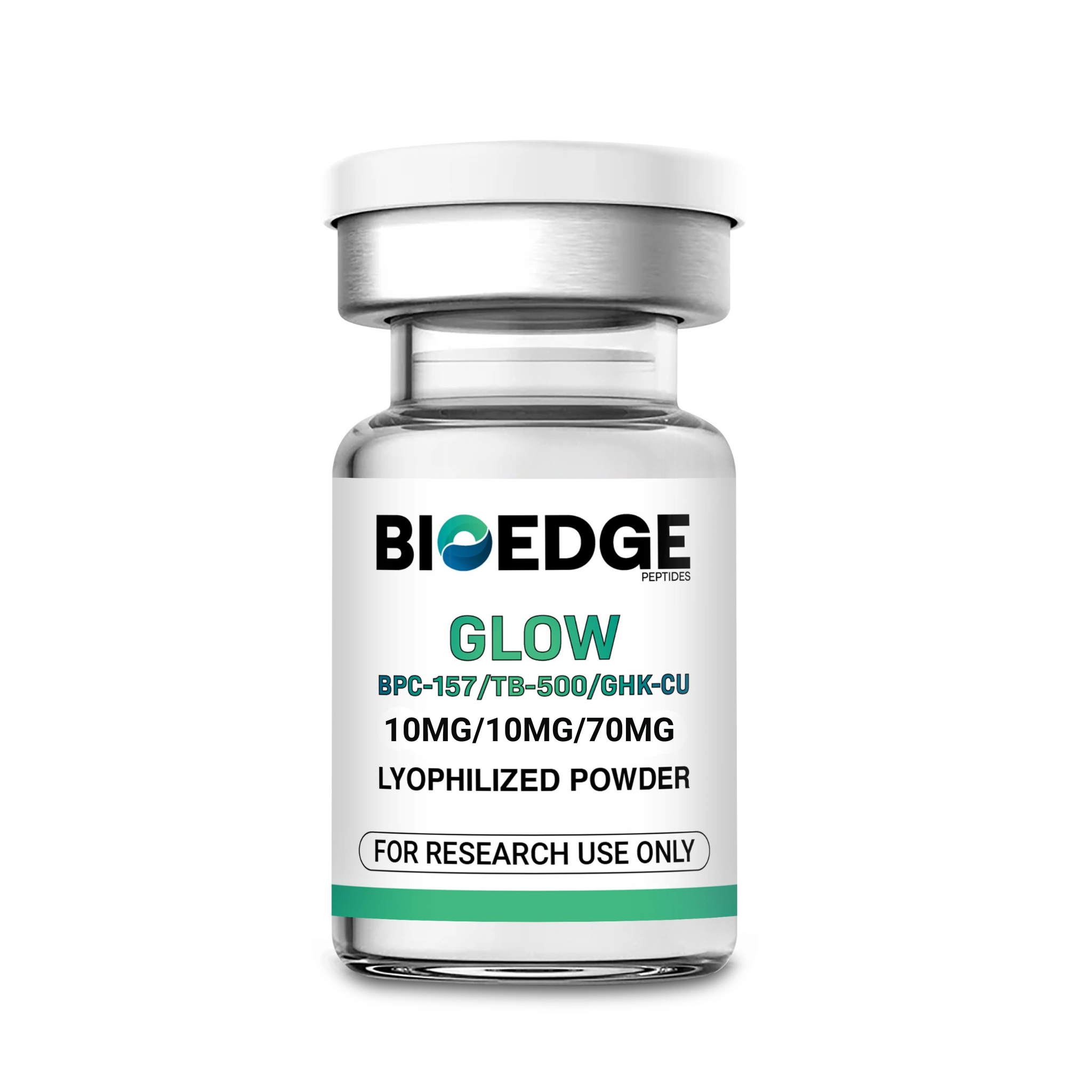
Glow Blend stands out as a 70mg multi-peptide mix featuring GHK-Cu, BPC-157, and TB-500. These compounds draw attention in research on skin structure, connective tissue, and repair mechanisms. Their combined use reflects shared interests in regenerative biology.
What Defines Glow Blend?
Glow Blend joins three distinct research peptides into one formulation: GHK-Cu, BPC-157, and TB-500. Researchers examine each for unique effects, yet their paths cross in studies of skin health, tissue stability, and cell repair. The "Glow" label ties mainly to GHK-Cu's role in skin and collagen investigations.
This blend simplifies access to peptides linked to extracellular matrix work, repair signaling, and cell dynamics. For precise handling in experiments, tools like the Peptide Glossary can clarify terms.
Peptides in Glow Blend
Glow Blend includes these components with specific molecular formulas and study focuses:
- GHK-Cu (C14H22CuN6O4): A copper-bound peptide in skin structure, collagen pathways, copper signaling, and extracellular matrix studies.
- BPC-157 (C62H98N16O22): A 15-amino-acid synthetic peptide in connective tissue, repair pathways, angiogenesis models, and stability research.
- TB-500 (C38H68N10O14): A synthetic sequence from thymosin beta-4 fragment studies on cell migration, actin, tissue structure, and movement models.
These differ in structure and primary research areas but align in tissue-related models. Check the BPC-157 Research Guide or TB-500 Research Guide for deeper insights.
GHK-Cu Research Focus
GHK-Cu, or glycyl-L-histidyl-L-lysine copper, binds copper to influence biological processes. Studies center on skin biology, collagen production, wound models, antioxidant activity, gene expression, and extracellular matrix remodeling. The matrix provides cellular support and tissue form.
This positions GHK-Cu as key for skin-focused blends. Its signaling effects appear in discussions beyond muscle or performance topics.
BPC-157 Research Areas
BPC-157 consists of 15 amino acids in a synthetic sequence. Experiments explore its role in tissue response, connective tissue, tendon and ligament models, angiogenesis, and gastrointestinal systems.
Researchers note its presence in repair pathway studies. Such findings highlight experimental interest without implying medical use.


TB-500 Investigation Topics
TB-500 connects to thymosin beta-4 fragment research as a synthetic peptide. Key areas include cell movement, actin proteins for cell shape, tissue structure, and migration models.
It differs from full Thymosin Beta-4, which is larger. This distinction matters in tissue and repair discussions.
Reasons for Combining These Peptides
GHK-Cu targets skin and matrix remodeling. BPC-157 links to repair and connective tissue models. TB-500 addresses cell movement and structure.
Together, they cover skin, tissue repair, and regenerative pathways. Blends like this consolidate related research compounds.
Molecular Formulas Explained
Formulas detail atomic makeup: GHK-Cu (C14H22CuN6O4), BPC-157 (C62H98N16O22), TB-500 (C38H68N10O14). They aid identification and reference, not usage or dosing.
Batch verification ties products to certificates for transparency. Use calculators like the Reconstitution Calculator for lab prep.
Glow Blend Q&A
What is Glow Blend?
A multi-peptide blend with GHK-Cu, BPC-157, and TB-500, studied in skin, tissue, repair, and regenerative research.
What peptides does it contain?
GHK-Cu (copper peptide), BPC-157 (15-amino-acid synthetic), TB-500 (thymosin beta-4 fragment-related).
What is GHK-Cu studied for?
Skin biology, collagen, extracellular matrix, copper signaling, and cellular processes.
Glow Blend offers a practical way to study interconnected peptide effects. Researchers value its composition for targeted experiments. Always pair with lab tools from Free peptide tools for accuracy.
Related Research Compounds
Looking for high-purity research peptides? Browse our catalog for HPLC-verified compounds.
| Compound | Purity | Size | Price |
|---|---|---|---|
| BPC-157 5mg | >99% | 5mg | $34.00 |
| TB-500 5mg | >99% | 5mg | $29.00 |
| GHK-Cu 50mg | >99% | 50mg | $24.00 |
| BPC-157 10mg | >99% | 10mg | $44.00 |


