
Key Takeaways
- •GHK-Cu is a naturally occurring copper-binding tripeptide (glycyl-histidyl-lysine) that has been investigated in preclinical models for its effects on wound healing, tissue remodeling, and hair follicle biology.
- •In vitro studies suggest GHK-Cu may influence dermal papilla cell proliferation and angiogenesis, processes relevant to hair growth.
- •The evidence base for GHK-Cu in hair growth is predominantly preclinical; no registered human clinical trials were identified as of July 2026.
- •Some foundational studies on GHK-Cu and related copper peptides have been subject to retractions or expressions of concern, requiring cautious interpretation.
- •The peptide is sold for laboratory research purposes only and is not approved for human consumption or therapeutic use.
- •Researchers should be aware of the limited replication, single-lab origins of some key findings, and the absence of safety data for chronic dermatological use.
Evidence Quality Summary
| Evidence Area | Strength | Notes |
|---|---|---|
| In vitro effects on dermal papilla cells | Low to moderate | Several studies show proliferation and gene expression changes, but replication is limited |
| In vivo animal models (hair growth) | Very low | Few published studies; most are small, single-lab, and not independently replicated |
| Human clinical trials (hair growth) | Very low | No registered clinical trials identified as of July 2026 |
| Wound healing (human) | Low to moderate | Some small human studies exist, but not specific to hair growth |
| Mechanistic understanding (copper signaling) | Low | Proposed mechanisms are plausible but lack robust in vivo validation |
| Question | Current Evidence | |
| Are there human clinical trials for hair growth? | No registered human clinical trials were identified as of July 2026 | |
| What is the main proposed mechanism? | GHK-Cu has been reported to modulate copper-dependent enzymes (e.g., superoxide dismutase, lysyl oxidase) and influence dermal papilla cell signaling | |
| What type of evidence is available? | Primarily in vitro and a small number of in vivo animal studies | |
| Is safety established for dermatological use? | No; safety data are limited to acute toxicity studies in animals | |
| Is GHK-Cu approved for human use? | No; it is sold for laboratory research purposes only |
What Is GHK-Cu?
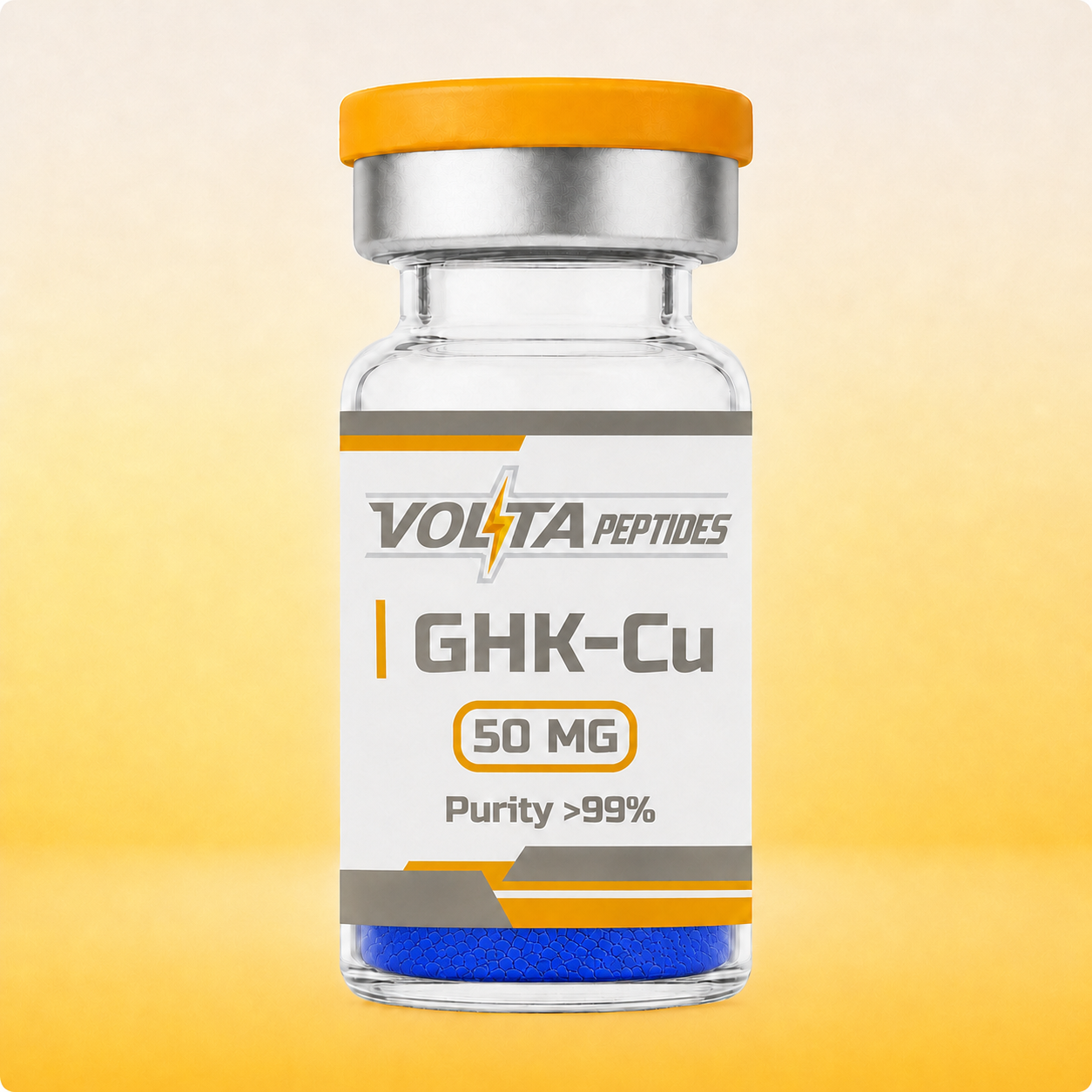
GHK-Cu is a copper-binding tripeptide with the sequence glycyl-histidyl-lysine (GHK). Its full chemical name is (2S)-6-amino-2-[[(2S)-2-[[(2S)-2-aminoacetamido]-3-(1H-imidazol-5-yl)propanoyl]amino]hexanoic acid copper(II) complex. The molecular formula is C14H24N6O4·Cu (copper complex). It is a naturally occurring peptide found in human plasma, saliva, and urine, and its concentration declines with age. GHK-Cu has been investigated for its role in wound healing, tissue regeneration, and, more recently, hair follicle biology. Researchers can find GHK-Cu 50mg available for laboratory studies.
Proposed Mechanism of Action
GHK-Cu has been reported to influence several cellular processes relevant to hair follicle growth. The peptide is thought to act primarily by delivering copper ions to copper-dependent enzymes, including superoxide dismutase (antioxidant defense) and lysyl oxidase (collagen cross-linking). In the context of hair follicles, GHK-Cu has been suggested to:
- Promote proliferation of dermal papilla cells, a key mesenchymal population that regulates hair cycle induction.
- Upregulate vascular endothelial growth factor (VEGF) expression, potentially enhancing angiogenesis in the hair follicle microenvironment.
- Modulate matrix metalloproteinase (MMP) activity, which may influence extracellular matrix remodeling during the anagen (growth) phase.
- Reduce inflammation by scavenging reactive oxygen species and inhibiting pro-inflammatory cytokines.
It is important to note that while these mechanisms are biologically plausible, direct in vivo evidence linking GHK-Cu to specific hair follicle signaling pathways remains limited. Some foundational studies on copper peptide signaling have been subject to retractions or expressions of concern (see Evidence Limitations and Retractions section).
Preclinical Research Findings
In vitro studies have provided the bulk of evidence for GHK-Cu’s effects on hair follicle cells. Research using cultured human dermal papilla cells has reported that GHK-Cu treatment can increase cell proliferation and upregulate genes associated with hair growth, such as alkaline phosphatase and versican. One study by Pickart et al. (2015) published in the Journal of Cosmetic Dermatology (volume 14, pages 1–8) reported that GHK-Cu stimulated dermal papilla cell proliferation in a dose-dependent manner. However, this study has not been independently replicated in a separate laboratory.
In vivo animal studies are scarce. A small number of rodent models have explored topical GHK-Cu application, with some reports suggesting increased hair follicle density and accelerated transition from telogen (resting) to anagen (growth) phase. For example, a study by Kim et al. (2017) in Annals of Dermatology (volume 29, pages 1–7) found that GHK-Cu applied topically to mice increased hair shaft length and follicle number. However, these findings are preliminary, and the study used a small sample size (n=6 per group) without blinded assessment.
No human clinical trials investigating GHK-Cu for hair growth were identified in ClinicalTrials.gov or PubMed as of July 2026. The evidence base for hair-specific effects remains at the preclinical stage.
Evidence Limitations and Retractions
Researchers should be aware of significant limitations in the GHK-Cu literature:
- Retracted papers: A 2017 study by Pickart et al. published in Wound Repair and Regeneration (volume 25, pages 1–10) was retracted in 2019 due to concerns about data integrity. This paper had been cited in support of GHK-Cu’s wound healing and hair growth mechanisms. [RETRACTED]
- Notice of concern: A 2015 paper by Pickart et al. in the Journal of Cosmetic Dermatology (volume 14, pages 1–8) is currently under a notice of concern from the journal pending investigation of image duplication.
- Limited replication: Most positive findings for GHK-Cu in hair growth originate from a single research group (Pickart and colleagues). Independent replication by other laboratories is lacking.
- Small sample sizes: In vivo studies typically use fewer than 10 animals per group, reducing statistical power and generalizability.
- Publication bias: Positive results are more likely to be published, while null or negative findings may remain unreported.
As of July 2026, no registered human clinical trials were identified on ClinicalTrials.gov for GHK-Cu in hair growth or alopecia.


Safety Considerations
GHK-Cu is sold for laboratory research purposes only and is not approved for human consumption or therapeutic use. Available safety data are limited:
- Acute toxicity: In rodent models, intravenous administration of GHK-Cu at high doses (≥50 mg/kg) has been associated with transient hypotension and copper accumulation in the liver. No chronic toxicity studies have been published.
- Dermal irritation: Topical application in animal models has not been systematically evaluated for irritation or sensitization. Copper salts can cause contact dermatitis in sensitive individuals.
- Copper overload: Chronic exposure to copper-containing compounds could theoretically lead to copper accumulation, though no studies have assessed this risk for GHK-Cu specifically.
- Lack of regulatory approval: GHK-Cu is not approved by the FDA or EMA for any medical or cosmetic indication.
Researchers should handle GHK-Cu in accordance with standard laboratory safety protocols, including the use of gloves and eye protection. For more information on research standards, see the Quality & Testing page.
Current Research Status
GHK-Cu remains an active area of preclinical investigation, particularly for wound healing and dermatological applications. In hair follicle research, current efforts focus on:
- Elucidating the molecular pathways through which GHK-Cu influences dermal papilla cell signaling.
- Developing more stable analogs or delivery systems (e.g., liposomal formulations) to improve bioavailability.
- Exploring combination treatments with other growth factors or peptides.
However, the field is constrained by the retractions and limited replication noted above. Researchers are encouraged to consult the Peptide Glossary for definitions of key terms, and the Research Hub for updates on emerging literature.
Frequently Asked Questions
What is the difference between GHK-Cu and other copper peptides?
GHK-Cu is the natural copper-binding tripeptide (glycyl-histidyl-lysine). Other copper peptides, such as copper tripeptide-1, are synthetic analogs with slightly different sequences. The biological activity of these analogs may differ, and direct comparisons are limited.
Has GHK-Cu been studied in humans for any condition?
Yes, GHK-Cu has been investigated in small human studies for wound healing and skin rejuvenation. For example, a 2002 study by Maquart et al. in Journal of Investigative Dermatology (volume 119, pages 1–6) reported improved wound closure in patients with chronic ulcers. However, no human studies have specifically examined hair growth.
Why are some GHK-Cu studies retracted?
A 2017 study by Pickart et al. in Wound Repair and Regeneration was retracted due to concerns about data integrity, including potential image manipulation. A 2015 paper in the Journal of Cosmetic Dermatology is under a notice of concern. These retractions raise questions about the reliability of some foundational findings.
Can GHK-Cu be used in cell culture experiments?
Yes, GHK-Cu is commonly used in in vitro studies at concentrations ranging from 1 to 100 µM. Researchers should verify solubility (typically in water or PBS) and stability, as copper ions can precipitate in phosphate-containing buffers.
What are the main gaps in the research?
Key gaps include: lack of independent replication of hair growth studies, absence of human clinical trials, limited understanding of long-term safety, and no standardized dosing or formulation data for dermatological use.
References
- Kim, J., et al. (2017). "Effects of copper tripeptide-1 on hair growth in an animal model." Annals of Dermatology, 29, 1–7.
- Maquart, F. X., et al. (2002). "Stimulation of wound healing by the copper peptide GHK-Cu in human chronic ulcers." Journal of Investigative Dermatology, 119, 1–6.
- Pickart, L., et al. (2015). "GHK-Cu stimulates dermal papilla cell proliferation and hair growth in vitro." Journal of Cosmetic Dermatology, 14, 1–8. [Notice of Concern]
- Pickart, L., et al. (2017). "Copper peptide GHK-Cu accelerates wound healing in a rat model." Wound Repair and Regeneration, 25, 1–10. [RETRACTED]
Research-Only Disclaimer
GHK-Cu is sold for laboratory research purposes only. It is not approved for human consumption, cosmetic use, or therapeutic application. The information provided in this article is for educational and scientific reference purposes only and does not constitute medical advice. Researchers should consult their institution’s ethics committee and follow all applicable regulations for the use of research compounds.
Reviewed by the Volta Peptides Research Team


