
Key Takeaways
- •Signal peptides boost matrix protein production, especially collagen, by activating skin cells such as human skin fibroblasts.
- •Carrier peptides facilitate transport of essential trace elements like copper and manganese, vital for wound healing and enzyme functions.
- •GHK consists of glycine, histidine, and lysine amino acids.
GHK and Copper Peptides: Key Roles in Skin Repair
Signal peptides boost matrix protein production, especially collagen, by activating skin cells such as human skin fibroblasts. They also enhance production of elastin, proteoglycans, glycosaminoglycans, and fibronectin. These actions increase matrix cell activity, leading to firmer, younger-looking skin.
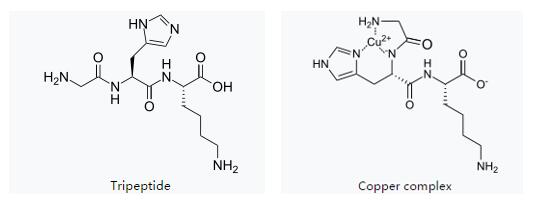
Carrier peptides facilitate transport of essential trace elements like copper and manganese, vital for wound healing and enzyme functions. The tripeptide-1, known as glycyl-L-histadyl-L-lysine or GHK, serves mainly as a carrier peptide. It stabilizes and delivers copper while functioning as a signal peptide.
Composition and Natural Occurrence of GHK
GHK consists of glycine, histidine, and lysine amino acids. Studies indicate it has antioxidant properties, modulates inflammation, and aids tissue repair and remodeling. It scavenges free radicals and lowers oxidative stress in skin cells.
This bioactive peptide appears naturally in human plasma, saliva, and urine. The body synthesizes it for key physiological roles. GHK draws attention in biomedical research for its wide range of biological effects. Check the Peptide Glossary for definitions of terms like tripeptide-1.
As a signal peptide, GHK promotes breakdown of extra-large collagen aggregates in scars. It supports regular collagen synthesis in healthy skin, along with production of elastin, proteoglycans, and glycosaminoglycans. GHK also boosts growth and migration of various cell types and triggers anti-inflammatory and antioxidant effects.
Formation and Enhanced Effects of GHK-Cu
GHK binds with copper ions to create GHK-Cu, called copper peptide. This complex shows stronger biological activities than GHK alone. Recent studies highlight GHK-Cu's role in skin regeneration and hair growth.
Research demonstrates GHK-Cu activates dermal fibroblasts and keratinocytes. This leads to higher collagen production and better hair follicle development. The complex works via receptor-mediated signaling and enzyme modulation. It also regulates gene expression tied to extracellular matrix remodeling and cell proliferation.
Copper in GHK-Cu supports redox signaling and enzyme activation in cells. GHK-Cu boosts production and secretion of growth factors for tissue repair. Studies show it increases expression of vascular endothelial growth factor (VEGF) and fibroblast growth factor (FGF) in skin cells.
Mechanisms in Collagen and Tissue Maintenance
These growth factors aid angiogenesis and fibroblast proliferation, speeding wound healing and skin regeneration. GHK-Cu drives collagen synthesis by activating fibroblasts, main producers of collagen in the skin's extracellular matrix (ECM). It triggers the MAPK/ERK pathway to raise collagen gene expression.
GHK-Cu also blocks matrix metalloproteinases (MMPs), preserving ECM integrity for firmer, more elastic tissue. It adjusts MMP activity in tissue remodeling. By curbing MMPs that break down collagen and elastin, GHK-Cu sustains ECM balance and prevents damage from aging or injury.
This MMP modulation supports anti-aging effects and tissue repair. GHK-Cu interacts with cell surface receptors like integrins and growth factor receptors. These interactions start signaling cascades for cell proliferation, migration, and ECM synthesis. For precise dosing, use the Dosage & Cycle Planner.


Benefits for Wound Healing and Skin Regeneration
GHK-Cu speeds wound closure through angiogenesis, essential for tissue repair. It raises VEGF and FGF expression for better vascularization and collagen deposition. GHK-Cu also fine-tunes MMPs for structured healing of damaged skin.
In anti-aging, GHK-Cu improves dermal thickness and elasticity. A 2022 study showed it stimulates collagen synthesis and blocks MMP activity, maintaining ECM structure. It promotes fibroblast growth and production of collagen and elastin for youthful skin resilience.
GHK-Cu offers anti-inflammatory and antioxidant benefits for skin health. It reduces pro-inflammatory cytokines and reactive oxygen species (ROS) in skin cells. This cuts oxidative stress and inflammation, slowing aging and aiding healing.
Hair Growth and Broader Applications
GHK-Cu supports hair follicle growth by activating hair cycle pathways. Research reveals it boosts Wnt/β-catenin and FGF signaling, key for follicle development. It extends the anagen growth phase and increases follicular proliferation for denser hair.
Studies confirm GHK-Cu treats alopecia by prolonging anagen and enhancing growth signals. Overall, GHK-Cu's activities span wound healing, anti-aging, hair stimulation, and tissue remodeling. These effects occur through varied molecular pathways, positioning it for dermatological and regenerative uses.
GHK-Cu regulates ECM remodeling by favoring collagen synthesis over degradation. It activates metalloproteinases for repair and balances ECM turnover genes. This maintains synthesis-degradation equilibrium for healthy tissue.
In summary, GHK and GHK-Cu provide multifaceted support for skin repair, hair growth, and anti-aging via precise cellular mechanisms. Their natural presence and researched benefits make them focal points in peptide studies. Explore more with our Free peptide tools.
Related Research Compounds
Looking for high-purity research peptides? Browse our catalog for HPLC-verified compounds.
| Compound | Purity | Size | Price |
|---|---|---|---|
| GHK-Cu 50mg | >99% | 50mg | $24.00 |


