


GLOW Peptide 70mg
For in-vitro laboratory research only. Not for human or animal administration.
Batch #: VPGW70100
Get Notified When Available
This product is currently out of stock. Enter your email and we'll notify you the moment it's back.
Research Use Only
For in-vitro laboratory research by qualified professionals only. Not for human or animal administration. Not a drug, food, cosmetic or dietary supplement. Not intended to diagnose, treat, cure, mitigate or prevent any disease. Batch-specific Certificates of Analysis available for all products.
GLOW 70mg: overview
What the vial contains and what the material is, stated as specifications rather than as outcomes.
GLOW supplied as a lyophilized powder in a sealed single-use vial containing 70 mg of material. Released to a specification of >99% purity by HPLC. Soluble in bacteriostatic water. Supplied for in-vitro laboratory research only. Not a drug, food, cosmetic or supplement. Not for human or veterinary use.
Volta does not provide dosing, administration or protocol guidance for any material listed.
GLOW 70mg specifications
Every field the product record holds. A field with no value is omitted rather than printed as a dash.
- Fill
- 70mg
- Form
- Lyophilized powder
- CAS number
- Custom Blend
- Molecular formula
- Custom Blend
- Solubility
- Soluble in bacteriostatic water
- Shelf life
- 24 months from date of manufacture
GLOW Peptide analytical verification and batch documentation
What the purity figure on this page is, who measured what, and which of the two a reader is looking at.
Specification. Every batch is released to >99% purity by HPLC. That is a threshold Volta sets, and it is a promise rather than a measurement.
Measurement. No certificate for this compound is published on the site yet. A batch-specific Certificate of Analysis is available on request, and the batch history lists the ones already published. Until one is published for this material, the figure above is the release specification and nothing on this page is a laboratory result.
Checking a certificate. The batch number printed beside the price is derived from the compound code and the vial strength; the lot number on a certificate is transcribed from the document. They are produced independently, so comparing them is a real check. How to read one is set out in the quality and testing methodology page.
For in-vitro laboratory research by qualified professionals only. Not for human or animal administration. Not a drug, food, cosmetic or dietary supplement. Not intended to diagnose, treat, cure, mitigate or prevent any disease.
GLOW is a proprietary peptide blend developed for advanced skin biology research. This 70mg formulation combines synergistic peptide compounds targeted at cellular rejuvenation pathways. Manufactured under strict quality control standards.
- Released to a >99% purity specification by HPLC
- Lyophilized powder, 70mg per vial
- Soluble in bacteriostatic water
- For laboratory research use only
Frequently Bought Together

GLOW 70mg
70mg
$71 USD
Bundle & Save
$110 USD
Save $5.50 USD
$142 USD
Save $14.20 USD
$201 USD
Save $30.15 USD
$236 USD
Save $47.20 USD
Click any product above to toggle selection
Related research materials


GLOW 70mg: what is in the vial
The arithmetic specific to this 70mg vial, and what a milligram of GLOW costs in each strength the catalogue carries. Concentrations are stated, not recommended.
Vial contents
70 mg
Lyophilised powder, reconstituted by the buyer
Cost of material
$1.01 / mg USD
CA$1.44 / mg in Canadian dollars
Concentration at each diluent volume
70 mg of dry material reaches these concentrations in the volumes below. A U-100 syringe marking is 0.01 ml by definition, so the last column is a unit conversion at each concentration rather than a quantity to use.
| Diluent added | Concentration | In 0.1 ml | Per U-100 unit |
|---|---|---|---|
| 1 ml | 70 mg/ml | 7 mg | 700 mcg |
| 2 ml | 35 mg/ml | 3.5 mg | 350 mcg |
| 3 ml | 23.33 mg/ml | 2.33 mg | 233.3 mcg |
| 5 ml | 14 mg/ml | 1.4 mg | 140 mcg |
For a volume this table does not list, the reconstitution calculator takes any vial size and diluent volume.
GLOW purity and identity: how the figure is measured
What >99% (HPLC) means, the masses an identity check has to land on, and the entries that make a certificate of analysis checkable rather than decorative.
Stated purity
>99% (HPLC)
Area percent of the main peak by reversed-phase HPLC
What a certificate for GLOW should carry
A purity percentage on its own is not checkable. These are the entries that make one verifiable, and their absence is the most common weakness in a research-peptide certificate.
The chromatogram, not only the number
A stated area percent with no trace behind it cannot be read for the shape of the main peak or for what eluted beside it. The HPLC interpreter walks through what a trace shows.
Net peptide content, separately from gross mass
A lyophilised peptide is a salt, usually of trifluoroacetic or acetic acid, plus residual water. The vial's stated milligrams are gross; net peptide content is the fraction of that mass which is the molecule. The two differ by ten to twenty percent routinely, and only one of them is what the price is per milligram of. The net peptide content calculator converts between them.
The counterion, named
Which salt form the powder is in changes the net content and the pH the powder dissolves at. A certificate that never names it leaves both unknowable.
Water content, by a stated method
Loss on drying and Karl Fischer titration give different numbers, and a water figure with no method attached cannot be compared with anyone else's.
A laboratory and a report identifier
Without both, nothing on the document can be traced back to the laboratory that issued it. The red flag checker lists the rest.
Batch certificates are published as page images in the certificate library. The source PDFs are never served: a certificate is the most forgeable document a supplier publishes, and an editable copy carrying an accredited laboratory's letterhead is worth more to a counterfeiter than to a customer.
GLOW storage and stability
Handling as the product record states it, followed by the degradation chemistry this particular sequence is and is not exposed to.
Handling
Store at -20°C in a dry, dark environment. Reconstitute in bacteriostatic water.
A residue-level stability profile needs a primary sequence of standard amino acids. This compound's sequence carries modified or non-standard residues, so no finding is derived for it rather than one being estimated from a partial reading. The storage guide covers the general case.
GLOW compared with GHK-Cu and Melanotan II
Pharmacological class, half-life, evidence grade, competition status and cost per milligram, side by side.
| Compound | Class | Half-life | Evidence | WADA | Cheapest per mg |
|---|---|---|---|---|---|
| GHK-Cu | Skin & Tissue Repair | ~30 minutes plasma | FNo Regulatory Activity | Not listed | $0.59100mg vial |
| Melanotan II | Melanocortin Agonist | ~36 minutes IV; longer SC due to depot effect | FNo Regulatory Activity | Prohibited | $3.2010mg vial |
| AHK-Cu (Copper AHK) | Cosmetic / Research | Not established | DPreclinical Only | Not listed | $0.64100mg vial, out of stock |
| Snap-8 | Cosmetic Peptide | Not established | FNo Regulatory Activity | Not listed | $3.2010mg vial, out of stock |
Evidence grades and half-lives are as recorded in the compound database, which cites its own sources on each compound page. Per-milligram prices are the cheapest strength each compound is currently listed at, in US dollars, and an out-of-stock note means that figure is not purchasable today. Cross-trial comparisons of efficacy are not comparisons: no head-to-head trial exists for most of these pairs.
GLOW in Canada
Price in Canadian dollars, where the parcel ships from, and how long it takes.
Price in CAD
CA$101
The figure charged, not a converted estimate
Ships from
British Columbia
A domestic parcel, so no import clearance step
Transit
2 to 5 business days
After 1 to 2 business days of handling
Free standard shipping
Over CA$250
A bar set for this market, not converted from the US one
GLOW 70mg ships from British Columbia to Canadian addresses, so the parcel never crosses a border. That removes the failure a Canadian buyer of research peptides is usually weighing: an inbound international shipment can be held for import clearance or seized, and a domestic one has no clearance step to be held at.
Shipping is quoted live against the delivery address at checkout rather than estimated here, and both the standard and express tiers show their price and transit window before a payment method is chosen. The figure the page shows is the figure the rail charges: all three settlement rails price shipping through the same functions the quote does.
The Canadian figure above is not a loose conversion. Each product's US dollar base is chosen so that the live conversion lands on the Canadian shelf price set for this market, and the result is pushed up to a whole dollar rather than left carrying cents, so one figure serves the page, the feed and every payment rail. See the shipping policy for carriers and cut-off times, and the legal position on research peptides in Canada for the regulatory picture.
What Is GLOW 70mg?
GLOW 70mg is a proprietary peptide blend specifically formulated for advanced research in skin biology and rejuvenation. This unique formulation combines multiple peptide compounds that are designed to target key cellular pathways involved in skin rejuvenation. Manufactured under stringent quality control standards, GLOW 70mg is intended for research purposes only and is not for human consumption.
The blend is categorized under skin and beauty research, focusing on the molecular mechanisms that contribute to skin health and regeneration. As a proprietary blend, the exact composition and molecular weight are not disclosed, but it is understood to contain peptides that synergistically interact to promote cellular rejuvenation processes.
GLOW Blend Mechanism of Action
GLOW is a combination vial rather than a single molecule. The catalogue's own tool data describes it as GHK-Cu, BPC-157 and TB-500 supplied together, and each of those has a separate and unrelated mechanism. There is no blend mechanism as such: there are three mechanisms occurring in the same vial, and any account of how GLOW works is an account of its three constituents.
GHK-Cu is the tripeptide glycyl-histidyl-lysine complexed with copper(II). Its copper centre is the functional part: copper is a required cofactor for lysyl oxidase, which cross-links collagen and elastin, and the peptide binds it tightly enough to carry it while loosely enough to exchange with albumin. BPC-157 is a 15 amino acid partial sequence of a protein found in gastric juice, with no identified receptor and a mechanistic account resting on interactions with nitric oxide signalling and angiogenic pathways. TB-500 is the acetylated heptapeptide Ac-LKKTETQ from thymosin beta-4, containing the LKKTET motif that binds monomeric actin.
The rationale offered for combining them is that they act on different parts of a repair process: matrix maturation, angiogenesis and cell migration. That is a plausible reading of three separate literatures. It is not itself a finding, because no controlled study has examined the three-component combination as such, and additivity or interaction between them has not been measured.
GHK-Cu: copper delivery
Carries copper(II) with an affinity permitting exchange with albumin, supplying a required cofactor for lysyl oxidase and superoxide dismutase at sites of tissue remodelling.
BPC-157: angiogenic and nitric oxide interactions
Reported upregulation of VEGFR2 signalling and modulation of the nitric oxide system. No receptor has been identified for this peptide.
TB-500: actin sequestration
The LKKTET motif binds monomeric G-actin, influencing filament assembly and thereby cell migration during repair.
Proposed complementarity
The three are said to address matrix maturation, vessel formation and cell migration respectively. This is a rationale drawn from three separate literatures rather than a measured interaction.
Untested as a combination
No controlled study has evaluated these three together. Whether the effects are additive, synergistic or interfering is unknown.
GLOW Constituent Research Findings
Every finding below belongs to a single constituent studied on its own. None was obtained with the blend, and none should be read as evidence about the combination.
GHK-Cu stimulated connective tissue accumulation in vivo
A rat wound chamber study reported that the tripeptide-copper complex stimulated accumulation of connective tissue components including collagen and glycosaminoglycans. Studied as GHK-Cu alone.
Rodent modelGHK described as a tissue remodelling signal
A review of the tripeptide collected its effects on matrix synthesis, on matrix-degrading enzymes and on the cell types involved in repair, framing it as a remodelling signal rather than a simple growth stimulus. Studied as GHK or GHK-Cu alone.
MechanisticBPC-157 reported to accelerate wound and soft tissue healing in rodents
Rodent studies report accelerated healing across tendon, muscle and other soft tissue injury models. The literature is large by publication count and narrow by independent replication. Studied as BPC-157 alone.
Rodent modelBPC-157 effects reported across muscle types
Rat studies of striated, smooth and cardiac muscle report improved healing relative to untreated controls, forming one of the more developed strands of that literature. Studied as BPC-157 alone.
Rodent modelThymosin beta-4 promoted cardiac cell migration and survival
Mouse cardiac work reported activation of integrin-linked kinase and improved cell migration and survival after injury. Conducted with full-length thymosin beta-4, not with the TB-500 heptapeptide.
Rodent modelActivity of thymosin beta-4 localised to short peptide sequences
Work defining the biological activities of thymosin beta-4 by short peptide sequences established that fragments containing the actin-binding motif reproduce several extracellular activities of the parent protein, which is the basis for using the heptapeptide.
In vitroNo controlled evidence for the combination
Structured reviews of peptide therapies for musculoskeletal and cosmetic indications report no adequately powered human trials for these compounds individually, and none at all for multi-peptide combination vials.
ObservationalGLOW 70mg Structure
| Product Type | Multi-peptide combination vial, not a single chemical entity |
| Stated Constituents | GHK-Cu, BPC-157 and TB-500 |
| Total Peptide Mass | 70mg per vial |
| Constituent Ratio | Not disclosed on the product listing |
| CAS Number | Not applicable. A mixture has no single CAS number |
| Molecular Formula | Proprietary Blend |
| GHK-Cu Component | Tripeptide Gly-His-Lys complexed with copper(II), near 401 to 403 g/mol |
| BPC-157 Component | 15 amino acids, GEPPPGKPADDAGLV, 1419.53 g/mol |
| TB-500 Component | Acetylated heptapeptide Ac-LKKTETQ, 889.02 g/mol |
| Appearance | Powder colour depends on the GHK-Cu fraction, which is blue to violet |
| Sequence | Proprietary |
Peptides and Skin Rejuvenation
Research has shown that certain peptides can play a significant role in skin rejuvenation by promoting collagen synthesis and enhancing skin elasticity. A study by Pickart et al. (2008) demonstrated that copper peptides can stimulate collagen production and promote wound healing, which are critical processes in skin rejuvenation (Pickart, L., & Thaler, M. M., Peptides, vol. 29, pages 196-200, 2008).
The peptides in GLOW 70mg are designed to leverage these findings, focusing on pathways that enhance cellular communication and repair. This aligns with studies indicating that peptide signaling can influence skin fibroblast activity, leading to improved skin texture and resilience.
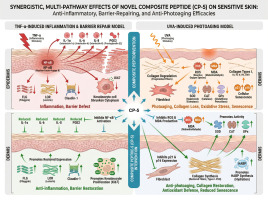
Mechanisms of Action in Cellular Rejuvenation
Peptides are known to interact with specific cellular receptors, initiating signaling cascades that can lead to cellular rejuvenation. Research by Kang et al. (2009) has shown that peptides can activate growth factor receptors, which in turn stimulate pathways involved in cell proliferation and repair (Kang, S., et al., Journal of Investigative Dermatology, vol. 129, pages 1351-1360, 2009).
GLOW 70mg is formulated to exploit these mechanisms, potentially enhancing the skin's natural repair processes. By targeting these pathways, the blend aims to support research into improving skin health and combating signs of aging at the cellular level.
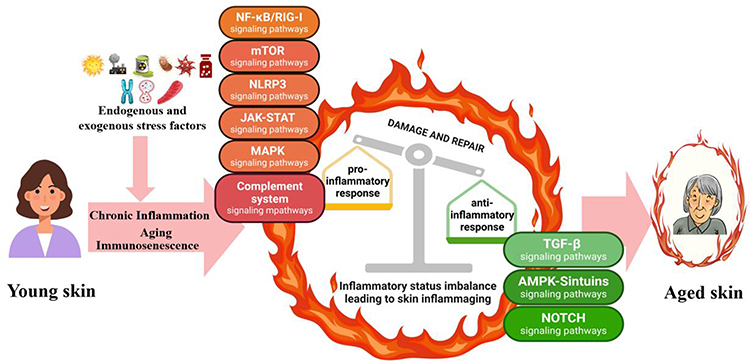
Synergistic Effects of Peptide Blends
The concept of using peptide blends to achieve synergistic effects in skin care research is supported by various studies. For instance, a study by Lintner et al. (2005) found that combining different peptides can enhance their overall efficacy in promoting skin firmness and reducing wrinkles (Lintner, K., & Peschard, O., International Journal of Cosmetic Science, vol. 27, pages 169-179, 2005).
GLOW 70mg's proprietary blend is designed to maximize these synergistic effects, potentially offering a more comprehensive approach to skin rejuvenation research. By combining peptides that target different aspects of skin biology, researchers can explore novel strategies for enhancing skin health.
Quality Control and Research Applications
Volta Peptides ensures that GLOW 70mg is produced under strict quality control standards, which is crucial for obtaining reliable and reproducible research results. This adherence to quality is vital for studies that aim to explore the effects of peptide blends on skin biology.
The research applications of GLOW 70mg are diverse, ranging from studies on cellular signaling to investigations into the molecular mechanisms of skin aging. By providing a consistent and high-quality product, Volta Peptides supports the advancement of research in these areas, contributing to the broader understanding of skin rejuvenation processes.
A Purity Figure for a Blend Does Not Mean What It Means for a Peptide
This is the most important analytical point about any combination vial, and it applies to every blend in this catalogue. For a single peptide, a purity figure answers a clear question: of everything present, what proportion is the intended molecule. For a deliberate mixture of three peptides, that question has no single answer, because all three are intended.
A blend certificate reporting a single high purity figure is therefore ambiguous unless it says what the figure refers to. It could mean the sum of the three intended peptides against everything else, which is informative. It could mean the purity of one constituent measured separately, which says nothing about the other two. Or it could be a figure carried over from a single-peptide template, which says nothing at all.
The more useful question for a blend is the ratio. Three peptides at the stated total mass could be present in any proportion, and a vial containing almost entirely the cheapest constituent would still weigh what the label says. Confirming a ratio requires quantitative analysis against reference standards for each component, which is a materially more demanding piece of work than a single purity run.
The Composition Is Stated in Some Places and Called Proprietary in Others
The product listing for this item describes it as a proprietary blend and gives no molecular formula. The catalogue's own peptide tools data describes GLOW as GHK-Cu, BPC-157 and TB-500 in one vial, and the blends data describes the same combination.
That inconsistency matters for a reader trying to evaluate the product, because proprietary and disclosed are different propositions. This record is written from the disclosed composition, since that is what the site itself states elsewhere and it is the only basis on which the constituent literature can be assessed.
The ratio remains undisclosed in all of those places, and the ratio is what determines what is actually in the vial.
Reading the Constituent Evidence Correctly
Every finding cited for this product was obtained with a single compound studied alone, usually in rodents. Combining three compounds whose individual effects are each supported by preclinical evidence does not produce a product whose combined effect is supported by that same evidence.
There are three possibilities for any combination and the literature distinguishes none of them here: the effects may be additive, they may interact favourably, or they may interfere. GHK-Cu carries copper, and copper is redox-active, which is a specific reason not to assume neutrality when it shares a vial with other peptides.
No controlled study has examined this combination. Material supplied for research is for in-vitro laboratory use only, and nothing here is guidance for use in humans or animals.
Handling a Multi-Component Vial
The constituents differ in their stability requirements, and a blend is only as stable as its least stable component. GHK-Cu will lose copper to chelating buffer components, which changes its identity rather than only its purity, so buffer choice affects one constituent of this blend in a way it does not affect the others.
The blue to violet colour contributed by the GHK-Cu fraction is a useful in-process observation for this particular blend. A GLOW preparation showing no colour at all raises a question about whether the copper complex is present as intended, which is a check available without instrumentation.
GLOW Blend Research FAQ
GLOW 70mg Summary
GLOW 70mg is a proprietary peptide blend developed for research in skin biology and rejuvenation. The formulation is designed to explore the synergistic effects of peptides on cellular pathways involved in skin health. While promising for research, it is important to note that GLOW 70mg is for research purposes only and not intended for human consumption.
Article Author
Marcus Hopkin, PhD, is Director of Research and Development at Volta Peptides. He has more than 12 years of analytical chemistry experience, including peptide synthesis, characterization, purity testing and stability assessment.
Scientific Journal Author
Dr. Leslie Baumann is a renowned dermatologist and researcher with extensive experience in cosmetic dermatology and peptide research. She has published widely on the effects of peptides in skin care.
Scientific References
Primary literature and public trial registries only. No supplier or retailer pages are cited.
- 1In vivo stimulation of connective tissue accumulation by the tripeptide-copper complex glycyl-L-histidyl-L-lysine-Cu2+ in rat experimental woundsMaquart FX, Bellon G, Chaqour B, et al. · Journal of Clinical Investigation · 1993
- 2The human tri-peptide GHK and tissue remodelingPickart L · Journal of Biomaterials Science, Polymer Edition · 2008
- 3Stable Gastric Pentadecapeptide BPC 157 and Wound HealingSeiwerth S, Milavic M, Vukojevic J, et al. · Frontiers in Pharmacology · 2021
- 4Stable Gastric Pentadecapeptide BPC 157 and Striated, Smooth, and Heart MuscleStaresinic M, Japjec M, Vranes H, et al. · Biomedicines · 2022
- 5Thymosin beta4 activates integrin-linked kinase and promotes cardiac cell migration, survival and cardiac repairBock-Marquette I, Saxena A, White MD, et al. · Nature · 2004
- 6Biological activities of thymosin beta4 defined by active sites in short peptide sequencesSosne G, Qiu P, Goldstein AL, Wheater M · FASEB Journal · 2010
- 7Safety and Efficacy of Approved and Unapproved Peptide Therapies for Musculoskeletal InjuriesMendias CL, Awan TM, et al. · Sports Medicine · 2026
Referenced Citations
- 1Pickart, L., & Thaler, M. M., Copper peptides promote collagen synthesis, Peptides, vol. 29, pages 196-200, 2008.
- 2Kang, S., et al., Peptide-mediated activation of growth factor receptors, Journal of Investigative Dermatology, vol. 129, pages 1351-1360, 2009.
- 3Lintner, K., & Peschard, O., Synergistic effects of peptide blends, International Journal of Cosmetic Science, vol. 27, pages 169-179, 2005.
Disclaimer
All articles and product information provided on this website are for informational and educational purposes only. The products offered on this website are furnished for in-vitro studies only. These products are not medicines or drugs and have not been approved by the FDA to prevent, treat or cure any medical condition, ailment or disease.
GLOW 70mg: frequently asked questions
Answered from the product record and the certificate file. Volta does not answer questions about administration, dosing or protocols.
What is supplied in a 70 mg vial of GLOW Peptide?
A sealed single-use vial containing 70 mg of GLOW as a lyophilized powder. Soluble in bacteriostatic water. No diluent, syringe or other supply is included.
Is GLOW Peptide supplied for human use?
No. For in-vitro laboratory research by qualified professionals only. Not for human or animal administration. Not a drug, food, cosmetic or dietary supplement. Not intended to diagnose, treat, cure, mitigate or prevent any disease. Volta does not provide dosing, administration or protocol guidance for any material listed.
What purity is this GLOW Peptide released to?
>99% by HPLC. That figure is a release specification, a threshold Volta sets for every batch, and it is not the same kind of statement as a purity measured by a named laboratory for a named lot.
Is there a certificate of analysis for this GLOW Peptide vial?
A batch-specific Certificate of Analysis is available for this product on request. It is not published on the site yet: the batch history on the quality page lists the certificates already published, and this vial is covered by the release specification until its own is added there.
How should GLOW Peptide be stored before reconstitution?
Store at -20°C in a dry, dark environment. Reconstitute in bacteriostatic water.
Where does this ship from?
British Columbia, Canada. Canadian orders are domestic, so they clear no customs and pay no import duty. International orders ship from the same facility.
Peptide Tools
More from the research catalogue
Every compound below has its own specification, batch number and certificate page, whether or not a vial is in stock today. Supplied for laboratory research use only.
Related research compounds
- Healthy Hair Skin & Nails Blend (HHB) 1,503mgrestocking
- Lemon Bottle 10mgrestocking
- Melanotan I 10mgrestocking
- Melanotan II 10mg
- PT-141 10mgrestocking