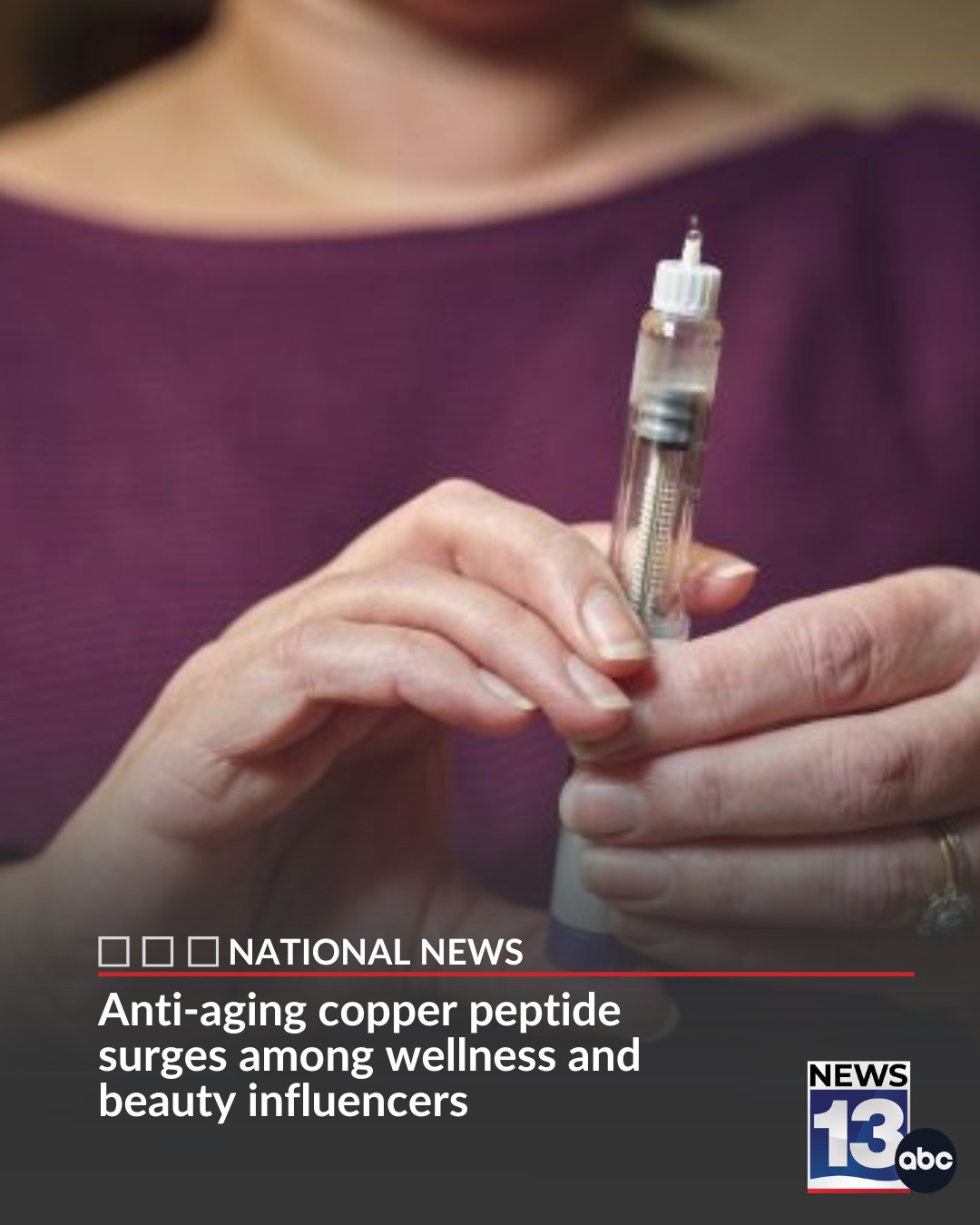
Key Takeaways
- •A compound known as copper peptide, used in anti-aging skincare, is gaining significant traction among wellness and beauty influencers, according to a report published by Yahoo on June 15, 2026.
- •The surge in popularity is largely attributed to endorsements from prominent figures in the wellness and beauty space.
- •The increased visibility of copper peptide among influencers may lead to greater adoption in the broader skincare market.
Copper Peptide Sees Rise in Popularity
A compound known as copper peptide, used in anti-aging skincare, is gaining significant traction among wellness and beauty influencers, according to a report published by Yahoo on June 15, 2026. The trend underscores growing consumer interest in peptide-based cosmetic ingredients. Influencers are increasingly featuring copper peptide in their content, citing its purported benefits for skin health and aging. The compound is often included in serums, creams, and other topical products.
The surge in popularity is largely attributed to endorsements from prominent figures in the wellness and beauty space. These influencers are sharing personal experiences and recommendations with their audiences, driving demand for copper peptide products. The Yahoo report notes that the trend reflects a broader shift toward science‑backed ingredients in the beauty industry. Consumers are seeking out compounds with research support, and copper peptide fits that criteria.
The increased visibility of copper peptide among influencers may lead to greater adoption in the broader skincare market. Brands are likely to respond by incorporating the ingredient into new product lines. As of the report’s publication, the trend shows no signs of slowing down. The compound’s popularity is expected to continue growing as more influencers and consumers explore its potential benefits.
What Is Copper Peptide and Why Does It Matter?
Copper peptide, chemically known as copper tripeptide‑1 or GHK‑Cu, is a small protein fragment composed of the amino acids glycine, histidine, and lysine bound to a copper ion. It was first identified in the 1970s by Dr. Loren Pickart while studying the properties of human albumin. Pickart observed that GHK‑Cu naturally occurs in human blood plasma, but its concentration declines with age. This discovery sparked decades of research into its biological functions.
In the context of topical skincare, GHK‑Cu is believed to support several processes: wound healing, collagen synthesis, antioxidant activity, and anti‑inflammatory modulation. Mechanistically, the copper ion acts as a cofactor for enzymes involved in cross‑linking collagen and elastin fibers. The peptide portion serves as a signaling molecule that communicates with fibroblasts, the cells responsible for producing extracellular matrix components.
A 2018 review in the International Journal of Molecular Sciences summarized that GHK‑Cu can stimulate the production of collagen, glycosaminoglycans, and proteoglycans, while also reducing the activity of matrix metalloproteinases (MMPs) that break down collagen. This dual action is often cited as the basis for its anti‑aging effects. However, many of the early studies were performed in vitro or in small clinical trials with limited controls, leaving room for skepticism regarding real‑world efficacy when applied topically.
The Science Behind the Influencer Hype
The Yahoo report frames copper peptide’s rising popularity as part of a broader shift toward “science‑backed” ingredients. But what does the actual evidence say? Several clinical studies have investigated GHK‑Cu for cosmetic applications.
A randomized, double‑blind, vehicle‑controlled trial published in the Journal of Drugs in Dermatology in 2002 examined a cream containing GHK‑Cu applied to the faces of 41 women over 12 weeks. The results showed statistically significant improvements in skin firmness, clarity, and fine wrinkle depth compared to the placebo group. Another 2005 study in the same journal reported that a GHK‑Cu‑containing cream reduced the appearance of photoaged skin after 12 weeks, with improvements in skin density and texture noted via ultrasound and histology.
Despite these promising findings, some dermatologists urge caution. Bioavailability is a key concern: the copper peptide molecule is relatively large, and its ability to penetrate the stratum corneum and reach viable skin layers without a specialized delivery system is uncertain. Formulation science plays a critical role. Many over‑the‑counter products may not contain GHK‑Cu at concentrations or in vehicles that permit meaningful absorption.
Moreover, the influencer ecosystem tends to amplify anecdotal success stories while underreporting cases of irritation or lack of effect. Copper peptides can cause skin sensitivity in some individuals, especially when used alongside other active ingredients such as retinoids or alpha‑hydroxy acids. The reported benefits in the beauty community may reflect a combination of genuine biological activity and placebo effects, as well as the selective attention of users who choose to share positive outcomes.


Market Implications and Industry Response
The Yahoo report notes that the trend may lead to greater adoption in the broader skincare market. Historically, the cosmetic industry has been responsive to influencer‑driven narratives. Ingredients like hyaluronic acid, niacinamide, and vitamin C have seen booms after widespread endorsement by digital creators. Copper peptide appears to be following a similar trajectory.
Brands are now formulating dedicated serum lines, emulsion masks, and “peptide‑infused” moisturizers. According to market analysis from 2024, the global market for peptide‑based cosmetics was valued at over $9 billion, with copper peptide comprising a growing segment. The influencer factor likely accelerates consumer awareness and product trial, but it also raises questions about the sustainability of the trend. Some experts warn that overexposure to a single ingredient can lead to consumer fatigue or unrealistic expectations.
Another implication is the potential for counterfeit or substandard products to enter the market. Because GHK‑Cu is a relatively expensive raw material, cheaper alternatives or mislabeled products might circulate among discount retailers and less scrupulous online shops. The Yahoo report does not address this directly, but it is a known risk whenever a niche ingredient goes mainstream.
The Broader Shift: Science‑Backed Beauty or Marketing Rhetoric?
The Yahoo report emphasizes that the copper peptide trend exemplifies a broader movement toward “science‑backed” ingredients. This shift is real: consumers increasingly look for clinical data, ingredient percentages, and mechanism explanations before purchasing. However, the translation of laboratory research into consumer products is not always straightforward.
For instance, many studies supporting GHK‑Cu were conducted with specific concentrations (typically 0.1% to 1%) and under controlled conditions. A consumer buying a serum that lists “copper tripeptide‑1” on its label has no guarantee that the product matches those experimental parameters. Formulation stability is also an issue: copper ions can degrade certain antioxidants or cause discoloration if not properly chelated.
Influencers often act as intermediaries, distilling complex science into relatable messaging. But this can lead to oversimplification. The Yahoo report does not name specific influencers, so it is difficult to assess the accuracy of their claims. Yet the overall trend suggests that the beauty industry is moving toward ingredient transparency, which many dermatologists view positively, provided that the information remains accurate.
Frequently Asked Questions
Q: What exactly is copper peptide, and how does it work in skincare?
A: Copper peptide (GHK‑Cu) is a naturally occurring protein fragment composed of three amino acids bound to a copper ion. It signals skin cells to produce more collagen and elastin, helps repair damaged tissue, and exhibits antioxidant properties. These actions are thought to reduce fine lines, improve skin firmness, and support wound healing, though clinical evidence varies by product formulation.
Q: Does scientific research support the anti‑aging claims made about copper peptide?
A: Several small clinical trials have shown improvements in skin firmness, wrinkle depth, and texture after regular use of GHK‑Cu creams. However, many studies include small sample sizes or lack rigorous controls. The bioavailability and optimal concentration of copper peptide in over‑the‑counter products remain subjects of ongoing research, so results may differ from lab‑based experiments.
Q: Why are beauty influencers promoting copper peptide so heavily?
A: Influencers tend to highlight ingredients that have a strong research origin and visible anecdotal results. Copper peptide fits both criteria: it has decades of scientific backing, and early users often report noticeable improvements. The Yahoo report from June 2026 notes that this reflects a broader consumer preference for evidence‑based cosmetics, which influencers are capitalizing on.
Q: Are there any risks or downsides to using copper peptide products?
A: Some users experience mild irritation or sensitivity, especially when combining copper peptides with strong acids or retinoids. Quality and stability also vary across brands. Because copper peptide is relatively expensive, cheap products may contain ineffective concentrations. Patch testing and adhering to product instructions are recommended.


