
Key Takeaways
- •Researchers focus on TB4 peptide because it supports tissue repair and cellular processes.
- •TB4 peptide occurs naturally in most cells.
- •Studies also call it thymosin beta 4 peptide.
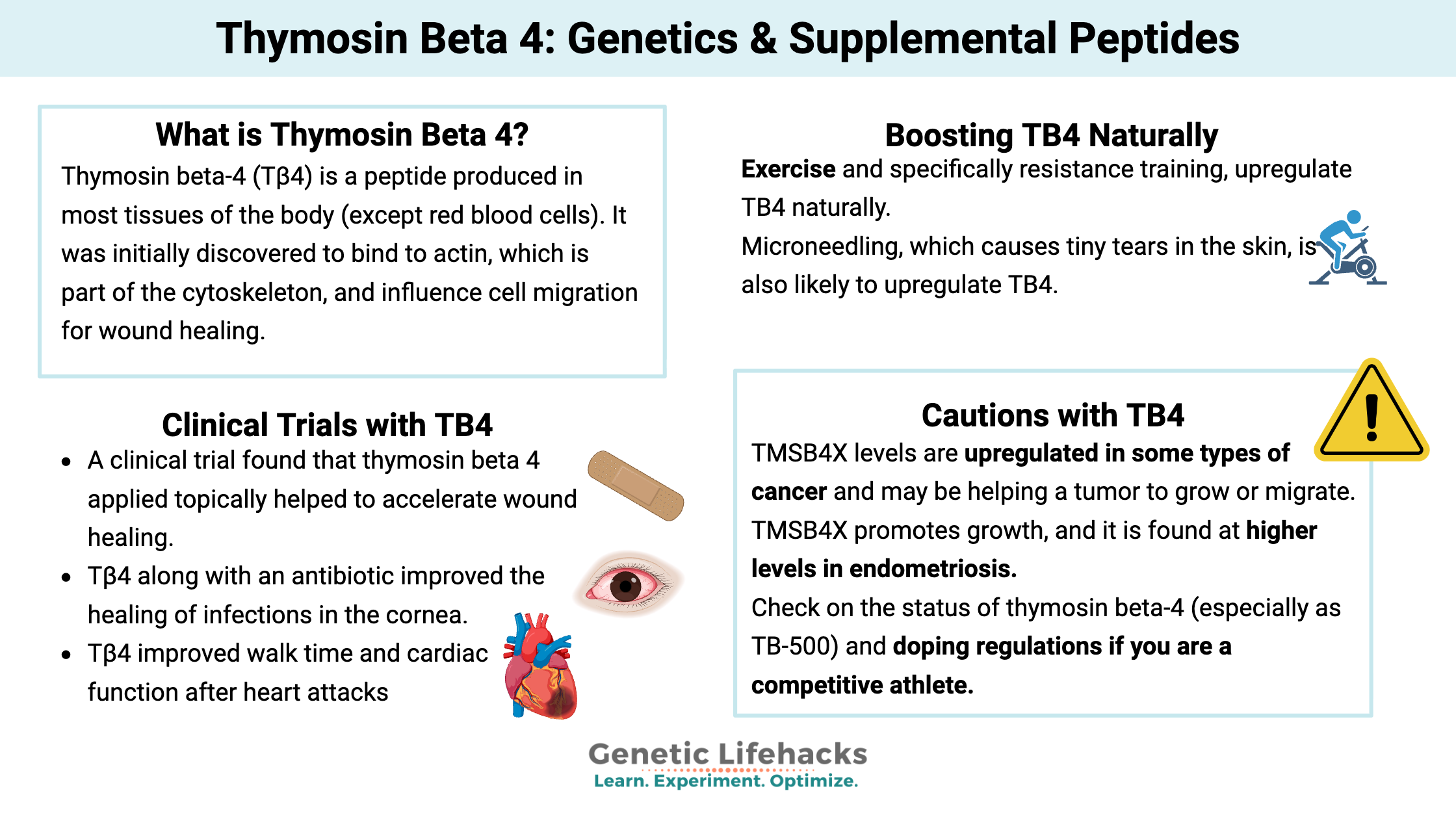
Researchers focus on TB4 peptide because it supports tissue repair and cellular processes. This compound draws interest for understanding injury recovery and the body's response, even as full answers remain elusive. It stays central to studies on regeneration.
What Is TB4 Peptide?
TB4 peptide occurs naturally in most cells. It regulates cell migration, reduces inflammation, and advances tissue repair, making it vital for healing and regeneration research.
Studies also call it thymosin beta 4 peptide. Both names describe the identical substance used in lab settings.
Primary Functions in Studies
At the cellular level, TB4 peptide draws scientific scrutiny for its actions. Key roles include speeding wound healing, stimulating new blood vessel formation, guiding cells to injury sites, and lowering inflammation.
These properties explain its frequent use in controlled experiments. For details on related compounds, see the TB-500 Research Guide.
How TB4 Peptide Operates
TB4 peptide binds to actin, a protein key to cell structure and motility. This binding improves cell travel to repair-needed areas.
It participates in signaling paths that manage tissue regeneration and inflammation. Such involvement prompts studies across biological systems.
Methods for Studying TB4 Peptide
Labs apply standard tests to assess TB4 peptide effects. These cover purity analysis using HPLC, mass spectrometry for molecular identification, cell-based assays for behavior observation, and controlled stability tests.
Related compounds like TB-500 (Thymosin Beta-4) appear in discussions for their similar traits. Tools like the Purity Analyzer aid such evaluations.


Safety in Laboratory Research
Peptide studies occur under strict lab conditions, with safety tied to purity, dosage, and testing protocols. Labels such as tb4 peptide 10mg serve as common examples, though applications vary by guidelines and experiment setup.
Researchers compare it to groups like cosmetic peptides to check wider applications and safety. Check the Peptide Glossary for term definitions.
Reasons for Continued Research
Interest in TB4 peptide grows from promising early results. Current efforts target tissue regeneration, cellular repair mechanisms, and anti-inflammatory paths.
Thymosin beta 4 research seeks deeper knowledge of its actions and future uses. Use the Free peptide tools for planning studies.
Related Research Compounds
Looking for high-purity research peptides? Browse our catalog for HPLC-verified compounds.
| Compound | Purity | Size | Price |
|---|---|---|---|
| TB-500 5mg | >99% | 5mg | $29.00 |
Frequently Asked Questions
What is peptide thymosin beta 4? It is a naturally occurring peptide that supports cell movement, repair, and inflammation control in the body.
What is thymosin beta 4 synthetic peptide? This is a lab-made version of the natural peptide, used in controlled research to study its effects.
What does the TB4 peptide do? It aids recovery, directs cells to damage sites, and spurs blood vessel development in lab experiments.
Why is the TB4 peptide important in scientific research? It provides insights into natural healing processes, helping researchers learn about regeneration and repair.
TB4 peptide holds steady relevance in modern science for its cell movement support, healing contributions, and inflammation role. Ongoing work clarifies its mechanisms while upholding lab standards. Proper testing ensures reliable outcomes in peptide research.


