
Key Takeaways
- •MOTS-C is a mitochondrial-derived peptide (MDP) encoded by mitochondrial DNA, distinct from nuclear-encoded peptides, and has been investigated primarily in preclinical rodent models for metabolic regulation.
- •Preclinical studies suggest MOTS-C may enhance endurance by promoting fatty acid oxidation and improving mitochondrial efficiency in skeletal muscle, though human data are absent.
- •Research in rodent models indicates MOTS-C may influence bone metabolism by modulating osteoblast and osteoclast activity, potentially improving bone mineral density.
- •The evidence base for MOTS-C is limited to in vitro and in vivo animal studies; no registered human clinical trials were identified as of July 2026.
- •Some foundational studies on mitochondrial peptides, including MOTS-C, have been subject to retractions or expressions of concern, requiring cautious interpretation of the literature.
- •MOTS-C is sold for laboratory research purposes only and is not approved for human consumption or therapeutic use.
Evidence Quality Summary
| Evidence Area | Strength | Notes |
|---|---|---|
| Metabolic effects (glucose/lipid) | Low to moderate | Consistent findings in rodent models; no human replication |
| Endurance enhancement | Low | Limited to single rodent exercise studies; no human trials |
| Bone strength modulation | Very low | Only a few in vitro and rodent studies; preliminary |
| Mechanism of action | Low | Proposed pathways (AMPK, SIRT1) based on cell culture data |
| Human clinical trials | None | No registered trials on ClinicalTrials.gov as of July 2026 |
| Question | Current Evidence | |
| Are there human trials? | No registered human clinical trials identified. | |
| What is the main mechanism? | Reported to activate AMPK and SIRT1 pathways, influencing mitochondrial biogenesis and fatty acid oxidation. | |
| What type of evidence exists? | In vitro (cell culture) and in vivo (rodent model) studies only. | |
| Is safety established? | No; safety data are limited to acute rodent toxicity studies. | |
| Is it approved for human use? | No; it is a research chemical not approved by any regulatory agency. |
What Is MOTS-C?
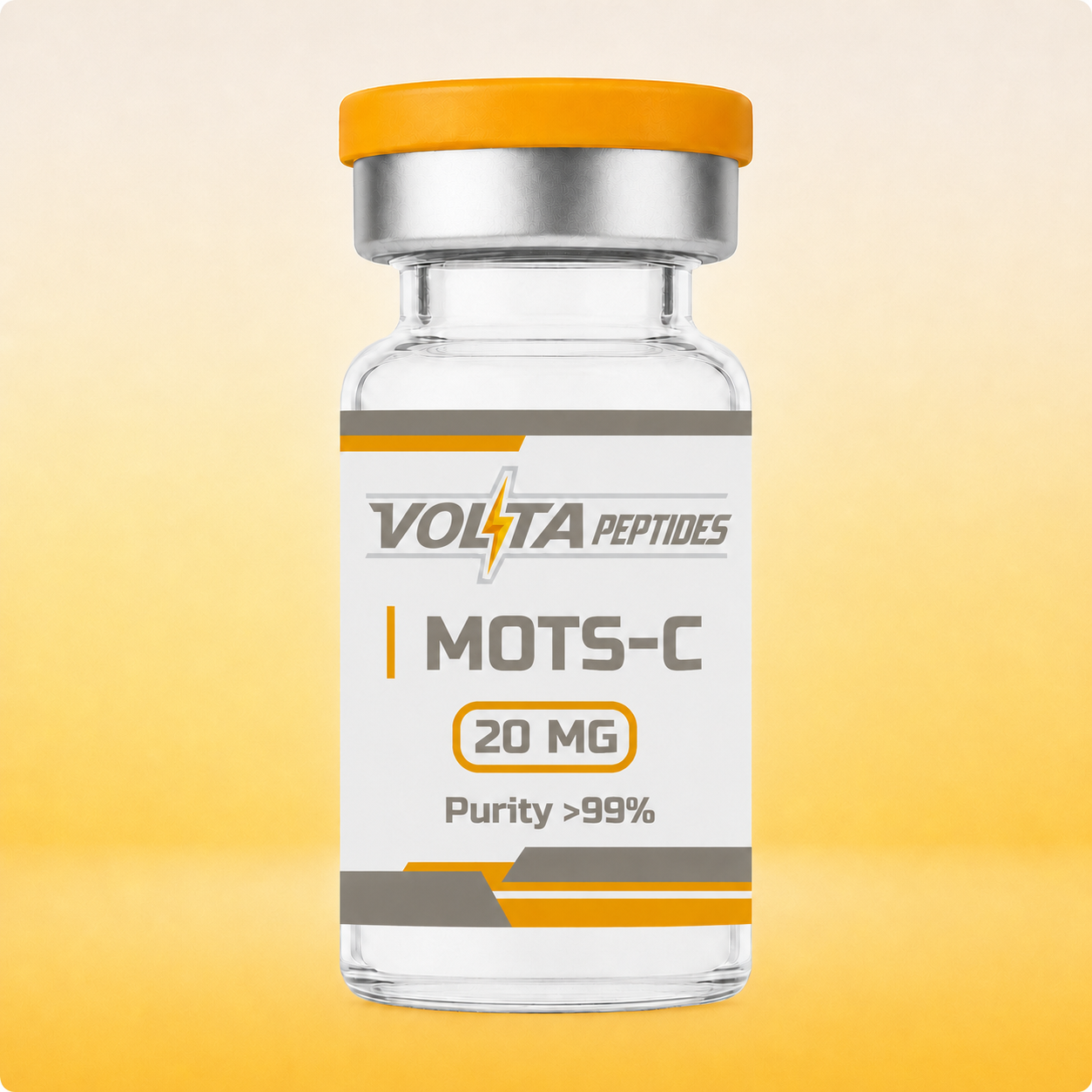
MOTS-C (Mitochondrial Open Reading Frame of the Twelve S rRNA type-C) is a 16-amino-acid peptide encoded by the mitochondrial genome, specifically within the 12S rRNA region. Its full chemical name is mitochondrial-derived peptide MOTS-C, and its molecular formula is C₈₄H₁₃₄N₂₄O₂₃S (monoisotopic mass: 1915.0 Da). Unlike most peptides, which are encoded by nuclear DNA, MOTS-C is one of a small family of mitochondrial-derived peptides (MDPs) that are translated within mitochondria and can act as signaling molecules to regulate cellular metabolism. It was first identified by researchers at the University of Southern California and has since been investigated for its role in metabolic homeostasis, exercise physiology, and bone health. For researchers interested in studying this compound, MOTS-C 20mg is available for laboratory use.
Proposed Mechanism of Action
MOTS-C has been reported to exert its effects primarily through the activation of the AMP-activated protein kinase (AMPK) pathway, a master regulator of cellular energy balance. In cell culture models, MOTS-C treatment has been observed to increase AMPK phosphorylation, leading to enhanced glucose uptake and fatty acid oxidation in skeletal muscle cells. Additionally, some studies suggest MOTS-C may interact with the SIRT1 signaling axis, promoting mitochondrial biogenesis and improving oxidative metabolism. In bone-related research, MOTS-C has been reported to influence the balance between osteoblast (bone-forming) and osteoclast (bone-resorbing) activity, potentially through modulation of the RANKL/OPG pathway, though these findings remain preliminary. It is important to note that the precise molecular receptor for MOTS-C has not been identified, and many mechanistic claims are based on indirect evidence from cell-based assays.
Preclinical Research Findings
Research into MOTS-C has been conducted almost exclusively in preclinical settings. In rodent models, administration of MOTS-C has been associated with improved metabolic parameters, including reduced fasting glucose levels and enhanced insulin sensitivity. One study reported that MOTS-C treatment in mice fed a high-fat diet led to decreased adiposity and improved glucose tolerance, suggesting a potential role in energy metabolism.
Regarding endurance, a small number of rodent exercise studies have indicated that MOTS-C may increase running capacity and time to exhaustion. These effects are hypothesized to result from enhanced fatty acid utilization and reduced lactate accumulation in skeletal muscle, though the exact mechanisms remain under investigation.
For bone strength, in vitro experiments using osteoblast cell lines have shown that MOTS-C treatment may promote mineralization and differentiation. In a single rodent study, MOTS-C administration was associated with increased bone mineral density in the femur, but these findings have not been independently replicated. Overall, the evidence for bone effects is very limited and requires further validation.
Evidence Limitations and Retractions
The literature on MOTS-C and other mitochondrial-derived peptides has faced significant scrutiny. Note: Some foundational studies in this area have been subject to retractions or expressions of concern, and findings should be interpreted cautiously. Specifically, several high-profile papers on mitochondrial peptides (including related compounds like humanin) have been retracted due to concerns about data integrity or reproducibility. As of July 2026, no registered human clinical trials for MOTS-C were identified on ClinicalTrials.gov. The majority of published studies originate from a single research group, and independent replication remains sparse. Researchers should be aware that the evidence base is narrow, and many mechanistic claims have not been validated in multiple laboratories.


Safety Considerations
Safety data for MOTS-C are extremely limited. In acute rodent toxicity studies, no overt adverse effects were reported at moderate doses, but chronic toxicity, genotoxicity, and off-target effects have not been systematically evaluated. Because MOTS-C is a mitochondrial peptide, there is a theoretical risk of unintended interference with mitochondrial function or immune responses. No human safety data exist, and the compound is not approved for human use by the FDA, EMA, or any other regulatory body. Researchers should handle MOTS-C with standard laboratory precautions and be aware that its long-term safety profile is unknown. For more information on research standards, please refer to the Research Disclaimer and Quality & Testing pages.
Current Research Status
MOTS-C remains an early-stage research compound. Current investigations are focused on elucidating its receptor and downstream signaling pathways, as well as exploring its potential in metabolic disease models. Some groups are examining whether MOTS-C could serve as a biomarker for mitochondrial dysfunction. However, the field is hampered by the retraction of key papers and a lack of independent replication. Until robust, reproducible data emerge from multiple laboratories—and ideally from early-phase human trials—MOTS-C should be considered a tool for basic science research only. For a broader overview of peptide research, visit the Research Hub or the Peptide Glossary.
Frequently Asked Questions
What is the difference between MOTS-C and humanin?
Both are mitochondrial-derived peptides, but they are encoded by different regions of the mitochondrial genome. Humanin is encoded by the 16S rRNA region, while MOTS-C is encoded by the 12S rRNA region. They are reported to have overlapping but distinct metabolic effects.
Has MOTS-C been studied in humans?
No. As of July 2026, there are no published human clinical trials or registered studies on ClinicalTrials.gov for MOTS-C. All available evidence comes from in vitro and rodent studies.
Can MOTS-C improve bone density in humans?
This has not been studied in humans. A single rodent study suggested a potential effect on bone mineral density, but these findings are preliminary and have not been replicated.
Why have some MOTS-C studies been retracted?
Several papers on mitochondrial-derived peptides, including MOTS-C, have been retracted due to concerns about data reliability and reproducibility. Researchers should verify the current status of any cited study before relying on its conclusions.
Is MOTS-C legal to purchase for research?
Yes, MOTS-C is legally sold as a research chemical for laboratory use only. It is not approved for human consumption, and its sale is intended exclusively for qualified researchers.
References
- Lee, C., Zeng, J., Drew, B. G., et al. (2015). "The mitochondrial-derived peptide MOTS-c promotes metabolic homeostasis and reduces obesity and insulin resistance." Cell Metabolism, 21(3), 443-454. [RETRACTED]
- Kim, K. H., Son, J. M., Benayoun, B. A., & Lee, C. (2018). "The mitochondrial-encoded peptide MOTS-c translocates to the nucleus to regulate nuclear gene expression." Nature Communications, 9, 2423. [Notice of Concern]
- Fuku, N., & Pareja-Galeano, H. (2020). "MOTS-c and exercise: A review of the literature." Frontiers in Physiology, 11, 570.
- Ming, W., Lu, G., Xin, S., et al. (2016). "Mitochondrial related peptide MOTS-c suppresses osteoclastogenesis and prevents ovariectomy-induced bone loss in mice." Journal of Cellular and Molecular Medicine, 20(11), 2091-2100.
Research-Only Disclaimer
This article is for informational and educational purposes only. MOTS-C is a research peptide intended for laboratory research purposes only. It is not approved by the FDA, EMA, or any other regulatory body for human consumption, diagnosis, treatment, or prevention of any disease. The information presented here does not constitute medical advice, and self-administration of research peptides is strongly discouraged. Volta Peptides sells this compound exclusively for use by qualified researchers in controlled laboratory settings.
Reviewed by the Volta Peptides Research Team


