
Key Takeaways
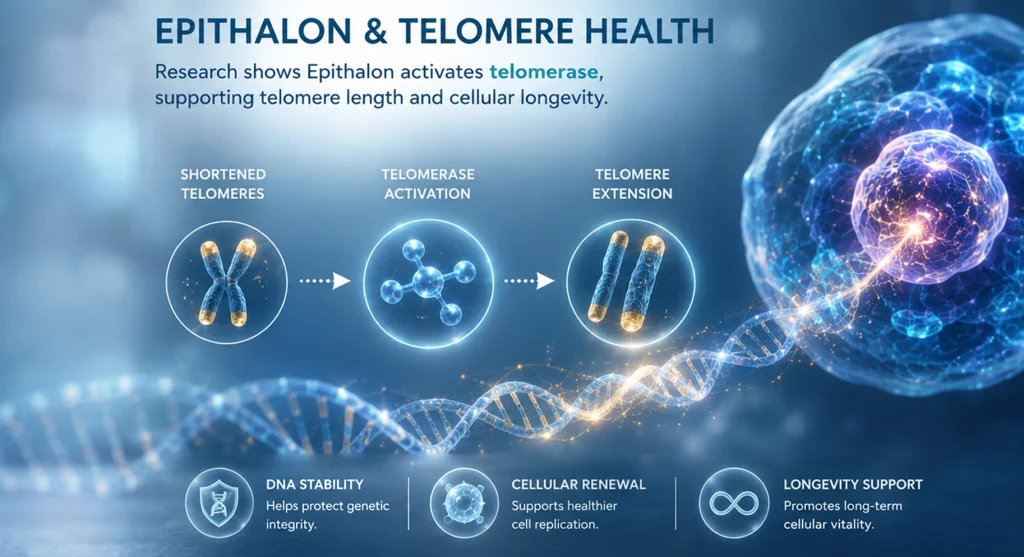
- •A synthetic tetrapeptide known as Epithalon (Ala-Glu-Asp-Gly, AEDG) activates telomerase in human fetal fibroblasts and somatic cells nearing replicative senescence.
- •Studies by Khavinson et al.
- •Rodent experiments showed Epithalon-treated animals had extended mean lifespan and lower tumor rates compared to controls.
Epithalon Research: Telomerase Activation and Longevity Effects
A synthetic tetrapeptide known as Epithalon (Ala-Glu-Asp-Gly, AEDG) activates telomerase in human fetal fibroblasts and somatic cells nearing replicative senescence. This leads to measurable telomere elongation, as reported in key studies. Such results position the peptide at the center of cellular aging mechanisms, with additional data on pineal gland modulation and lifespan in rodents.
Key Research Highlights
Studies by Khavinson et al. (2003) found that Epithalon activated telomerase in human fetal fibroblasts and somatic cells with limited replicative potential, resulting in telomere elongation (PMID 14557977).
Rodent experiments showed Epithalon-treated animals had extended mean lifespan and lower tumor rates compared to controls. Researchers propose pineal gland-mediated melatonin pathway changes as a factor.
Anisimov et al. reported Epithalon restored altered circadian melatonin rhythms in aged animals, improving estrus cyclicity and reproductive neuroendocrine function (PMID 11299915).
For detailed peptide terminology, consult the Peptide Glossary.
From Epithalamin to Synthetic Epithalon
Vladimir Khavinson's team at the St. Petersburg Institute of Bioregulation and Gerontology developed Epithalon as a synthetic analog of epithalamin. Epithalamin comes from bovine pineal gland extract and showed anti-aging effects, tumor suppression, and melatonin modulation in 1980s and 1990s rodent tests.
The complex nature of epithalamin prevented full characterization. Epithalon offers a defined, synthesizable tetrapeptide that replicates epithalamin's main activities.
The pineal gland produces melatonin and regulates circadian rhythms. Melatonin levels drop with age, linking to disrupted rhythms and neuroendocrine aging changes.
Telomerase Activation Mechanism
Telomerase adds TTAGGG repeats to telomeres, preventing shortening from cell divisions. Adult somatic cells typically lack telomerase activity, leading to senescence at critical telomere lengths.
In the 2003 study by Khavinson et al. (PMID 14557977), Epithalon treatment of human fetal fibroblasts and late-passage somatic cells increased telomerase activity via TRAP assay. Treated cells showed telomere elongation over passages, unlike controls.
This result suggests short peptides can reactivate telomerase in aging cells. The study originates from Khavinson's group with small cell numbers, and Western lab replications are scarce.


Melatonin Rhythm Restoration
Vladimir Anisimov, a key gerontologist collaborating with Khavinson, studied Epithalon's impact on the melatonin-pineal axis in aging rodents. In Anisimov et al. (2001, PMID 11299915), aged female rats had reduced nighttime melatonin peaks and flattened profiles.
Epithalon treatment partially restored these peaks to youthful levels. It also prolonged estrus cyclicity, indicating real neuroendocrine effects beyond mere biomarkers.
Rodent Longevity Outcomes
Khavinson and Anisimov's rodent studies reported mean lifespan increases of 6% to 25% in Epithalon groups versus controls, varying by model and dose.
Tumor incidence dropped, especially mammary tumors in female rats, tied to melatonin restoration since melatonin inhibits tumors in such models.
Rodent longevity trials face challenges like small sample sizes and variables. Epithalon studies often used modest n values typical of their time, with meta-analyses noting persistent limits.
Oxidative Stress Reduction
Epithalon consistently lowers oxidative stress markers like lipid peroxidation products (MDA, TBARS) across tissues in treated animals.
Antioxidant enzymes such as SOD and catalase increase in activity. These patterns hold in ischemia and aging models, adding reliability.
Khavinson attributes this to gene expression changes upregulating antioxidant defenses, similar to peptides like Pinealon affecting Sod2 and Cat.
Stay updated via latest peptide news.
Research Implications
Epithalon links telomerase, melatonin, longevity, and antioxidants through pineal mechanisms. Data from Russian groups provide a foundation, but broader replication could clarify effects.
Use tools like the Half-Life Calculator for peptide research planning. Findings highlight potential in aging models while underscoring evidence gaps.


