epithalon
7 articles tagged with ‘epithalon’
Epithalon and Telomeres: A Research Review of Telomerase Activation and Aging
Epithalon peptide research: telomerase activation, telomere length, and aging in preclinical models. Current evidence and limitations.
Epitalon, Sleep, DNA, and Telomere Research: A Comprehensive Scientific Review
Epitalon research: sleep, DNA repair, telomere length. Preclinical evidence review for researchers.
Epithalon and Aging: A Research Review of Pineal Peptide Effects on Senescence
Research article on Epithalon, a synthetic pineal tetrapeptide investigated for its effects on cellular senescence and aging mechanisms in preclinical models.
Epithalon: Telomerase Activation and Longevity Research — A Comprehensive Scientific Review
Epithalon peptide research review: telomerase activation, preclinical longevity studies, mechanism, safety, and limitations.
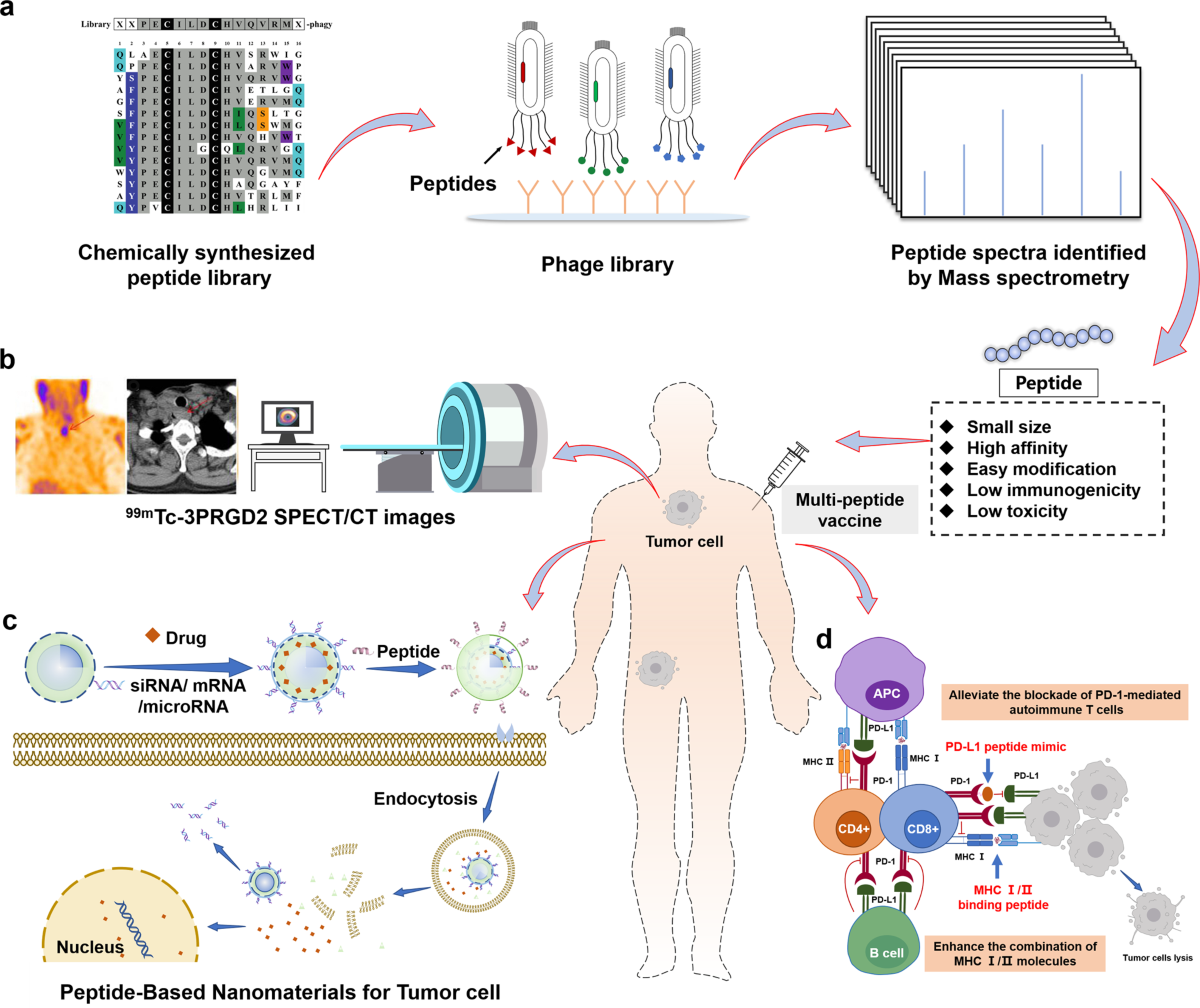
Understanding Peptide Research: Mechanisms, Classifications, and Scientific Applications
Explore peptide biochemistry, classifications, and research applications for immune modulation, wound healing, and longevity.
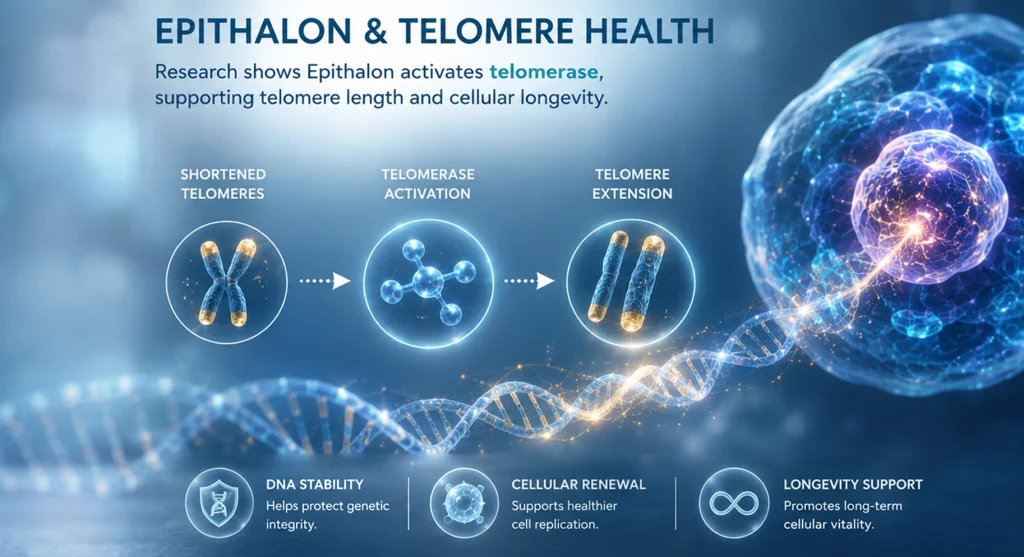
Epithalon Research: Telomerase Activation and Longevity Effects
Epithalon, a synthetic tetrapeptide (Ala-Glu-Asp-Gly, AEDG), activates telomerase in human cells, leading to telomere elongation according to studies by Vladimir Khavinson's group. Research also shows lifespan extensions of 6% to 25% in rodents, reduced tumor incidence, and restored melatonin rhythms in aging models. These findings link the peptide to pineal gland function and oxidative stress reduction, though independent replication remains limited.
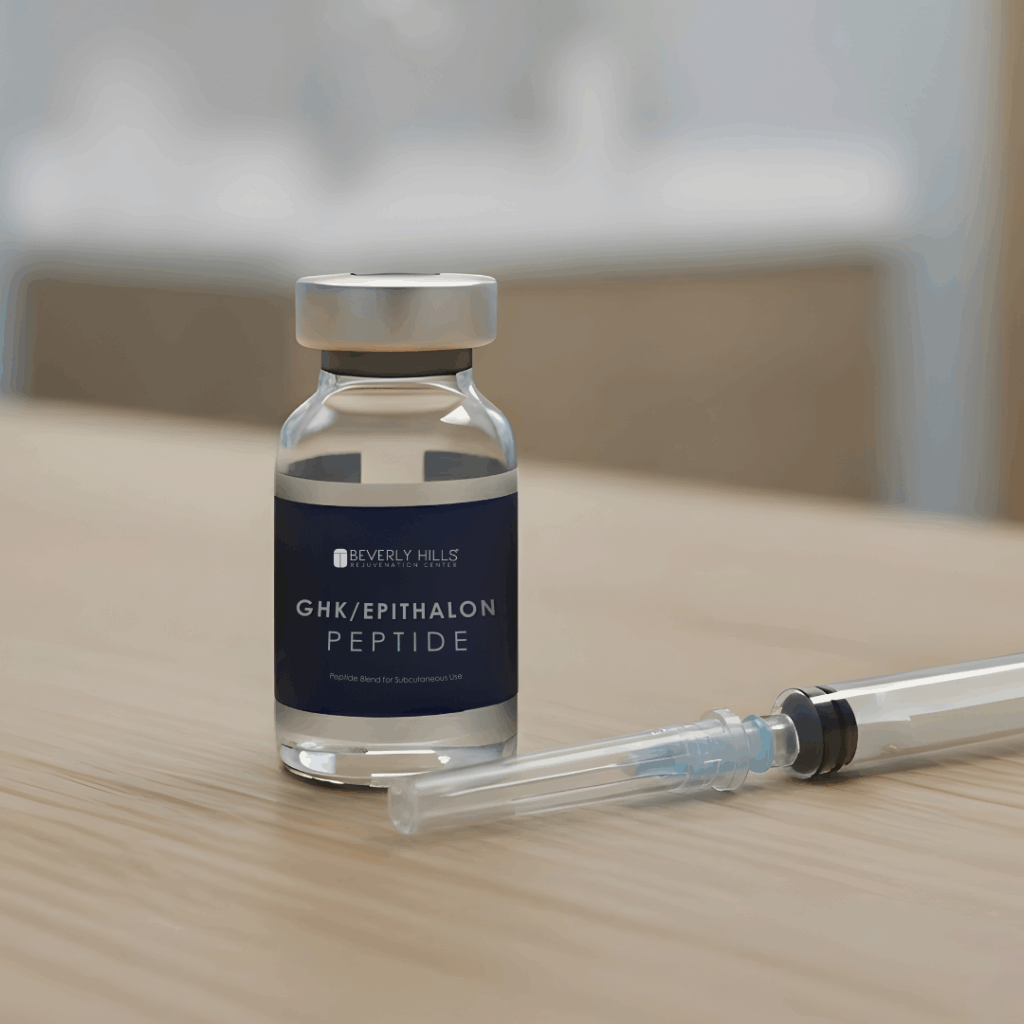
Anti-Aging Peptides: Epithalon, NAD+, GHK-Cu Research
Research on anti-aging peptides targets cellular aging processes like telomere shortening, mitochondrial decline, and gene expression changes. Compounds such as Epithalon from Khavinson’s group, GHK-Cu with over 4,000 gene interactions documented by Pickart, and NAD+ for sirtuin activation show promise in preclinical models. These peptides support studies on telomerase activation, collagen synthesis, DNA repair, and more, with all compounds verified at >99% purity by HPLC and published COAs.