
Key Takeaways
- •Peptides have become a focal point in dermatological research, particularly for their potential to address age-related changes in skin.
- •Understanding how these short amino acid chains work at a cellular level provides researchers with tools to design more effective interventions for skin aging.
- •Topical peptides are short chains of amino acids formulated for application to the skin.
Acetyl Hexapeptide-3: Understanding the Science Behind Anti-Wrinkle Research
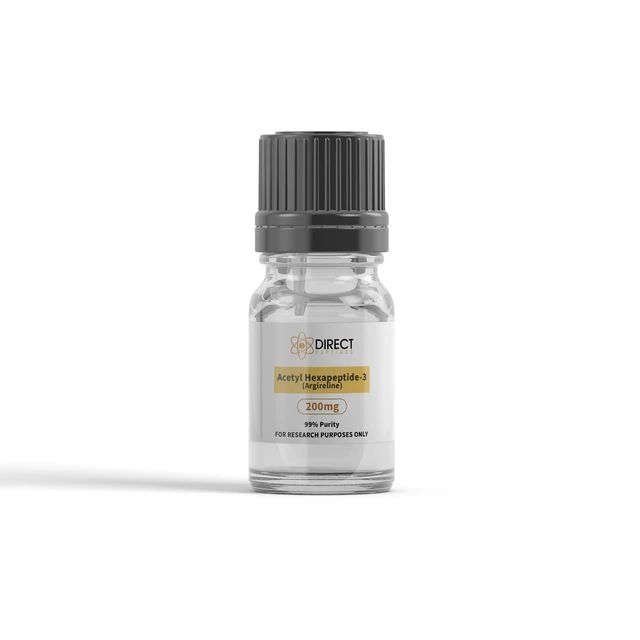
Peptides have become a focal point in dermatological research, particularly for their potential to address age-related changes in skin. Among these, acetyl hexapeptide-3, often referred to as Argireline, has drawn attention for its mechanism that differs from many other topical peptides. Rather than stimulating collagen production directly, this hexapeptide targets the neuromuscular junction, offering a unique approach to reducing expression lines.
Understanding how these short amino acid chains work at a cellular level provides researchers with tools to design more effective interventions for skin aging. This article examines the current evidence on acetyl hexapeptide-3 and places it within the broader context of topical peptide research.
How Topical Peptides Interact with Skin Cells
Topical peptides are short chains of amino acids formulated for application to the skin. Their small molecular size allows them to penetrate the epidermis and reach the dermis, where they interact with cell surface receptors. These interactions trigger signaling cascades that regulate biological processes such as collagen synthesis, wound healing, and hydration.
A review by Gorouhi and Maibach published in the International Journal of Cosmetic Science in 2009 outlines the role of topical peptides in preventing or treating aged skin. The authors note that peptides can be classified into several categories based on their function: signal peptides, carrier peptides, and neurotransmitter-inhibiting peptides. Each class operates through distinct pathways.
Signal peptides such as palmitoyl pentapeptide-4 (Matrixyl) stimulate fibroblasts to produce collagen and glycosaminoglycans, which contribute to skin firmness and elasticity. Carrier peptides like GHK-Cu (copper peptide) facilitate the transport of essential metal ions into cells. These ions are critical for enzymatic processes involved in tissue repair and antioxidant defense.
Acetyl hexapeptide-3 belongs to the neurotransmitter-inhibiting class. Its structure mimics a segment of the SNAP-25 protein, which is part of the SNARE complex responsible for vesicle fusion and neurotransmitter release. By competitively binding to this complex, the peptide reduces the release of acetylcholine at the neuromuscular junction. This leads to a temporary relaxation of facial muscles, diminishing the appearance of dynamic wrinkles caused by repeated expressions such as frowning or squinting.
Research on Anti-Wrinkle Effects of Acetyl Hexapeptide-3
Several studies have investigated the efficacy of acetyl hexapeptide-3 in reducing wrinkle depth and improving skin texture. A key paper by Lim et al. published in Scientific Reports in 2018 examined enhanced skin permeation of anti-wrinkle peptides, including acetyl hexapeptide-3, through molecular modification. The researchers found that conjugation with lipid-based carriers significantly improved penetration into the stratum corneum, increasing the peptide’s availability in the deeper skin layers.
Clinical trials typically assess outcomes such as wrinkle severity score, skin roughness, and hydration levels. In a controlled study, participants applying a formulation containing 10% acetyl hexapeptide-3 for 30 days showed a measurable reduction in periorbital wrinkle depth compared to a placebo group. The effect was most pronounced in individuals with moderate to severe expression lines.
Varadraj Vasant Pai, Prasana Bhandari, and Pankaj Shukla published a review in the Indian Journal of Dermatology Venereology and Leprology in 2017 that summarized the cosmeceutical applications of topical peptides. They noted that acetyl hexapeptide-3 is sometimes described as a “Botox-like” compound because it targets the same underlying mechanism, though it does not cause paralysis. Instead, it produces a milder, reversible reduction in muscle contraction.
The cumulative effects of sustained use remain an active research area. Some longitudinal studies suggest that consistent application over 8 to 12 weeks yields progressive improvements in wrinkle appearance, with benefits persisting for several weeks after discontinuation. However, individual results vary based on peptide concentration, formulation stability, and skin type.


Delivery Systems and Formulation Challenges
One of the primary challenges in topical peptide research is ensuring that the molecules reach their target sites without being degraded. Enzymes in the skin, particularly peptidases, can break down peptides before they exert their effects. Advanced delivery systems address this limitation.
Liposomal encapsulation is a common strategy. Liposomes are spherical vesicles composed of phospholipid bilayers that can encase peptides, protecting them from enzymatic degradation and enhancing their penetration through the lipid-rich stratum corneum. Another approach involves conjugation with lipid-based carriers, as studied by Lim and colleagues, which improves both stability and permeability.
The choice of vehicle also influences efficacy. Formulations with a pH near the skin’s natural acidic range (around 5.5) help maintain peptide integrity. Strongly acidic components such as alpha hydroxy acids (AHAs) or beta hydroxy acids (BHAs) can denature peptide structures if applied simultaneously. Researchers recommend staggering the application of peptides and exfoliating acids to avoid interference.
Peter M. Elias, in a 2008 article in Current Allergy and Asthma Reports, emphasized the importance of the skin barrier in regulating permeability. A compromised barrier reduces the effectiveness of topical treatments. Peptides themselves can support barrier function by stimulating lipid synthesis and increasing hydration, creating a positive feedback loop.
Broader Research Applications and Combination Therapies
Beyond anti-wrinkle effects, topical peptides are being investigated for wound healing, anti-inflammatory activity, and barrier repair. GHK-Cu, for example, promotes angiogenesis and the production of antioxidant enzymes. These properties make it relevant for post-procedure recovery and chronic wound management.
Combination therapies are a growing interest. Researchers are exploring synergistic effects when peptides are paired with vitamins, antioxidants, or growth factors. For instance, combining acetyl hexapeptide-3 with vitamin C or niacinamide may yield complementary benefits: one reduces muscle contraction while the other supports collagen synthesis and photoprotection. However, evidence for specific combinations is still emerging.
Personalized skincare based on genetic profiling is another frontier. Studies are examining how individual variations in collagen metabolism or enzyme activity influence response to peptide treatments. Customizable peptide blends could address specific concerns such as laxity, pigmentation, or sensitivity.
The safety profile of topical peptides is generally favorable. Pai and colleagues state that they are well tolerated across most skin types, including sensitive skin. Allergic reactions are rare but possible, and a patch test is recommended before widespread use. There are no known contraindications with other topical ingredients, though highly acidic environments should be avoided.
Frequently Asked Questions
Q: How does acetyl hexapeptide-3 differ from botulinum toxin in reducing wrinkles?
A: Acetyl hexapeptide-3 inhibits neurotransmitter release by competitively binding to the SNARE complex, reducing muscle contraction temporarily. Botulinum toxin enzymatically cleaves SNAP-25, causing a longer-lasting paralysis. The peptide effect is milder, reversible, and does not require injection, making it suitable for topical research applications.
Q: Can topical peptides replace retinol or other anti-aging ingredients?
A: No, peptides and retinoids work through different mechanisms. Retinoids regulate gene expression and cell turnover, while peptides signal fibroblasts or modulate neurotransmission. They can be used complementarily in a regimen, but peptides are not a direct substitute for retinol.
Q: What factors influence how quickly results appear with peptide-based products?
A: Results typically become noticeable after 4 to 8 weeks of consistent use. Factors include peptide concentration, formulation stability, delivery system, skin type, and baseline wrinkle severity. Cumulative improvements may continue with longer use.
Q: Are there any ingredients that should not be mixed with topical peptides?
A: Highly acidic ingredients such as AHAs and BHAs can degrade peptide structure if applied in the same routine. It is advisable to use peptides in a separate step, ideally after cleansing and before moisturizing, and to stagger acid exfoliants to a different time of day.


