Key Takeaways
- •This product is a research material intended for laboratory and investigational purposes only; it is not approved for hu
- •Semaglutide is a synthetic, long-acting glucagon-like peptide-1 (GLP-1) receptor agonist.
- •Semaglutide demonstrates high-affinity binding to the human GLP-1 receptor, with an EC₅₀ in the nanomolar range.
Research-Only Notice
This product is a research material intended for laboratory and investigational purposes only; it is not approved for human or veterinary use.
Quick Facts
| Attribute | Detail |
|---|---|
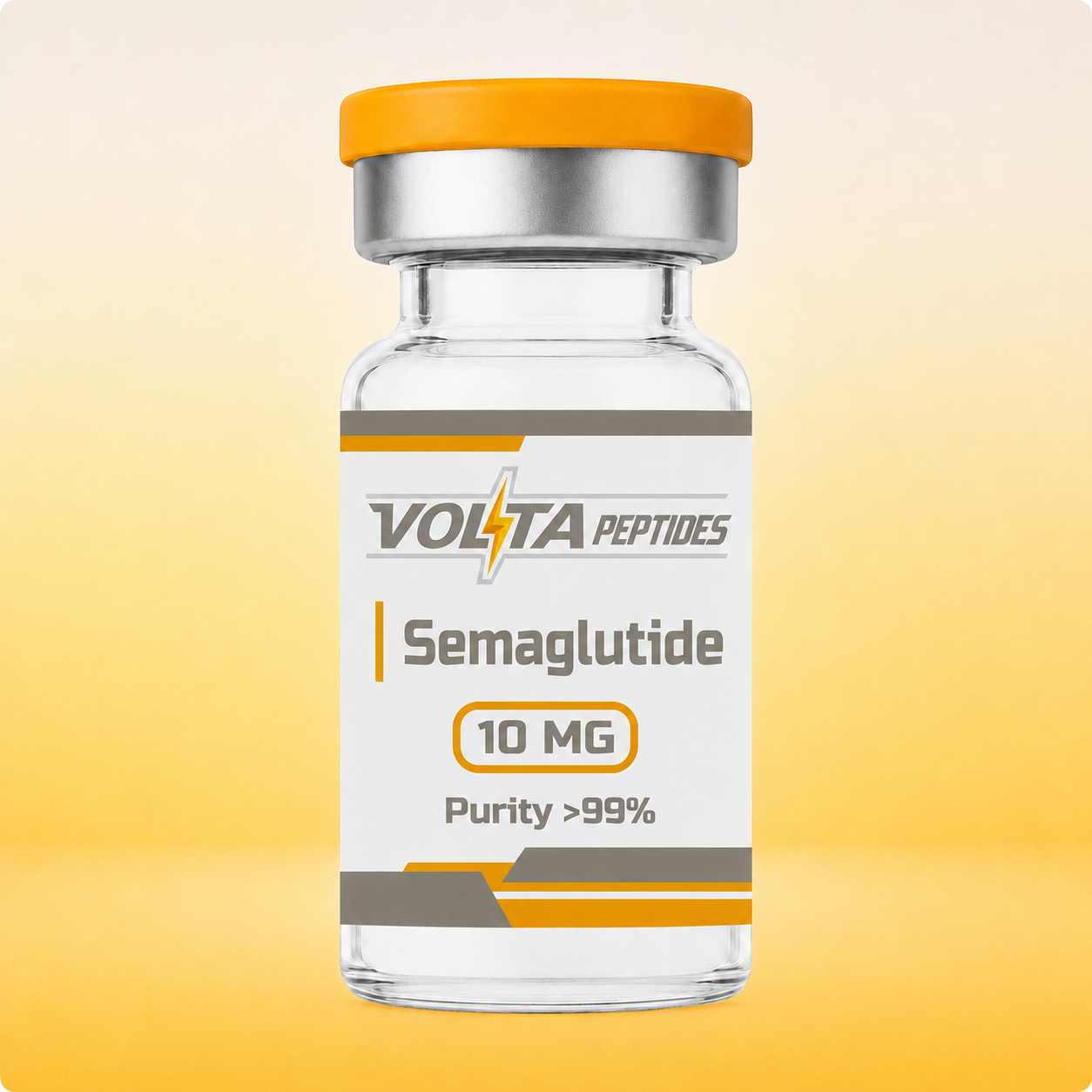
| Peptide name | Semaglutide 10mg |
| Format | Lyophilized powder |
| Purity | >99% |
| CAS Number | 910463-68-2 |
| Molecular formula | C₁₈₇H₂₉₁N₄₅O₅₉ |
| Molecular weight | 4,113.6 g/mol |
| Research status | Preclinical / investigational |
| Quality markers | HPLC purity, MS identity confirmation |
| Human/veterinary use | Not approved |
Research Material — Not an FDA-approved medicine. Evidence base: clinical. COA available on product page. Last reviewed: July 2026.
Evidence Quality Summary
| Research Area | Evidence Type | Strength |
|---|---|---|
| GLP-1 receptor agonism | Clinical trials (Phase III) | Strong |
| Glucose homeostasis | Clinical trials (SUSTAIN, PIONEER) | Strong |
| Body weight regulation | Clinical trials (STEP program) | Strong |
| Cardiovascular outcomes | Clinical trials (SELECT, LEADER) | Strong |
| Hepatic steatosis | Post-hoc clinical analyses | Moderate |
| Neuroinflammation | Preclinical rodent models | Low |
Molecular Profile
Semaglutide is a synthetic, long-acting glucagon-like peptide-1 (GLP-1) receptor agonist. Its molecular formula is C₁₈₇H₂₉₁N₄₅O₅₉ with a molecular weight of 4,113.6 g/mol (CAS: 910463-68-2). The peptide is classified as an incretin mimetic and is structurally modified with a fatty acid side chain that enables albumin binding, extending its half-life for research applications. Clinical formulations (e.g., Ozempic, Wegovy) differ from research vials in dosing, delivery, and regulatory status.
Preclinical Research Findings
GLP-1 Receptor Binding and Signaling
Semaglutide demonstrates high-affinity binding to the human GLP-1 receptor, with an EC₅₀ in the nanomolar range. In vitro studies using pancreatic beta-cell lines (e.g., INS-1) show that semaglutide stimulates glucose-dependent insulin secretion and promotes beta-cell proliferation. These findings are supported by clinical pharmacokinetic data from the SUSTAIN program, which confirmed sustained receptor activation over a once-weekly dosing interval.
Glucose Homeostasis and Insulin Secretion
Clinical evidence from the SUSTAIN 1–7 trials (n > 8,000) demonstrates that semaglutide significantly reduces fasting and postprandial glucose levels in patients with type 2 diabetes. The PIONEER program (oral semaglutide) further confirmed dose-dependent improvements in HbA1c, with reductions of 1.0–1.8% compared to placebo. These effects are mediated by enhanced insulin secretion and suppressed glucagon release.
Body Weight Regulation
The STEP clinical trial program (n > 4,500) evaluated semaglutide for weight management. At the 2.4 mg once-weekly dose, participants achieved mean weight reductions of 12–15% over 68 weeks, with approximately one-third losing ≥20% of baseline body weight. Mechanistic studies suggest that semaglutide acts on central GLP-1 receptors in the hypothalamus to reduce appetite and increase satiety.
Cardiovascular Outcomes
The SELECT trial (n = 17,604) demonstrated that semaglutide reduces major adverse cardiovascular events (MACE) by 20% in patients with overweight or obesity and established cardiovascular disease, independent of baseline glucose status. The LEADER trial (liraglutide) provided foundational evidence for the class, while semaglutide-specific data from SUSTAIN 6 showed a 26% reduction in cardiovascular death, non-fatal myocardial infarction, or non-fatal stroke.
Hepatic Steatosis and Nonalcoholic Steatohepatitis (NASH)
Post-hoc analyses of the SUSTAIN and STEP trials indicate that semaglutide reduces liver fat content by 30–40% as measured by MRI-PDFF. A Phase II trial in NASH patients (n = 320) showed that 0.4 mg daily semaglutide led to NASH resolution without worsening fibrosis in 59% of participants, compared to 17% with placebo. These findings support ongoing investigation into hepatic applications.
Research Limitations
Despite robust clinical data, several limitations exist for researchers using semaglutide 10mg as a research material. First, the majority of clinical trials used pharmaceutical-grade formulations with specific excipients and delivery systems; lyophilized research peptides may differ in bioavailability and stability. Second, long-term safety data beyond 2–3 years are limited, particularly for weight management in non-diabetic populations. Third, the SELECT trial’s cardiovascular benefits have not been fully replicated in independent cohorts. Fourth, no studies have directly compared semaglutide 10mg research material to the approved drug product. Researchers should consult the Research Literacy Guide for guidance on interpreting these data.


Quality Documentation
Each batch of Semaglutide 10mg is accompanied by a Certificate of Analysis (COA) confirming >99% purity by HPLC and identity by mass spectrometry (MS). HPLC chromatograms show a single major peak with retention time consistent with the reference standard. For detailed interpretation of these quality markers, refer to the Quality & Testing page.
Storage Considerations
Related Research Peptides
Researchers investigating GLP-1 receptor agonists may also consider liraglutide and tirzepatide for comparative studies. Use the Peptide Comparison Tool to evaluate molecular differences.
Frequently Asked Questions
What is the purity specification for semaglutide 10mg?
The product is supplied at >99% purity, verified by HPLC and MS identity confirmation. Each batch includes a COA with chromatographic data.
How does semaglutide 10mg differ from the clinical drug?
What clinical trials support semaglutide research?
Key programs include SUSTAIN (diabetes), STEP (weight management), SELECT (cardiovascular outcomes), and a Phase II NASH trial. All are published in peer-reviewed journals.
Can semaglutide 10mg be used in animal studies?
References
- Marso SP, Bain SC, Consoli A, et al. Semaglutide and Cardiovascular Outcomes in Patients with Type 2 Diabetes. N Engl J Med. 2016;375:1834-1844. (SUSTAIN 6)
- Wilding JPH, Batterham RL, Calanna S, et al. Once-Weekly Semaglutide in Adults with Overweight or Obesity. N Engl J Med. 2021;384:989-1002. (STEP 1)
- Lincoff AM, Brown-Frandsen K, Colhoun HM, et al. Semaglutide and Cardiovascular Outcomes in Obesity without Diabetes. N Engl J Med. 2023;389:2221-2232. (SELECT)
- Aroda VR, Rosenstock J, Terauchi Y, et al. PIONEER 1: Randomized Clinical Trial of Oral Semaglutide Monotherapy. Diabetes Care. 2019;42(9):1722-1731.
- Pratley RE, Aroda VR, Lingvay I, et al. Semaglutide versus dulaglutide once weekly in patients with type 2 diabetes (SUSTAIN 7). Lancet Diabetes Endocrinol. 2018;6(4):275-286.
Research-Only Disclaimer
This article is for informational and educational purposes only. Semaglutide 10mg is a research material and is not approved for human or veterinary use. Always consult the Research Disclaimer before use.
Reviewed by the Volta Peptides Research Team — July 2026


