Key Takeaways
- •Skin pigmentation
- •Fat burning
- •Cognitive function
- •Blood pressure
- •Vascular health
Introduction
Melanotan 1 (MT1) and Melanotan 2 (MT2) are synthetic derivatives of alpha-melanocyte stimulating hormone (α-MSH) . Both peptides exert their effects by binding to melanocortin receptors, resulting in a range of biological activities. Research indicates that both MT1 and MT2 influence melanin expression and, consequently, skin pigmentation. Additionally, studies suggest these peptides modulate sexual arousal, feeding behavior, blood pressure, central nervous system function, and aspects of willpower or impulse control.
Given their overlapping functional profiles, comparative investigations of melanotan 1 vs 2 are common in peptide research. Although these molecules share many characteristics, notable differences in structure and receptor binding affinity distinguish their overall effects. The following analysis examines how MT1 and MT2 compare across key research parameters.
Structural Comparison of Melanotan 1 vs 2
| Property | Melanotan 1 | Melanotan 2 |
|---|---|---|
| Amino Acid Sequence | SYSXEHFRWGKPV | Nle-DHRFWK |
| Molecular Weight | 1646.8 g/mol | 1024.2 g/mol |
| Molecular Formula | C78H111N21O19 | C50H69N15O9 |
| Synonyms | Afamelanotide, SCENESSE | Bremelanotide (slight modification) |
| Source | PubChem | PubChem |
Structural analysis reveals that MT1 is significantly more similar to endogenous α-MSH than MT2. This structural proximity explains why MT1 retains more of the parent molecule’s properties, particularly those related to pigmentation. The distinct amino acid compositions result in Melanotan 1 exhibiting different receptor binding affinities compared to Melanotan 2. Although both peptides bind to the same melanocortin receptors, they do so with varying strengths, which alters their overall biological impact.
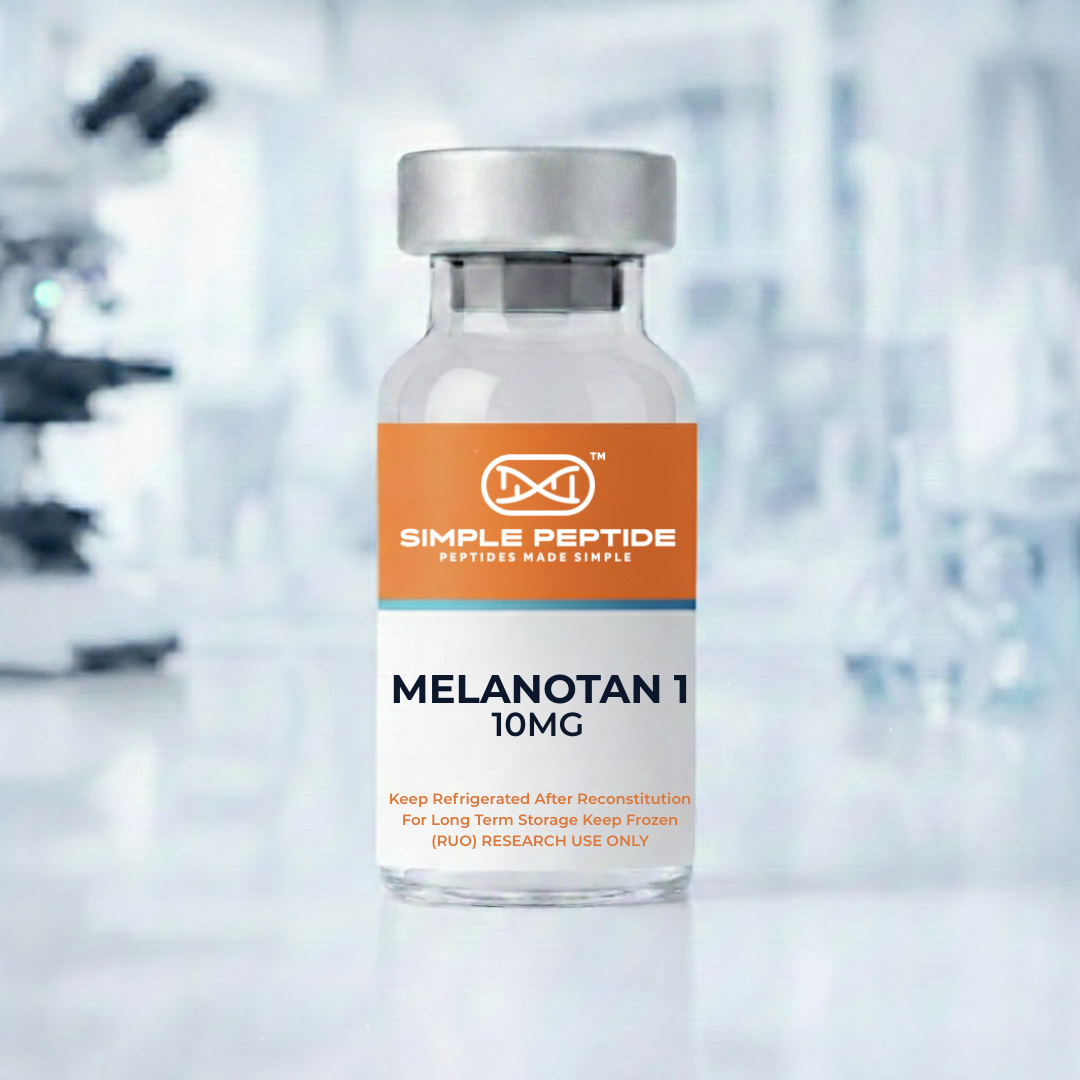
Overview of Research Findings: Melanotan 1 vs 2
A side-by-side comparison of general research findings highlights both the similarities and divergences between these peptides.
Melanotan 1
- Skin pigmentation
- Fat burning
- Cognitive function
- Blood pressure
- Vascular health
- Neuroinflammatory disease
Melanotan 2
- Sexual function (erectile dysfunction)
- Skin pigmentation
- Impulse control
- Addiction behavior
- Hunger and satiety regulation
- Autism Spectrum Disorder
At a broad level, both peptides affect the skin, central nervous system, and certain aspects of metabolism. Closer inspection reveals that nuances within these categories distinguish MT1 from MT2. These differences are likely attributable to specific patterns of melanocortin receptor binding. The comparative study of melanotan 1 vs 2 has helped researchers move beyond a simple on/off dichotomy in biological systems, demonstrating how subtle variations in receptor binding affinities can fine-tune entire physiological systems.


Receptor Binding Profiles
Both MT1 and MT2 act as relatively non-specific agonists of multiple melanocortin receptors. Research shows that each peptide binds to MC1R (melanocortin 1 receptor), MC3R, MC4R, and MC5R with varying affinities. Notably, neither peptide demonstrates significant affinity for MC2R, a receptor primarily involved in adrenal hormone secretion.
The key distinction between melanotan 1 vs 2 lies in their receptor preferences. MT2 exhibits heightened affinity for the MC4 receptor, while MT1 retains α-MSH’s enhanced affinity for MC1R. This difference explains why MT1 produces stronger pigmentation effects, whereas MT2 has more pronounced sexual effects, including impacts on erectile function and sexual arousal.
Beyond primary receptor interactions, further differences emerge. Melanotan 1 shows significant activity at the MC5 receptor, which is expressed on pancreatic islet cells. Research indicates that MC5R stimulation promotes fatty acid metabolism and may support weight loss [1]. Conversely, Melanotan 2 demonstrates notable effects on the MC3 receptor. Although the MC3 receptor is not well characterized, there is speculation regarding its involvement in certain autism spectrum disorder behaviors. Studies suggest that MT2 may help reduce decreased communication, repetitive behaviors, and impaired social interactions observed in autism models [2].
The melanocortin receptor signaling system remains incompletely understood and was largely unknown to science prior to the development of melanocortin 1. The comparative study of MT1 vs MT2 exemplifies how a seemingly straightforward discovery can advance fundamental understanding of human physiology. Continued research into these peptides is helping scientists probe the nuances of the melanocortin system and elucidate the roles of these receptors in biological function.
Research and Development Pathways
MT1 and MT2 have followed markedly different research trajectories. MT1 was originally developed as a sunless tanning agent and subsequently abandoned for years. MT2 was investigated as a drug candidate for female hypoactive sexual desire disorder and male erectile dysfunction. These divergent research pathways reflect the peptides’ different melanocortin receptor binding affinities.
Despite early abandonment, MT1 has experienced a resurgence of interest. Originally developed at the University of Arizona, research demonstrated that MT1 could boost pigmentation by as much as 75% and decrease the risk of sunburn by as much as 47%. Developers initially believed these properties could protect against long-term effects of ultraviolet skin damage [3]. However, this application did not succeed for various reasons, leading to near-complete abandonment of MT1 for research purposes.
Melanotan 2, in various forms, was developed for treating sexual dysfunctions, including female hypoactive sexual desire disorder and erectile dysfunction, under the name bremelanotide. This research was also discontinued, partly due to clinical trial design problems but primarily because of a significant patent dispute between Competitive Technologies and Palatin Technologies.
Competitive Technologies, a technology transfer company affiliated with the University of Arizona, licensed MT1 to an Australian startup called Clinuvel in 2006 for development as a sunless tanning agent. Meanwhile, Palatin Technologies, which had secured licensing rights to MT2, was developing a derivative known as bremelanotide. Bremelanotide differs from MT2 in that it contains a hydroxyl group rather than an amide group.
Competitive Technologies sued Palatin for breach of contract, claiming ownership of bremelanotide, which was thought to be a metabolite of MT2. The lawsuit was eventually settled, with Palatin retaining rights to bremelanotide and Competitive Technologies receiving US $800,000. This legal dispute proved significant because it established that the original clinical trial benefits of MT2 were likely due to the presence of its slightly different metabolite, bremelanotide. This finding reignited interest in both MT1 and MT2, as it became apparent that many original issues leading to research abandonment could be addressed through simple peptide modifications.
MT1, under the generic name afamelanotide and brand name SCENESSE, has been approved for treating adults with erythropoietic protoporphyria in Europe, Australia, and the United States. Under Clinuvel’s guidance, MT1 has undergone 15 clinical trials involving over 900 patients, resulting in more than 200 journal articles [4]. The peptide is currently being investigated for several other indications, including other forms of porphyria, vitiligo, xeroderma pigmentosa, arterial ischemic stroke, and in pediatric patients. According to Dr. Philippe Wolgen, CEO of Clinuvel, the first treatment of patients with MT1 occurred in April 2020.
Summary
Structurally, MT1 and MT2 are very different molecules; functionally, they share many properties. This apparent paradox has advanced peptide science by demonstrating that minor structural modifications can profoundly influence both effects and side effects. The comparative question is not which peptide is "better," but rather which is best suited to a particular research context. "Better" implies an absolute ranking that does not apply to peptide research, where subtlety governs outcomes. The differences between melanotan 1 vs 2 should be understood within the framework of their varied potential applications. With renewed research interest, both MT1 and MT2—along with modified derivatives—are likely to yield interesting applications in the near future.
References
[1] C. L. Møller et al., "Characterization of murine melanocortin receptors mediating adipocyte lipolysis and examination of signalling pathways involved," Mol. Cell. Endocrinol., vol. 341, no. 1–2, pp. 9–17, Jul. 2011, doi: 10.1016/j.mce.2011.03.010.
[2] E. Minakova et al., "Melanotan-II reverses autistic features in a maternal immune activation mouse model of autism," PloS One, vol. 14, no. 1, p. e0210389, 2019, doi: 10.1371/journal.pone.0210389.
[3] R. T. Dorr et al., "Effects of a superpotent melanotropic peptide in combination with solar UV radiation on tanning of the skin in human volunteers," Arch. Dermatol., vol. 140, no. 7, pp. 827–835, Jul. 2004, doi: 10.1001/archderm.140.7.827.
[4] "Pharmaceutical Technology," Clinuvel. https://www.clinuvel.com/pharmaceutical-technology... (accessed Apr. 10, 2022).
Products available for research use only.
Reviewed by the Volta Peptides Research Team


