
Key Takeaways
- •Melanotan 1 stimulates melanin production to promote tanning without much sun exposure.
- •Melanotan 1, known as MT-1 or Afamelanotide, serves as a synthetic version of the natural melanocortin peptide hormone alpha-melanocyte-stimulating hormone (α-MSH).
- •It attaches to melanocortin receptors to boost the skin's tanning capacity through higher melanin output.
Melanotan 1: Tanning Peptide with Broad Research Potential
Melanotan 1 stimulates melanin production to promote tanning without much sun exposure. This synthetic peptide also shows research interest in skin protection, heart disease risk reduction, inflammation control, blood pressure management, cognitive enhancement, stroke recovery, and fat metabolism.
What Is Melanotan 1?
Melanotan 1, known as MT-1 or Afamelanotide, serves as a synthetic version of the natural melanocortin peptide hormone alpha-melanocyte-stimulating hormone (α-MSH). Developers created it to trigger melanogenesis, the process that generates melanin in skin cells.
It attaches to melanocortin receptors to boost the skin's tanning capacity through higher melanin output. Researchers examine its role in photoprotection, pigmentation issues, and melanocortin-related conditions. For peptide details, see the Peptide Glossary.
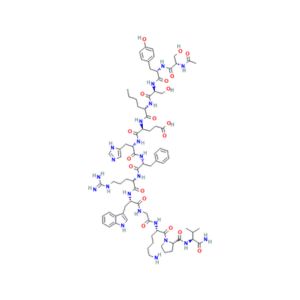
Chemical Structure of Melanotan 1
The sequence reads Ac-Ser-Tyr-Ser-Nle-Glu-His-D-Phe-Arg-Trp-Gly-Lys-Pro-Val-NH2.
Its molecular formula is C78H111N21O19, with a molecular weight of 1646.8 g/mol. PubChem lists it under CID: 16197727. Source: PubChem.
Mechanism of Action
Melanotan 1 replicates the function of alpha-melanocyte-stimulating hormone (α-MSH). It connects to melanocortin receptors, especially MC1R on melanocytes, the melanin-producing cells.
This binding prompts greater melanin creation, darkening skin pigmentation. Such changes offer some shield from UV rays, allowing tans without extended sun time and possibly limiting UV damage risks.
Skin Health Research Benefits
MT-1 aids sunless tanning, especially for Fitzpatrick types I and II with limited natural tanning. Phase 1 trials note a 75% tanning increase, 47% less burning, 50% reduced UV needs, and tans lasting three weeks more than controls (1). It supports those with variant MC1 receptors, raising melanin and UV defense to cut skin cancer chances (2).
For actinic keratosis, a UV-linked precancerous state that can lead to squamous cell carcinoma, researchers target hidden lesions with the peptide to halt progression (3).
In vitiligo, marked by pigment loss, pairing it with UVB therapy spurs melanin and melanocyte growth. About half of small-trial patients saw better pigmentation and quicker results. It may improve standard treatments and help hypopigmented scars (4).


Neurological and Anti-Inflammatory Effects
Mouse studies suggest protection against Alzheimer's through lower amyloid beta plaques, neuron safeguarding, and better cognition (5). MC4 receptor activity promotes neurogenesis, astrocyte performance, and brain-derived neurotrophic factor (BDNF) for synapse support. Unlike many options, it may advance rather than just delay Alzheimer's (6).
Post-stroke, it cuts brain harm, aids memory even 9 hours after onset, activates repair, and boosts synaptic plasticity via Zif268 gene overexpression (7).
On neuroinflammation, MC1 receptor activation curbs central nervous system swelling. In multiple sclerosis mouse models, MT-1 halts myelin loss, guards neurons, and aids recovery (8). For experimental autoimmune uveitis, MC4 effects suppress T-cells, providing steroid alternatives with localized delivery and fewer body-wide issues (9).
Another finding: MC1R activation by BMS-470539 eases early brain injury post-subarachnoid hemorrhage via AMPK/TBK1/NF-κB, limiting microglia, boosting anti-inflammation, and reducing neutrophils (10).
Cardiovascular and Metabolic Research
It lowers hypertension in mice without dropping normal pressure, dodging hypotension risks in drugs, especially for older adults (11).
In rats, MT-1 and melanocortins lessen heart attack damage and aid blood flow. With epinephrine in CPR, it restores pressure and heart rate, fixes acidosis, cuts inflammation, and raises cardiac gene expression, lifting survival by 81% (12).
For fat loss, MC5R and other interactions speed muscle fatty acid oxidation and switch fat storage to burning. Mouse work points to complex pathways for metabolism shifts, aiding those limited by obesity, disability, or injury (13).
Researchers use tools like the Dosage & Cycle Planner and Half-Life Calculator for studies. Nasal spray forms provide non-invasive delivery via nasal absorption.
Key Research Takeaways
Melanotan 1 research covers skin disorders, heart disease risk, inflammation, blood pressure, cognition, stroke recovery, and fat reduction. Its MC1R and other receptor actions drive diverse effects. Ongoing studies highlight its versatility in health applications.
Related Research Compounds
Looking for high-purity research peptides? Browse our catalog for HPLC-verified compounds.
| Compound | Purity | Size | Price |
|---|---|---|---|
| Melanotan II 10mg | >99% | 10mg | $34.00 |


