Key Takeaways
- •The stoma care industry is undergoing a significant transformation.
- •This growth reflects a deeper shift in how healthcare systems approach chronic disease management.
- •The structural drivers behind this market expansion are rooted in global demographic and epidemiological trends.
The Global Stoma Care Market: Engineering Dignity and Discretion in Post-Surgical Recovery
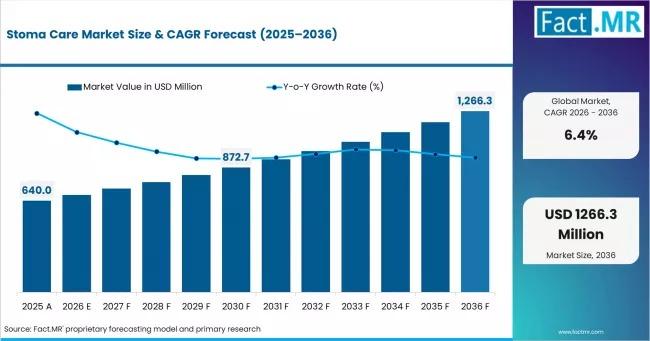
The stoma care industry is undergoing a significant transformation. No longer a niche segment of medical supplies, it has evolved into a sophisticated field where advanced material science, patient psychology, and value-based healthcare converge. According to a detailed analysis by market research firm Fact.MR, the global stoma care market is projected to reach USD 1,266.3 million by 2036, expanding at a compound annual growth rate (CAGR) of 6.4% from a 2026 baseline of USD 681 million.
This growth reflects a deeper shift in how healthcare systems approach chronic disease management. Stoma care is becoming a critical component of long-term recovery for patients undergoing ostomy surgery, driven by rising rates of colorectal cancers and inflammatory bowel diseases (IBD). The market is now defined not just by functional containment, but by the pursuit of what industry observers call the “invisible” integration of medical devices into daily life.
Market Dynamics: Demographic Pressures and Clinical Drivers
The structural drivers behind this market expansion are rooted in global demographic and epidemiological trends. Aging populations in developed nations are contributing to higher incidences of colorectal malignancies. Meanwhile, the prevalence of Crohn’s disease and ulcerative colitis, two major forms of IBD, continues to climb worldwide. These conditions often necessitate surgical intervention resulting in an ostomy, a surgically created opening on the abdomen for waste elimination.
A particularly notable shift is the movement of stoma care from hospital settings to home environments. Currently, 46% of the market is concentrated in home care settings. This transition places a premium on product designs that are intuitive, easy to use, and failsafe. Patients must be able to manage their ostomy independently, reducing the burden on healthcare facilities and improving overall quality of life. For product developers, this means engineering skin barriers and adhesives that prevent peristomal skin complications (PSCs), which are among the most common and distressing issues ostomates face.
Technological Innovation: From the Pouch to the Skin
The competitive battleground in stoma care has shifted decisively. It is no longer about the pouch alone. The focus has moved to the interface between the device and the body. Innovations in skin barriers and adhesives now serve as the primary differentiators for market leaders. Peristomal skin complications, including irritation, infection, and allergic reactions, affect a substantial proportion of ostomates and can severely compromise adherence to treatment and quality of life.
Advanced materials such as hydrocolloid adhesives, silicone-based barriers, and moisture-wicking fabrics are being incorporated into product designs to reduce these risks. The goal is to create a seal that is secure yet gentle, durable yet easy to remove. These materials are engineered to maintain integrity for multiple days while allowing the skin to breathe. Research into biocompatible adhesives is driving the next wave of innovation, with companies investing heavily in R&D to reduce the incidence of skin breakdown.
Beyond materials, digital integration represents the next frontier. Smart stoma sensors that alert patients to leaks or skin changes before they become clinical problems are emerging as a patient-centric innovation. These sensors can detect moisture, pH changes, or early signs of infection and communicate via smartphone apps, offering a proactive approach to stoma management.
Challenges and Strategic Opportunities
Despite the promising growth trajectory, the stoma care market faces several hurdles. The cost of advanced specialized pouches can be prohibitive in price-sensitive regions, limiting adoption. Additionally, the psychological stigma associated with ostomy surgery remains a significant barrier. Many patients experience anxiety, depression, and social withdrawal, which can reduce adherence to proper care routines and diminish overall quality of life.
These challenges, however, create strategic opportunities. There is a growing, underserved niche for pediatric stoma care. Children with ostomies have unique anatomical and developmental needs that are not fully addressed by products designed for adults. Similarly, solutions tailored for active, athletic ostomates are gaining attention. These patients require pouching systems that are secure during physical activity, low-profile under clothing, and resistant to sweat and movement.
Digital integration also offers an avenue to address stigma. Subscription-based delivery models, nurse support hotlines, and digital health apps that provide education and community support are transforming stoma care from a product transaction into an ecosystem of care. This holistic approach can improve patient outcomes and brand loyalty.
Segmentation Insights: Products and Applications
The market’s structural composition reflects the diverse needs of the ostomate population. In terms of product type, open or drainable bags hold the largest share at 28%. These are favored for their cost-effectiveness and utility in high-output scenarios, such as ileostomies. Closed bags follow closely at 24%, prized for their convenience and discretion in social settings. A variety of one-piece and two-piece systems, convex and flat flanges, and accessory products such as skin wipes, pastes, and belts round out the market.
By surgical application, colostomy accounts for 45% of the market, urostomy for 31%, and ileostomy for 24%. Each application requires distinct material properties. Colostomy bags often incorporate odor neutralizers, while urostomy systems require specialized anti-reflux valves to prevent urine backflow and infection. Ileostomy bags must manage high-volume liquid output without leaking.


Regional Analysis: Established Markets and Emerging Frontiers
Europe and North America collectively remain the largest revenue contributors to the stoma care market. These regions benefit from mature reimbursement frameworks, high levels of patient education, and well-established distribution networks. Government and private insurance programs typically cover ostomy supplies, which supports consistent demand.
The fastest growth, however, is occurring in the Asia-Pacific region. China is projected to grow at a CAGR of 6.8%, while India follows at 6.4%. This expansion is driven by expanding healthcare infrastructure, rising awareness of ostomy care, and a burgeoning middle class that demands higher standards of medical care. As hospitals in these regions adopt more advanced surgical techniques, the number of ostomy surgeries is increasing, creating new demand for quality post-operative products.
The Competitive Landscape
The stoma care market is characterized by a mix of established medical device giants and specialized innovators. Key players include Coloplast Group, ConvaTec Group PLC, B. Braun Medical Inc., Hollister Incorporated, ALCARE Co. Ltd., Salts Healthcare Ltd., and Welland Medical Ltd. Competition is moving away from basic manufacturing toward the creation of comprehensive care ecosystems.
Market leaders are investing in digital apps that track pouch wear time, provide reminders for changes, and connect patients with wound care nurses. Some are developing subscription models that deliver products directly to patients’ homes, ensuring continuity of supply and reducing the burden of reordering. These strategies are particularly effective in the dominant home care segment.
Future Outlook: Discretion and Dignity as Market Drivers
Over the next decade, the stoma care market will be defined by two words: discretion and dignity. As USD 0.55 billion in new revenue is added by 2035, the companies that succeed will be those that bridge the gap between medical necessity and lifestyle integration. The ultimate goal is a future where a stoma is no longer a limitation, but a manageable aspect of a high-quality, active life.
For researchers and industry observers, the stoma care market offers lessons in how a traditionally low-tech medical segment can be transformed through materials science, patient-centered design, and digital health. The human need for dignity drives innovation as powerfully as any technological breakthrough.
Frequently Asked Questions
Q: What is the projected market size for stoma care by 2036?
A: According to Fact.MR, the global stoma care market is projected to reach USD 1,266.3 million by 2036, growing at a compound annual growth rate (CAGR) of 6.4% from a 2026 valuation of USD 681 million.
Q: Which product segment currently dominates the stoma care market?
A: Open or drainable bags hold the largest product segment share at 28%. They are popular due to their cost-effectiveness and suitability for high-output ostomies. Closed bags follow at 24%.
Q: What is the primary application area in stoma care?
A: Colostomy is the dominant application, accounting for 45% of the market. Urostomy and ileostomy represent 31% and 24% of the market, respectively. Each application requires distinct product features.
Q: Which geographic region is expected to grow the fastest?
A: The Asia-Pacific region, particularly China (6.8% CAGR) and India (6.4% CAGR), is the fastest-growing frontier. This growth is driven by expanding healthcare infrastructure and rising demand for advanced medical care.


