
Key Takeaways
- •A Phase 2 clinical study in The New England Journal of Medicine reported up to 17.5% average mean body-weight reduction at 24 weeks and 24.2% at 48 weeks in the highest-dose group of adults with obesity or overweight.
- •This content serves educational research purposes only.
- •Retatrutide functions as a triple hormone receptor agonist.
Retatrutide (RETA) Research: Triple Agonist Metabolic Effects
A Phase 2 clinical study in The New England Journal of Medicine reported up to 17.5% average mean body-weight reduction at 24 weeks and 24.2% at 48 weeks in the highest-dose group of adults with obesity or overweight. These results highlight Retatrutide's potential in metabolic research. Known online as RETA, this compound draws interest for its action on multiple pathways.
This content serves educational research purposes only. It offers no medical advice, treatment guidance, dosage details, or administration instructions.
Triple-Receptor Action of Retatrutide
Retatrutide functions as a triple hormone receptor agonist. It targets GLP-1, GIP, and glucagon receptors simultaneously.
The GLP-1 pathway connects to appetite control, satiety, glucose processes, and overall metabolic regulation in studies. GIP plays a role in nutrient processing, insulin signaling, and energy metabolism. Glucagon influences energy use, liver function, and glucose balance.
This combined profile positions Retatrutide as a key subject in advanced metabolic investigations. For definitions of these terms, see the Peptide Glossary.
Clinical Trial Results from Phase 2
The Phase 2 trial, published in The New England Journal of Medicine, examined Retatrutide in adults with obesity or overweight. It showed dose-dependent body weight changes over time.
At 24 weeks, the highest-dose group achieved up to 17.5% average mean body-weight reduction. By 48 weeks, this reached up to 24.2% as a secondary endpoint.
These outcomes occurred under strict trial protocols with monitoring and specific participant selection. Such data fuels discussions in metabolic research communities.
Metabolic Regulation and Glucose Pathways
Research examines how Retatrutide's multi-receptor signaling affects metabolic control. This includes management of energy, nutrients, and feedback signals in lab settings.
GLP-1 and GIP pathways link closely to glucose signaling. These connections sustain interest in this class of compounds.
Glucagon adds focus on energy expenditure and liver metabolism, broadening Retatrutide's scope compared to single-pathway agents. Tools like the Half-Life Calculator aid in understanding compound dynamics in research.


Energy Balance and Liver Fat Research
The glucagon pathway stands out for its ties to energy spending and liver processes. Studies observe changes in liver-fat content and related markers in metabolic dysfunction-associated steatotic liver disease models.
These findings occur in controlled environments and spark ongoing scientific focus. Retatrutide's profile extends its relevance here.
Researchers track these markers as part of wider metabolic evaluations. Browse our catalog for related research compounds.
Neurological and Cognitive Study Areas
Incretin pathways like GLP-1 appear in neurological and neurodegenerative models. This overlap involves cognition, inflammation, and brain-energy processes.
Retatrutide's multi-pathway design fits into this growing field. However, it lacks proof for Alzheimer's disease, dementia, or cognitive decline.
The interest stems from broader incretin research, making Retatrutide a compound worth monitoring. Stay updated via latest peptide news.
Key Research Questions on Retatrutide
What defines Retatrutide, or RETA? It targets GLP-1, GIP, and glucagon receptors, drawing metabolic research attention.
How does it differ from others? Its three-pathway action affects metabolic signals, appetite, energy balance, glucose mechanisms, and liver markers.
Is it limited to weight research? No, it covers metabolic regulation, liver fat, energy balance, and glucose paths beyond weight data.
What Phase 2 results were noted? Up to 17.5% body-weight drop at 24 weeks and 24.2% at 48 weeks in the top dose under trial conditions.
Why liver-fat markers? Studies link it to liver-fat in metabolic dysfunction-associated steatotic liver disease, as research interest only.
Any Alzheimer's studies? Not proven for that; GLP-1 incretins are explored in neurodegeneration models cautiously.
Retatrutide represents advancing multi-pathway metabolic science. Phase 2 data and broader profiles underscore its research value. Follow developments with reliable tools and updates.
Related Research Compounds
Looking for high-purity research peptides? Browse our catalog for HPLC-verified compounds.
| Compound | Purity | Size | Price |
|---|---|---|---|
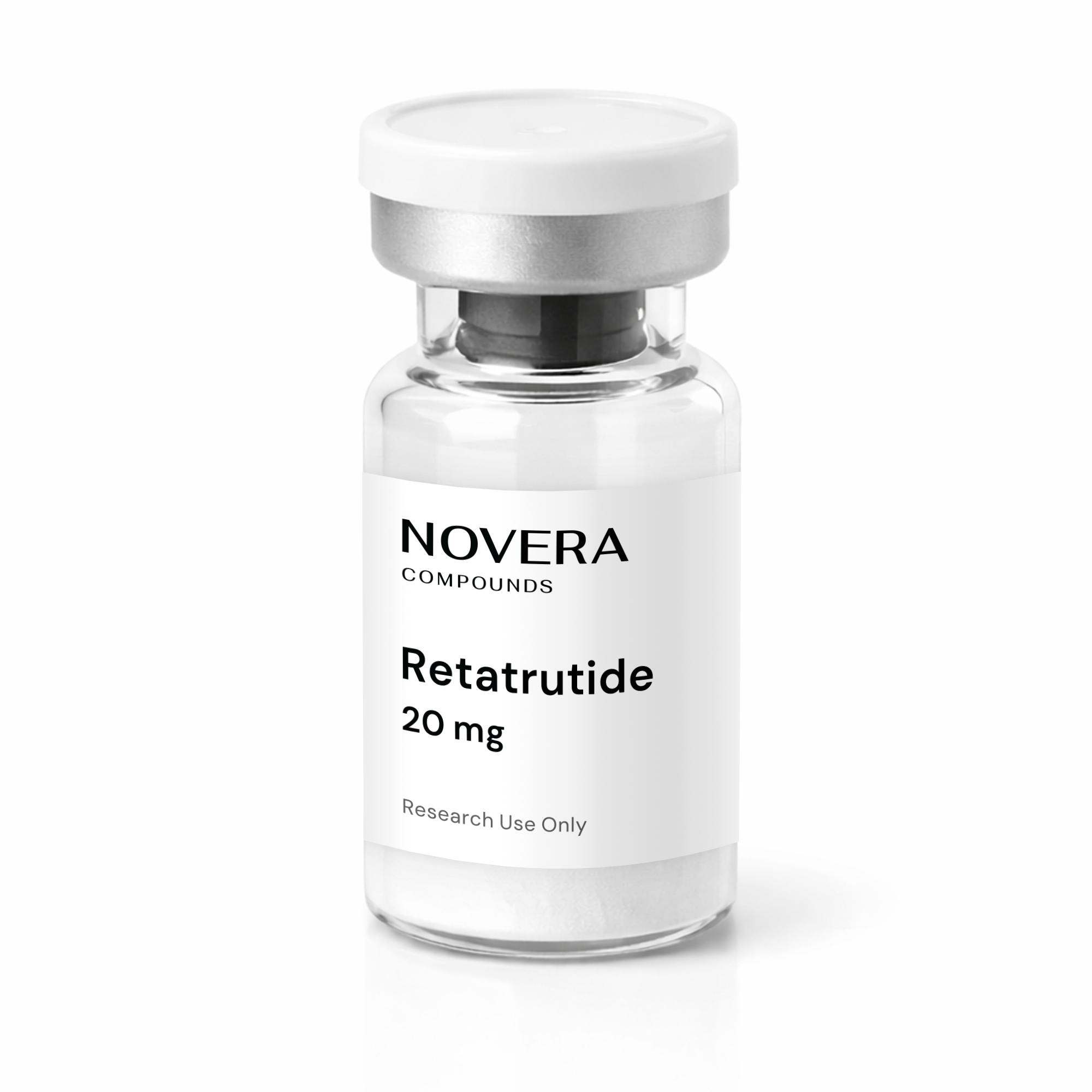
| Retatrutide 20mg | >99% | 20mg | $99.00 |
| Retatrutide 10mg | >99% | 10mg | $64.00 |


