SLU-PP-332 in brief
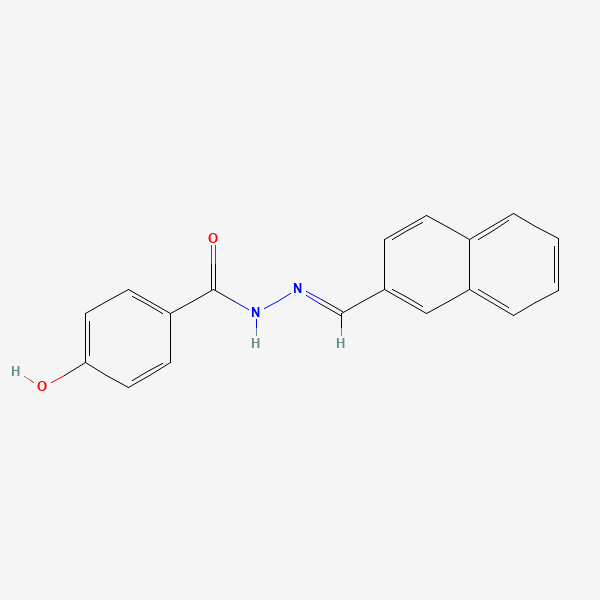
SLU-PP-332 is a small synthetic acylhydrazone, C18H14N2O2, designed at Saint Louis University in 2023 from the older compound GSK4716 by changing one ring to a naphthalene. It is a laboratory probe that raises the transcriptional output of the three estrogen-related receptors, with its highest reported potency at the alpha paralog in transfected reporter assays. Most of its roughly ten studies come from one group of collaborating laboratories and use cells or animals; there are no human in vivo data. No binding constant has been measured at any of the three receptors and no experimental structure of the molecule exists, so its binding pose is modelled rather than observed.[1,2,3,4,5]
SLU-PP-332 regulatory status
SLU-PP-332 is not an approved medicine: no marketing authorisation was found in Drugs@FDA, the EMA medicines database or the Health Canada Drug Product Database, and a ClinicalTrials.gov search returns no study with it as an intervention (all searched November 2026). The WADA 2026 Prohibited List does not name it, and it does not name the estrogen-related receptors or their agonists as a class. Section S4.4, metabolic modulators, names activators of AMP-activated protein kinase, peroxisome proliferator-activated receptor delta agonists, Rev-erb agonists, insulins and insulin-mimetics, meldonium and trimetazidine, so estrogen-related receptor agonism is not among the classes that section names. Two other features of the List bear on reading that: its categories are written as including but not limited to their examples, and section S0, non-approved substances, prohibits at all times any pharmacological substance that no other section addresses and that has no current approval by any governmental regulatory health authority for human therapeutic use. It appears neither in the FDA list of bulk drug substances that may present significant safety risks, which therefore records no agency concern against it, nor among the nominations that page lists as withdrawn (checked November 2026), and no retraction or expression of concern was found on any work cited here.[6,7,8,9,10,11]
SLU-PP-332 at a glance
- A small synthetic molecule of 290.3 g/mol, C18H14N2O2, with no stereocentres and an E-configured acylhydrazone linker joining a 4-hydroxyphenyl ring to a naphthalene.[1]
- Built in 2023 from the older compound GSK4716 by one substituent change, with the explicit aim of reaching the alpha member of the estrogen-related receptor family, which earlier agonists of that chemotype did not activate.[2,3]
- Not a medicine anywhere and not in clinical study: no marketing authorisation in Drugs@FDA, the EMA medicines database or the Health Canada Drug Product Database, and no registered trial with it as an intervention (searched November 2026). The WADA 2026 Prohibited List names neither the compound nor the receptor family it acts on.[6,7,8,10,9]
- Reported half-maximal concentrations in a transfected reporter assay of 98 nM at ERRalpha, 230 nM at ERRbeta and 430 nM at ERRgamma in the originating paper, and 0.22 and 0.59 micromolar at the alpha and gamma paralogs in a later paper from an overlapping group. No binding constant has been measured at any of the three.[2,5]
- No experimental structure of the molecule exists, bound or free. What the molecular picture shows is a calculated conformer, and every published binding pose is a docking or simulation result.[1,5]
- Two independent doping-control laboratories have characterised it analytically and mapped its in vitro metabolism in human liver preparations, one finding nine metabolites and the other 22.[12,13]
What is SLU-PP-332?
SLU-PP-332 is a laboratory chemical probe for the estrogen-related receptors, a family of three nuclear receptors named alpha, beta and gamma. A nuclear receptor is a protein that binds DNA and controls transcription of nearby genes; these three share a great deal of sequence with the classical estrogen receptors but do not bind estrogens and have no known natural ligand. They are described as constitutively active, meaning they drive transcription in partnership with a coactivator protein without waiting for a molecule to arrive, and they are concentrated in tissues with heavy oxidative metabolism such as heart, skeletal muscle and liver. Two words used throughout this page are worth fixing here. Paralog means one of several related genes in the same genome that arose by duplication, so alpha, beta and gamma are paralogs of one another rather than one receptor's versions in different species. And every potency figure below is a half-maximal effective concentration, the concentration at which an assay reaches half of its own maximum response, which is a property of the compound in that assay rather than a binding affinity.[14,15,16]
The compound is older than its pharmacology. It is a plain acylhydrazone that sat in screening catalogues under a registry number, and it became SLU-PP-332 in 2023 when a group at Saint Louis University and collaborating institutions designed it from an earlier molecule, GSK4716, a phenolic acylhydrazone that activates the beta and gamma paralogs and, by the 2005 report that introduced the chemotype, not the alpha one. Reaching the alpha receptor was the stated goal, because the genetic evidence pointing at it had no pharmacological tool to go with it. The design change was a single group: a naphthalene in place of an isopropylphenyl.[2,3,1]
The name causes two kinds of confusion. First, compounds sharing the SLU-PP prefix do not share its behaviour: SLU-PP-915 is a chemically unrelated thiophene boronic acid, and SLU-PP-1072, which comes from the same GSK4716 ancestry as this molecule, is an inverse agonist rather than an agonist. Second, the literature is written in the vocabulary of exercise physiology, and the phrase in the paper titles describes the transcriptional programme the authors were measuring in animals rather than any property of the molecule. What has been established is narrower: the compound raises the transcriptional output of three named receptors in cell assays, with a measured potency order, and that output is attributable to one paralog in one tissue and to another in another.[17,18,2,19]
The literature is small and concentrated. Roughly ten studies name the compound, applied across skeletal muscle, heart, kidney and whole-animal metabolic models, and most come from one group of collaborating laboratories whose senior authors declare stock in two companies developing agonists of these receptors. The exceptions come from outside: a pilot study in human primary muscle cells from an Italian group, and two sports anti-doping laboratories, in Cologne and at UCLA, which characterised the molecule analytically with doping control in mind. The Cologne group describes compounds of this kind as potentially relevant to sports drug testing programmes; the UCLA group writes that the World Anti-Doping Agency prohibits the use of exercise mimetics and metabolic modulators in sport. Neither sentence is a listing, and this page does not treat them as one: the 2026 Prohibited List names neither this compound nor this receptor family, and the compound is not an approved medicine or a registered trial intervention in any database searched. There is no human in vivo data of any kind. Nothing else in this library shares this target family either, so the entries offered as related share a research area, mitochondrial and metabolic biology, rather than a target or a chemotype.[4,20,21,12,13,22,9,6,10]
Not to be confused with
- GSK4716
- The parent compound, and the single substituent away. GSK4716 is a phenolic acylhydrazone selective for the beta and gamma paralogs; this molecule is the same chemotype with naphthalen-2-yl in place of its isopropylphenyl group. In the originating reporter assay GSK4716 had a half-maximal concentration above 5000 nM at the alpha paralog where this compound had 98 nM, so the two are not interchangeable in any experiment about that receptor.[2,3]
- SLU-PP-915
- A later compound from the same programme and a completely different scaffold: a 2,5-disubstituted thiophene amide carrying a boronic acid rather than a phenol. It was taken forward because the authors treated the acyl hydrazide group as a liability for work in animals and sought a replacement for it, and because SLU-PP-332 itself, by their later account, has poor systemic bioavailability. The two are often reported side by side, and a figure for one is not a figure for the other.[17,28]
- SLU-PP-1072
- An inverse agonist at the alpha and gamma paralogs, derived from the same GSK4716 scaffold. It is the clearest demonstration that neither the SLU-PP numbering nor the shared chemical ancestry predicts the direction of an effect on these receptors.[18]
- XCT790
- The older tool compound for the same receptor family, and a cautionary one: it uncouples mitochondria independently of any receptor, which confounds exactly the metabolic readouts this literature uses. It appears in the originating paper only as a comparator for inverse-agonist efficacy.[2,18]
- DS45500853 and DS20362725
- Unrelated chemotypes that reach agonism at the alpha paralog from a different direction: DS45500853 is an acetophenone analogue and DS20362725 a benzimidazole. DS45500853 is the ligand in the crystal structure that the 2026 structure-activity work used as a docking receptor for this compound, so the two molecules are easy to conflate when reading that modelling.[29,5]
- The classical estrogen receptors
- The receptor family shares high sequence homology with estrogen receptor alpha and beta but does not bind endogenous estrogens, and this compound showed no activity at either estrogen receptor in cotransfection assays. The name is the only thing the two families share here.[2,14]
SLU-PP-332 molecular structure
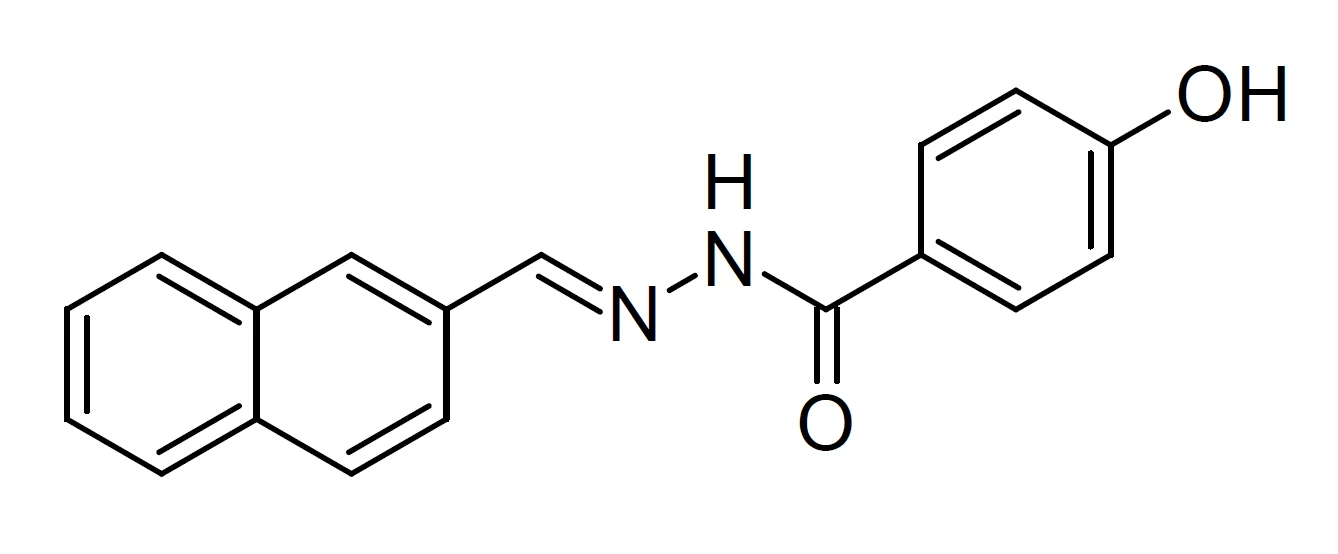
The molecule reads in three parts from one end to the other. A 4-hydroxyphenyl ring carries a carbonyl; the carbonyl is joined through an NH to a nitrogen that is double-bonded to a carbon; and that carbon carries a naphthalene attached at its 2 position. The middle three atoms, C(=O)NH-N=CH, are the acylhydrazone, formed in synthesis by condensing an acyl hydrazide with an aldehyde. Because the central link is a carbon-nitrogen double bond, the molecule has two possible geometries at that bond, and both the database record and every published name specify the E isomer. There are no stereocentres at all.[1,5]
Each of the three parts has been probed by substitution. Replacing the carbonyl with a sulfonyl abolished activity across a whole analogue series, which the authors attribute to geometry rather than to one lost contact. Replacing the phenol with a pyridine was mostly detrimental but survivable when other parts compensated. The naphthalene is the part the selectivity is pinned on: it was added to reach Phe328 in the alpha paralog, where the other two have an alanine, and the test of that idea is the analogue in which it was swapped for a 3,4-dichlorophenyl group at almost identical computed lipophilicity, polar surface area and acidity. That analogue lost the alpha preference, which is reasonably direct evidence that an extended aromatic surface and not bulk physical properties is doing the work.[5,2]
The measured and computed properties, gathered in one place rather than left across three sections. Kinetic aqueous solubility of 0.2 micromolar at a computed cLogP of 4.05; a half-life of 31.3 minutes in human liver microsomes with intrinsic clearance of 22 microlitres per minute per milligram, against an earlier report from the same programme placing the half-life at or above 60 minutes in both human and mouse microsomes; ligand efficiencies of 0.42 at the alpha paralog and 0.31 at the gamma; a computed topological polar surface area of 61.7 square angstroms and a computed partition coefficient of 3.7 in the database record, beside the 4.05 the medicinal chemistry paper computed. The protonated molecule is observed at m/z 291.1142 with a dominant product ion at m/z 121.0288. Three things are not measured anywhere that was read: a partition coefficient or acid dissociation constant on material rather than in silico, the isomeric composition and aqueous stability of the hydrazone, and any solid form, salt, hydrate or polymorph. The solubility figure also sits two orders of magnitude below the concentrations much of the cell work uses, which no source read addresses.[5,12,17,1]
The three-dimensional view on this page is a calculated conformer from PubChem. It is not a measurement, not a bound pose, and not evidence about which accessible geometry a receptor selects. No experimental structure of this molecule exists, and the published pictures of it in a pocket are docking poses and simulation snapshots computed in a crystal structure of the alpha paralog that was solved with a chemically unrelated agonist in it. The one experimental structure in this story is of the parent compound GSK4716 in the gamma paralog's ligand-binding domain, at 2.6 angstroms, in which the phenol hydrogen bonds to Asp328 and the ring on the far side of the hydrazone stacks against Tyr326. Its authors describe the pocket accommodating the ligand through an unexpected rearrangement of the phenol-binding residues, and report that activation by this ligand does not involve the major rearrangement or stabilisation of the C-terminal helix that the conventional account of nuclear receptor activation turns on. Everything structural said here is read across from that.[1,5,23,17,24,25]
Modifications
- Ring A, the 4-hydroxyphenyl group A phenol on the acyl side of the molecule. In the parent chemotype's crystal structure this hydroxyl is the hydrogen-bond donor to an aspartate in the receptor's pocket, and in the modelling of this compound at the alpha paralog it is placed at a glutamate. Replacing it with a pyridine nitrogen was largely detrimental across an analogue series, and replacing it with a methyl removed that hydrogen bond while leaving the molecule active, so the phenol is important rather than indispensable.[17,5]
- The acylhydrazone bridge, C(=O)NH-N=CH The linker that gives the chemotype its name: a carbonyl, an NH, and a carbon-nitrogen double bond. The NH is modelled as a hydrogen bond to a phenylalanine backbone. Exchanging the carbonyl for a sulfonyl abolished activity throughout the analogue series, which the authors read as the carbonyl holding the geometry rather than merely adding a contact. A methyl on the hydrazone carbon was usually detrimental and in one analogue produced nanomolar potency, so this bridge is the most substitution-sensitive part of the molecule.[5]
- Ring B, the naphthalen-2-yl group The extended aromatic system that distinguishes this compound from its parent. It was added to reach a phenylalanine (Phe328 in the alpha paralog) where the other two paralogs carry an alanine, and it is what the selectivity is attributed to. The test of that attribution is a substitution: a 3,4-dichlorophenyl group of nearly identical computed physicochemical parameters removed the preference for the alpha paralog, which separates the aromatic surface from mere lipophilicity.[2,5]
There are no stereocentres and no D or L question: every ring is flat and every substituted carbon is aromatic or part of the double bond. What the molecule does have is geometric isomerism at the carbon-nitrogen double bond of the hydrazone, and the database record and the published names both specify the E configuration. No study read here reported a measurement of the E to Z composition of a sample, or of how the hydrazone behaves in solution over time, which for this class of linker is the obvious question and is unaddressed.[1]
What studies on SLU-PP-332 show
Each card names the experimental system and what was measured. A result in one system is not evidence about another.
Cell-based cotransfection reporter assay · HEK293 cells transfected with full-length human ERRalpha, ERRbeta or ERRgamma and a luciferase reporter, with Gal4-ERR-LBD chimeras and a panel of other nuclear receptors run alongside
Reporter activation with half-maximal concentrations of 98 nM at ERRalpha, 230 nM at ERRbeta and 430 nM at ERRgamma, a 4.4-fold preference for the alpha over the gamma paralog. GSK4716 was above 5000 nM at both alpha and beta in the same assay. Neither estrogen receptor nor the other nuclear receptors tested responded.[2]
- Material
- SLU-PP-332, with GSK4716 as the scaffold comparator
- Measured
- Half-maximal effective concentration for reporter activation at each receptor, and efficacy relative to the assay's own maximum
- Compared with
- GSK4716; estrogen receptor alpha and beta; other nuclear receptors in the same assay format
- Limitation
- Potency in an overexpressing transfected reporter is not an affinity and not a cellular concentration. The authors state explicitly that the compound is not selective enough to isolate the function of a single paralog, so no experiment using it alone can attribute a result to one receptor.
Billon C et al., 2023, ACS Chemical Biology
Biochemical engagement assays · Purified ERRalpha ligand-binding domain subjected to chymotrypsin; purified ERRgamma ligand-binding domain in a differential scanning fluorimetry assay
The compound protected an ERRalpha domain fragment from digestion in a concentration-dependent way, and raised the thermal stability of the purified ERRgamma domain. Both are consistent with the compound binding the domains directly rather than acting upstream.[2]
- Material
- SLU-PP-332 against the isolated domains
- Measured
- Protection of a domain fragment from proteolysis, and the thermal melting shift of the domain
- Compared with
- Compound-free domain in each assay
- Limitation
- Both readouts are qualitative and neither yields a dissociation constant, so no affinity for any paralog has been measured. The assays are not interchangeable: the authors report that ERRalpha did not work in the fluorimetry format and ERRgamma did not work in the proteolysis format, so the two receptors were never compared in one biochemical assay.
Billon C et al., 2023, ACS Chemical Biology
Pharmacological response in genetically null primary cells · Primary myocytes from mice with skeletal-muscle-specific deletion of ERRalpha, of ERRgamma, or of both
Both transcripts rose at 2 hours and not at 24, and the rise was absent in ERRalpha-null and ERRalpha/gamma-null cells while present in ERRgamma-null cells. For these two genes in this tissue, the response requires ERRalpha.[2]
- Material
- SLU-PP-332 at 1 micromolar for 2 hours and for 24 hours
- Measured
- Ddit4 and Slc25a25 transcript levels
- Compared with
- Wild-type primary myocytes, and vehicle in each genotype
- Limitation
- The conclusion covers two genes in one cell type. The authors note that other responses to the compound may run through the other paralogs, and in heart tissue a later paper attributes the transcriptional response mainly to ERRgamma, so paralog attribution is tissue-specific and not a property of the molecule.
Billon C et al., 2023, ACS Chemical Biology
Structure-activity relationship study with docking and molecular dynamics · Cell-based functional assays at ERRalpha and ERRgamma; docking into PDB 7E2E; 400 ns molecular dynamics with binding-energy decomposition
In this laboratory's assay the reference gave 0.22 micromolar at ERRalpha and 0.59 micromolar at ERRgamma. Three structural conclusions follow from the series: a sulfonyl in place of the carbonyl abolishes activity, a 3,4-dichlorophenyl in place of the naphthalene removes the alpha preference at matched computed properties, and a methyl at the hydrazone carbon is usually harmful but in one analogue gives nanomolar potency. The modelled contacts are the phenol at a glutamate, the hydrazone NH at a phenylalanine backbone, and the naphthalene stacked on Phe328.[5]
- Material
- SLU-PP-332 as reference, with systematic analogues varying each ring, the hydrazone carbon and the carbonyl
- Measured
- Half-maximal concentrations and efficacy at the two paralogs, docking scores, computed binding free energies, ligand efficiency
- Compared with
- The analogue series, and the crystal structure's own acetophenone ligand in the docking
- Limitation
- Every pose and energy here is computational, and the receptor used was crystallised with another molecule, so the pocket conformation is that molecule's induced fit. The potency figures are about twofold weaker than the originating report for the same compound, and neither paper reconciles the difference.
Okda HE et al., 2026, International Journal of Biological Macromolecules
In vitro physicochemical and metabolic property panel · Kinetic solubility assay; human liver microsomes
Kinetic solubility of 0.2 micromolar at a computed cLogP of 4.05, a human microsomal half-life of 31.3 minutes with intrinsic clearance of 22 microlitres per minute per milligram, and ligand efficiencies of 0.42 and 0.31 at the two paralogs. Several analogues were far more soluble at comparable potency.[5]
- Material
- SLU-PP-332 and its analogues
- Measured
- Kinetic aqueous solubility, computed cLogP, microsomal half-life, intrinsic clearance, ligand efficiency
- Compared with
- The analogue series
- Limitation
- In vitro measurements in one laboratory. The half-life directly contradicts the earlier report from the same programme, which placed it at or above 60 minutes in both human and mouse microsomes. The solubility figure also sits two orders of magnitude below the concentrations commonly used in the cell experiments, which is a question about those assay conditions that no source read addresses.
Okda HE et al., 2026, International Journal of Biological Macromolecules
Two unrelated agonists in an animal model, with multi-omics and genetic dependency · Mice with pressure-overload heart failure over a six-week study period; cardiomyocytes in vitro; RNA sequencing and metabolomics; receptor-deletion genotypes for the dependency work
Both agonists raised ejection fraction, reduced fibrosis and increased survival in this model without changing cardiac hypertrophy, and transcriptionally activated a broad set of metabolic genes concentrated in fatty acid metabolism and mitochondrial function. Metabolomics showed substantial normalisation of fatty acid, lipid, tricarboxylic acid and oxidative phosphorylation metabolites in hearts after six weeks of pressure overload. The genetic dependency experiments, in cells and in animals, identified ERRgamma as the main mediator of both the transcriptional response and the cardiac protection. Agonism also reduced cell cycle and developmental pathway expression, partly through E2F1 in cardiomyocytes.[19]
- Material
- SLU-PP-332 and the structurally distinct SLU-PP-915, run in the same experiments
- Measured
- Ejection fraction, fibrosis, survival, cardiac hypertrophy, transcript and metabolite profiles, mitochondrial oxidative capacity and fatty acid use
- Compared with
- Vehicle in animals carrying the same pressure overload, and the receptor-null genotypes
- Limitation
- A mouse model, with no human data of any kind, and the paper reports the two compounds together, so a result stated for the pair is not a measurement on this molecule alone. Its value here runs the other way: two chemically unrelated agonists moving the same endpoints is the strongest argument in this literature against a scaffold artefact. The paralog attribution is to ERRgamma in heart against ERRalpha in skeletal muscle, so it is a finding about the tissue rather than about the compound.
Xu W et al., 2024, Circulation
Analytical characterisation and in vitro metabolism by high-resolution mass spectrometry · Liquid chromatography with high-resolution tandem mass spectrometry; human liver microsomes and human liver S9 fraction with an NADPH regenerating system and phase II cofactors, with enzyme-free and substrate-free blanks
The protonated molecule appears at m/z 291.1142 with a dominant product ion at m/z 121.0288 assigned to cleavage beside the hydrazide, which is an independent confirmation of the connectivity. Nine metabolites were found, six phase I and three phase II: hydroxylation and bis-hydroxylation located by fragment ions on both the naphthalene and the phenol, a reduced bis-hydroxylated pair consistent with the naphthalene epoxide and dihydrodiol route known for naphthalene itself, and glucuronide and sulfate conjugates.[12]
- Material
- Commercially purchased SLU-PP-332, alongside SLU-PP-915
- Measured
- Protonated molecule and product ions; identity and number of phase I and phase II transformation products
- Compared with
- Incubation blanks, and the structurally unrelated SLU-PP-915 run in parallel
- Limitation
- In vitro liver preparations, not a person. The authors state that tandem mass spectrometry locates a transformation approximately rather than exactly and that only synthesis settles a position, which was done for the other compound's metabolites and not for these. The 22 metabolites reported by the other laboratory, on a different incubation system, do not match this inventory.
Möller T et al., 2026, Rapid Communications in Mass Spectrometry
Pilot study in human primary muscle cells · Primary myoblasts and differentiated myotubes cultured from intraoperative muscle biopsies of twenty women undergoing hip arthroplasty, ten self-reported physically active and ten inactive
Treated cultures differed from untreated cultures on every one of those measures, and myotubes formed on differentiation. This is the only measurement in human cells in the literature on this compound.[21]
- Material
- SLU-PP-332 at a single assay concentration of 10 micromolar for 48 hours, applied to cells from the inactive group
- Measured
- Lactate dehydrogenase release, a fluorescent reactive oxygen species probe, reduced glutathione, senescence-associated beta-galactosidase activity, and immunoblot levels of NOX4, SIRT1, PGC-1alpha, ERRalpha, FNDC5, Akt and Bcl-2
- Compared with
- Untreated cells from the same donors
- Limitation
- A pilot by its own title: one concentration, one exposure time, one surgical donor population of twenty, and activity assigned by self-report. Critically, there is no receptor-null and no antagonist control, so nothing in it establishes that the changes run through an estrogen-related receptor at all.
Bonanni R et al., 2025, Frontiers in Physiology
What is established about how SLU-PP-332 acts on the three estrogen-related receptors
The receptors this compound acts on are already working before it arrives. The 2004 crystal structure of the alpha paralog's ligand-binding domain bound to a fragment of the coactivator PGC-1alpha, with no ligand present, is the evidence for the constitutive, ligand-independent activity the family is known for, and a later mouse study showed that all three paralogs activate a target promoter in a cell assay only when the coactivator is supplied with them. So an agonist here is a molecule that raises an output that is already running and that depends on a partner protein, rather than one that switches a receptor on.[15,26]
Where it binds is argued by analogy rather than shown. The parent chemotype's crystal structure in the gamma paralog places that ligand in the ligand-binding pocket of the domain, its phenol hydrogen-bonded to Asp328 and its other aromatic ring stacked on Tyr326, with the pocket's phenol-binding residues rearranged to take it. This compound's design rests on extending that ring to reach Phe328, which the alpha paralog has and the other two replace with alanine. Two results make the idea more than a drawing: the potency shift against the parent compound at the alpha receptor, and the analogue that loses alpha preference when the naphthalene is replaced by a group of matched physicochemical properties. Neither is a structure.[23,17,2,5]
What follows downstream has been measured as transcription of known target genes: Pdk4 in a muscle cell line, Ddit4 and Slc25a25 transiently in primary myocytes where the response requires the alpha paralog, and TFEB, reported as a direct target gene, in neonatal rat ventricular myocytes and in C2C12 mouse myoblasts. In that same muscle cell line maximal mitochondrial respiration and mitochondrial staining were also higher than in vehicle-treated cells, which is a functional rather than a transcriptional endpoint and carries no test of receptor dependence. The strongest evidence that this is receptor-driven rather than a scaffold artefact does not come from this molecule alone: two chemically unrelated agonists produced the same transcriptional direction in the cardiac study, where genetic dependency experiments attributed the response mainly to the gamma paralog. Taken with the alpha dependence found in skeletal muscle, the honest statement is that the compound raises the activity of a receptor family and cannot distinguish its members.[2,27,19]
What is still unknown about SLU-PP-332
There is no experimental structure, and that is the largest gap. Nobody has crystallised or imaged this molecule, alone or in a receptor, so every statement about its contacts is a docking or simulation result, and the only alpha-paralog structure available for that modelling was solved with an unrelated agonist in the pocket. For a compound whose design argument is one aromatic ring reaching one phenylalanine, that argument rests on potency shifts and substitution tests rather than on seeing it.[5,25,23]
Three published potency sets exist for this one compound and they do not agree. The originating paper's cotransfection reporter in HEK293 cells gave 98 nM at the alpha paralog, 230 nM at the beta and 430 nM at the gamma. The thiophene-series paper from the same programme, which used this compound as its reference in a cell-based cotransfection assay, reports 230 nM at the beta paralog and 428 nM at the gamma, which sits with the originating figures. The 2026 structure-activity paper, again from an overlapping group, reports 0.22 micromolar at the alpha paralog and 0.59 micromolar at the gamma, roughly twofold weaker, and no paper acknowledges the difference. No independently curated bioactivity record was retrieved to break the tie. The same pattern appears in the metabolic properties: one paper reports the compound stable in human and mouse microsomes with a half-life at or above 60 minutes, another measures 31.3 minutes in human microsomes. Both discrepancies are probably assay-to-assay, which is the point: nothing in this literature has been replicated between unrelated laboratories, because almost all of it comes from one.[2,17,5]
No affinity has ever been measured. Binding rests on a protease-protection result on one domain and a thermal shift on another, both qualitative, and the authors record that neither assay worked for both receptors, so the two were never compared in one format. There is also a mismatch between the concentrations used and the measured kinetic solubility of 0.2 micromolar: much of the cell work uses 10 micromolar, fifty times that figure, and what is in solution at that nominal concentration is not addressed by any source read.[2,5]
The chemistry of the linker is unexamined. An acylhydrazone has a configurable double bond and a hydrolysable bond beside it, and the E configuration on this page comes from a database record and from compound names rather than from a measurement on material: no source reports the isomeric composition of a sample or the stability of the hydrazone in aqueous buffer. The two anti-doping laboratories that mapped in vitro metabolism found different inventories, nine metabolites against 22, on different liver preparations, and both describe their structural assignments as approximate without synthesis.[1,12,13]
Key papers on SLU-PP-332
- Synthetic ERRα/β/γ Agonist Induces an ERRα-Dependent Acute Aerobic Exercise Response and Enhances Exercise Capacity.
Billon C, Sitaula S, Banerjee S, Welch R, Elgendy B, Hegazy L, Oh TG, Kazantzis M, Chatterjee A, Chrivia J, Hayes ME, Xu W, Hamilton A, Huss JM, Zhang L, Walker JK, Downes M, Evans RM, Burris TP (2023), ACS Chemical Biology · Receptor pharmacology with genetic dependency
The originating paper and the place to begin. It contains the design rationale from GSK4716, the potency set at all three receptors, both biochemical engagement assays, and the knockout-myocyte experiment that is the only clean attribution of a transcriptional response to one paralog.
- Chemical optimization of the exercise mimetic SLU-PP-332 enables insight into estrogen-related receptor signaling.
Okda HE, Zhao P, Hayes M, Duvall C, Quillin E, Fang H, Mohammed BM, Hegazy L, Burris TP, Elgendy B (2026), International Journal of Biological Macromolecules · Structure-activity relationship with docking and molecular dynamics
The most chemically informative source. Read it for what each part of the molecule does: the sulfonyl substitution that kills activity, the matched-property swap that removes paralog preference, and the solubility and clearance figures. Read the modelling as modelling.
- X-ray crystal structures of the estrogen-related receptor-gamma ligand binding domain in three functional states reveal the molecular basis of small molecule regulation.
Wang L, Zuercher WJ, Consler TG, Lambert MH, Miller AB, Orband-Miller LA, McKee DD, Willson TM, Nolte RT (2006), The Journal of Biological Chemistry · X-ray crystallography
The only agonist-bound crystal structure in this receptor family, and the structural foundation every account of this chemotype is built on. It is a different ligand in a different paralog, which is exactly why it is worth reading directly rather than through the citations.
- In Vitro Metabolism and Analytical Characterization of SLU-PP-332 and SLU-PP-915: Novel Pan-ERR Agonists With Doping Potential.
Möller T, Krug O, Thevis M (2026), Rapid Communications in Mass Spectrometry · High-resolution mass spectrometry and in vitro metabolism
An independent characterisation from a laboratory with no stake in the pharmacology, including the fragmentation that confirms the connectivity and the in vitro metabolite map. The clearest view of the molecule as a molecule.
- Novel Pan-ERR Agonists Ameliorate Heart Failure Through Enhancing Cardiac Fatty Acid Metabolism and Mitochondrial Function.
Xu W, Billon C, Li H, Wilderman A, Qi L, Graves A, Rideb JRDC, Zhao Y, Hayes M, Yu K, Losby M, Hampton CS, Adeyemi CM, Hong SJ, Nasiotis E, Fu C, Oh TG, Fan W, Downes M, Welch RD, Evans RM, Milosavljevic A, Walker JK, Jensen BC, Pei L, Burris T, Zhang L (2024), Circulation · Animal model with multi-omics and genetic dependency
The strongest argument in this literature that the readouts are receptor-driven: two chemically unrelated agonists producing the same transcriptional direction, with genetic dependency work pointing at the gamma paralog where the muscle work pointed at the alpha.
- Targeting ERRs to counteract age-related muscle atrophy associated with physical inactivity: a pilot study.
Bonanni R, Falvino A, Matticari A, Rinaldi AM, D'Arcangelo G, Cifelli P, Iundusi R, Gasbarra E, Tancredi V, Cariati I, Tarantino U (2025), Frontiers in Physiology · Human primary cell pilot study
The only human-cell measurement, and a useful lesson in reading it carefully: a wide panel of endpoints in primary myoblasts from twenty donors, with no control that would show the receptor family was involved.
- Pharmacology of estrogen-related receptors (ERRs) agonists.
Radwan MO, Guin S, Burris TP (2026), RSC Chemical Biology · Review
A short current review of the receptor family and its agonists for background on constitutive activity, the three paralogs and their tissue distribution. Written by the originating laboratory, so read it for framing rather than for assessment.
References
- 1.PubChem (National Center for Biotechnology Information). Compound Summary for CID 5338394, 4-hydroxy-N-[(E)-naphthalen-2-ylmethylideneamino]benzamide. PubChem. source · database record
- 2.Billon C, Sitaula S, Banerjee S, Welch R, Elgendy B, Hegazy L, Oh TG, Kazantzis M, Chatterjee A, Chrivia J, Hayes ME, Xu W, Hamilton A, Huss JM, Zhang L, Walker JK, Downes M, Evans RM, Burris TP. (2023). Synthetic ERRα/β/γ Agonist Induces an ERRα-Dependent Acute Aerobic Exercise Response and Enhances Exercise Capacity. ACS Chemical Biology. 18:756-771. doi:10.1021/acschembio.2c00720 · full text read
- 3.Zuercher WJ, Gaillard S, Orband-Miller LA, Chao EY, Shearer BG, Jones DG, Miller AB, Collins JL, McDonnell DP, Willson TM. (2005). Identification and structure-activity relationship of phenolic acyl hydrazones as selective agonists for the estrogen-related orphan nuclear receptors ERRbeta and ERRgamma. Journal of Medicinal Chemistry. 48:3107-3109. doi:10.1021/jm050161j · abstract only
- 4.Billon C, Schoepke E, Avdagic A, Chatterjee A, Butler AA, Elgendy B, Walker JK, Burris TP. (2024). A Synthetic ERR Agonist Alleviates Metabolic Syndrome. The Journal of Pharmacology and Experimental Therapeutics. 388:232-240. doi:10.1124/jpet.123.001733 · abstract only
- 5.Okda HE, Zhao P, Hayes M, Duvall C, Quillin E, Fang H, Mohammed BM, Hegazy L, Burris TP, Elgendy B. (2026). Chemical optimization of the exercise mimetic SLU-PP-332 enables insight into estrogen-related receptor signaling. International Journal of Biological Macromolecules. 355:151450. doi:10.1016/j.ijbiomac.2026.151450 · full text read
- 6.U.S. Food and Drug Administration. (2026). Drugs@FDA: FDA-Approved Drugs. Drugs@FDA database. source · database record
- 7.European Medicines Agency. (2026). Medicines: search for human medicines (centrally authorised medicines). European Medicines Agency medicines database. source · database record
- 8.Health Canada. (2026). Drug Product Database online query. Health Canada Drug Product Database. source · database record
- 9.World Anti-Doping Agency. (2025). World Anti-Doping Code International Standard: Prohibited List 2026. World Anti-Doping Agency. source · full text read
- 10.U.S. National Library of Medicine. (2026). ClinicalTrials.gov search for studies with intervention SLU-PP-332. ClinicalTrials.gov. source · database record
- 11.US Food and Drug Administration. (2026). Certain Bulk Drug Substances for Use in Compounding that May Present Significant Safety Risks. FDA human drug compounding. source · full text read
- 12.Möller T, Krug O, Thevis M. (2026). In Vitro Metabolism and Analytical Characterization of SLU-PP-332 and SLU-PP-915: Novel Pan-ERR Agonists With Doping Potential. Rapid Communications in Mass Spectrometry. 40:e70039. doi:10.1002/rcm.70039 · full text read
- 13.Avliyakulov NK, Sobolevsky T, Ahrens E. (2026). Analysis and Identification of In Vitro Metabolites of Exercise Mimetic SLU-PP-332 ERRα/β/γ Agonist for Doping-Control Purposes. Drug Testing and Analysis. 18:439-450. doi:10.1002/dta.70035 · abstract only
- 14.Radwan MO, Guin S, Burris TP. (2026). Pharmacology of estrogen-related receptors (ERRs) agonists. RSC Chemical Biology. 7:1265-1277. doi:10.1039/d6cb00077k · abstract only
- 15.Kallen J, Schlaeppi JM, Bitsch F, Filipuzzi I, Schilb A, Riou V, Graham A, Strauss A, Geiser M, Fournier B. (2004). Evidence for ligand-independent transcriptional activation of the human estrogen-related receptor alpha (ERRalpha): crystal structure of ERRalpha ligand binding domain in complex with peroxisome proliferator-activated receptor coactivator-1alpha. The Journal of Biological Chemistry. 279:49330-49337. doi:10.1074/jbc.M407999200 · abstract only
- 16.Burris TP, de Vera IMS, Cote I, Flaveny CA, Wanninayake US, Chatterjee A, Walker JK, Steinauer N, Zhang J, Coons LA, Korach KS, Cain DW, Hollenberg AN, Webb P, Forrest D, Jetten AM, Edwards DP, Grimm SL, Hartig S, Lange CA, Richer JK, Sartorius CA, Tetel M, Billon C, Elgendy B, Hegazy L, Griffett K, Peinetti N, Burnstein KL, Hughes TS, Sitaula S, Stayrook KR, Culver A, Murray MH, Finck BN, Cidlowski JA. (2023). International Union of Basic and Clinical Pharmacology CXIII: Nuclear Receptor Superfamily-Update 2023. Pharmacological Reviews. 75:1233-1318. doi:10.1124/pharmrev.121.000436 · abstract only
- 17.Hampton CS, Sitaula S, Billon C, Haynes K, Avdagic A, Wanninayake U, Adeyemi CM, Chatterjee A, Griffett K, Banerjee S, Burris SL, Schoepke E, Boehm T, Bess A, de Vera IMS, Burris TP, Walker JK. (2023). Development and pharmacological evaluation of a new chemical series of potent pan-ERR agonists, identification of SLU-PP-915. European Journal of Medicinal Chemistry. 258:115582. doi:10.1016/j.ejmech.2023.115582 · full text read
- 18.Schoepke E, Billon C, Haynes KM, Avdagic A, Sitaula S, Sanders R, Adeyemi CM, Walker JK, Burris TP. (2020). A Selective ERRα/γ Inverse Agonist, SLU-PP-1072, Inhibits the Warburg Effect and Induces Apoptosis in Prostate Cancer Cells. ACS Chemical Biology. 15:2338-2345. doi:10.1021/acschembio.0c00670 · abstract only
- 19.Xu W, Billon C, Li H, Wilderman A, Qi L, Graves A, Rideb JRDC, Zhao Y, Hayes M, Yu K, Losby M, Hampton CS, Adeyemi CM, Hong SJ, Nasiotis E, Fu C, Oh TG, Fan W, Downes M, Welch RD, Evans RM, Milosavljevic A, Walker JK, Jensen BC, Pei L, Burris T, Zhang L. (2024). Novel Pan-ERR Agonists Ameliorate Heart Failure Through Enhancing Cardiac Fatty Acid Metabolism and Mitochondrial Function. Circulation. 149:227-250. doi:10.1161/CIRCULATIONAHA.123.066542 · full text read
- 20.Wang XX, Myakala K, Libby AE, Krawczyk E, Panov J, Jones BA, Bhasin K, Shults N, Qi Y, Krausz KW, Zerfas PM, Takahashi S, Daneshpajouhnejad P, Titievsky A, Taranenko E, Billon C, Chatterjee A, Elgendy B, Walker JK, Albanese C, Kopp JB, Rosenberg AZ, Gonzalez FJ, Guha U, Brodsky L, Burris TP, Levi M. (2023). Estrogen-Related Receptor Agonism Reverses Mitochondrial Dysfunction and Inflammation in the Aging Kidney. The American Journal of Pathology. 193:1969-1987. doi:10.1016/j.ajpath.2023.07.008 · abstract only
- 21.Bonanni R, Falvino A, Matticari A, Rinaldi AM, D'Arcangelo G, Cifelli P, Iundusi R, Gasbarra E, Tancredi V, Cariati I, Tarantino U. (2025). Targeting ERRs to counteract age-related muscle atrophy associated with physical inactivity: a pilot study. Frontiers in Physiology. 16:1616693. doi:10.3389/fphys.2025.1616693 · full text read
- 22.de Souza-Lima J, Astrosa-Martin BD, Galaz-Rodríguez CA, Silva-Bernal JE, Orellana-Pizarro LI, Mena-Díaz CA. (2026). [Pharmacological Activation of ERRα/β/γ as an Exercise Mimetic: Potential Therapeutic Applications]. Revista Médica de Chile. 154:237-245. doi:10.4067/s0034-98872026000200237 · abstract only
- 23.Wang L, Zuercher WJ, Consler TG, Lambert MH, Miller AB, Orband-Miller LA, McKee DD, Willson TM, Nolte RT. (2006). X-ray crystal structures of the estrogen-related receptor-gamma ligand binding domain in three functional states reveal the molecular basis of small molecule regulation. The Journal of Biological Chemistry. 281:37773-37781. doi:10.1074/jbc.M608410200 · abstract only
- 24.Wang L, Zuercher WJ, Consler TG, Lambert MH, Nolte RT (depositors). (2006). PDB 2GPP: Estrogen Related Receptor-gamma ligand binding domain complexed with a RIP140 peptide and synthetic ligand GSK4716. RCSB Protein Data Bank. doi:10.2210/pdb2GPP/pdb · database record
- 25.Shinozuka T, Ito S, Kimura T, Izumi M, Wakabayashi K (depositors). (2021). PDB 7E2E: Crystal structure of the Estrogen-Related Receptor alpha (ERRalpha) ligand-binding domain (LBD) in complex with an agonist DS45500853 and a PGC-1alpha peptide. RCSB Protein Data Bank. doi:10.2210/pdb7E2E/pdb · database record
- 26.Sveidahl Johansen O, McIntyre RL, Rahbani JF, Zhang Q, Scholtes C, Lagarde DM, Billon C, Côté I, Delgado-Martin M, Tandio D, Basse AL, Eury E, Kralli A, Burris TP, Giguère V, Kazak L, Gerhart-Hines Z. (2026). Cold exposure induces the constitutively active thermogenic receptor, GPR3, via ERRα and ERRγ. Molecular Metabolism. 103:102277. doi:10.1016/j.molmet.2025.102277 · abstract only
- 27.Losby M, Hayes M, Valfort A, Sopariwala DH, Sanders R, Walker JK, Xu W, Narkar VA, Zhang L, Billon C, Burris TP. (2024). The Estrogen Receptor-Related Orphan Receptors Regulate Autophagy through TFEB. Molecular Pharmacology. 106:164-172. doi:10.1124/molpharm.124.000889 · abstract only
- 28.Billon C, Appourchaux K, Côté I, Burris TP. (2026). An orally active estrogen receptor-related receptor agonist, SLU-PP-915, enhances aerobic exercise capacity. The Journal of Pharmacology and Experimental Therapeutics. 393:103787. doi:10.1016/j.jpet.2025.103787 · abstract only
- 29.Shinozuka T, Ito S, Kimura T, Izumi M, Wakabayashi K. (2021). Discovery of a Novel Class of ERRα Agonists. ACS Medicinal Chemistry Letters. 12:817-821. doi:10.1021/acsmedchemlett.1c00100 · abstract only
- 30.UniProt Consortium. UniProtKB P11474 (ERR1_HUMAN), steroid hormone receptor ERR1, gene ESRRA. UniProtKB. source · database record
- 31.UniProt Consortium. UniProtKB P62508 (ERR3_HUMAN), estrogen-related receptor gamma, gene ESRRG. UniProtKB. source · database record
- 32.UniProt Consortium. UniProtKB O95718 (ERR2_HUMAN), steroid hormone receptor ERR2, gene ESRRB. UniProtKB. source · database record
Related entries
- MOTS-cMOTS-c is a 16-residue peptide, MRWQEMGYIFYPRKLR, encoded by a 51 base pair reading frame inside the human mitochondrial 12S ribosomal RNA gene. It has no identified receptor, no published affinity constant and no deposited three-dimensional structure.
- Nicotinamide adenine dinucleotide (NAD+)NAD+ is the oxidised form of nicotinamide adenine dinucleotide, in which nicotinamide riboside and adenosine are joined through a pyrophosphate bridge. Cells use it both as a carrier of hydride in redox reactions and as a substrate that sirtuins, PARPs, CD38 and SARM1 cleave.
- SS-31 (elamipretide)SS-31 (elamipretide) is a synthetic tetrapeptide, D-Arg-Dmt-Lys-Phe-NH2, built from alternating cationic and aromatic residues. It is studied for its selective binding to cardiolipin, the anionic phospholipid of the inner mitochondrial membrane.
