GLP-3 RT in brief
GLP-3 RT (LY3437943) is a synthetic 39-residue peptide that activates the human GIP, GLP-1 and glucagon receptors within one molecule. It carries 2-aminoisobutyric acid at positions 2 and 20, alpha-methyl leucine at 13, a C-terminal amide and a C20 fatty diacid on the Lys17 side chain (C221H342N46O68). Three cryo-EM structures show it as one continuous helix in each receptor, but only residues 1 to 30 and without the lipid arm. No regulator has approved it. Its human evidence is a phase 2 and phase 3 trial programme, much of the latter disclosed as sponsor toplines rather than full peer-reviewed reports. Every receptor-activity ratio traces back to the sponsor's own work, reported in 2022.[1,2,3,4,5,6,7]
GLP-3 RT regulatory status
GLP-3 RT is investigational: no FDA, EMA or Health Canada marketing authorisation was found in Drugs@FDA (queried through the openFDA drugsfda endpoint), the EMA medicines data set or the Health Canada Drug Product Database (searched November 2026). The highest phase reached is phase 3, with completed sponsor trials registered on ClinicalTrials.gov in adults with obesity or overweight (NCT05929066) and in adults with type 2 diabetes and obesity or overweight (NCT05929079). No sport listing naming this compound was located. The change announced for the WADA 2026 Monitoring Program adds markers of GLP-2 TZ beside those of GLP-1 SM, in and out of competition, and names no triple agonist; nothing read here places GLP-3 RT by name on the 2026 Prohibited List or in that programme, and the Prohibited List itself was not machine-readable here, so this is an absence of evidence in the sources read rather than a confirmed absence of listing.[7,8,9,10,11,12]
GLP-3 RT at a glance
- A 39-residue linear peptide with four deliberate departures from ordinary protein chemistry: 2-aminoisobutyric acid at positions 2 and 20, 2-methyl-L-leucine at 13, a C-terminal serine amide, and a C20 fatty diacid attached to the Lys17 side chain through a gamma-glutamate and one AEEA spacer. The whole conjugate is C221H342N46O68, about 4731 g/mol.[2,13]
- It is investigational. No regulator has approved it, the highest phase reached is phase 3, and a 2026 critical review records that most of that programme was available as sponsor topline disclosures rather than full peer-reviewed reports. Registry identity is nonetheless unambiguous: CAS 2381089-83-2, UNII NOP2Y096GV, INN list number 12350, PubChem CID 171390338, KEGG D12430. The development code LY3437943 appears throughout the earlier literature and names the same molecule.[4,6,7,2,13,14,1]
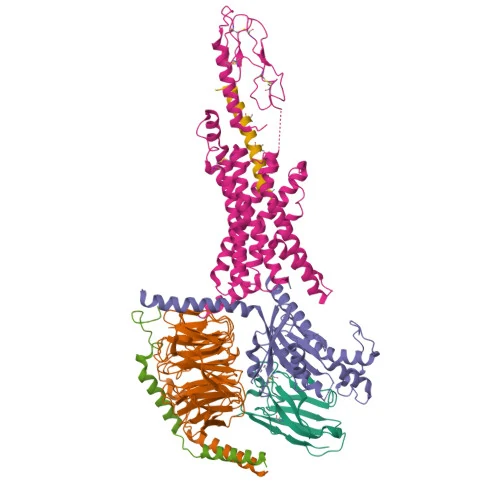
- Three cryo-EM structures determined in one study show the peptide bound to each of its three receptors in complex with Gs: the GLP-1 receptor at 2.68 Å, the glucagon receptor at 2.84 Å and the GIP receptor at 3.26 Å.[3,15,16,17]
- The discovery report describes balanced glucagon-receptor and GLP-1-receptor activity with greater GIP-receptor activity in vitro. The structural study's introduction restates that comparison against the native hormones as 8.9-fold more potent at the GIP receptor and 0.3-fold and 0.4-fold at the glucagon and GLP-1 receptors. Those ratios originate in the discovery report, which was read here as an abstract only, so the assay formats and receptor species behind them were not verified at source.[1,3]
- What no deposited structure yet shows: the peptide alone, its C-terminal nine residues, or the lipid arm in any of the three published receptor complexes.[15,16,17,13]
What is GLP-3 RT?
GLP-3 RT is a laboratory-designed peptide reported in 2022 by a group at Eli Lilly under the code LY3437943. It belongs to a class of molecules sometimes called unimolecular multi-receptor agonists: single synthetic peptides engineered so that one chain activates several related receptors that normally each have their own hormone. The three receptors here are the glucose-dependent insulinotropic polypeptide receptor (GIPR, UniProt P48546), the glucagon-like peptide 1 receptor (GLP-1R, P43220) and the glucagon receptor (GCGR, P47871), all three class B1 G protein-coupled receptors that couple to the stimulatory G protein Gs.[1,18,19,20]
The design route matters for understanding the sequence. Structural comparison of the triple agonists places GLP-3 RT as developed from the GIP backbone, while the other published triple agonist, peptide 20 (also called MAR423), was developed from the glucagon backbone. The two therefore reach three-receptor activity from opposite starting points, which is why their sequences differ in the middle region while agreeing at the positions that have to match a receptor's extracellular loop. The lipid arm itself has a job that is not receptor engagement. A C20 fatty diacid of this kind is a half-life extension motif: the regulator's label for GLP-2 TZ, which carries the same twenty-carbon diacid, states plainly that the diacid enables albumin binding and prolongs the half-life, and the discovery report for this compound describes its human pharmacokinetic profile as consistent with a long duration of action.[3,21,1]
It is routinely confused with the peptides nearest it in the same class. GLP-2 TZ activates two of the three receptors and carries no glucagon-receptor arm; GLP-1 SM activates one; mazdutide and survodutide are glucagon-and-GLP-1 dual agonists. All are chemically distinct molecules rather than variants of one another, and a validated multiplexed liquid chromatography and high-resolution mass spectrometry method identifies nine of them, GLP-3 RT included, by accurate mass with fragment confirmation, reporting baseline chromatographic separation for most of the set.[3,22]
Identity confirmation on actual material is therefore an analytical question rather than an academic one. A plasma and urine method developed to World Anti-Doping Agency criteria monitors the triply protonated precursor ion and confirms with diagnostic fragments; a 2026 case report describes a patient who had received an unverified product reported to contain GLP-3 RT, with no analysis of the material available. A label is a claim, and only a measurement settles what a preparation contains.[23,22,24]
Not to be confused with
- GLP-2 TZ
- A dual GIP and GLP-1 receptor agonist with no glucagon receptor arm. In the alignment the structural study uses, its fatty-diacid linker sits on the lysine at position 20 rather than position 17. GLP-3 RT and GLP-2 TZ were compared side by side in the cryo-EM analysis of extracellular-loop-1 contacts, and they are separate peptides with different sequences.[3,22]
- GLP-1 SM
- Acts at the GLP-1 receptor only, and carries its fatty-diacid linker on a different lysine from GLP-3 RT's Lys17. The structural study places that lysine at position 20 in the alignment it uses; GLP-1 SM's own residue numbering runs from a different start point, so the position number is not comparable between the two molecules without stating which numbering is meant. It is a different peptide, not a variant of GLP-3 RT.[3,22]
- Mazdutide and survodutide
- GLP-1 and glucagon receptor dual agonists. They share the multi-receptor design idea but carry no deliberate GIP receptor arm, and they are chemically separate peptides: a validated method identifies all nine of these agonists, GLP-3 RT, mazdutide and survodutide among them, by accurate mass with fragment confirmation.[22]
- GIP (glucose-dependent insulinotropic polypeptide)
- The endogenous 42-residue hormone whose backbone the GLP-3 RT design was developed from. GLP-3 RT is not GIP: it carries two alpha,alpha-dialkyl residues, an alpha-methyl leucine, a C-terminal amide, a lipid arm and a substituted middle region.[3,19]
- Peptide 20 (MAR423)
- A separate triple agonist developed from the glucagon backbone rather than the GIP backbone, with its fatty-diacid linker on the lysine at position 10 in the alignment the structural study uses. It is the closest published design comparator and a different molecule.[3]
GLP-3 RT structure and sequence
Read along the chain, the sequence is Tyr-Aib-Gln-Gly-Thr-Phe-Thr-Ser-Asp-Tyr-Ser-Ile-(2-methyl-Leu)-Leu-Asp-Lys-Lys-Ala-Gln-Aib-Ala-Phe-Ile-Glu-Tyr-Leu-Leu-Glu-Gly-Gly-Pro-Ser-Ser-Gly-Ala-Pro-Pro-Pro-Ser, ending in an amide rather than a free acid. Aib stands for 2-aminoisobutyric acid, an alanine with a second methyl group on the alpha carbon, which makes the residue achiral and constrains the local backbone; 2-methyl-L-leucine at position 13 is the same idea applied to a bulkier side chain. The second of the two adjacent lysines, Lys17, carries the lipid arm: its side-chain nitrogen is acylated by a single 2-[2-(2-aminoethoxy)ethoxy]acetyl spacer, then a gamma-linked L-glutamate, then eicosanedioic acid, a twenty-carbon chain with a carboxylic acid at each end. The distal acid stays free.[2,13,3]
The arithmetic is worth doing once, because it checks that the published figures describe the same object. Summing the 39 residues with the two Aib substitutions, the alpha-methyl leucine and the C-terminal amide gives C190H288N44O59 for the bare chain; adding the diacid, the glutamate and the spacer, less the three waters lost to the three new amide bonds, adds C31H54N2O9 and lands exactly on C221H342N46O68, the formula PubChem carries for CID 171390338, at about 4731 g/mol average and 4728.4718 Da monoisotopic. The one published figure that does not describe this molecule is the formula computed in the FDA substance record, which reads the sequence as plain alanines and leucines with no amide and no lipid.[13,2]
The 3D view is a receptor complex, not a portrait of the free peptide. In all three deposited structures the peptide is a single continuous helix: residues 1 to 13 run down into the core of the receptor's transmembrane domain, and residues 14 to 30 lie against the N-terminal helix of the receptor's extracellular domain, the extracellular tip of transmembrane helix 1 and extracellular loop 1. Two things are therefore not on screen. The C-terminal nine residues, Pro31 through the Ser39 amide, lie outside the deposited peptide entity and so have no coordinates, and the Lys17 lipid arm has no coordinates in any of the three published entries, so the feature that most distinguishes this molecule from its unmodified parent hormone is the one the picture omits. A separate, as yet unpublished deposition (8YWF) extends the model to residue 33 and does include the acyl arm as its own chemical component.[3,15,16,17,25]
C-terminus: NH2
- Tyr1
- Aib2
- Gln3
- Gly4
- Thr5
- Phe6
- Thr7
- Ser8
- Asp9
- Tyr10
- Ser11
- Ile12
- (alpha-Me-Leu)13
- Leu14
- Asp15
- Lys16
- Lys(acyl)17
- Ala18
- Gln19
- Aib20
- Ala21
- Phe22
- Ile23
- Glu24
- Tyr25
- Leu26
- Leu27
- Glu28
- Gly29
- Gly30
- Pro31
- Ser32
- Ser33
- Gly34
- Ala35
- Pro36
- Pro37
- Pro38
- Ser39
Modifications
- 2 and 20 2-aminoisobutyric acid (Aib, alpha-methylalanine), an achiral alpha,alpha-dialkyl residue in place of a proteinogenic amino acid. Modelled in the deposited structures as chemical component AIB.[2,15,3]
- 13 2-methyl-L-leucine (alpha-methyl leucine), modelled in the deposited structures as chemical component 2ML.[2,15,3]
- 17 The lysine side-chain nitrogen carries N6-[N-(19-carboxy-1-oxononadecyl)-L-gamma-glutamyl-2-[2-(2-aminoethoxy)ethoxy]acetyl]: eicosanedioic acid (a C20 alpha,omega-dicarboxylic acid) joined through a gamma-linked L-glutamate and a single 2-[2-(2-aminoethoxy)ethoxy]acetyl (AEEA) spacer. The free distal carboxylate of the diacid is retained.[2,13,3,25]
- 39 C-terminal serine amide (serinamide) rather than a free carboxylate.[2]
The backbone is all-L apart from the four glycines and the two Aib residues, which are achiral; position 13 is 2-methyl-L-leucine and the linker glutamate is the L enantiomer, gamma-linked. There are no cysteines, so there is no disulfide; the peptide is linear and uncyclised, and there is no glycosylation and no metal coordination. The only branch point is the Lys17 side-chain nitrogen bearing the glutamate and AEEA spacer, which terminates in the C20 diacid.[2,13]
What studies on GLP-3 RT show
Each card names the experimental system and what was measured. A result in one system is not evidence about another.
Cryo-EM structure determination with site-directed mutagenesis and cAMP accumulation assays · Purified complexes of human GLP-1R, GIPR and GCGR with heterotrimeric Gs and nanobody Nb35, assembled by a NanoBiT tethering strategy; receptor point mutants assayed in cells for cAMP accumulation
The peptide binds all three receptors as one continuous helix with a Cα root-mean-square deviation of 0.88 to 0.93 Å between the three complexes, sharing a conserved contact set (two salt bridges from the N-terminal amine to the residues at positions 6.53b and 7.42b, stacking of Phe22, Tyr1 and Phe6, hydrogen bonds from Gln3, Ser8, Ser11 and Asp15) while differing mainly in the upper half of the pocket. Mutation effects track those contacts: alanine at 6.53b reduced potency 3.6-fold at GLP-1R, 1.6-fold at GIPR and 8.3-fold at GCGR; at 7.42b, 71.6-fold at GIPR and 5.8-fold at GCGR; the largest single shifts were GIPR R196(ECL1)Y at 107.7-fold, GCGR I194(2.67b)K at 36.0-fold and GCGR Y138(1.36b)A at 26.9-fold.[3]
- Material
- GLP-3 RT, modelled as residues 1 to 30 with no lipid arm, against wild-type and alanine-substituted receptors
- Measured
- Structure at 2.68 Å (GLP-1R), 2.84 Å (GCGR) and 3.26 Å (GIPR); the interaction fingerprint of each receptor residue contacting the peptide; and the shift in GLP-3 RT potency (pEC50) for cAMP accumulation at each receptor mutant relative to wild type
- Compared with
- Published complexes of the same receptors with GLP-1 (6X18), GIP (7DTY), glucagon (6LMK), GLP-1 SM (7KI0), exenatide (7LLL), GLP-2 TZ (7FIM, 7FIY) and peptide 20 (7VBH, 7FIN, 7V35); wild-type receptors for the mutagenesis
- Limitation
- Every functional reading is cAMP accumulation in a recombinant cell system, so the study establishes nothing about arrestin recruitment, receptor trafficking or pathway bias. The peptide is modelled only over residues 1 to 30 and with no lipid arm, and the GIP receptor extracellular domain and the Gs alpha helical domain were unresolved. All three structures come from one laboratory and one deposition set, so the contacts are unreplicated.
Li W et al., 2024, Cell Discovery
Discovery report, in vitro receptor pharmacology · In vitro receptor assays
The peptide showed balanced glucagon-receptor and GLP-1-receptor activity with greater GIP-receptor activity. These are the ratios every later source restates.[1]
- Material
- LY3437943, the development code for GLP-3 RT
- Measured
- Activity at the glucagon, GIP and GLP-1 receptors in vitro
- Compared with
- Not established from the abstract
- Limitation
- Sponsor study: every author is an employee and shareholder of the sponsor. Read as abstract only, so the numeric potency values, the assay formats and the receptor species were not verified at source, and no independent curator of these values was reachable.
Coskun T et al., 2022, Cell Metabolism
Discovery report, rodent studies with a first-in-human phase 1 study · Obese mice; healthy human participants
In obese mice, body weight decreased, and the authors attribute the change to a glucagon-receptor-mediated increase in energy expenditure added to a GIP- and GLP-1-receptor-driven reduction in calorie intake. The pharmacokinetic profile in humans was reported as consistent with a long duration of action, which is the property the lipid arm is designed to confer.[1]
- Material
- LY3437943, the development code for GLP-3 RT
- Measured
- Body weight and glycaemic measures in obese mice, energy expenditure and calorie intake as separable contributions, and human pharmacokinetics
- Compared with
- Vehicle in the rodent work; not established from the abstract for the human part
- Limitation
- Sponsor study. Read as abstract only. The attribution of the energy-expenditure component to one of the three receptors is an interpretation of the rodent experiments rather than a receptor-level measurement, and a later mouse and hamster characterisation found no significant change in energy expenditure under its own conditions.
Coskun T et al., 2022, Cell Metabolism
Receptor genetics with cAMP assays and indirect calorimetry · Diet-induced obese wild-type mice and GLP-1 receptor knockout mice; mouse GIPR, GCGR and GLP-1R for cAMP measurement
GLP-3 RT normalised body weight in obese GLP-1R knockout mice, that is with one of its three target receptors genetically absent. BWB3054 was comparably potent to GLP-3 RT for cAMP at the mouse GIP receptor, about 4-fold weaker at the mouse glucagon receptor and more than 100-fold weaker at the mouse GLP-1 receptor, and reduced excess body weight in obese mice to a similar degree.[26]
- Material
- GLP-3 RT, used as the balanced triple-agonist reference, against a fatty-acylated GIPR and GCGR co-agonist (BWB3054) and selective single-receptor agonists
- Measured
- cAMP production at each mouse receptor; body weight in obese wild-type and GLP-1R knockout mice; food intake against energy expenditure by pair-feeding and calorimetry
- Compared with
- BWB3054 and physical co-mixtures of selective GIPR and GCGR agonists
- Limitation
- Potencies are at mouse receptors, not human ones, and are reported relative to a comparator rather than as absolute affinities. The knockout removes the receptor for life, so compensatory development cannot be excluded. Several authors declare founder or employment interests in the company developing the comparator peptide. Read as abstract only.
Perez-Tilve D et al., 2026, Molecular Metabolism
Rodent combination study with plasma proteomics and brain transcriptomics · Diet-induced obese male rats
The combination produced dose-dependent reductions in body weight and food intake in male rats that exceeded both single agents and the GLP-1 SM- and GLP-2 TZ-based comparator combinations. Pair-feeding and weight-matching showed the body-weight difference was not accounted for by reduced food intake alone, and the proteomic and transcriptomic profiles separated weight-change-dependent from compound-specific molecular responses.[27]
- Material
- GLP-3 RT given in combination with cagrilintide, an amylin and calcitonin receptor co-agonist
- Measured
- Body weight and food intake; circulating cholesterol, triglycerides and insulin; plasma proteome; brain transcriptome
- Compared with
- Equimolar GLP-3 RT and cagrilintide single-agent groups, and matched combinations built on GLP-1 SM or GLP-2 TZ instead; pair-fed and weight-matched control groups
- Limitation
- Male rats only, and the two agents were given separately rather than as a co-formulation, so the study says nothing about the chemical compatibility or stability of a mixture of the two peptides. Several authors are founders of companies developing peptides in this area. Read as abstract only.
Petersen J et al., 2026, Nature Metabolism
Rodent model characterisation · Diet-induced obese mice and diet-induced obese hamsters, both as steatohepatitis models
In mice, body weight fell by 31 percent against vehicle, with reductions in both fat and lean mass and in food and water intake over the first days, while energy expenditure was not significantly altered in this setting. In hamsters, chow intake rose while high-fat and fructose-water intake fell, and hepatic triglyceride content was about 50 percent lower, with no change in histopathological scoring and no change in bone mineral density.[28]
- Material
- GLP-3 RT
- Measured
- Body weight, fat and lean mass, food and water intake, energy expenditure, the HOMA-IR index, hepatic steatosis score, hepatic triglyceride content, plasma lipids, bone mineral density, and diet preference in hamsters
- Compared with
- Vehicle
- Limitation
- Two short rodent models run by a contract research organisation whose staff are the authors and shareholders. Energy expenditure not changing here sits against the discovery report's attribution of part of the body-weight change to that mechanism, which is a disagreement between models rather than a resolved question. Histology did not move even where biochemistry did. Read as abstract only.
Briand F et al., 2026, Obesity (Silver Spring)
Comparative cell and rodent study with pathway profiling · HK-2 human proximal tubular cells; mouse unilateral ureteral obstruction model; aged mice
The three peptides produced model-specific and compound-specific patterns: in the obstruction model, GLP-3 RT was associated with concurrent reduction of PI3K-AKT and NF-kappaB pathway signal, GLP-1 SM with PI3K-AKT alone and GLP-2 TZ with PI3K-AKT plus PPAR activation. In the ageing model all three were linked to reduced G2/M arrest.[29]
- Material
- GLP-3 RT
- Measured
- Fibrotic and inflammatory markers; PI3K-AKT, PPAR and NF-kappaB pathway readouts; cell-cycle arrest markers
- Compared with
- GLP-1 SM and GLP-2 TZ, head to head
- Limitation
- The models are non-diabetic fibrosis models, and the comparison is under the exposure conditions tested rather than at matched receptor occupancy, so the ordering between the three compounds is not a potency comparison. Pathway association is correlative and does not identify which of the three receptors is responsible. Read as abstract only.
Ding M et al., 2026, iScience
Rodent histology and gene expression study · Male Sprague-Dawley rats given streptozotocin to induce insulin-deficient diabetes
HIF-1 alpha expression was highest in untreated diabetic animals and significantly lower in treated diabetic animals. Histopathological scores were consistently lower in the treated diabetic group with large standardised effects, but the difference did not survive family-wise error correction, and TNF-alpha did not differ in any comparison. GLP-3 RT alone changed neither expression nor histology relative to controls.[30]
- Material
- GLP-3 RT
- Measured
- Renal IL-1 beta and TNF-alpha by ELISA, HIF-1 alpha expression, and cortical and medullary histopathological injury scores
- Compared with
- Untreated diabetic rats, untreated controls, and GLP-3 RT alone in non-diabetic rats
- Limitation
- The primary histological comparison is a negative result once corrected for multiple testing, and the authors say so. The model is insulin-deficient rather than type 2 diabetes, and the treatment period was short. Read as abstract only.
Keskin U et al., 2026, Journal of Molecular Histology
Analytical method development and validation, with human sample analysis · Human plasma and urine
Limits of detection were 6.14 ng/mL in plasma and 2.44 ng/mL in urine as assay conditions. Neither the intact peptide nor metabolite-derived signals were found in any urine sample despite several extraction strategies, while plasma profiles were non-monotonic and the peptide remained detectable in plasma for roughly 56 days after first exposure.[23]
- Material
- Intact GLP-3 RT and any metabolite-derived signals
- Measured
- Detection of the triply protonated precursor ion by targeted selected-ion monitoring with parallel reaction monitoring of diagnostic fragments; limits of detection; plasma and urine concentration-time profiles from four individuals exposed to material reported to be the peptide outside any controlled study
- Compared with
- Not applicable; validated against World Anti-Doping Agency criteria
- Limitation
- Four individuals exposed to material of unverified composition, not a controlled study, so the profile describes what was measurable rather than how much material was involved. The absence of a urinary signal is a negative result for the extraction strategies tried. Read as abstract only.
Carneiro GRA et al., 2026, Rapid Communications in Mass Spectrometry
Randomised, double-blind, placebo-controlled phase 2 trial · 338 adults with obesity, or with overweight plus at least one weight-related condition, over 48 weeks
The trial's safety record is the part reproduced here. The most common adverse events in the compound arms were gastrointestinal; they were dose-related, mostly mild to moderate in severity, and partially mitigated in the arms that began at the lower of the two starting amounts. Dose-dependent increases in heart rate peaked at 24 weeks and declined thereafter. The efficacy results are reported in the trial publication and are not restated on this page.[5]
- Material
- GLP-3 RT across the arms tested, against placebo
- Measured
- Percentage change in body weight from baseline to 24 weeks as the primary end point, the same measure to 48 weeks and thresholds of weight reduction as secondary end points, and safety
- Compared with
- Placebo
- Limitation
- Sponsor-funded, with sponsor employees among the authors, and read here as an abstract. A phase 2 trial of 338 participants over 48 weeks establishes nothing about longer exposure, and the adverse events named are those the abstract reports as most common rather than a complete safety profile; the trial report and the regulator-independent phase 3 literature are the place to read that.
Jastreboff AM et al., 2023, The New England Journal of Medicine
Synthetic chemistry, a route to the molecule rather than a study of it · Liquid-phase peptide synthesis assisted by a hydrophobic tag, set against the solid-phase route the compound is normally made by
A liquid-phase route using a hydrophobic tag is presented as a practical alternative to solid-phase synthesis for this peptide, which the authors argue is limited on efficiency, scalability and structural flexibility. This says nothing about what the molecule does; it is carried here because how a 39-residue acylated peptide is actually made bears on what a supplied sample is likely to contain.[31]
- Material
- The full-length peptide as the synthetic target
- Measured
- Whether the liquid-phase route assembles the target, and how it compares on efficiency, scale and flexibility of the sequence
- Compared with
- Solid-phase peptide synthesis, which the authors describe as the method the compound currently relies on
- Limitation
- Abstract read rather than full text, so yields, purities and the characterisation of the product are not carried. A synthesis paper establishes that a route exists, not that any given supplied material was made by it.
Mao CY et al., 2026, Organic Letters
What the three cryo-EM structures show about activation at GLP-1R, GIPR and GCGR
The structural account of why one peptide can activate three receptors is a story about what the three receptors share and where they differ. The shared part is the bottom of the pocket. In all three complexes the peptide's N-terminal amine makes two salt bridges with conserved acidic residues at class B1 positions 6.53b and 7.42b, Phe22 stacks against a conserved tryptophan in each receptor's extracellular domain, Tyr1 stacks against the tryptophan at 5.36b, and hydrogen bonds come from Gln3, Ser8, Ser11 and Asp15. Alanine substitution at those conserved acidic positions reduced the peptide's potency for cAMP accumulation at every receptor tested, most sharply at the GIP receptor position 7.42b.[3]
The differences sit in the upper half of the pocket, and the clearest one is the shape of extracellular loop 1. In the GLP-1 and glucagon receptors that loop holds a short alpha helix, next to transmembrane helix 2 in one and helix 3 in the other, and it keeps that helix whatever peptide is bound. In the GIP receptor the same loop is an unwound, relaxed loop, which the authors attribute to three prolines at positions 195, 197 and 199. A rigid loop means the peptide has to present matching residues at fixed positions; a flexible loop can accommodate variation. Consistent with that, the mutation reducing GLP-3 RT's potency most of all in the whole study, by over a hundredfold, was a single substitution in the GIP receptor's extracellular loop 1.[3]
The reading the authors draw is a design rule rather than a claim about the body. Six peptide positions contact extracellular loop 1 across the three receptors, and the dual and triple agonists all use amino acids at those positions similar to the native GLP-1 and glucagon residues, while the rest of the middle region varies freely. That is where receptor-selectivity engineering has room, and it is why two triple agonists built from different hormone backbones can reach comparable three-receptor activity. A separate medicinal-chemistry study makes the same point from the other direction, reporting designed triple agonists with much weaker GIP-receptor activity than GLP-3 RT and arguing that potent activation of all three may not be required.[3,32]
What is still unknown about GLP-3 RT
No structure characterises the whole molecule. The three published receptor complexes contain a 30-residue construct with no lipid arm, so neither the C-terminal nine residues nor the C20 diacid and its spacer appear in any of them, and there is no deposited structure of the free peptide and no computed conformer. The lipid arm is what distinguishes this molecule from an unacylated peptide of the same sequence, and what it contacts is not shown. The one deposition including the acyl group, 8YWF, was listed as to be published when read.[15,16,17,25,13]
Receptor-level evidence is narrow in a specific way: every functional measurement located in this reading is cAMP accumulation. A PubMed search pairing GLP-3 RT with arrestin, internalisation, biased agonism, molecular dynamics or docking returned five records, none reporting arrestin recruitment or trafficking for this peptide. Whether it signals in a pathway-biased way at any of its three receptors, and whether it drives internalisation differently from the native hormones, is unestablished rather than established-and-negative. A designed comparator series has reported receptor-biased agonism within this compound class, which makes the gap for GLP-3 RT itself more conspicuous. The one published non-cAMP assay located for this peptide is a protocol for measuring glycerol release from primary human adipocytes, and it documents the method rather than reporting a result for the compound.[3,32,33]
Species and setting are easy to blur in this literature. The three structures and their mutagenesis use human receptors; the knockout and co-agonist potency comparisons are at mouse receptors; and the reported ratios against the native hormones come from the sponsor's discovery paper, which was read here as an abstract only, so the assay formats behind them were not verified at source. The rodent studies also disagree with each other on at least one mechanistic point: the discovery report attributes part of the body-weight change in obese mice to a glucagon-receptor-mediated rise in energy expenditure, while a later mouse and hamster characterisation found no significant change in energy expenditure under the conditions of its models. The rest of the rodent corpus is descriptive rather than receptor-level: tissue-scale profiling of mouse white adipose tissue and a mouse steatohepatitis model both report what moved in a tissue without identifying which receptor moved it.[1,26,28,3,34,35]
A reporting caution worth carrying. A 2026 critical review notes that most of the phase 3 programme was available as sponsor topline disclosures rather than full peer-reviewed reports at the time of writing, with only part of it published, so figures circulating for this compound are of mixed provenance. The peer-reviewed phase 1b, phase 2 and phase 3 reports are cited here bibliographically and their efficacy numbers are not reproduced; the adverse events the phase 2 report names are, because a documented harm is not a figure this page withholds.[4,36,37,5,6,38,39]
A separate caution about the chemistry record. The formula and mass computed in the FDA substance record describe the unmodified 39-residue chain and not the acylated molecule, which is the kind of discrepancy that propagates quietly once copied. The recomputation above is the check: only the acylated reading reaches the formula PubChem carries.[2,13]
Key papers on GLP-3 RT
- Structural insights into the triple agonism at GLP-1R, GIPR and GCGR manifested by [GLP-3 RT].
Li W, Zhou Q, Cong Z, Yuan Q, Li W, Zhao F, Xu HE, Zhao LH, Yang D, Wang MW (2024), Cell Discovery · Cryo-EM structures with mutagenesis and cAMP assays
The only structural account of this peptide, and the single most informative paper on it: three cryo-EM structures with the mutagenesis that tests the contacts they show. Open access.
- LY3437943, a novel triple glucagon, GIP, and GLP-1 receptor agonist for glycemic control and weight loss: From discovery to clinical proof of concept.
Coskun T, Urva S, Roell WC, Qu H, Loghin C, Moyers JS, O'Farrell LS, Briere DA, Sloop KW, Thomas MK, Pirro V, Wainscott DB, Willard FS, Abernathy M, Morford L, Du Y, Benson C, Gimeno RE, Haupt A, Milicevic Z (2022), Cell Metabolism · Discovery report with in vitro, rodent and first-in-human data
The discovery report. Everything later written about the receptor-activity profile and the design rationale traces back here.
- GIPR:GCGR co-agonism restores normal weight in obese rodents.
Perez-Tilve D, Zhang F, Zhang Y, Lohman K, Sorrell J, Vick A, Müller TD, Tschöp MH, DiMarchi RD (2026), Molecular Metabolism · Receptor genetics with cAMP assays and calorimetry
Uses a GLP-1 receptor knockout to ask which of the three receptor arms is doing the work, which is the cleanest separation of the three in the rodent literature.
- Cagrilintide and [GLP-3 RT] combination therapy enhances weight loss and metabolic outcomes in obese male rats.
Petersen J, Merrild C, Holm SK, Kurgan N, Hassan S, Mathiesen CV, Börchers S, Svendsen C, D'Anna S, Andersen NR, Klein AB, Fritzen AM, Deshmukh AS, Pers TH, Clemmensen C (2026), Nature Metabolism · Rodent combination study with proteomics and transcriptomics
The only combination study with cagrilintide, and the reason a combination of the two is a rodent finding about two separately given agents rather than anything known about a co-formulated mixture.
- Detection and Excretion Profile of [GLP-3 RT] in Human Plasma and Urine by LC-HRMS: Implications for Antidoping Analysis.
Carneiro GRA, da Costa Nunes IK, Dos Santos Cardoso GR, Dos Santos PF, Padilha MC, Nogueira FCS, Pereira HMG (2026), Rapid Communications in Mass Spectrometry · LC-HRMS method validation with human samples
How the intact peptide is actually identified in a biological matrix, including the negative urine result and the long plasma detection window.
- A Hydrophobic Tag-Assisted Liquid-Phase Strategy for the Synthesis of [GLP-3 RT].
Mao CY, Pang ZJ, Qiao GY, Dong L (2026), Organic Letters · Synthetic methodology
A synthesis route for the molecule, which is where questions about scale, impurity profile and what a given preparation contains begin.
- [GLP-3 RT] as a Unimolecular GIP/GLP-1/Glucagon Receptor Tri-Agonist: Molecular Design, Pharmaceutical Development and Critical Interpretation of Emerging Phase 3 Evidence.
Mateescu DM, Capraru ID, Enache B, Enache A, Precup CV, Buhaș CL, Muresan CO (2026), Pharmaceutics · Critical narrative review
A 2026 critical review that separates peer-reviewed reports from sponsor topline disclosures, which is the main reason figures for this compound disagree between sources.
References
- 1.Coskun T, Urva S, Roell WC, Qu H, Loghin C, Moyers JS, O'Farrell LS, Briere DA, Sloop KW, Thomas MK, Pirro V, Wainscott DB, Willard FS, Abernathy M, Morford L, Du Y, Benson C, Gimeno RE, Haupt A, Milicevic Z. (2022). LY3437943, a novel triple glucagon, GIP, and GLP-1 receptor agonist for glycemic control and weight loss: From discovery to clinical proof of concept. Cell Metabolism. 34:1234-1247.e9. doi:10.1016/j.cmet.2022.07.013 · abstract only
- 2.FDA Global Substance Registration System. Substance record: [GLP-3 RT], UNII NOP2Y096GV. GSRS, National Center for Advancing Translational Sciences. source · database record
- 3.Li W, Zhou Q, Cong Z, Yuan Q, Li W, Zhao F, Xu HE, Zhao LH, Yang D, Wang MW. (2024). Structural insights into the triple agonism at GLP-1R, GIPR and GCGR manifested by [GLP-3 RT]. Cell Discovery. 10:77. doi:10.1038/s41421-024-00700-0 · full text read
- 4.Mateescu DM, Capraru ID, Enache B, Enache A, Precup CV, Buhaș CL, Muresan CO. (2026). [GLP-3 RT] as a Unimolecular GIP/GLP-1/Glucagon Receptor Tri-Agonist: Molecular Design, Pharmaceutical Development and Critical Interpretation of Emerging Phase 3 Evidence. Pharmaceutics. 18:1277. doi:10.3390/pharmaceutics18101277 · abstract only
- 5.Jastreboff AM, Kaplan LM, Frías JP, Wu Q, Du Y, Gurbuz S, Coskun T, Haupt A, Milicevic Z, Hartman ML; GLP-3 RT Phase 2 Obesity Trial Investigators. (2023). Triple-Hormone-Receptor Agonist [GLP-3 RT] for Obesity - A Phase 2 Trial. The New England Journal of Medicine. 389:514-526. doi:10.1056/NEJMoa2301972 · abstract only
- 6.Jastreboff AM, Kaplan LM, Davies MJ, Wilding JPH, Ahmad NN, Murray M, Du Y, Makarova N, Giblin K, Schloot NC, Wang Y; TRIUMPH-1 Investigators. (2026). [GLP-3 RT], a Triple Hormone Receptor Agonist, for Treatment of Obesity. The New England Journal of Medicine. doi:10.1056/NEJMoa2604169 · abstract only
- 7.U.S. Food and Drug Administration. (2026). Drugs@FDA data, query by active ingredient [GLP-3 RT]: no matching application (searched 2026-11-02). openFDA drugsfda endpoint. source · database record
- 8.European Medicines Agency. (2026). Medicines output: European public assessment reports data set (no entry for [GLP-3 RT], searched 2026-11-02). European Medicines Agency, medicines data (download). source · database record
- 9.Health Canada. (2026). Drug Product Database, active ingredient query [GLP-3 RT]: no matching product (searched 2026-11-02). Health Canada Drug Product Database API. source · database record
- 10.Eli Lilly and Company; ClinicalTrials.gov, U.S. National Library of Medicine. (2026). A Study of [GLP-3 RT] (LY3437943) in Participants Who Have Obesity or Overweight (TRIUMPH-1), NCT05929066, phase 3, completed. ClinicalTrials.gov. source · database record
- 11.Eli Lilly and Company; ClinicalTrials.gov, U.S. National Library of Medicine. (2026). A Study of [GLP-3 RT] (LY3437943) in Participants With Type 2 Diabetes Mellitus Who Have Obesity or Overweight (TRIUMPH-2), NCT05929079, phase 3, completed. ClinicalTrials.gov. source · database record
- 12.Nationale Anti Doping Agentur Deutschland. (2025). WADA publishes Prohibited List 2026 (including changes to the 2026 Monitoring Program). NADA Germany, news. source · full text read
- 13.PubChem. Compound Summary: CID 171390338 ([GLP-3 RT]; record title "Triple G"). PubChem, National Library of Medicine. source · database record
- 14.Kanehisa Laboratories. KEGG DRUG entry D12430: [GLP-3 RT]. KEGG, Kyoto Encyclopedia of Genes and Genomes. source · database record
- 15.Li W, Zhou Q, Cong Z, Yuan Q, Li W, Zhao F, Xu HE, Zhao LH, Yang D, Wang MW. (2024). Cryo-EM structure of the [GLP-3 RT]-bound human GLP-1R-Gs complex. Protein Data Bank, entry 8YW3. doi:10.2210/pdb8YW3/pdb · database record
- 16.Li W, Zhou Q, Cong Z, Yuan Q, Li W, Zhao F, Xu HE, Zhao LH, Yang D, Wang MW. (2024). Cryo-EM structure of the [GLP-3 RT]-bound human GIPR-Gs complex. Protein Data Bank, entry 8YW4. doi:10.2210/pdb8YW4/pdb · database record
- 17.Li W, Zhou Q, Cong Z, Yuan Q, Li W, Zhao F, Xu HE, Zhao LH, Yang D, Wang MW. (2024). Cryo-EM structure of the [GLP-3 RT]-bound human GCGR-Gs complex. Protein Data Bank, entry 8YW5. doi:10.2210/pdb8YW5/pdb · database record
- 18.UniProt Consortium. UniProtKB P43220: Glucagon-like peptide 1 receptor (GLP1R), Homo sapiens. UniProtKB. source · database record
- 19.UniProt Consortium. UniProtKB P48546: Gastric inhibitory polypeptide receptor (GIPR), Homo sapiens. UniProtKB. source · database record
- 20.UniProt Consortium. UniProtKB P47871: Glucagon receptor (GCGR), Homo sapiens. UniProtKB. source · database record
- 21.U.S. Food and Drug Administration. (2026). Prescribing information, section 12.1, Mechanism of Action: [GLP-2 TZ], the statement that the C20 fatty diacid enables albumin binding and prolongs the half-life (label set id 0818426a-53eb-4db7-9609-bbae1e7a3964, effective 2026-07-29). openFDA drug label database. source · full text read
- 22.Tong LH, Leung KK, Hung CT. (2026). Development and validation of a multiplexed LC-HRMS method for nine GLP-1 receptor agonists and its pharmaceutical application. Journal of Chromatography A. 1786:467288. doi:10.1016/j.chroma.2026.467288 · abstract only
- 23.Carneiro GRA, da Costa Nunes IK, Dos Santos Cardoso GR, Dos Santos PF, Padilha MC, Nogueira FCS, Pereira HMG. (2026). Detection and Excretion Profile of [GLP-3 RT] in Human Plasma and Urine by LC-HRMS: Implications for Antidoping Analysis. Rapid Communications in Mass Spectrometry. 40:e70179. doi:10.1002/rcm.70179 · abstract only
- 24.Buzzi RM, Huber LC. (2026). Emerging risks of health optimisation: refractory nausea associated with peptide injections reported to contain [GLP-3 RT]. BMJ Case Reports. 19:e276106. doi:10.1136/bcr-2026-276106 · abstract only
- 25.Zhao L, Xu HE, Yuan Q. Cryo-EM structure of GLP1 complex bound with [GLP-3 RT]. Protein Data Bank, entry 8YWF. doi:10.2210/pdb8YWF/pdb · database record
- 26.Perez-Tilve D, Zhang F, Zhang Y, Lohman K, Sorrell J, Vick A, Müller TD, Tschöp MH, DiMarchi RD. (2026). GIPR:GCGR co-agonism restores normal weight in obese rodents. Molecular Metabolism. 108:102365. doi:10.1016/j.molmet.2026.102365 · abstract only
- 27.Petersen J, Merrild C, Holm SK, Kurgan N, Hassan S, Mathiesen CV, Börchers S, Svendsen C, D'Anna S, Andersen NR, Klein AB, Fritzen AM, Deshmukh AS, Pers TH, Clemmensen C. (2026). Cagrilintide and [GLP-3 RT] combination therapy enhances weight loss and metabolic outcomes in obese male rats. Nature Metabolism. 8:2069-2083. doi:10.1038/s42255-026-01603-y · abstract only
- 28.Briand F, Le Cudennec C, Grasset E, Breyner N, Bigot C, Dillard P, Sulpice T. (2026). [GLP-3 RT] Shows Multiple Metabolic Benefits in Diet-Induced Obese MASH Mouse and Hamster Models. Obesity (Silver Spring). 34 Suppl 1:43-53. doi:10.1002/oby.70155 · abstract only
- 29.Ding M, Li X, Wei Y, Wang J, Jiao B, Li C, Ma W, Peng Y, Shen J, Yu G, Gao C. (2026). Comparative effects of [GLP-1 SM] [GLP-2 TZ] and [GLP-3 RT] on renal fibrosis in UUO and aged mice. iScience. 29:117174. doi:10.1016/j.isci.2026.117174 · abstract only
- 30.Keskin U, Altın E, Özatik FY, Sezgin AK, Gündoğdu AÇ, Arı NS, Kara MK. (2026). [GLP-3 RT] treatment in streptozotocin-induced diabetic rats: renal inflammatory cytokines, HIF-1α expression, and histopathological injury profile. Journal of Molecular Histology. 57:343. doi:10.1007/s10735-026-11013-9 · abstract only
- 31.Mao CY, Pang ZJ, Qiao GY, Dong L. (2026). A Hydrophobic Tag-Assisted Liquid-Phase Strategy for the Synthesis of [GLP-3 RT]. Organic Letters. 28:7486-7490. doi:10.1021/acs.orglett.6c02001 · abstract only
- 32.Wang S, Liu Y, Yan Z, Huang X, Liao Y, Tang C, Jing L, Zhou Z, Han J, Tang W, Jiang N. (2025). Strategic Design of Triple GLP-1R/GCGR/GIPR Agonists with Varied Receptor Potency: Achieving Comparable Glycemic and Weight Reduction Effects. Journal of Medicinal Chemistry. 68:20765-20788. doi:10.1021/acs.jmedchem.5c02032 · abstract only
- 33.Regmi A, Roell W. (2023). Differentiation of human subcutaneous adipocytes and measurement of lipolytic function induced by GIP or LY3437943. STAR Protocols. 4:102304. doi:10.1016/j.xpro.2023.102304 · abstract only
- 34.Li Q, Cheng W, Zhang J, Ran S, Yu H, Zhou W, Wang Y, Lin J, Liu Y, Hong X, Li H, Yan S. (2026). Multi-omic profiling reveals [GLP-3 RT] alleviates adipose tissue fibrosis via metabolic reprogramming and tissue repair. Diabetology & Metabolic Syndrome. 18:120. doi:10.1186/s13098-026-02116-0 · abstract only
- 35.Viebahn GK, Khurana A, Freund L, Chilin-Fuentes D, Jepsen K, Rosenthal SB, Chatterjee S, Ellenrieder V, Hsu CL, Schnabl B, Hartmann P. (2025). [GLP-3 RT] improves steatohepatitis in an accelerated mouse model of diet-induced steatohepatitis with a fructose binge. American Journal of Physiology. Gastrointestinal and Liver Physiology. 329:G680-G695. doi:10.1152/ajpgi.00164.2025 · abstract only
- 36.Urva S, Coskun T, Loh MT, Du Y, Thomas MK, Gurbuz S, Haupt A, Benson CT, Hernandez-Illas M, D'Alessio DA, Milicevic Z. (2022). LY3437943, a novel triple GIP, GLP-1, and glucagon receptor agonist in people with type 2 diabetes: a phase 1b, multicentre, double-blind, placebo-controlled, randomised, multiple-ascending dose trial. The Lancet. 400:1869-1881. doi:10.1016/S0140-6736(22)02033-5 · abstract only
- 37.Rosenstock J, Frias J, Jastreboff AM, Du Y, Lou J, Gurbuz S, Thomas MK, Hartman ML, Haupt A, Milicevic Z, Coskun T. (2023). [GLP-3 RT], a GIP, GLP-1 and glucagon receptor agonist, for people with type 2 diabetes: a randomised, double-blind, placebo and active-controlled, parallel-group, phase 2 trial conducted in the USA. The Lancet. 402:529-544. doi:10.1016/S0140-6736(23)01053-X · abstract only
- 38.Bellido V, le Roux CW, Ekinci EI, Bjornstad P, Frias JP, Giblin K, Eyde S, Park SY, Ferro J, Johnson C, Taylor A. (2026). [GLP-3 RT] in adults with obesity and type 2 diabetes (TRIUMPH-2): a double-blind, parallel-group, randomised, placebo-controlled, phase 3 trial. The Lancet. 408:1455-1472. doi:10.1016/S0140-6736(26)01861-1 · abstract only
- 39.Grunstein RR, Somers VK, Azarbarzin A, Malhotra A, Sands SA, Lucey BP, Allen SE, Giblin K, Falcon BL, Park SY, Lou J, Krueger K; TRIUMPH-1-OSA and TRIUMPH-2-OSA Investigators. (2026). [GLP-3 RT] Once Weekly for Treatment of Obstructive Sleep Apnea. The New England Journal of Medicine. doi:10.1056/NEJMoa2611477 · abstract only
- 40.ChEMBL. ChEMBL molecule search record: CHEMBL5095485, [GLP-3 RT]. ChEMBL, European Molecular Biology Laboratory. source · database record
- 41.ChEBI. ChEBI:759046 [GLP-3 RT]. Chemical Entities of Biological Interest. source · database record
Related entries
- GLP-2 TZGLP-2 TZ is a synthetic 39-residue peptide carrying a twenty-carbon fatty-diacid side chain on Lys20. It activates two human class B1 G protein-coupled receptors, the GIP receptor and the GLP-1 receptor, with measurably different signalling behaviour at each.
- GLP-1 SMGLP-1 SM is a long-acting synthetic GLP-1 receptor agonist, a 31-residue analogue of human glucagon-like peptide 1 with a fatty-acid side chain. That side chain binds serum albumin, and two backbone substitutions stiffen the cleavage site and leave the side chain only one place to attach.
- CagrilintideCagrilintide is a long-acting synthetic analogue of the pancreatic hormone amylin: 37 residues carrying a C20 fatty diacid on the N-terminal lysine. It is investigational and approved nowhere.
- SurvodutideSurvodutide, development code BI 456906, is an investigational synthetic peptide built on the human glucagon sequence. It is characterised in the literature as an agonist at both the human glucagon and GLP-1 receptors, and carries a C18 fatty-diacid arm that binds albumin.
- MazdutideMazdutide is a synthetic 34-residue peptide built on the human oxyntomodulin sequence, carrying a C20 fatty diacid on the Lys20 side chain. It also carries 2-aminoisobutyric acid at position 2 and a C-terminal glycinamide, and is characterised in the literature as an agonist at both the human GLP-1 receptor and the human glucagon receptor.
