immunology
5 articles tagged with ‘immunology’
Wegovy in Research: Peptide Insights for Cancer and Infection Immunology
Explore how peptide research, including insights from LMP-1, TIL therapy, PRAME, and Influenza A Matrix Protein 1, informs immunology and virus studies. Learn about the role of synthetic peptides in understanding pathogen and tumor biology, and how Volta Peptides supports researchers with tools and guides.

2025-2026 Peptide Research Publications: Key Studies and Findings
A curated list of scientific publications from 2025 and 2026 that used peptide products in their research. The compilation covers studies on immune responses, infectious diseases, cancer vaccines, neuroinflammation, and more, highlighting the broad utility of peptides in biomedical science.

MHC Class I vs II Peptide Binding: T Cell Presentation Explained
Adaptive immunity relies on T cell recognition of peptide-MHC complexes. MHC class I binds short endogenous peptides (8-10 amino acids) in a closed groove, presenting to CD8+ cytotoxic T cells. MHC class II binds longer exogenous peptides (13-25 amino acids) in an open groove, presenting to CD4+ helper T cells. Understanding these structural and functional differences is key for designing peptide-based vaccines and T cell assays.

Endotoxin-Free Peptides: Key to Accurate T Cell Assays
Trace endotoxin levels in peptides can distort T cell assay results by triggering non-specific immune responses and false positives. Endotoxins, components of gram-negative bacterial LPS, activate TLR4 and influence various immune cells. Continuous testing since 2016 through certified labs has confirmed negative results for all peptides and pools, ensuring reliable reagents for immunology research.
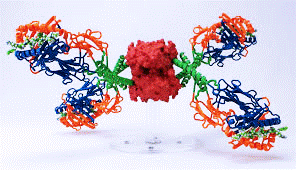
MHC-Peptide Tetramers: Powerful Tools for T Cell Research
MHC-peptide tetramers consist of four MHC molecules each loaded with a specific peptide antigen, conjugated to fluorochromes like BV421, PE, or APC for detecting antigen-specific T cells. Developed in 1996 by Stanford University School of Medicine researchers, these tools revolutionized T cell analysis via flow cytometry. They enable precise identification, quantification, and monitoring of T cell responses in immunology, vaccines, cancer, and more.