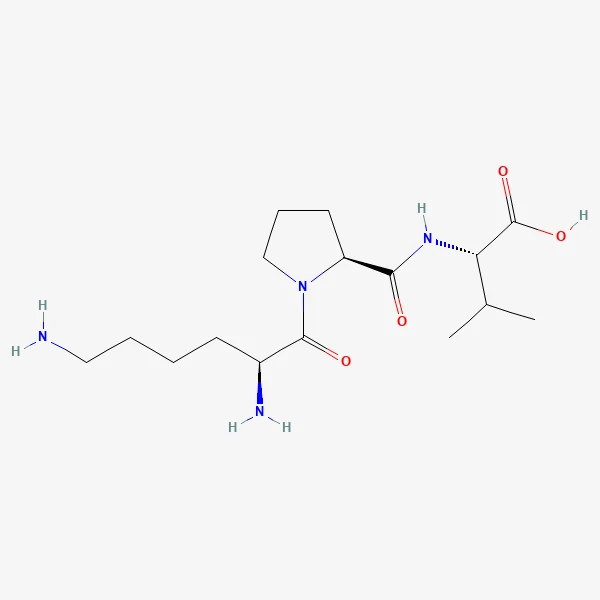
KPV in brief
KPV is the linear tripeptide Lys-Pro-Val (C16H30N4O4, average mass 342.43), residues 11 to 13 of alpha-melanocyte-stimulating hormone, with no modification and none of the His-Phe-Arg-Trp sequence that melanocortin receptors recognise. Its best-supported molecular property is transport: it is a substrate of the oligopeptide transporter PepT1, and in a mouse genetic test the measured effect disappeared when PepT1 was deleted. The evidence base is mostly cell lines, chemically induced rodent models and delivery chemistry in which KPV is the cargo. Whether it engages any melanocortin receptor is contested, and no binding constant has been measured. No experimental 3D structure exists, no medicines regulator has approved it, and the FDA states it has identified no human exposure data for the substance by any route.[1,2,3,4,5,6,7]
KPV regulatory status
No marketing authorisation for KPV was found in Drugs@FDA (queried through openFDA), the EMA medicines database or the Health Canada Drug Product Database, and ClinicalTrials.gov returned no registered study with KPV as an intervention (all searched November 2026). KPV is not named on the 2026 WADA Prohibited List, whose class S0 prohibits at all times any pharmacological substance not addressed elsewhere on the List and with no current approval for human therapeutic use. The FDA's compounding safety-risk page lists KPV among bulk substances previously in category 2 whose nominations were withdrawn by the nominators, stating that the agency has not identified any human exposure data for KPV by any route and lacks important information on whether it would cause harm in humans (page current as of 22 April 2026).[8,9,10,11,12,7]
KPV at a glance
- A three-residue peptide, Lys-Pro-Val, formula C16H30N4O4 and average mass 342.43. All three residues are L and the chain is linear, with no disulfide, no lipid, no sugar and no metal.[1]
- It is the C-terminal three residues of alpha-melanocyte-stimulating hormone, which pro-opiomelanocortin encodes at residues 138 to 150. The same stretch is positions 11 to 13 of corticotropin, which is why one molecule carries both names.[2,1]
- It carries none of the His-Phe-Arg-Trp message sequence that melanocortin receptors recognise, and the receptor-pharmacology work read here reports effects that survive a melanocortin MC3/MC4 antagonist and a non-functional MC1 receptor.[5,13,6]
- The best-supported molecular claim about it is a transport claim rather than a receptor claim: it is a substrate of the oligopeptide transporter PepT1, and in a mouse genetic test the measured effect disappeared when PepT1 was deleted.[3,4]
- It is not stable in plain aqueous solution: in the one study that tested the point directly, KPV in solution lost measurable activity within two hours at 37 degrees Celsius while the same material held in a hydrogel did not. That is why much of the recent corpus is delivery chemistry rather than work on the free peptide.[14]
What is KPV?
KPV is what remains of a hormone when all but its last three residues are removed. Alpha-melanocyte-stimulating hormone is a thirteen-residue peptide, Ser-Tyr-Ser-Met-Glu-His-Phe-Arg-Trp-Gly-Lys-Pro-Val, cut out of pro-opiomelanocortin at residues 138 to 150 and released with its first serine acetylated and its last valine amidated. Positions 11, 12 and 13 of that sequence are Lys-Pro-Val. Corticotropin begins with the same thirteen residues, so Lys-Pro-Val is positions 11 to 13 of that hormone as well, and the literature calls the tripeptide alpha-MSH (11-13) and ACTH (11-13) interchangeably, and both mean this molecule.[2,1]
It entered the literature in 1989, when Hiltz and Lipton reported that graded amounts of alpha-MSH (11-13) changed picryl-chloride-induced ear swelling in mice in a dose-related way, following earlier work that had located the antipyretic message of the hormone in the same three residues. The interest in the fragment from that point on was chemical: the full hormone darkens pigment, a three-residue piece that has lost the receptor-binding tetrapeptide cannot, and the reviews that followed describe KPV as a fragment studied for what remains once the pharmacophore is removed.[15,6,16]
What the primary studies measure is inflammatory readouts, and saying so plainly places the compound better than its chemistry does. Across the works read here the endpoints are leukocyte accumulation in the mouse peritoneal cavity, NF-kappaB reporter activity and cytokine release in human intestinal, bronchial and T-cell lines, and tissue damage, cytokine and tumour counts in chemically induced rodent colitis and colitis-associated cancer models. A smaller set of papers measured microbial growth, and a larger recent set measured a gel or a particle carrying KPV rather than the peptide itself. Every one of those is a measurement in a named cell line or animal model, and none of them is a finding about a person.[5,3,13,4,17,14]
As a class it is a short linear peptide of three proteinogenic residues with both termini free, which is a different kind of object from the hormone it comes from. It is small enough to be a substrate for the intestinal di- and tripeptide transporter PepT1, which is the property most of the recent work turns on. It is also unstable enough in plain solution that several groups have built gels and films to hold it and have measured the difference, so the material and its behaviour in a vial are not the same question as its sequence.[3,14,18,19,1]
The names it is confused with matter more than usual here, because the three letters are a sequence rather than a code. PubChem resolves the bare string KPV to 2-oxo-5-phenylpentanoic acid, an unrelated molecule with no amino acids in it, so a lookup that trusts the abbreviation returns the wrong formula. KdPT, KP-D-V, GKPV and the disulfide-linked dimer [Ac-CKPV]2 are separate molecules appearing in the same papers, and the structured list above keeps them apart.[20,1,21,22,23,16]
Not to be confused with
- alpha-melanocyte-stimulating hormone (alpha-MSH) itself
- The hormone is thirteen residues, Ser-Tyr-Ser-Met-Glu-His-Phe-Arg-Trp-Gly-Lys-Pro-Val, encoded inside pro-opiomelanocortin at residues 138 to 150. KPV is its last three residues read out as a separate molecule, which is roughly one fifth of the hormone's mass.[2,1]
- The Lys-Pro-Val segment as it exists inside alpha-MSH
- This is the identity point most often skipped. In the mature hormone the UniProt record annotates Ser138 as N-acetylserine and Val150 as a valine amide, so the hormone's C-terminus is -Lys-Pro-Val-NH2. The free tripeptide sold as KPV carries a free alpha-amino group on lysine and a free carboxylate on valine. The chain of three residues is the same; the two ends are not, and both ends are charged groups.[2,1]
- The melanocortin core pharmacophore His-Phe-Arg-Trp (alpha-MSH 6 to 9)
- That tetrapeptide is the message sequence melanocortin receptors read. KPV contains no histidine, no phenylalanine, no arginine and no tryptophan, so it carries none of it, which is the stated basis for treating KPV as a molecule that cannot engage a melanocortin receptor in the ordinary agonist sense.[6,5,2]
- KdPT (Lys-D-Pro-Thr)
- A separate tripeptide corresponding to residues 193 to 195 of interleukin-1 beta. It differs from KPV at two positions at once: threonine replaces valine and the proline is the D enantiomer. Findings about KdPT are findings about KdPT.[16,38,39]
- KP-D-V (Lys-D-Pro-Val)
- The D-proline diastereomer of KPV, used alongside it in keratinocyte signalling work. Same formula and same mass; a different molecule.[21]
- GKPV (alpha-MSH 10 to 13)
- A tetrapeptide with an extra N-terminal glycine. The experiment that tested whether a surface-tethered peptide could still act used GKPV and not KPV, so its conclusion is about the four-residue sequence.[23]
- [Ac-CKPV]2, also written (CKPV)2
- A designed dimer in which two Ac-Cys-Lys-Pro-Val units are joined through a cysteine-cysteine linkage. It is twice the chain with an acetyl cap and a disulfide, and it is the molecule the only published three-dimensional structural study examined, so that structure is not a structure of KPV.[22,40]
- Ac-YKPVD-CHO (PDB entry 7RNE, polymer entity 3)
- A synthetic pentapeptide aldehyde that happens to contain the letters KPV, deposited with an acetyl cap and a C-terminal aspartyl aldehyde. A sequence-motif search for the three letters KPV returns it, and it is the only short PDB polymer entity that matches. It is a protease inhibitor construct and not this compound.[24]
- 2-oxo-5-phenylpentanoic acid (PubChem CID 13294447)
- Asking PubChem to resolve the bare name KPV returns this small molecule, which has no amino acids in it at all. The tripeptide is CID 125672, reached by the name Lys-Pro-Val. A name-resolution step that trusts the three-letter abbreviation will silently fetch the wrong formula and the wrong mass.[20,1]
KPV structure and sequence
There is very little chain to describe. Lysine contributes a four-carbon side chain ending in a primary amine; proline contributes a pyrrolidine ring whose nitrogen is part of the backbone; valine contributes an isopropyl side chain and the free C-terminal carboxylate. Three chiral centres, one per residue, all (S) in the record's isomeric SMILES. The interesting feature is the middle residue: because proline's nitrogen is tied into a ring, the peptide bond preceding it has no amide hydrogen to donate and the backbone torsions around it are restricted, so a Lys-Pro-Val chain is conformationally poorer than three free residues would be. Near neutral pH there are charged groups at both ends and on the lysine side chain, a net charge near +1, and a single hydrophobic patch at the valine.[1]
The view on this page is a calculated conformer from the PubChem record for CID 125672, and the status line says so. No experiment placed those atoms. A three-residue peptide with two free termini and a proline hinge is a flexible object in water, so it should be read as a connectivity diagram drawn in three dimensions rather than as a determined shape: it shows the connectivity, the stereochemistry and the relative bulk of the three side chains, and nothing about which conformation the molecule adopts in solution, at a transporter, or at any protein surface.[1]
Nothing better is available. A Protein Data Bank motif search for KPV restricted to short polymer entities returns one hit, Ac-YKPVD-CHO in entry 7RNE, a synthetic pentapeptide aldehyde that contains the three letters and is not this compound. The nearest real structural work in the family is a proton NMR study of the designed dimer [Ac-CKPV]2, reporting an extended backbone with a beta-turn-like feature; that molecule has an acetyl cap, a cysteine at each N-terminus and a disulfide joining two chains, so its geometry is not transferable here.[24,22]
- Lys1
- Pro2
- Val3
Three chiral centres, one per residue, all L in the canonical molecule: the record's isomeric SMILES fixes lysine, proline and valine each as (S). The chain is linear and uncyclised. There is no cysteine and therefore no disulfide, no lipidation, no PEG, no glycosylation, no linker, no metal coordination and no non-proteinogenic residue. Charge is simple enough to count by hand: the lysine side-chain amine and the free N-terminal amine are protonated near neutral pH and the valine carboxylate is deprotonated, giving a net charge near +1. Proline in the middle position removes the only backbone amide hydrogen the three-residue chain would otherwise have there and restricts the backbone angles around it, which is the usual reason a proline-containing tripeptide has fewer accessible conformations than its residue count suggests.[1]
What studies on KPV show
Each card names the experimental system and what was measured. A result in one system is not evidence about another.
Receptor pharmacology, in vivo and macrophage assays · Mouse crystal-induced and interleukin-1 beta-induced peritonitis; mouse macrophages; recessive yellow (e/e) mice carrying a non-functional MC1 receptor
KPV reduced leukocyte accumulation, and that reduction was not blocked by the MC3 and MC4 antagonist SHU9119 and was still present in recessive yellow (e/e) mice, a strain whose MC1 receptor is non-functional. Unlike alpha-MSH and MTII, KPV did not inhibit macrophage KC and interleukin-1 beta release and did not raise cyclic AMP. The authors concluded KPV is unlikely to act through melanocortin receptors.[5]
- Material
- KPV, compared against alpha-MSH, the core melanocortin peptide His-Phe-Arg-Trp, MTII (a cyclic synthetic melanocortin analogue used here as an MC3 and MC4 receptor agonist) and the MC1-selective agonist MS05
- Measured
- Polymorphonuclear leukocyte accumulation in the peritoneal cavity; macrophage release of KC (a mouse chemokine that recruits neutrophils) and interleukin-1 beta; cyclic AMP accumulation in macrophages
- Compared with
- SHU9119, a melanocortin MC3 and MC4 receptor antagonist, and the core and MC1-selective melanocortin peptides
- Limitation
- A negative pharmacology result bounds what KPV does not need rather than identifying what it binds. No binding constant was measured, and the alternative the authors propose, interference with interleukin-1 beta function, was inferred from the model comparison rather than demonstrated on a purified target.
Getting SJ et al., 2003, Journal of Pharmacology and Experimental Therapeutics
Radiolabelled uptake, competition and reporter-gene assays · Human intestinal epithelial lines Caco2-BBE and HT29-Cl.19A, and the human T-cell line Jurkat, stimulated with pro-inflammatory cytokines
KPV was taken up by a route competed by a PepT1 substrate in both epithelial and immune cells, and at nanomolar assay concentrations it reduced NF-kappaB reporter activity and MAP kinase signalling in those cells.[3]
- Material
- KPV, with tritiated KPV for uptake kinetics and unlabelled KPV as a competitor against a radiolabelled PepT1 substrate
- Measured
- Uptake kinetics of tritiated KPV; NF-kappaB luciferase reporter activity; MAP kinase signalling by Western blot; cytokine transcript levels and secretion
- Compared with
- Unstimulated cells, and cells in which PepT1-mediated uptake was competed out
- Limitation
- Read as the published abstract only; the kinetic constants in the figures were not opened, because the full text is not in the open-access subset. Transport and the reporter readout were established in the same cells but the link between them is an inference from the two results sitting together.
Dalmasso G et al., 2008, Gastroenterology
Mouse genetic test with a chemically induced tumour model · Mice overexpressing human PepT1 in intestinal epithelium, PepT1 knockout mice and wild-type littermates; separately APC(Min/+) mice; and human colonic biopsy specimens for PepT1 expression
KPV reduced tumour number and malignant epithelial proliferation in wild-type mice and produced none of those changes in PepT1 knockout mice. Deleting the transporter abolished the readout.[4]
- Material
- KPV given to the mice across the induction period alongside azoxymethane and two rounds of dextran sodium sulfate
- Measured
- Tumour number and size, intestinal inflammation, proliferating crypt cells; PepT1 transcript and protein levels in human biopsy specimens
- Compared with
- The same induction sequence without KPV, and critically the same KPV exposure in PepT1 knockout animals
- Limitation
- This is the strongest available evidence that the transporter is required for the measured effect, and it still does not identify a molecular target downstream of entry. It is a chemically induced mouse model and the paper makes no claim about a human course of disease. Full text read.
Viennois E et al., 2016, Cellular and Molecular Gastroenterology and Hepatology
Reporter-gene, imaging and competition assays · Immortalised human bronchial epithelial cells (16HBE14o-) stimulated with tumour necrosis factor alpha or respiratory syncytial virus
KPV entered the nucleus, was associated with IkappaB alpha stabilisation and reduced p65RelA nuclear translocation, and competition experiments indicated an interaction at the importin-alpha3 binding site on p65RelA. The gamma-MSH effect in the same cells required MC3R and the KPV effect did not.[25]
- Material
- KPV, compared with gamma-melanocyte-stimulating hormone as an MC3 receptor agonist
- Measured
- NF-kappaB reporter activity, matrix metalloproteinase-9 activity, interleukin-8 and eotaxin secretion, nuclear translocation of p65RelA (the transcription-activating subunit of NF-kappaB) tagged with yellow fluorescent protein, the stability of IkappaB alpha (the inhibitory protein that holds NF-kappaB out of the nucleus), and competition against the binding site for importin-alpha3 (one of the carrier proteins that take cargo through the nuclear pore) on p65RelA
- Compared with
- gamma-MSH, whose effect in the same cells required MC3R
- Limitation
- This is the only mechanistic proposal read here that names a molecular binding partner, and it rests on competition and imaging in one cell line rather than on a structure or a measured dissociation constant. The suggested blockade of specific armadillo repeats, the repeated helical units that form importin-alpha's cargo-binding groove, is explicitly framed as a possibility. Read as the published abstract only; the full text is not in the open-access subset.
Land SC, 2012, International Journal of Physiology, Pathophysiology and Pharmacology
Second-messenger assays in keratinocytes and a transfected cell line · HaCaT keratinocytes, normal human keratinocytes, and Chinese hamster ovary cells stably transfected with the MC1 receptor
Neither alpha-MSH nor KPV raised cyclic AMP in either keratinocyte preparation. Rapid intracellular calcium responses to alpha-MSH, KPV, KP-D-V and ACTH were seen in HaCaT cells only in the presence of PIA, and in MC1 receptor-transfected CHO cells alpha-MSH and the KPV peptides raised intracellular calcium.[21]
- Material
- KPV and KP-D-V, compared with alpha-MSH and corticotropin peptides
- Measured
- Cyclic AMP accumulation and intracellular calcium
- Compared with
- alpha-MSH, ACTH and ACTH 1-17 in the same cells, with and without PIA (N6-phenylisopropyladenosine), an adenosine receptor agonist
- Limitation
- The calcium response in the keratinocytes required a co-treatment that suppresses the cyclic AMP pathway, which makes the condition part of the finding. The transfected-cell result places a KPV-associated calcium response in cells carrying MC1R without establishing that KPV binds MC1R, and it sits against the pharmacology in R06 rather than agreeing with it.
Elliott RJ et al., 2004, Journal of Investigative Dermatology
Reporter-gene assay with a surface-immobilised peptide. The construct is GKPV, not KPV, so this card is not a KPV result · HBL cells stably transfected with an NF-kappaB luciferase reporter, stimulated with tumour necrosis factor alpha
Beads carrying immobilised GKPV reduced reporter activity relative to peptide-free beads under one of the two growth conditions tested, while soluble alpha-MSH and GKPV reduced it as expected. The authors read the tethered result as evidence for action at a cell-surface site.[23]
- Material
- GKPV (alpha-MSH 10 to 13) tethered to polystyrene beads through a polyethylene glycol spacer, alongside the same peptide in solution
- Measured
- NF-kappaB luciferase activity
- Compared with
- Beads carrying no peptide, and soluble alpha-MSH and GKPV
- Limitation
- The construct is the four-residue GKPV, not KPV, and the immobilisation result held in one of two conditions. A tethered peptide that cannot enter a cell also cannot be fully ruled out as having released material, and the study identifies no surface protein.
Kelly JM et al., 2006, Peptides
Microbial growth and viability assays · Staphylococcus aureus colony formation and Candida albicans viability and germ tube formation; separately, killing of both organisms by human neutrophils
Both peptides reduced S. aureus colony formation and reduced C. albicans viability and germ tube formation across a broad range of assay concentrations, cyclic AMP rose in peptide-treated yeast, and dideoxyadenosine partly reversed the killing. Neutrophil killing was not reduced by the peptides.[17]
- Material
- KPV, alongside the full alpha-MSH peptide
- Measured
- Colony formation, yeast viability and germ tube formation, cellular cyclic AMP in the treated yeast, and neutrophil killing
- Compared with
- Untreated cultures; the adenylyl cyclase inhibitor dideoxyadenosine as a mechanistic probe
- Limitation
- The organisms are two laboratory strains and the proposed cyclic AMP route in the yeast is supported by one inhibitor. The PubMed record carries a later published comment with an author reply, which was not read, so the point in dispute is not stated here.
Cutuli M et al., 2000, Journal of Leukocyte Biology
Formulation chemistry and rheology, with a rat colitis readout · Cysteamine-grafted gamma-polyglutamic acid hydrogels; rats with trinitrobenzene sulfonic acid-induced colitis
KPV in plain solution lost measurable activity over two hours at 37 degrees Celsius, and the same material held in the hydrogel did not; the gel formed without a cross-linker and was unaffected by the presence of KPV.[14]
- Material
- KPV in solution compared with KPV held in the self-cross-linked hydrogel
- Measured
- Thiol grafting, elastic and viscous moduli across 0.01 to 10 Hz, release profile, retention of KPV activity after two hours at 37 degrees Celsius, and colonic myeloperoxidase and cytokine levels
- Compared with
- KPV solution, and hydrogel without KPV
- Limitation
- The stability loss is reported through retained activity rather than through a chemical identification of what the peptide degraded into, so the degradation pathway is not established. The animal readout is a chemically induced rat model.
Sun J et al., 2021, ACS Biomaterials Science and Engineering
Why KPV is studied as a transported peptide rather than as a receptor ligand
The sequence argument comes first and it is arithmetic on the hormone. Melanocortin receptors read the His-Phe-Arg-Trp tetrapeptide at positions 6 to 9 of alpha-MSH. KPV is positions 11 to 13 and contains no part of it, so on sequence alone there is no reason to expect it to act as a melanocortin agonist. The pharmacology is consistent with that: in a mouse peritonitis comparison the KPV effect survived an MC3/MC4 antagonist and persisted in animals with a non-functional MC1 receptor, and KPV did not raise cyclic AMP in macrophages where the core peptides did. A colitis study reported the same persistence in MC1R-deficient mice.[6,5,13,2]
What takes the receptor's place is a transporter. PepT1 carries di- and tripeptides across intestinal epithelium, and KPV is the right size to be a substrate. Uptake of tritiated KPV in human intestinal epithelial and T-cell lines was competed by a PepT1 substrate, a fluorescent conjugate built on KPV has been used to report PepT1 expression, and most of the delivery chemistry since has been designed around that transporter rather than around a receptor. The decisive test is genetic: in PepT1 knockout mice the changes seen in wild-type animals did not occur. That establishes that entry through this transporter is required for the readout in that model. It does not identify what the peptide engages once inside.[3,4,26,27]
One study proposes a named intracellular partner. NF-kappaB sits in the cytoplasm held by an inhibitory protein, IkappaB alpha; when that inhibitor is degraded, the transcription-activating subunit p65RelA is carried through the nuclear pore by a carrier protein, importin-alpha3, and switches genes on. In human bronchial epithelial cells KPV was found in the nucleus, was associated with stabilised IkappaB alpha and reduced nuclear translocation of tagged p65RelA, and competition experiments pointed at the importin-alpha3 binding site on p65RelA, with the authors suggesting interference with specific armadillo repeats, the repeated helical units making up that carrier's cargo-binding groove. That is the most structurally specific hypothesis available for this molecule, and it remains a hypothesis: there is no structure of KPV bound to importin-alpha or to p65RelA, and no dissociation constant. Reduced NF-kappaB activity is the one readout that recurs across cell types, reported since 2000 and attributed in the earlier work to preservation of IkappaB alpha, but the molecular event behind it has one candidate and no structural confirmation.[25,3,28,29,30]

What is still unknown about KPV
Whether KPV engages a melanocortin receptor at all is genuinely contested in the works read, and the disagreement is not a matter of emphasis. A 2003 review from the Muenster group states that the C-terminal tripeptide was able to bind MC1R, and a 2004 study found calcium responses to KPV in MC1 receptor-transfected CHO cells. Against that, a 2003 pharmacology paper reported the KPV effect insensitive to an MC3/MC4 antagonist and intact in mice with a non-functional MC1 receptor, a 2008 colitis study reported the same insensitivity in MC1R-deficient animals, and a 2010 review from the same Muenster group states flatly that KPV lacks the entire sequence motif required to bind any known melanocortin receptor. No measured binding constant at any melanocortin receptor was located in any of them, which is why the question is open: it is being argued from sequence and from models rather than settled by a measurement.[31,21,5,13,6]
The structural gap is total. There is no deposited experimental structure of the free tripeptide, no structure of it bound to PepT1, and no structure of it bound to importin-alpha or to p65RelA. The only three-dimensional structural work in the family is NMR on the designed dimer [Ac-CKPV]2, whose acetyl caps and disulfide make it a different molecule. Everything shown on this page in three dimensions is calculated.[24,22,1]
The shape of the corpus is a limit, and so is the access. Most of what has been published since the transporter work is delivery chemistry (nanoparticles, hydrogels, films, a fluorescent conjugate) in which KPV is a cargo or a targeting group and the thing measured is the vehicle; the papers studying the free peptide tend to report one organism-level endpoint in one named system without replication, a rabbit cornea in 2006 and mouse preadipocytes in 2026 among them, and a 2025 tripeptide review confirms the pattern rather than resolving it. Nothing read here has followed the 2012 importin proposal with a target identification. Separately, the two papers carrying the key mechanistic numbers, the PepT1 uptake kinetics and the importin competition, sit outside the PubMed Central open-access subset, so those constants and curves were not opened: one full text was read in full and the rest is abstract-level reading.[32,33,26,34,35,36,37,3,25,4]
There is no human safety data, and that is a documented absence rather than an inference from silence. ClinicalTrials.gov returns no registered study with KPV as an intervention, and the FDA's compounding safety-risk page records that the agency identified no human exposure data for KPV by any route and lacks important information on whether the substance would cause harm in humans. No toxicology study in any species appears among the works read here, so the organism-level findings on this page are the inflammatory and tumour endpoints the papers set out to measure and carry no statement about tolerability.[11,7]
The chemistry of the material is also a live question separate from the chemistry of the molecule. KPV in plain aqueous solution lost measurable activity within two hours at 37 degrees Celsius in the one study that tested it directly, which is why several later papers hold it in a gel or a particle, and no work read here identifies the degradation products. The salt form is not resolvable from a label reading only KPV: the synonym list carries both free-acid and acetate-salt spellings, and a counterion changes the mass of a weighed powder without changing the peptide.[14,1]
Key papers on KPV
- Critical role of PepT1 in promoting colitis-associated cancer and therapeutic benefits of the anti-inflammatory PepT1-mediated tripeptide KPV in a murine model
Viennois E, Ingersoll SA, Ayyadurai S, Zhao Y, Wang L, Zhang M, Han MK, Garg P, Xiao B, Merlin D (2016), Cellular and Molecular Gastroenterology and Hepatology · Mouse genetic test with a chemically induced tumour model
The one genetic test in this literature, and the only full text read here: deleting PepT1 abolished the measured effect, which is the strongest available statement about how the peptide has to reach a cell.
- Dissection of the anti-inflammatory effect of the core and C-terminal (KPV) alpha-melanocyte-stimulating hormone peptides
Getting SJ, Schioth HB, Perretti M (2003), Journal of Pharmacology and Experimental Therapeutics · Receptor pharmacology
The careful dissection of what KPV does not need, run against the core melanocortin peptides, a receptor antagonist and an MC1R-deficient strain in one study.
- PepT1-mediated tripeptide KPV uptake reduces intestinal inflammation
Dalmasso G, Charrier-Hisamuddin L, Nguyen HT, Yan Y, Sitaraman S, Merlin D (2008), Gastroenterology · Radiolabelled uptake and reporter assays
The paper that identified KPV as a PepT1 substrate and set the direction of everything written about it since.
- Inhibition of cellular and systemic inflammation cues in human bronchial epithelial cells by melanocortin-related peptides: mechanism of KPV action and a role for MC3R agonists
Land SC (2012), International Journal of Physiology, Pathophysiology and Pharmacology · Reporter-gene, imaging and competition assays
The only work read that names a candidate intracellular binding partner, the importin-alpha3 site on p65RelA, and is worth reading for how far short of a structure that evidence falls.
- Antiinflammatory activity of a COOH-terminal fragment of the neuropeptide alpha-MSH
Hiltz ME, Lipton JM (1989), FASEB Journal · Primary study, mouse
The 1989 report that made the fragment a subject in its own right, and the origin of the claim that the hormone's message sits in its last three residues.
- Terminal signal: anti-inflammatory effects of alpha-melanocyte-stimulating hormone related peptides beyond the pharmacophore
Brzoska T, Bohm M, Lugering A, Loser K, Luger TA (2010), Advances in Experimental Medicine and Biology · Review
The review that states the sequence argument most plainly: the tripeptide lacks the entire motif required to bind any known melanocortin receptor. Read it beside R07, which says the opposite.
- Three-dimensional structure of the alpha-MSH-derived candidacidal peptide [Ac-CKPV]2
Catania A, Grieco P, Randazzo A, Novellino E, Gatti S, Rossi C, Colombo G, Lipton JM (2005), Journal of Peptide Research · Proton NMR with restrained mechanics and dynamics
The only three-dimensional structural study in the family, and a precise illustration of why it is not a structure of KPV.
- Msh (11-13) (Lys-Pro-Val), Compound Summary for CID 125672
PubChem, PubChem, National Center for Biotechnology Information · Database record
The compound record carrying the formula, the masses, the stereochemistry and the calculated conformer shown here. Reach it by the name Lys-Pro-Val, never by the abbreviation.
References
- 1.PubChem. Msh (11-13) (Lys-Pro-Val), Compound Summary for CID 125672. PubChem, National Center for Biotechnology Information. source · database record
- 2.UniProt Consortium. P01189, Pro-opiomelanocortin (POMC), Homo sapiens. UniProtKB. source · database record
- 3.Dalmasso G, Charrier-Hisamuddin L, Nguyen HT, Yan Y, Sitaraman S, Merlin D. (2008). PepT1-mediated tripeptide KPV uptake reduces intestinal inflammation. Gastroenterology. 134:166-178. doi:10.1053/j.gastro.2007.10.026 · abstract only
- 4.Viennois E, Ingersoll SA, Ayyadurai S, Zhao Y, Wang L, Zhang M, Han MK, Garg P, Xiao B, Merlin D. (2016). Critical role of PepT1 in promoting colitis-associated cancer and therapeutic benefits of the anti-inflammatory PepT1-mediated tripeptide KPV in a murine model. Cellular and Molecular Gastroenterology and Hepatology. 2:340-357. doi:10.1016/j.jcmgh.2016.01.006 · full text read
- 5.Getting SJ, Schioth HB, Perretti M. (2003). Dissection of the anti-inflammatory effect of the core and C-terminal (KPV) alpha-melanocyte-stimulating hormone peptides. Journal of Pharmacology and Experimental Therapeutics. 306:631-637. doi:10.1124/jpet.103.051623 · abstract only
- 6.Brzoska T, Bohm M, Lugering A, Loser K, Luger TA. (2010). Terminal signal: anti-inflammatory effects of alpha-melanocyte-stimulating hormone related peptides beyond the pharmacophore. Advances in Experimental Medicine and Biology. 681:107-116. doi:10.1007/978-1-4419-6354-3_8 · abstract only
- 7.U.S. Food and Drug Administration. (2026). Certain Bulk Drug Substances for Use in Compounding that May Present Significant Safety Risks (content current as of 22 April 2026). U.S. Food and Drug Administration, Human Drug Compounding. source · full text read
- 8.U.S. Food and Drug Administration. (2026). Drugs@FDA (openFDA drugsfda endpoint): approved-product active ingredient search for KPV or lysyl-prolyl-valine, no matches. Drugs@FDA. source · database record
- 9.European Medicines Agency. (2026). Medicines output: European public assessment reports for human and veterinary medicines (full list, JSON report). European Medicines Agency medicines database. source · database record
- 10.Health Canada. (2026). Drug Product Database: active ingredient search for KPV, no records. Health Canada Drug Product Database. source · database record
- 11.U.S. National Library of Medicine. (2026). ClinicalTrials.gov study search by intervention for KPV, no records. ClinicalTrials.gov. source · database record
- 12.World Anti-Doping Agency. (2026). The 2026 Prohibited List: International Standard. World Anti-Doping Agency. source · full text read
- 13.Kannengiesser K, Maaser C, Heidemann J, Luegering A, Ross M, Brzoska T, Bohm M, Luger TA, Domschke W, Kucharzik T. (2008). Melanocortin-derived tripeptide KPV has anti-inflammatory potential in murine models of inflammatory bowel disease. Inflammatory Bowel Diseases. 14:324-331. doi:10.1002/ibd.20334 · abstract only
- 14.Sun J, Xue P, Liu J, Huang L, Lin G, Ran K, Yang J, Lu C, Zhao YZ, Xu HL. (2021). Self-Cross-Linked Hydrogel of Cysteamine-Grafted gamma-Polyglutamic Acid Stabilized Tripeptide KPV for Alleviating TNBS-Induced Ulcerative Colitis in Rats. ACS Biomaterials Science and Engineering. 7:4859-4869. doi:10.1021/acsbiomaterials.1c00792 · abstract only
- 15.Hiltz ME, Lipton JM. (1989). Antiinflammatory activity of a COOH-terminal fragment of the neuropeptide alpha-MSH. FASEB Journal. 3:2282-2284. PMID 2550304 · abstract only
- 16.Brzoska T, Luger TA, Maaser C, Abels C, Bohm M. (2008). Alpha-melanocyte-stimulating hormone and related tripeptides: biochemistry, antiinflammatory and protective effects in vitro and in vivo, and future perspectives for the treatment of immune-mediated inflammatory diseases. Endocrine Reviews. 29:581-602. doi:10.1210/er.2007-0027 · abstract only
- 17.Cutuli M, Cristiani S, Lipton JM, Catania A. (2000). Antimicrobial effects of alpha-MSH peptides. Journal of Leukocyte Biology. 67:233-239. doi:10.1002/jlb.67.2.233 · abstract only
- 18.Shao W, Chen R, Lin G, Ran K, Zhang Y, Yang J, Pan H, Shangguan J, Zhao Y, Xu H. (2021). In situ mucoadhesive hydrogel capturing tripeptide KPV: the anti-inflammatory, antibacterial and repairing effect on chemotherapy-induced oral mucositis. Biomaterials Science. 10:227-242. doi:10.1039/d1bm01466h · abstract only
- 19.Zhao Y, Huang L, Lin G, Tong M, Xie Y, Pan H, Shangguan J, Yao Q, Xu S, Xu H. (2022). Skin-adaptive film dressing with smart-release of growth factors accelerated diabetic wound healing. International Journal of Biological Macromolecules. 222:2729-2743. doi:10.1016/j.ijbiomac.2022.10.054 · abstract only
- 20.PubChem. 5-Phenyl-2-keto-valeric acid (2-oxo-5-phenylpentanoic acid), Compound Summary for CID 13294447. PubChem, National Center for Biotechnology Information. source · database record
- 21.Elliott RJ, Szabo M, Wagner MJ, Kemp EH, MacNeil S, Haycock JW. (2004). alpha-Melanocyte-stimulating hormone, MSH 11-13 KPV and adrenocorticotropic hormone signalling in human keratinocyte cells. Journal of Investigative Dermatology. 122:1010-1019. doi:10.1111/j.0022-202X.2004.22404.x · abstract only
- 22.Catania A, Grieco P, Randazzo A, Novellino E, Gatti S, Rossi C, Colombo G, Lipton JM. (2005). Three-dimensional structure of the alpha-MSH-derived candidacidal peptide [Ac-CKPV]2. Journal of Peptide Research. 66:19-26. doi:10.1111/j.1399-3011.2005.00265.x · abstract only
- 23.Kelly JM, Moir AJ, Carlson K, Yang Y, MacNeil S, Haycock JW. (2006). Immobilized alpha-melanocyte stimulating hormone 10-13 (GKPV) inhibits tumor necrosis factor-alpha stimulated NF-kappaB activity. Peptides. 27:431-437. doi:10.1016/j.peptides.2005.03.062 · abstract only
- 24.RCSB Protein Data Bank. Polymer entity 7RNE_3, Ac-YKPVD-CHO. RCSB PDB. source · database record
- 25.Land SC. (2012). Inhibition of cellular and systemic inflammation cues in human bronchial epithelial cells by melanocortin-related peptides: mechanism of KPV action and a role for MC3R agonists. International Journal of Physiology, Pathophysiology and Pharmacology. 4:59-73. PMID 22837805 · abstract only
- 26.Zeng M, Shao A, Li H, Tang Y, Li Q, Guo Z, Wu C, Cheng Y, Tian H, Zhu WH. (2017). Peptide Receptor-Targeted Fluorescent Probe: Visualization and Discrimination between Chronic and Acute Ulcerative Colitis. ACS Applied Materials and Interfaces. 9:13029-13036. doi:10.1021/acsami.7b00936 · abstract only
- 27.Wu Y, Sun M, Wang D, Li G, Huang J, Tan S, Bao L, Li Q, Li G, Si L. (2019). A PepT1 mediated medicinal nano-system for targeted delivery of cyclosporine A to alleviate acute severe ulcerative colitis. Biomaterials Science. 7:4299-4309. doi:10.1039/c9bm00925f · abstract only
- 28.Barcellini W, Colombo G, La Maestra L, Clerici G, Garofalo L, Brini AT, Lipton JM, Catania A. (2000). Alpha-melanocyte-stimulating hormone peptides inhibit HIV-1 expression in chronically infected promonocytic U1 cells and in acutely infected monocytes. Journal of Leukocyte Biology. 68:693-699. PMID 11073109 · abstract only
- 29.Ichiyama T, Sato S, Okada K, Catania A, Lipton JM. (2000). The neuroimmunomodulatory peptide alpha-MSH. Annals of the New York Academy of Sciences. 917:221-226. doi:10.1111/j.1749-6632.2000.tb05386.x · abstract only
- 30.Catania A, Cutuli M, Garofalo L, Carlin A, Airaghi L, Barcellini W, Lipton JM. (2000). The neuropeptide alpha-MSH in host defense. Annals of the New York Academy of Sciences. 917:227-231. doi:10.1111/j.1749-6632.2000.tb05387.x · abstract only
- 31.Luger TA, Scholzen TE, Brzoska T, Bohm M. (2003). New insights into the functions of alpha-MSH and related peptides in the immune system. Annals of the New York Academy of Sciences. 994:133-140. doi:10.1111/j.1749-6632.2003.tb03172.x · abstract only
- 32.Laroui H, Dalmasso G, Nguyen HT, Yan Y, Sitaraman SV, Merlin D. (2010). Drug-loaded nanoparticles targeted to the colon with polysaccharide hydrogel reduce colitis in a mouse model. Gastroenterology. 138:843-853. doi:10.1053/j.gastro.2009.11.003 · abstract only
- 33.Xiao B, Xu Z, Viennois E, Zhang Y, Zhang Z, Zhang M, Han MK, Kang Y, Merlin D. (2017). Orally Targeted Delivery of Tripeptide KPV via Hyaluronic Acid-Functionalized Nanoparticles Efficiently Alleviates Ulcerative Colitis. Molecular Therapy. 25:1628-1640. doi:10.1016/j.ymthe.2016.11.020 · abstract only
- 34.Bonfiglio V, Camillieri G, Avitabile T, Leggio GM, Drago F. (2006). Effects of the COOH-terminal tripeptide alpha-MSH(11-13) on corneal epithelial wound healing: role of nitric oxide. Experimental Eye Research. 83:1366-1372. doi:10.1016/j.exer.2006.07.014 · abstract only
- 35.An SH, Park JY, Lee SJ. (2026). KPV attenuates adipogenesis and lipid metabolism through modulation of ROS-mediated AKT/mTORC1/PPARgamma signaling. Tissue & Cell. 104:103837. doi:10.1016/j.tice.2026.103837 · abstract only
- 36.Can VC, Locke IC, Kaneva MK, Kerrigan MJP, Merlino F, De Pascale C, Grieco P, Getting SJ. (2020). Novel anti-inflammatory and chondroprotective effects of the human melanocortin MC1 receptor agonist BMS-470539 dihydrochloride and human melanocortin MC3 receptor agonist PG-990 on lipopolysaccharide activated chondrocytes. European Journal of Pharmacology. 872:172971. doi:10.1016/j.ejphar.2020.172971 · abstract only
- 37.Adnan SB, Maarof M, Fauzi MB, Fadilah NIM. (2025). Exploring the Role of Tripeptides in Wound Healing and Skin Regeneration: A Comprehensive Review. International Journal of Medical Sciences. 22:4175-4200. doi:10.7150/ijms.118118 · abstract only
- 38.Bohm M, Luger T. (2019). Are melanocortin peptides future therapeutics for cutaneous wound healing?. Experimental Dermatology. 28:219-224. doi:10.1111/exd.13887 · abstract only
- 39.Luger TA, Brzoska T. (2007). alpha-MSH related peptides: a new class of anti-inflammatory and immunomodulating drugs. Annals of the Rheumatic Diseases. 66 Suppl 3:iii52-iii55. doi:10.1136/ard.2007.079780 · abstract only
- 40.Gatti S, Carlin A, Sordi A, Leonardi P, Colombo G, Fassati LR, Lipton JM, Catania A. (2006). Inhibitory effects of the peptide (CKPV)2 on endotoxin-induced host reactions. Journal of Surgical Research. 131:209-214. doi:10.1016/j.jss.2005.08.009 · abstract only
- 41.ChemSpider, Royal Society of Chemistry. L-Lysyl-L-prolyl-L-valine, C16H30N4O4, ChemSpider ID 111779. ChemSpider. source · database record
- 42.U.S. Environmental Protection Agency. (2026). CompTox Chemicals Dashboard: InChIKey-exact search returning DTXSID80987067 for YSPZCHGIWAQVKQ-AVGNSLFASA-N. CompTox Chemicals Dashboard. source · database record
