BPC-157 in brief
BPC-157 is a synthetic, unmodified linear peptide of 15 amino acids (GEPPPGKPADDAGLV, C62H98N16O22, 1419.5 g/mol), named in 1993 after a 40 kDa gastric-juice protein whose own sequence has never been published. It entered an inflammatory bowel disease programme under codes such as PL 14736, and no marketing authorisation for it was found at the FDA, the European Medicines Agency or Health Canada. The World Anti-Doping Agency names it in the 2026 Prohibited List under S0, non-approved substances, prohibited at all times, and the FDA carries it in the table of bulk drug substances nominated for compounding and then withdrawn, stating that compounded drugs containing it may pose a risk of immunogenicity, that the agency has identified no or only limited safety-related information, and that it therefore lacks sufficient information to know whether the drug would cause harm when administered to humans. No molecular target is known: the literature reports downstream signalling readouts, mostly from rodent and cell systems and many of them from one group. The human record is three uncontrolled pilot reports totalling 30 participants, every one of which a 2026 systematic review graded poor in methodological quality and very low in certainty of evidence. The intact peptide is cleared within 30 minutes in rats and dogs, and why reported readouts outlast that remains unexplained.[1,2,3,4,5,6,7,8,9,10,11]
BPC-157 regulatory status
BPC-157 is prohibited in sport by name. The World Anti-Doping Agency lists it in the 2026 Prohibited List under S0, non-approved substances, which is prohibited at all times, in and out of competition; S0 covers any pharmacological substance that no other section of the list addresses and that no governmental regulatory health authority currently approves for human therapeutic use, and every substance in the class is a Specified Substance. The FDA also carries BPC-157 by name, in the table headed bulk drug substances nominated but withdrawn on its published list of substances that may present significant safety risks (content current as of 22 April 2026); that table is of substances previously in category 2 of the agency's interim policies, whose nominations the nominators withdrew. The concerns the agency states there are its own: that compounded drugs containing BPC-157 may pose a risk of immunogenicity, that the substance may have complexities with regard to peptide-related impurities and characterisation of the active pharmaceutical ingredient, that the FDA has identified no or only limited safety-related information, and that it therefore lacks sufficient information to know whether the drug would cause harm when administered to humans. No marketing authorisation was found anywhere: Drugs@FDA, the European Medicines Agency medicines database and the Health Canada Drug Product Database were each searched in November 2026 and none returns an authorised product containing the peptide. ClinicalTrials.gov lists a phase 2 study in acute hamstring strain registered as recruiting in 2026, and a 2015 phase 1 safety and pharmacokinetics study whose status is given as unknown and for which no results have been posted; no phase 3 study is registered. One item in the literature cited on this page has been retracted, a rat electrolyte study whose PubMed record now carries the Retracted Publication type and whose title begins Withdrawn; no other cited reference carries a retraction, correction or expression of concern.[4,5,6,12,13,7,8,14]
BPC-157 at a glance
- Fifteen proteinogenic L residues in a linear chain, GEPPPGKPADDAGLV, with free termini and no modification of any kind: no acylation, no amidation, no disulfide, no sugar, no metal. C62H98N16O22, average mass 1419.5. The sequence has been printed independently of the originating laboratory, including by a doping-control laboratory that identified the peptide in market material and validated a urine method for it.[2,3,15]
- Named by name in two regulators' documents. The World Anti-Doping Agency 2026 Prohibited List carries BPC-157 in class S0, prohibited at all times; the FDA carries it in the withdrawn-nomination table of bulk substances that may present significant safety risks, citing possible immunogenicity, complexities with peptide-related impurities and characterisation of the active ingredient, and insufficient information to know whether the drug would cause harm when administered to humans. No marketing authorisation was found in the United States, the European Union or Canada.[7,8,4,5,6]
- No molecular target is known. Three decades of literature report downstream phosphorylation and expression readouts rather than a binding partner, and no published work reports a binding constant, a saturation curve or a co-structure.[16,17,10]
- The best-replicated molecular observation is endothelial. In isolated rat aorta the peptide relaxed endothelium-intact rings by 48.3 plus or minus 3.2 per cent at the top of a 0.1 to 100 microgram per millilitre series against 19.2 plus or minus 3.5 per cent in denuded rings, and inhibiting nitric oxide synthase cut relaxation from 37.6 to 10.0 per cent. In 2026 a different group reproduced the pattern in isolated human internal mammary artery rings, where maximal residual contraction was 42 per cent of the stimulated value with the endothelium intact and about 80 per cent without it.[17,18]
- Intact peptide has an elimination half-life under 30 minutes in rats and dogs and breaks down by ordinary amide-bond cleavage into short fragments and then free amino acids; two reviews name the gap between that and the duration of the reported readouts as the central unexplained feature.[11,19,20]
What is BPC-157?
BPC-157 is a short synthetic peptide that takes its name from a 1993 account of human gastric juice, published from the Department of Pharmacology at the Medical Faculty of the University of Zagreb by Sikirić and colleagues. That paper described a peptide of relative molecular mass 40,000, called BPC, and reported that a 15 amino acid stretch thought to carry its activity had been characterised separately and named BPC 157. The 15-residue sequence is now well established; the 40 kDa parent is not. No sequence, accession or database record for it was found, and the FDA substance register holds the pentadecapeptide as an entity in its own right rather than as a fragment of a named protein. The familiar description of BPC-157 as a gastric-juice fragment therefore rests on a single early report whose parent molecule has never been independently identified.[1,3]
Chemically it is one of the plainest molecules in this library: fifteen ordinary L amino acids and nothing else. Compare that with the lipidated incretin analogues, where a fatty-diacid arm and non-proteinogenic residues are the whole point of the design. The same sequence and mass have been printed in primary papers as well as in the reviews, so the written identity has been stable since the 1990s and is fully specified by the sequence alone.[2,3,21,22]
It carried several development codes before it became a loosely regulated research chemical. PL-10, PLD-116 and PL 14736 all name the same peptide, under which it entered an inflammatory bowel disease programme at Pliva in Croatia; Bepecin is the name it holds in the WHO drug dictionary. It has no marketing authorisation in the United States, the European Union or Canada. Two regulators name it explicitly and neither is neutral about it: the World Anti-Doping Agency places BPC-157 in class S0 of the 2026 Prohibited List, non-approved substances, prohibited at all times in and out of competition, and the FDA lists it among bulk drug substances that were nominated for use in compounding, then withdrawn, on its register of substances that may present significant safety risks, where the agency records possible immunogenicity, complexities with peptide-related impurities and characterisation of the active ingredient, and that it has too little safety information to know whether the substance would cause harm in people. A 2025 literature and patent review surveys the patent estate built around the peptide and describes the number of applications as modest to date.[23,21,3,24,7,8,4,5,6]
Material is made by chemical synthesis, and two groups have published recombinant routes instead: surface display and secretion from engineered Lactococcus lactis, with the peptide liberated from its fusion partner by trypsin, and chromosomally integrated fusion expression in Bacillus licheniformis. Both produce the sequence inside a larger construct, which is a production result rather than a statement about the free peptide.[25,26]
Not to be confused with
- BPC, the parent gastric-juice protein
- The 1993 overview that introduced the name describes a gastric-juice peptide of relative molecular mass 40,000, called BPC, and a 15-residue fragment of it designated BPC 157. The parent is identified in that account by mass alone: no sequence, no accession and no database entry for it could be found, and the FDA substance register holds the 15-residue peptide as an entity in its own right rather than as a fragment of any named protein. So BPC-157 is a defined molecule and BPC is not.[1,3]
- TB-500 and thymosin beta-4
- A different and longer peptide. The two are routinely listed together, co-formulated in blends and measured side by side on the same analytical panels, which is why they are confused; they share no sequence. The one human report cited in this literature used BPC-157 alone in some patients and with thymosin beta-4 in others, so even that small record cannot be read as describing either peptide on its own.[29,35]
- Mechano growth factor variant MGF R23H
- A separate peptide present in the same market material that a doping-control laboratory examined in 2017. The paper reports them together and establishes that they are distinct analytes with different plasma behaviour; the shared paper is a shared sample, not a shared chemistry.[15]
- A salt or arginate form
- Every identifier used here describes the free peptide with a free N-terminal amine and a free C-terminal carboxylate. A PubChem lookup for an arginate form returns no record, and the FDA register lists no salt. Material supplied as a salt would carry a different mass per unit weight, so a mass figure stated for the free peptide should not be applied to one.[2,3]
BPC-157 structure and sequence
The chain reads Gly1-Glu2-Pro3-Pro4-Pro5-Gly6-Lys7-Pro8-Ala9-Asp10-Asp11-Ala12-Gly13-Leu14-Val15. Four of the fifteen positions are proline, three of them consecutive at 3 to 5, which restricts the backbone locally and removes four amide hydrogens, leaving ten backbone NH groups. One glutamate at position 2, two adjacent aspartates at 10 and 11 and one lysine at position 7 are the only charged side chains, and the molecule is strongly polar: PubChem computes an XLogP of -9 and sixteen hydrogen-bond donors across 100 heavy atoms. No residue is aromatic and none is cysteine, so there is nothing to stack, nothing to oxidise to a disulfide and no chromophore at 280 nanometres, which matters for how the peptide is quantified. The FDA register records one subunit with no agent, physical or structural modification, and no salt form is registered or carried in PubChem, so the mass figures above describe the free peptide and should not be read across to a salt.[2,3]
There is no three-dimensional picture to show, and that is a fact about the molecule rather than a gap in the search. With 39 rotatable bonds, no disulfide and no cyclic constraint beyond the proline runs, a short linear peptide of this kind populates many conformations in solution, and no NMR or circular dichroism study of BPC-157 has been published. Two Fourier transform infrared studies do appear in this literature and are easy to misread: they record amide I, amide II and lipid bands from rat aortic TISSUE collected after administration, so they describe the protein secondary structure of a vessel wall, not the conformation of the peptide.[2,27,28]
Its chemical fate is unremarkable in the way a plain peptide's should be. A tritium-labelled study in rats and dogs found the intact peptide cleared with a half-life under 30 minutes, with urine and bile the main excretory routes, and the label distributed into short peptide fragments and then single amino acids entering ordinary amino acid metabolism. An isotope-labelling study in two in vitro incubation models assigned eight metabolites to conventional amide-bond cleavage plus one from a route the authors describe as novel. Stability is matrix-dependent: in a 54-analyte doping-control validation the peptide degraded completely in serum held at 4 or 22 degrees Celsius, while staying detectable in dried blood spots throughout.[11,19,29]
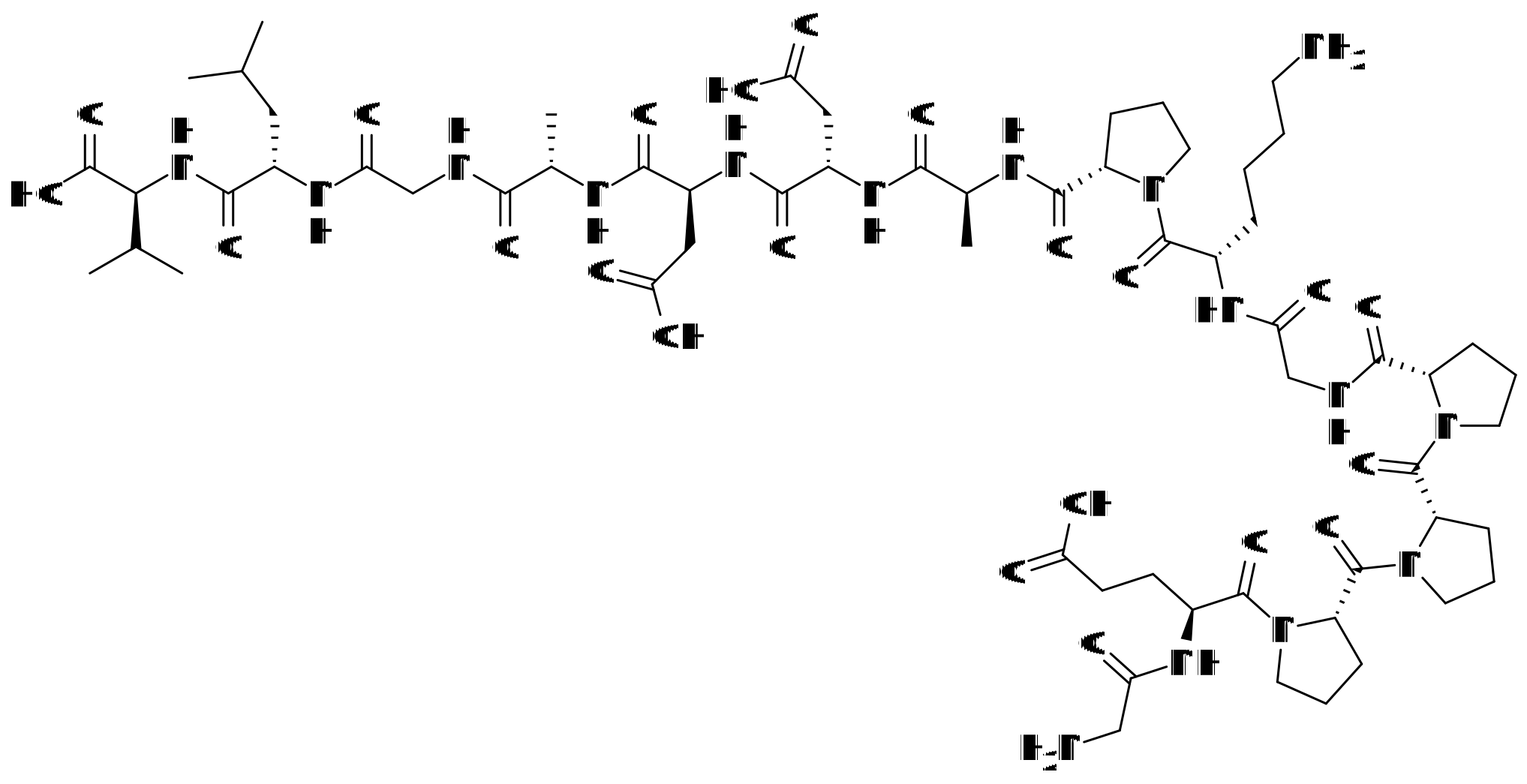
Every chiral residue is the L enantiomer and the three glycines, at positions 1, 6 and 13, are achiral, so there are twelve defined stereocentres and no D residue; PubChem reports twelve defined and no undefined atom stereocentres for CID 9941957. There is no cysteine, therefore no disulfide and no free thiol. The peptide is linear and uncyclised, with no lipidation, no PEG, no glycosylation and no metal coordination; the lysine at position 7 is the only basic side chain and its amine is free. Three consecutive prolines at positions 3 to 5, plus a fourth at position 8, constrain the backbone locally, which is why the molecule is often described as conformationally restricted even though no measured conformation has been published.[2,3]
What studies on BPC-157 show
Each card names the experimental system and what was measured. A result in one system is not evidence about another.
Endothelial cell culture with chick chorioallantoic membrane and rodent arms · Human vascular endothelial cells; chick chorioallantoic membrane; rat hind limb ischaemia
BPC 157 raised VEGFR2 mRNA and protein in human endothelial cells without raising VEGF-A, increased VEGFR2 internalisation, and activated the VEGFR2-Akt-eNOS phosphorylation cascade; dynasore abolished both the cascade and the tube-formation increase.[16]
- Material
- Synthetic BPC 157
- Measured
- VEGFR2 and VEGF-A transcript and protein, VEGFR2 internalisation, phosphorylation along the VEGFR2-Akt-eNOS axis, endothelial tube formation, vessel density, laser Doppler flow
- Compared with
- Untreated cultures, and dynasore as an endocytosis inhibitor
- Limitation
- The experiment did not establish that the peptide binds VEGFR2 or any other receptor. The dynasore result shows receptor trafficking is required for the readout, not that the peptide is the ligand, and no binding assay was reported. Read as abstract only.
Hsieh MJ et al., 2017, Journal of Molecular Medicine
Organ bath pharmacology with signalling readouts · Isolated rat aortic rings with and without endothelium; a three-dimensional vascular smooth muscle cell construct; endothelial cell culture
Relaxation of endothelium-intact rat aortic rings rose with concentration from 16.5 plus or minus 5.5 per cent at the bottom of the series to 48.3 plus or minus 3.2 per cent at the top, against 9.0 to 19.2 per cent in denuded rings. After a single top-of-series addition, relaxation of 37.6 plus or minus 5.7 per cent fell to 10.0 plus or minus 5.1 per cent with the nitric oxide synthase inhibitor L-NAME present and to 12.3 plus or minus 2.3 per cent with haemoglobin as a nitric oxide scavenger. A three-dimensional disc of vascular smooth muscle cells alone did not relax at either concentration tested while the nitric oxide donor sodium nitroprusside dilated it. Nitric oxide production in endothelial cells rose about 1.35-fold, phosphorylation of Src and caveolin-1 rose by 30 to 60 minutes and eNOS phosphorylation peaked at 30 minutes, all three reduced by the Src inhibitor SKI-1, and eNOS to caveolin-1 binding fell to roughly half of control.[17]
- Material
- Synthetic BPC 157
- Measured
- Vascular tone across a 0.1 to 100 microgram per millilitre cumulative series, intracellular nitric oxide by DAF-FM fluorescence, phosphorylation of Src, caveolin-1 and eNOS, caveolin-1 to eNOS binding by co-immunoprecipitation
- Compared with
- Endothelium-denuded rings, L-NAME, haemoglobin, a Src inhibitor
- Limitation
- The experiment did not establish what activates Src. It places the peptide's action upstream of Src in an ex vivo vessel and says nothing about a receptor, and the organ bath concentrations are far above any measured plasma concentration. Full text read.
Hsieh MJ et al., 2020, Scientific Reports
Organ bath pharmacology in human tissue · Surgical remnants of internal mammary artery from 12 of 14 consenting elective coronary bypass patients, all male; 11 endothelium-intact and 11 denuded rings analysed
Residual contraction in endothelium-intact rings fell with concentration from 85.3 plus or minus 7.9 per cent to 42.2 plus or minus 6.4 per cent, while denuded rings fell only from 94.7 plus or minus 3.0 to 79.7 plus or minus 5.5 per cent; maximal response differed significantly between the two (42.2 against 79.7). Pre-incubation with L-NAME raised maximal response in intact rings to 90.8 and the two groups became statistically indistinguishable from the second concentration upward, with 87.2 against 86.5 per cent at the top of the series. A small concentration-dependent relaxation survived both denudation and nitric oxide synthase inhibition.[18]
- Material
- Synthetic BPC 157 of stated purity above 95 per cent by HPLC, cumulative concentration series of 0.01, 0.1, 0.5 and 1 milligram per millilitre
- Measured
- Phenylephrine-induced contraction as maximum force and as area under the curve over ten minutes, both expressed as a percentage of the initial stimulated contraction, plus maximal response and half-maximal effective concentration by nonlinear regression
- Compared with
- Endothelium-denuded rings, acetylcholine as an endothelial integrity check, and L-NAME pre-incubation
- Limitation
- The experiment did not establish any systemic effect, and it made no molecular measurement at all in the human tissue: eNOS, caveolin-1, VEGFR2 and Src are discussed from the earlier rat work rather than assayed here. The donors all had advanced coronary artery disease, all were male, several rings came from the same patient so the observations are not independent, and the authors state the concentrations used are far above any measured plasma concentration and call the result exploratory and hypothesis-generating. Full text read.
Yildirim AK et al., 2026, Journal of Clinical Medicine
Cell culture and explant assays with phosphorylation readouts · Rat Achilles tendon explants and isolated tendon fibroblasts
Proliferation was unchanged by MTT, while migration and spreading rose with concentration, F-actin staining increased, and phosphorylation of FAK and paxillin rose concentration-dependently with total protein levels unchanged.[30]
- Material
- Synthetic BPC 157
- Measured
- Explant outgrowth, MTT proliferation, transwell migration, cell spreading, F-actin by phalloidin staining, phosphorylation and total protein of FAK and paxillin
- Compared with
- Untreated explants and cultures; hydrogen peroxide as a stressor
- Limitation
- The experiment did not establish a receptor or a direct interaction; it reports the phosphorylation state of two focal-adhesion proteins in one cell type from one laboratory. Read as abstract only.
Chang CH et al., 2011, Journal of Applied Physiology
Endothelial cell culture with a rodent model arm · Human umbilical vein endothelial cells; rat alkali-burn skin model
Proliferation, migration and tube formation all increased in human endothelial cells, VEGF-A transcript rose, and the ERK1/2 pathway with its c-Fos, c-Jun and Egr-1 readouts was modulated.[31]
- Material
- Synthetic BPC-157
- Measured
- MTT and cell cycle distribution, transwell and scratch migration, VEGF-A transcript, tube formation, phosphorylation of ERK1/2 and abundance of c-Fos, c-Jun and Egr-1; histology and collagen staining in the animal arm
- Compared with
- Untreated cultures and a model control group
- Limitation
- The experiment did not establish a target, and its VEGF-A result points the other way from the VEGFR2-without-VEGF-A pattern reported in the other endothelial study, which remains unreconciled. Read as abstract only.
Huang T et al., 2015, Drug Design, Development and Therapy
Radiolabelled disposition study · Rats and beagle dogs
The intact peptide was eliminated with a half-life under 30 minutes in both species with linear kinetics across the range tested; urine and bile carried most of the label, and the labelled peptide appeared rapidly as short fragments and then as single amino acids entering ordinary amino acid metabolism.[11]
- Material
- Solid-phase synthesised BPC157, with tritium-labelled peptide for the radioactivity work
- Measured
- Plasma concentration of intact peptide over time, linearity, bioavailability by route, recovery of radioactivity in urine and bile, identity of labelled species in tissue
- Compared with
- Comparison across species and across the administered range
- Limitation
- The experiment did not establish any human disposition figure, and it measured the fate of the molecule rather than any activity. Routes and amounts are deliberately not reproduced here. Read as abstract only.
He L et al., 2022, Frontiers in Pharmacology
Analytical identification and in vitro metabolism · Market material examined by a doping-control laboratory; plasma incubation; human urine for method validation
An independent doping-control laboratory confirmed the sequence in the material it examined, found that the peptide forms a stable metabolite in plasma, and validated a urine method with a limit of detection of 0.1 nanograms per millilitre and linearity r-squared of 0.998, with the analyte stable in urine for at least four days.[15]
- Material
- Material from the examined vials, identified as GEPPPGKPADDAGLV
- Measured
- Analyte identity, metabolite formation in plasma, limit of detection and linearity of a weak cation exchange extraction method, stability in urine
- Compared with
- MGF R23H, a second peptide present in the same material
- Limitation
- The experiment characterised the material in front of it, not any particular supplied material, and reported no purity figure for it. Read as abstract only.
Cox HD et al., 2017, Drug Testing and Analysis
Systematic review of human evidence, prospectively registered · Human participants, any indication; Embase, PubMed, the Cochrane Library and ClinicalTrials.gov searched to 1 June 2026
Three studies totalling 30 participants met the inclusion criteria: a retrospective report in 16 people with knee pain, a retrospective pilot in 12 women with interstitial cystitis, and a prospective safety pilot in 2 people. All three reported symptom change in most participants and no treatment-related adverse events. All three were judged poor in methodological quality, and overall certainty of evidence was rated very low for serious risk of bias, indirectness and imprecision.[9]
- Material
- BPC-157 as used in the included reports
- Measured
- Study eligibility and count, methodological quality by the National Institutes of Health tool for before-after studies with no control group, and certainty of evidence by GRADE
- Compared with
- None available: every included study was a before-and-after design with no control group
- Limitation
- The review establishes the size and quality of the human record, not an effect. With 30 participants across three uncontrolled reports and no adverse-event surveillance of any kind, the absence of reported harm carries almost no information, and the authors conclude the compound should not be used clinically outside ethically approved, regulated, high-quality trials. Read as abstract only.
Poolton JT et al., 2026, Acta Orthopaedica Belgica
What the signalling literature measured, and why it is not a mechanism yet
BPC-157 has no identified molecular target. No publication located for this entry reports a binding constant, a saturation binding curve, a radioligand displacement, a mutagenesis-mapped contact or a deposited complex. What the literature contains instead is a set of downstream readouts: phosphorylation states, transcript and protein abundances, and tissue-level responses that can be blocked by inhibiting an enzyme several steps removed from whatever the peptide first touches.[16,17,10]
The most coherent of those readouts is endothelial and nitric-oxide-linked. In isolated rat aorta the peptide's relaxant effect depended on an intact endothelium and fell from about 38 to about 10 per cent when nitric oxide synthase was inhibited, a disc of smooth muscle cells alone did not relax at all, and the accompanying phosphorylation of Src, caveolin-1 and eNOS was reduced by inhibiting Src, placing the peptide's point of action upstream of Src. The same endothelium-dependent, nitric-oxide-dependent pattern was reproduced in 2026 in isolated human internal mammary artery rings, by a different group in a different tissue, which is the single strongest piece of cross-system agreement in this literature. The human study measured tone only and made no molecular measurement, so the signalling chain is carried across from the rat work rather than confirmed in human tissue, and neither study identifies what Src is responding to.[17,18]
The VEGFR2 result is often read as a mechanism and does not support that reading. The peptide raised VEGFR2 abundance and internalisation in endothelial cells without raising VEGF-A, and an endocytosis inhibitor abolished both the downstream Akt and eNOS phosphorylation and the tube-formation readout. That makes receptor trafficking necessary for the observed response; it does not make the peptide a VEGFR2 ligand, and no binding experiment has tested whether it is. A separate group reported an ERK1/2 route with c-Fos, c-Jun and Egr-1 readouts in human endothelial cells and found VEGF-A transcript rising, which is in tension with the first result and has not been reconciled. In tendon fibroblasts the readouts are different again. One study from that group reported concentration-dependent phosphorylation of the focal-adhesion proteins FAK and paxillin with their total protein unchanged; a companion transcriptomic screen in the same cell type found the growth hormone receptor among the most up-regulated transcripts, with its mRNA and protein rising with concentration and time and JAK2 activating time-dependently. Changing a receptor's abundance is not the same as engaging it, and nothing in that work distinguishes a primary interaction from a transcriptional consequence of one.[16,31,30,32]

What is still unknown about BPC-157
The identity of the molecule is settled and the identity of its origin is not. The 1993 account names the parent as a gastric-juice peptide of relative molecular mass 40,000 and gives no sequence; no accession or database entry for it was found, and the FDA register treats the pentadecapeptide as an entity in its own right. The phrase repeated in recent reviews, that BPC-157 is a fragment of a protein found in human gastric juice, is therefore a thirty-year-old attribution carried forward without new evidence, and nothing about the peptide's chemistry depends on it. Nor is there structural or binding data of any kind: no deposited structure, no computed conformer, no NMR or circular dichroism spectrum, no molecular dynamics or docking study, and no co-structure with any protein. For a 15-residue peptide with four prolines and 39 rotatable bonds, that leaves even its solution behaviour unmeasured, and it leaves the signalling literature with no way to distinguish a receptor-mediated effect from an indirect one.[1,3,24,20,2]
A large share of the literature comes from one group and its collaborators, and the study designs are thin in ways that are now documented rather than alleged. A 2026 critical review of the rodent ischaemia-reperfusion work declined to attempt a meta-analysis because of heterogeneity in organ systems, injury paradigms, routes, timing and outcome measures, and described the body of work as relying on short observation periods, single-dose designs and incompletely characterised risk-of-bias domains, concluding that it is hypothesis-generating. The 2026 rat hind-limb reperfusion study in that literature is typical of the design it describes: four groups of six male Wistar albino rats, one reperfusion interval and no dose arm, as its own authors state. One item in this literature has been retracted: a rat electrolyte study whose PubMed record now carries the Retracted Publication type and whose title begins Withdrawn. No other reference cited on this page carries a retraction, correction or expression of concern.[10,14,33]
The human record is three uncontrolled pilot reports and nothing else. A 2026 systematic review that searched four databases to 1 June 2026 found exactly three studies in people, 30 participants between them: a retrospective single-centre chart review in 16 patients with knee pain, where pain was recalled by telephone months afterwards with no instrument used and some patients had received a second peptide as well; a retrospective pilot at a private clinic in 12 women with interstitial cystitis who had not responded to pentosan polysulfate, scored on a single global response questionnaire after one procedure, with no control group and no blinding; and a prospective safety pilot in 2 adults at a private clinic, both of whom had received the peptide before the study began, reporting no change in a panel of cardiac, hepatic, renal, thyroid and glucose laboratory measures. Every one was graded poor in methodological quality and the overall certainty of evidence very low. The registered 2015 phase 1 safety and pharmacokinetics study has posted no results and its status is given as unknown, so no human pharmacokinetic figure exists in the public record. With no controls and no systematic adverse-event surveillance anywhere in those 30 participants, the absence of reported harm is not evidence of safety, and a 2026 biopharmaceutical review states plainly that there is no approved formulation and no completed phase II trial, and names the central puzzle: a plasma half-life under 30 minutes against readouts that persist far longer, a disconnect for which no mechanism has been offered.[9,34,35,36,37,13,20,11]
One safety question is raised inside this literature and left open by it. The readouts most often reported for the peptide, raised VEGFR2 abundance, eNOS-linked nitric oxide and EGR-1 expression, are the same signals that support tumour vasculature, and a 2025 literature and patent review says so directly: it records that no publication establishes whether BPC-157 acts on cancer cells, that VEGF receptors are expressed in about half of the human cancers studied and that nitric oxide synthase expression correlates with tumour growth and aggressiveness, and it cites one xenograft experiment in which administration to mice carrying implanted cancer cells left tumour volume lower but not significantly different from control. The review draws a caution from this rather than a finding, and nothing in the cited literature tests it. It is a hypothesis with a mechanism behind it and no experiment addressed to it, which is the honest description of the only toxicological question this body of work has posed about itself.[24,16,31]
Key papers on BPC-157
- A new gastric juice peptide, BPC. An overview of the stomach-stress-organoprotection hypothesis and beneficial effects of BPC.
Sikirić P, Petek M, Rucman R, Seiwerth S, Grabarević Z, Rotkvić I, Turković B, Jagić V, Mildner B, Duvnjak M, et al. (1993), Journal de Physiologie (Paris) · Narrative overview, 1993
The paper the name comes from. Read it to see exactly how much, and how little, was established about the 40 kDa parent and the 15-residue fragment taken from it.
- Detection and in vitro metabolism of the confiscated peptides BPC 157 and MGF R23H.
Cox HD, Miller GD, Eichner D (2017), Drug Testing and Analysis · Analytical identification and in vitro metabolism
The sequence confirmed outside the originating group, by a doping-control laboratory working from vials of market material, with a validated urine method and a plasma metabolite. The cleanest independent identity check in the literature.
- Modulatory effects of BPC 157 on vasomotor tone and the activation of Src-Caveolin-1-endothelial nitric oxide synthase pathway.
Hsieh MJ, Lee CH, Chueh HY, Chang GJ, Huang HY, Lin Y, Pang JS (2020), Scientific Reports · Organ bath pharmacology with signalling readouts
The most carefully constructed mechanistic experiment: endothelium-dependent relaxation of isolated aorta, with Src inhibition and co-immunoprecipitation locating the readout rather than asserting a target.
- Endothelium-Dependent Nitric Oxide-Mediated Vasorelaxant Effects of BPC 157 in Human Internal Mammary Artery.
Yildirim AK, Dastan AO, Demeli Ertus M, Ensarioglu M, Karabacak K, Pehlivanoglu B (2026), Journal of Clinical Medicine · Organ bath pharmacology in human tissue
The same endothelial nitric oxide pattern reproduced in human arterial tissue by a different group. Read beside the rat study to see what cross-system agreement looks like here.
- Pharmacokinetics, distribution, metabolism, and excretion of body-protective compound 157, a potential drug for treating various wounds, in rats and dogs.
He L, Feng D, Guo H, Zhou Y, Li Z, Zhang K, Zhang W, Wang S, Wang Z, Hao Q, Zhang C, Gao Y, Gu J, Zhang Y, Li W, Li M (2022), Frontiers in Pharmacology · Radiolabelled disposition in two species
The only formal disposition study. It settles what happens to the molecule and sets up the half-life question that the rest of the literature does not answer.
- BPC 157 in Rodent Ischemia-Reperfusion Injury: A Critical Review of Preclinical Evidence.
Demirtaş H (2026), International Journal of Molecular Sciences · Critical review of preclinical evidence
A critical appraisal that states why the rodent evidence base cannot be pooled, and is explicit that it is hypothesis-generating.
- BPC-157 as an Investigational Peptide Therapeutic: Biopharmaceutical Challenges, Formulation Strategies, and Translational Development Barriers.
Mateescu DM, Gavrilescu DM, Constantinescu FE, Oancea C, Ilie AC, Folescu R, Popa MD, Iurciuc S, Muresan CO, Enache A (2026), Pharmaceutics · Biopharmaceutical narrative review
The development-side view: no approved formulation, no completed phase II trial, and the kinetics-to-effect disconnect named as the central barrier.
- Human evidence for BPC-157 in orthopaedic and regenerative medicine: a systematic review of efficacy and safety.
Poolton JT, Minett J, Kazmi A (2026), Acta Orthopaedica Belgica · Systematic review of human evidence
The whole human record in one place, with its quality graded: three uncontrolled reports, 30 participants, all poor quality and very low certainty. Read it before reading any claim about people.
References
- 1.Sikirić P, Petek M, Rucman R, Seiwerth S, Grabarević Z, Rotkvić I, Turković B, Jagić V, Mildner B, Duvnjak M, et al. (1993). A new gastric juice peptide, BPC. An overview of the stomach-stress-organoprotection hypothesis and beneficial effects of BPC. Journal de Physiologie (Paris). 87:313-327. doi:10.1016/0928-4257(93)90038-u · abstract only
- 2.National Center for Biotechnology Information. PubChem Compound Summary for CID 9941957, BPC-157. PubChem. source · database record
- 3.US Food and Drug Administration, Global Substance Registration System. Substance record 8ED8NXK95P (BPC-157 / BEPECIN). FDA GSRS. source · database record
- 4.U.S. Food and Drug Administration. (2026). Drugs@FDA: FDA-Approved Drugs. U.S. Food and Drug Administration. source · database record
- 5.European Medicines Agency. (2026). Medicines. European Medicines Agency. source · database record
- 6.Health Canada. (2026). Drug Product Database online query. Health Canada. source · database record
- 7.World Anti-Doping Agency. (2026). The 2026 Prohibited List: International Standard. World Anti-Doping Agency. source · full text read
- 8.U.S. Food and Drug Administration. (2026). Certain Bulk Drug Substances for Use in Compounding that May Present Significant Safety Risks. U.S. Food and Drug Administration. source · full text read
- 9.Poolton JT, Minett J, Kazmi A. (2026). Human evidence for BPC-157 in orthopaedic and regenerative medicine: a systematic review of efficacy and safety. Acta Orthopaedica Belgica. 92. doi:10.52628/92.3.15837 · abstract only
- 10.Demirtaş H. (2026). BPC 157 in Rodent Ischemia-Reperfusion Injury: A Critical Review of Preclinical Evidence. International Journal of Molecular Sciences. 27:8344. doi:10.3390/ijms27188344 · abstract only
- 11.He L, Feng D, Guo H, Zhou Y, Li Z, Zhang K, Zhang W, Wang S, Wang Z, Hao Q, Zhang C, Gao Y, Gu J, Zhang Y, Li W, Li M. (2022). Pharmacokinetics, distribution, metabolism, and excretion of body-protective compound 157, a potential drug for treating various wounds, in rats and dogs. Frontiers in Pharmacology. 13:1026182. doi:10.3389/fphar.2022.1026182 · abstract only
- 12.U.S. National Library of Medicine. (2026). BPC 157 for Acute Hamstring Muscle Strain Repair (NCT07437547). ClinicalTrials.gov. source · database record
- 13.U.S. National Library of Medicine. (2015). PCO-02 - Safety and Pharmacokinetics Trial (NCT02637284). ClinicalTrials.gov. source · database record
- 14.Grubisic MM, Strbe S, Barisic I, Balenovic D, Stambolija V, Lozic M, Ostojic SB, Oreskovic I, Zizek H, Brcic K, Coric L, Staresinic M, Blagaic V, Oreskovic LB, Halle ZB, Matek D, Soldo D, Grizelj B, Blagaic AB, Skrtic A, Sikiric P, Seiwerth S. (2025). Withdrawn: Stable Gastric Pentadecapeptide BPC 157 as a Therapy of Severe Electrolyte Disturbances in Rats. Current Neuropharmacology. doi:10.2174/011570159X349612241205065330 · abstract only · retracted: Carries the PubMed publication type Retracted Publication and the title now begins Withdrawn. Cited here only so the page can state that one item in this literature has been retracted; nothing in it is used as evidence.
- 15.Cox HD, Miller GD, Eichner D. (2017). Detection and in vitro metabolism of the confiscated peptides BPC 157 and MGF R23H. Drug Testing and Analysis. 9:1490-1498. doi:10.1002/dta.2152 · abstract only
- 16.Hsieh MJ, Liu HT, Wang CN, Huang HY, Lin Y, Ko YS, Wang JS, Chang VH, Pang JS. (2017). Therapeutic potential of pro-angiogenic BPC157 is associated with VEGFR2 activation and up-regulation. Journal of Molecular Medicine. 95:323-333. doi:10.1007/s00109-016-1488-y · abstract only
- 17.Hsieh MJ, Lee CH, Chueh HY, Chang GJ, Huang HY, Lin Y, Pang JS. (2020). Modulatory effects of BPC 157 on vasomotor tone and the activation of Src-Caveolin-1-endothelial nitric oxide synthase pathway. Scientific Reports. 10:17078. doi:10.1038/s41598-020-74022-y · abstract only
- 18.Yildirim AK, Dastan AO, Demeli Ertus M, Ensarioglu M, Karabacak K, Pehlivanoglu B. (2026). Endothelium-Dependent Nitric Oxide-Mediated Vasorelaxant Effects of BPC 157 in Human Internal Mammary Artery. Journal of Clinical Medicine. 15:3488. doi:10.3390/jcm15093488 · abstract only
- 19.Tian T, Jing J, Li Y, Wang Y, Deng X, Shan Y. (2023). Stable Isotope Labeling-Based Nontargeted Strategy for Characterization of the In Vitro Metabolic Profile of a Novel Doping BPC-157 in Doping Control by UHPLC-HRMS. Molecules. 28:7345. doi:10.3390/molecules28217345 · abstract only
- 20.Mateescu DM, Gavrilescu DM, Constantinescu FE, Oancea C, Ilie AC, Folescu R, Popa MD, Iurciuc S, Muresan CO, Enache A. (2026). BPC-157 as an Investigational Peptide Therapeutic: Biopharmaceutical Challenges, Formulation Strategies, and Translational Development Barriers. Pharmaceutics. 18:625. doi:10.3390/pharmaceutics18050625 · abstract only
- 21.Sikiric P, Seiwerth S, Brcic L, Blagaic AB, Zoricic I, Sever M, Klicek R, Radic B, Keller N, Sipos K, Jakir A, Udovicic M, Tonkic A, Kokic N, Turkovic B, Mise S, Anic T. (2006). Stable gastric pentadecapeptide BPC 157 in trials for inflammatory bowel disease (PL-10, PLD-116, PL 14736, Pliva, Croatia). Full and distended stomach, and vascular response. Inflammopharmacology. 14:214-221. doi:10.1007/s10787-006-1531-7 · abstract only
- 22.Staresinic M, Sebecic B, Patrlj L, Jadrijevic S, Suknaic S, Perovic D, Aralica G, Zarkovic N, Borovic S, Srdjak M, Hajdarevic K, Kopljar M, Batelja L, Boban-Blagaic A, Turcic I, Anic T, Seiwerth S, Sikiric P. (2003). Gastric pentadecapeptide BPC 157 accelerates healing of transected rat Achilles tendon and in vitro stimulates tendocytes growth. Journal of Orthopaedic Research. 21:976-983. doi:10.1016/S0736-0266(03)00110-4 · abstract only
- 23.Sikiric P. (1999). The pharmacological properties of the novel peptide BPC 157 (PL-10). Inflammopharmacology. 7:1-14. doi:10.1007/s10787-999-0022-z · abstract only
- 24.Józwiak M, Bauer M, Kamysz W, Kleczkowska P. (2025). Multifunctionality and Possible Medical Application of the BPC 157 Peptide-Literature and Patent Review. Pharmaceuticals. 18:185. doi:10.3390/ph18020185 · abstract only
- 25.Škrlec K, Ručman R, Jarc E, Sikirić P, Švajger U, Petan T, Perišić Nanut M, Štrukelj B, Berlec A. (2018). Engineering recombinant Lactococcus lactis as a delivery vehicle for BPC-157 peptide with antioxidant activities. Applied Microbiology and Biotechnology. 102:10103-10117. doi:10.1007/s00253-018-9333-6 · abstract only
- 26.Zhang H, Shao L, Feng Q, Guo Q, Wang H, Zhang H. (2026). Efficient Expression of Small Molecule Bioactive Peptides in Bacillus licheniformis. Applied Biochemistry and Biotechnology. 198:8312-8331. doi:10.1007/s12010-026-05885-6 · abstract only
- 27.Gamulin O, Oroz K, Coric L, Krajacic M, Skrabic M, Dretar V, Strbe S, Talapko J, Juzbasic M, Krezic I, Lozic M, Stambolija V, Zizek H, Jurca I, Jurjevic I, Blagaic AB, Skrtic A, Seiwerth S, Sikiric P. (2022). Fourier Transform Infrared Spectroscopy Reveals Molecular Changes in Blood Vessels of Rats Treated with Pentadecapeptide BPC 157. Biomedicines. 10:3130. doi:10.3390/biomedicines10123130 · abstract only
- 28.Smoday IM, Vukovic V, Oroz K, Vranes H, Kalogjera L, Gamulin O, Vlainic J, Milavic M, Sikiric S, Nikolac Gabaj N, Marijancevic D, Koprivanac A, Beketic Oreskovic L, Oreskovic I, Strbe S, Barisic I, Kordic M, Tvrdeic A, Seiwerth S, Sikiric P, Boban Blagaic A, Skrtic A. (2026). Fourier Transform Infrared Spectroscopic Characterization of Aortic Wall Remodeling by Stable Gastric Pentadecapeptide BPC 157 After Unilateral Adrenalectomy in Rats. Pharmaceuticals. 19:191. doi:10.3390/ph19010191 · abstract only
- 29.Mazzarino M, Colpaert T, Deventer K, Van Eenoo P. (2026). Rapid and harmonized analytical workflow for the determination of peptidic and non-peptidic doping agents in dried and liquid blood matrices. Analyst. 151:4398-4413. doi:10.1039/d6an00455e · abstract only
- 30.Chang CH, Tsai WC, Lin MS, Hsu YH, Pang JH. (2011). The promoting effect of pentadecapeptide BPC 157 on tendon healing involves tendon outgrowth, cell survival, and cell migration. Journal of Applied Physiology. 110:774-780. doi:10.1152/japplphysiol.00945.2010 · abstract only
- 31.Huang T, Zhang K, Sun L, Xue X, Zhang C, Shu Z, Mu N, Gu J, Zhang W, Wang Y, Zhang Y, Zhang W. (2015). Body protective compound-157 enhances alkali-burn wound healing in vivo and promotes proliferation, migration, and angiogenesis in vitro. Drug Design, Development and Therapy. 9:2485-2499. doi:10.2147/DDDT.S82030 · abstract only
- 32.Chang CH, Tsai WC, Hsu YH, Pang JH. (2014). Pentadecapeptide BPC 157 enhances the growth hormone receptor expression in tendon fibroblasts. Molecules. 19:19066-19077. doi:10.3390/molecules191119066 · abstract only
- 33.Yıldırım AK, Demirtaş H, Özer A, Arslan M. (2026). Protective effects of BPC 157 in rats with experimentally induced lower extremity ischemia-reperfusion injury. Scientific Reports. 16:24375. doi:10.1038/s41598-026-55449-1 · abstract only
- 34.Vasireddi N, Hahamyan H, Salata MJ, Karns M, Calcei JG, Voos JE, Apostolakos JM. (2025). Emerging Use of BPC-157 in Orthopaedic Sports Medicine: A Systematic Review. HSS Journal. 21:485-495. doi:10.1177/15563316251355551 · abstract only
- 35.Lee E, Padgett B. (2021). Intra-Articular Injection of BPC 157 for Multiple Types of Knee Pain. Alternative Therapies in Health and Medicine. 27:8-13. PMID 34324435 · abstract only
- 36.Lee E, Walker C, Ayadi B. (2024). Effect of BPC-157 on Symptoms in Patients with Interstitial Cystitis: A Pilot Study. Alternative Therapies in Health and Medicine. 30:12-17. PMID 39325560 · abstract only
- 37.Lee E, Burgess K. (2025). Safety of Intravenous Infusion of BPC157 in Humans: A Pilot Study. Alternative Therapies in Health and Medicine. 31:20-24. PMID 40131143 · abstract only
- 38.European Molecular Biology Laboratory, European Bioinformatics Institute. ChEMBL compound record CHEMBL4297358 (BPC-157). ChEMBL. source · database record
