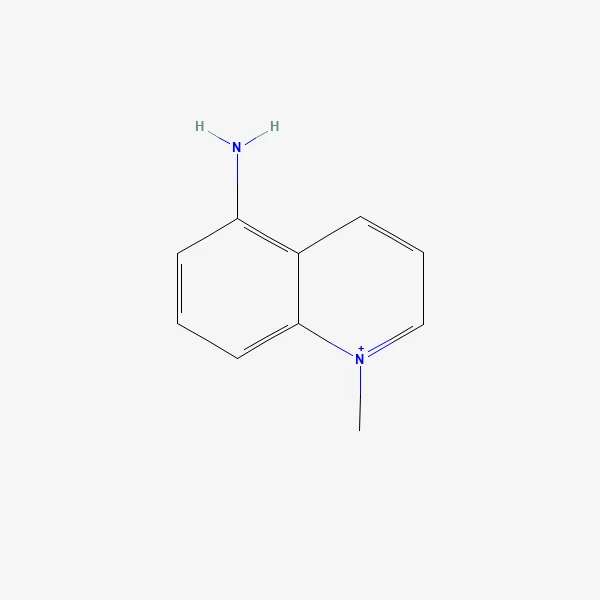
5-Amino-1-methylquinolinium in brief
5-Amino-1-methylquinolinium (5-amino-1MQ) is a small synthetic quaternary cation, 159.21 g/mol as the free ion and usually isolated as the iodide, designed to inhibit the enzyme nicotinamide N-methyltransferase. A 2017 screen found it inhibited the purified enzyme at 1.2 micromolar, and its amine at position 5 let it cross membranes where the parent cation did not. No medicines regulator checked has authorised it and no registered human study was found, so the evidence is enzyme assays, cell studies and rodent work, most of it from one research group and the company founded out of it. No experimental structure of the compound, free or bound to its target, exists. Whether a catalogued sample is the free cation or the iodide is not stated in public records.[1,2,3,4,5,6,7]
5-Amino-1-methylquinolinium regulatory status
No marketing authorisation as a medicine was found for 5-amino-1-methylquinolinium in any form: Drugs@FDA, the European Medicines Agency medicines database and the Health Canada Drug Product Database return no record of it (all searched November 2026). No registered study appears on ClinicalTrials.gov under the compound name or its abbreviations, so there is no human-subject record to place it at a development phase, and its evidence base remains enzyme, cell and rodent work. It is named nowhere on the World Anti-Doping Agency 2026 Prohibited List, including in the metabolic-modulator class S4.4, which lists examples and is written as an open class. That absence is not a clearance: class S0 of the same List prohibits at all times any pharmacological substance not addressed by a later section of the List and with no current approval by any governmental regulatory health authority for human therapeutic use, and the position recorded above is exactly that. It does not appear on the FDA's list of bulk drug substances nominated for compounding that may present significant safety risks, in either the current category or the withdrawn-nomination table (page content current as of 22 April 2026), so no agency concern about it sits on that record. No work cited on this page carries a retraction or an expression of concern.[6,8,9,7,10,11]
5-Amino-1-methylquinolinium at a glance
- A permanently charged quaternary cation, C10H11N2+, 159.21 g/mol as the free ion, with no stereocentres. The isolated solid is the 1:1 iodide, C10H11IN2, 286.11 g/mol.[3,4]
- Not authorised as a medicine by any regulator checked, and no registered human study was located, so everything known about it comes from enzyme assays, cultured cells and rodents. The World Anti-Doping Agency 2026 Prohibited List names it nowhere, but its class S0 prohibits at all times any pharmacological substance with no current approval by any governmental regulatory health authority for human therapeutic use, which is the position described here.[6,8,9,7,10]
- Built against one named enzyme: human nicotinamide N-methyltransferase (EC 2.1.1.1), which moves a methyl group from S-adenosyl-L-methionine onto nicotinamide, giving 1-methylnicotinamide and S-adenosyl-L-homocysteine.[12,13]
- The best-characterised member of a screened methylquinolinium series, reported at a half-maximal inhibitory concentration of 1.2 micromolar against the enzyme in a biochemical assay, within a series spanning more than a thousand-fold in activity.[1,2]
- The amine at position 5 is what made the scaffold usable in cells: in a parallel artificial membrane assay this compound was classed highly permeable, while the unsubstituted parent cation and the enzyme's own methylated product both showed no measurable passive flux.[2]
- No experimental structure of the molecule exists, and none of it bound to its target. The published binding pose is a docking result, and the three-dimensional view here is a calculated conformer of the free cation.[1,3]
What is 5-Amino-1-methylquinolinium?
5-Amino-1-methylquinolinium is a small synthetic cation built to interfere with a single enzymatic reaction. The enzyme is nicotinamide N-methyltransferase, a 264-residue cytosolic protein that takes a methyl group from S-adenosyl-L-methionine, the cell's general-purpose methyl donor, and attaches it to the nitrogen of nicotinamide, producing 1-methylnicotinamide and the demethylated cofactor S-adenosyl-L-homocysteine. Because nicotinamide is a precursor for NAD+ and S-adenosyl-L-methionine supplies methyl groups to much of the rest of the cell, that one reaction sits where two separate supply lines cross.[12,13,14]
Interest in blocking it followed a 2014 report in which nicotinamide N-methyltransferase emerged as the most strongly reciprocally regulated gene in an array comparison of mouse adipose tissue, and knocking the transcript down with antisense oligonucleotides altered the diet-induced obesity phenotype of those animals. That was a genetic tool rather than a chemical one, and it set the problem the chemistry then took up.[13]
The compound came out of a 2017 screening campaign on N-methylated heteroaromatic cations that tested quinolinium, isoquinolinium, pyridinium and benzimidazolium or benzothiazolium analogues and found quinoliniums the most active sub-series. The design logic is product mimicry rather than substrate mimicry: the enzyme's own output, 1-methylnicotinamide, is a methylated aromatic cation and a feedback inhibitor of the enzyme, so a methylated aromatic cation that binds the same pocket and cannot be turned over is a reasonable starting point, and quinolinium adds a second fused ring to that idea. A companion paper built the fluorescence assay the series was screened on and established that the enzyme binds its two substrates in random order, each about twenty times more tightly once the other is present.[1,15,16]
The literature names this one molecule at least four ways: 5-amino-1MQ, 5-AMQ, 5A1MQ and, in papers about the biology rather than the chemistry, simply NNMTi. One cell study abbreviates it 5MQ and expands that abbreviation in its own body text as 5-methylquinolinium, a different compound. Databases add their own traps: a name lookup for 5-amino-1MQ returns no record at all, and the iodide's synonym list includes a chloride spelling of the salt.[17,18,3,4]
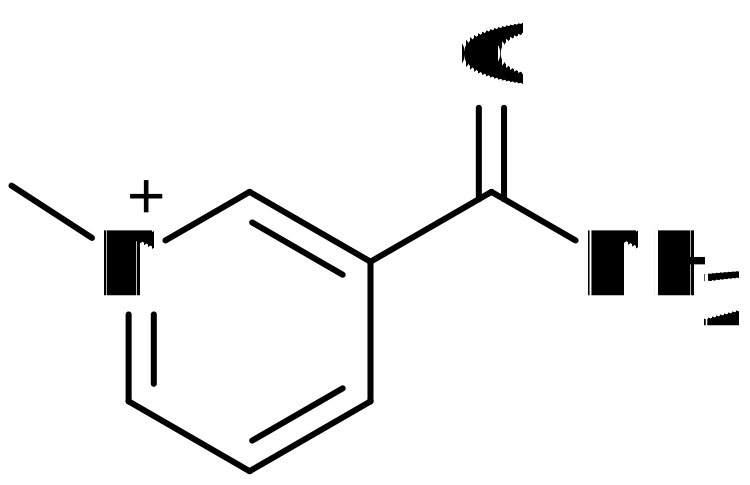
Not to be confused with
- 1-Methylquinolinium (1-MQ)
- The parent cation with no amine. It inhibits the same enzyme at a similar order of magnitude in a biochemical assay, but in a parallel artificial membrane assay it showed no measurable passive flux at all, where the 5-amino compound was classed as highly permeable. The amine at position 5 is the whole difference between the two and is why one of them reaches an intracellular enzyme.[2]
- 1-Methylnicotinamide (1-MNA)
- The enzyme's own methylated reaction product, and itself a feedback inhibitor of the enzyme. It is a pyridinium, not a quinolinium: one aromatic ring rather than two fused rings, and it carries an amide instead of an amine. Like 1-MQ it showed no passive membrane flux in the same assay. The two are easily conflated because this compound was designed as a product-like cation.[2,16]
- 7-Amino-1MQ and 2,3-diamino-1MQ
- Positional isomers and a diamine from the same screening series, assayed side by side with this compound for permeability, selectivity and cell activity. They are separate molecules with their own inhibition and transport figures, and the position of the amine moves both.[2,1]
- 5-Methylquinolinium
- A different compound, and a real transcription hazard rather than a hypothetical one: one published cell study abbreviates this compound as 5MQ and expands that abbreviation in its body text as 5-methylquinolinium, while its own impact statement spells the full name as 5-amino-1-methylquinolinium. The methyl in this molecule sits on the ring nitrogen and the amine sits at carbon 5.[17,3]
5-Amino-1-methylquinolinium molecular structure
The molecule is two fused six-membered aromatic rings, one containing a nitrogen that carries a methyl group, with a primary amine on carbon 5 of the all-carbon ring. The methylated nitrogen is quaternary, and that has two separate consequences. The first is electrostatic: the molecule carries a formal positive charge at any pH, so it cannot be isolated as a neutral solid and exists as a salt, the published one being the iodide. The second is chemical: a quaternised nitrogen has no lone pair left, so the enzyme has nothing on it to methylate. That matters because a substrate-like inhibitor of the same enzyme, from a separate programme, turned up in a co-crystal as its own N-methylated product, meaning the enzyme had slowly turned that inhibitor over rather than simply binding it.[3,19]
The pocket the molecule is aimed at is well described, from the enzyme rather than from the compound. A 2.7 angstrom crystal structure of human nicotinamide N-methyltransferase as a ternary complex with the demethylated cofactor and nicotinamide (Protein Data Bank entry 3ROD, confirmed as holding exactly those two non-polymer components at 2.72 angstroms) shows the acceptor site as a hydrophobic clamp in which Tyr204 and Leu164 sandwich the flat nicotinamide ring, with Asp197, Ser201 and Ser213 within hydrogen-bonding distance of its amide and the Tyr20 hydroxyl reaching both the ring and the cofactor's carboxylate. Mutagenesis in the same study separated the binding determinants from the catalytic residues, the Tyr20 and Asp197 substitutions losing almost all relative specific activity while the two serine substitutions were essentially unchanged.[20,21]
A flat aromatic cation suits that clamp, and two independent lines support the inference without demonstrating it for this molecule: an unrelated tricyclic inhibitor was co-crystallised stacked between the same Tyr204 and Leu164, and in a bisubstrate series the modification that most improved activity was a naphthalene intended to make pi-stacking contacts in that same pocket. For this compound the only published account of the pose is computational docking into the substrate site. The view on this page is therefore a calculated conformer of the free cation, with no counter-ion and no protein: a substructure search of the Protein Data Bank for this cation returns no matching chemical component at all. The nearest structural analogy is a different molecule, in crystal structures of monkey and mouse forms of the enzyme with the methylated product 1-methylnicotinamide in the acceptor site.[22,23,1,3,16,24]
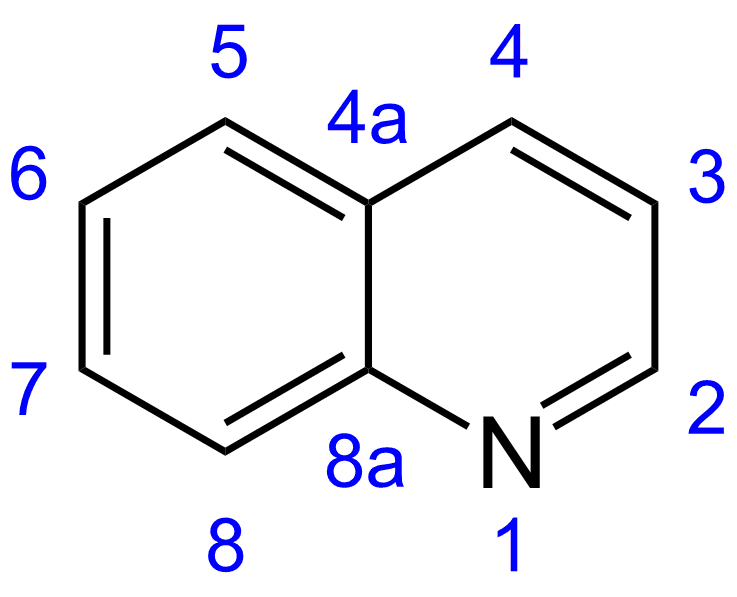
Modifications
- Ring nitrogen (N1) A methyl group on the quinoline nitrogen. This is what makes the molecule a permanent cation: the nitrogen is quaternised, so the positive charge is structural rather than a matter of pH, and there is no lone pair left on it for the enzyme to methylate. That distinguishes it from substrate-like inhibitors of the same enzyme, one of which was found in a co-crystal as its own methylated product.[3,19]
- C5 of the benzo ring A primary aromatic amine. In the series this compound comes from, substitution around the ring is what the structure-activity work varied, and the amine at this position coincides with both low micromolar enzyme inhibition and high measured membrane permeability.[1,2]
The molecule is flat and has no stereocentres: a planar bicyclic aromatic system, a methyl on the ring nitrogen and an amine on the carbon ring, so there are no isomers to specify and no D or L question to answer. The charge is the feature that matters chemically. A quaternised aromatic nitrogen carries a formal positive charge at any pH, which means the free species cannot exist as an isolated neutral solid and is always paired with an anion; the published salt is the iodide.[3,4]
What studies on 5-Amino-1-methylquinolinium show
Each card names the experimental system and what was measured. A result in one system is not evidence about another.
Biochemical inhibition screen with structure-activity analysis and computational docking · Purified nicotinamide N-methyltransferase activity assays; docking into the nicotinamide-binding site of the enzyme
Quinoliniums were the most active sub-series, reaching low micromolar inhibition (the abstract gives around 1 micromolar for the sub-series), and docking scores for ligand-enzyme interaction correlated with the measured values across the set. The predicted orientation places the analogues in the substrate site rather than the cofactor site, and identifies the ring substitution pattern as what drives the interaction.[1]
- Material
- A screened series of N-methylated quinolinium, isoquinolinium, pyridinium and benzimidazolium or benzothiazolium analogues, this compound among them
- Measured
- Half-maximal inhibitory concentration for each analogue, and the correlation between docking score and that measured value
- Compared with
- The other scaffolds and positional isomers in the same screen, spanning more than a thousand-fold in activity
- Limitation
- Read as abstract only, so the per-compound table is not in hand; the 1.2 micromolar figure quoted for this molecule reaches this page through a table in the 2018 characterisation paper that cites this one. Every pose is docked, not crystallographic. A correlation between a scoring function and an inhibition value supports the model used, and does not establish where the molecule actually sits. No mechanism of inhibition and no dissociation constant were determined.
Neelakantan H et al., 2017, Journal of medicinal chemistry
Membrane permeability assays, enzyme selectivity panel, and cell-based metabolite measurement · Parallel artificial membrane permeability assay and bidirectional Caco-2 monolayer transport; 3T3-L1 mouse pre-adipocytes and differentiated adipocytes with liquid chromatography and tandem mass spectrometry readout; contract-laboratory activity assays for DNMT1, PRMT3, catechol-O-methyltransferase, nicotinamide phosphoribosyltransferase and sirtuin 1
The compound was classed highly permeable (passive flux 3.01 by ten to the minus six centimetres per second; Caco-2 apical to basolateral 34.2 and basolateral to apical 45.2 by the same units, efflux ratio 1.33, so no net efflux), while the parent cation and the enzyme's methylated product both showed zero passive flux despite inhibiting the enzyme at comparable order of magnitude. No inhibition of DNMT1 or PRMT3 was detectable across the tested range, no usable curve was obtained for catechol-O-methyltransferase, nicotinamide phosphoribosyltransferase was not inhibited up to 100 micromolar and sirtuin 1 not up to 300 micromolar, with a minor fall in its activity at 600 micromolar that yielded no fittable curve. In adipocytes, which expressed about 37-fold more of the target enzyme than pre-adipocytes and held about 7.5-fold more of its product, treatment lowered intracellular 1-methylnicotinamide, while free nicotinamide and S-adenosyl-L-homocysteine did not change. The two rises are not equally strong: the overall effect of treatment on S-adenosyl-L-methionine reached significance, whereas for NAD+ the overall effect did not (reported at P = 0.0568) and only one assay concentration was significant on the post hoc test. Lipid accumulation during differentiation fell with increasing assay concentration.[2]
- Material
- This compound, assayed beside 1,8-dimethylquinolinium, 7-amino-1MQ, 2,3-diamino-1MQ, the parent 1-methylquinolinium and the reaction product 1-methylnicotinamide
- Measured
- Passive flux and apparent permeability with efflux ratio; inhibition of five off-target enzymes; intracellular 1-methylnicotinamide, NAD+, S-adenosyl-L-methionine and free nicotinamide; cell viability; lipid accumulation during differentiation
- Compared with
- Permeability reference compounds (ranitidine, talinolol, warfarin) and enzyme-specific positive-control inhibitors for each selectivity assay
- Limitation
- The selectivity panel is five enzymes chosen for structural or pathway relatedness, not a broad screen, and the negatives are reported as an absence of a fittable curve rather than as measured constants; the nicotinamide phosphoribosyltransferase readout was interfered with by the compound itself above 100 micromolar, which had to be worked around with a fluorinated analogue. All cell work is one mouse cell line. Nothing here measures occupancy of the enzyme in a cell, so target engagement is inferred from the fall in the product. The study also contains an organism-level arm in mice, which establishes nothing about a human and is not the basis of any claim here.
Neelakantan H et al., 2018, Biochemical pharmacology
Organism-level study in mice: body composition, liver histopathology and adipose tissue metabolomics · Diet-induced obese mice moved onto a lean diet, with age-matched lean-diet control animals
Against the lean diet alone, the combination lowered body weight and fat mass faster and further, raised the ratio of whole-body lean mass to body weight, reduced liver and epididymal white adipose tissue weights and liver adiposity, and improved hepatic steatosis. Body composition and liver adiposity reached the levels seen in the age-matched lean-diet control animals. Adipose tissue carried a distinct metabolomic signature, led by higher abundance of ketogenic amino acids.[25]
- Material
- A nicotinamide N-methyltransferase inhibitor from this group's series; the companion microbiome study from the same laboratory names the inhibitor used in this programme as 5-amino-1-methylquinolinium
- Measured
- Body weight and fat mass over time, whole-body lean mass to body weight ratio, liver and epididymal white adipose tissue weights, liver adiposity and hepatic steatosis by histology, and the adipose tissue metabolome
- Compared with
- Lean diet substitution alone, and age-matched lean-diet control animals
- Limitation
- Mice, in an obesity model, so nothing here transfers to a human. The design compares a combination against a diet change, so what is measured is the difference between two interventions rather than the compound acting alone. No occupancy of the enzyme was measured in any tissue, so target engagement is inferred from the phenotype. The senior author founded the company developing this inhibitor series and one author was employed by it, both declared in the paper.
Sampson CM et al., 2021, Scientific reports
Organism-level study in aged mice after muscle injury, with a cell-culture arm · 24-month-old mice given an acute chemical injury to the tibialis anterior muscle, with nucleoside labelling to track muscle stem cells; C2C12 mouse myoblasts in culture
Treated animals showed greater muscle stem cell proliferation and subsequent fusion, close to twofold greater myofiber cross-sectional area, a fibre size distribution shifted toward larger fibres, and peak torque of the injured muscle about 70 percent higher than controls. The three-week study period gave larger cross-sectional areas than the one-week period. In C2C12 myoblasts, differentiation increased alongside a shift in the cellular NAD+ to NADH redox state.[26]
- Material
- A nicotinamide N-methyltransferase inhibitor from this group's series, across the dose arms tested, over a one-week and a three-week study period after the injury
- Measured
- Muscle stem cell proliferation and fusion, myofiber cross-sectional area and fibre size distribution, in vivo contractile peak torque of the injured muscle, and myoblast differentiation with the cellular NAD+ to NADH redox state
- Compared with
- Saline-treated injured animals of the same age; untreated myoblasts in the culture arm
- Limitation
- Aged mice and a chemically induced injury model, so it establishes nothing about a human. One muscle and one injury model, and every readout is tissue-level or cellular rather than enzyme-level: no occupancy of the target was measured. The paper's link to the NAD+ salvage pathway is stated as its hypothesis and is not a metabolite measurement it reports. The senior author's company interest is declared.
Neelakantan H et al., 2019, Biochemical pharmacology
Context, about the enzyme rather than this compound: X-ray crystallography with site-directed mutagenesis, steady-state kinetics and molecular dynamics · Purified human nicotinamide N-methyltransferase, crystallised as a ternary complex; wild-type and five active-site point mutants assayed for activity and kinetics
The acceptor pocket is a hydrophobic clamp formed by Tyr204 and Leu164 around the flat nicotinamide ring, with Asp197, Ser201 and Ser213 hydrogen-bonding its amide and Tyr20 contacting both the ring and the cofactor carboxylate. Mutation sorted these by function: Tyr20 to alanine left 0.6 percent and Asp197 to alanine 2 percent of relative specific activity, whereas Ser201 and Ser213 substitutions were effectively unchanged. In the kinetics, turnover fell only about twofold for the impaired mutants while the Michaelis constants rose by two to three orders of magnitude, identifying these residues as substrate-binding determinants rather than catalytic residues.[20]
- Material
- The enzyme with S-adenosyl-L-homocysteine and nicotinamide bound; the compound is absent from this study
- Measured
- Structure at 2.7 angstroms; relative specific activity of each mutant; Michaelis constants and turnover numbers for both substrates
- Compared with
- Wild-type enzyme for every mutant; other class I methyltransferase ternary complexes for the fold comparison
- Limitation
- This characterises the enzyme and the pocket, not this compound: no quinolinium is present in the structure, so it cannot confirm a pose. One crystal form, and part of the work used a thermostabilised construct rather than the wild-type protein. The large rise in the cofactor Michaelis constant for the Asp197 mutant is not explained by the structure itself and was addressed with simulation.
Peng Y et al., 2011, Biochemistry
Context, about a different inhibitor: high-throughput screen, medicinal chemistry series and inhibitor co-crystallography · Human and mouse enzyme activity assays; co-crystal structure of the enzyme with a tricyclic inhibitor; enzyme-knockout animals used as a specificity control
The co-crystal places this unrelated inhibitor below a hairpin motif in the nicotinamide pocket, stacked between Tyr204 and Leu164, the same two residues identified from the substrate complex. That is independent structural evidence that the clamp is where a flat small-molecule inhibitor of this enzyme binds. The specificity control cut the other way: part of the metabolic readout persisted in enzyme-knockout animals.[22]
- Material
- JBSNF-000028, a tricyclic compound chemically unrelated to a methylquinolinium
- Measured
- Enzyme inhibition, the product's abundance in tissue, the binding mode in the co-crystal, and whether the measured metabolic readout persisted without the enzyme
- Compared with
- Wild-type against enzyme-knockout animals; a broad off-target panel
- Limitation
- A different compound, so it supports the pocket description and not this molecule's pose. Read as abstract only. The persistence of a readout in knockout animals is reported rather than explained, and it is a direct caution against treating an organism-level observation in this field as evidence that the enzyme was inhibited.
Ruf S et al., 2022, Scientific reports
Context, about a different inhibitor: enzyme inhibition with co-crystallography and a genetic specificity control · Human and mouse enzyme activity; co-crystal structure; enzyme-knockout animals
The species found bound in the co-crystal was the N-methylated product of the inhibitor, not the inhibitor as supplied, and the methylated form was also detectable in treated animals. The authors read the compound as a slow-turnover substrate analogue rather than an inert binder. Separately, the compound's organism-level readouts were absent in enzyme-knockout animals, which is the specificity experiment the methylquinolinium series has not published.[19]
- Material
- JBSNF-000088, a nicotinamide analogue; not this compound
- Measured
- Enzyme inhibition, the abundance of the enzyme's product, the identity of the bound species in the co-crystal
- Compared with
- Wild-type against enzyme-knockout animals
- Limitation
- A different compound and a different programme, read as abstract only. The slow-turnover interpretation is the authors' reading of their own structure. The relevance here is by contrast: a permanently quaternised nitrogen removes the site that turnover would act on, which is an argument from chemistry rather than a measurement on this molecule.
Kannt A et al., 2018, Scientific reports
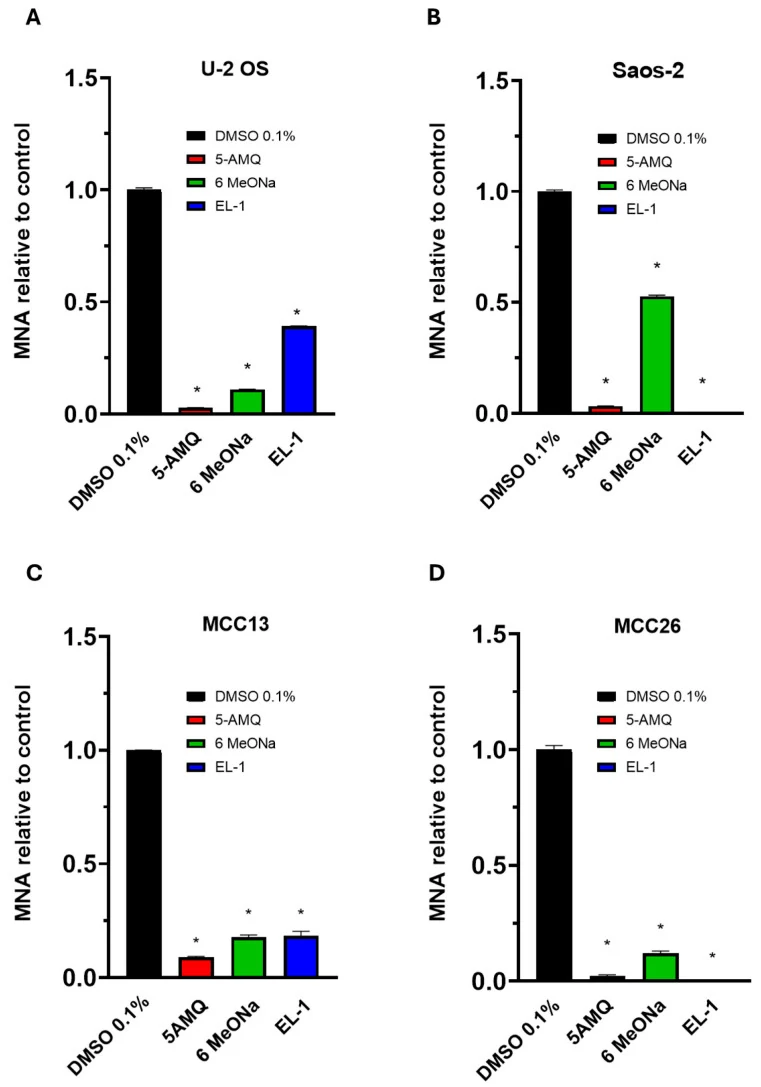
Cell viability, reactive oxygen species and apoptosis assays with a three-inhibitor comparison · U-2 OS and Saos-2 human osteosarcoma lines and MCC13 and MCC26 human Merkel cell carcinoma lines
Reduced viability, increased reactive oxygen species and activation of apoptotic pathways were reported across the four human lines for the inhibitors tested. Intracellular 1-methylnicotinamide, the enzyme's own product, fell by at least half in every line for all three, and further for this compound than for the other nicotinamide-like inhibitor; the unrelated pyrimidine-carboxamide abolished it in two lines and matched or trailed the other comparator in the other two. That is the enzyme-output readout the rest of this compound's literature takes only in mouse adipocytes. This is also the only study located that places this compound beside two unrelated inhibitors of the same enzyme in one assay system, which is the comparator design the rest of its literature lacks.[5]
- Material
- This compound (as 5-AMQ), assayed in parallel with 6-methoxynicotinamide and a pyrimidine-5-carboxamide inhibitor
- Measured
- Cell viability, reactive oxygen species production, markers of apoptotic activation, intracellular 1-methylnicotinamide by liquid chromatography and tandem mass spectrometry, and the same readouts with cisplatin added
- Compared with
- The two chemically unrelated inhibitors in the same assays, and cisplatin alone or in combination
- Limitation
- The full text is open access and was read. Viability was tested across a concentration range, but the product, apoptosis and oxidative-stress readouts were each taken at one fixed concentration of 100 micromolar, and the potencies the paper quotes for the three inhibitors are carried over from earlier papers rather than measured here. Cancer cell lines in culture, phenotypic endpoints, and no measurement of enzyme occupancy, so the results do not establish that the phenotype followed from inhibiting the enzyme. From an independent group, which is its main value.
Pompei V et al., 2025, Biomolecules
Cell proliferation assay with transcript and protein measurement · HeLa human cervical carcinoma cells, with HEK-293 cells as a second line
Proliferation of HeLa cells fell with increasing assay concentration and exposure time, while HEK-293 proliferation was reported as not apparently affected. Among the measured molecular changes, phospho-Akt and sirtuin 1 protein were decreased and the transcript changes went in mixed directions.[17]
- Material
- The compound as identified by the authors, assayed over 0.1 to 500 micromolar assay concentrations
- Measured
- Viability by tetrazolium assay, transcript abundance for TWIST, ZEB1, SERPIN1, SIRT1 and CD16 by quantitative PCR, and phospho-Akt and SIRT1 protein by immunoblot
- Compared with
- Untreated cells, and HEK-293 as a non-tumour-line comparison
- Limitation
- Abstract only, and the identity of the tested material rests on the authors' own naming: the article abbreviates the compound 5MQ and expands that abbreviation in its body text as 5-methylquinolinium, a different molecule, while its impact statement gives the correct full name. No catalogue number or CAS is stated in the abstract, so this is recorded as the authors' claim rather than as verified identity. Two cell lines, no enzyme-level confirmation of target engagement, and the transcript and protein changes are measured rather than mechanistically connected.
Akar S et al., 2021, Journal of obstetrics and gynaecology : the journal of the Institute of Obstetrics and Gynaecology
Bioanalytical method development and validation by liquid chromatography with tandem mass spectrometry · Rat plasma and urine matrices
The quantifying transition is mass-to-charge 159.100 to 90.00. That precursor is the free cation and not the iodide at 286.11, which is the expected behaviour of a permanent quaternary cation in positive-ion mode and is independent confirmation that the species measured in a biological matrix is the cation. The method was linear from 10 to 2500 nanograms per millilitre with recoveries of 99.5 to 110.6 percent and precision within the 15 percent acceptance range. Applied to rats, it reported a mean terminal elimination half-life of 3.80 plus or minus 1.10 hours in one study arm and 6.90 plus or minus 1.20 hours in the other.[27]
- Material
- The compound as the named analyte, with an internal standard
- Measured
- Multiple reaction monitoring transitions, linearity, intra-day and inter-day precision and accuracy, extraction recovery, matrix effect and stability; and, in the application study, plasma exposure and terminal elimination half-life in rats
- Compared with
- Spiked calibration standards and quality-control concentrations across four levels
- Limitation
- Abstract only. A method paper: it establishes how the cation is detected and that the detected species is the cation, and nothing about the enzyme. The half-life figures are rat measurements and are the only disposition figures reproduced here; the study's exposure and bioavailability figures are defined by how the compound was given to the animals and are deliberately left out, as is every amount.
Awosemo O et al., 2021, Journal of pharmaceutical and biomedical analysis
What the enzyme assays and the cell measurements establish, and where the inference stops
The proposed mechanism is narrow and has one testable core: the compound occupies the acceptor-substrate pocket of nicotinamide N-methyltransferase, so less nicotinamide is methylated. Three measurements line up behind it, each set out in the study cards above: low micromolar inhibition of the purified enzyme with docking scores that tracked potency across the series, a fall in the intracellular level of the enzyme product in mouse adipocytes, which is the readout closest to the enzyme that has been taken inside a cell, and an enzyme structure in which a flat methylated cation fits the clamp an unrelated inhibitor was co-crystallised inside.[1,2,20,22,28]
The step beyond that concerns metabolic flux rather than the enzyme. The reaction consumes nicotinamide, which feeds NAD+ synthesis through the salvage pathway, and S-adenosyl-L-methionine, the methyl donor, so blocking it should spare both. In adipocytes both were measured higher after treatment while free nicotinamide did not change, which the authors read as nicotinamide being pulled onward into NAD+ synthesis rather than accumulating; the S-adenosyl-L-methionine effect was significant overall and the NAD+ effect only at one assay concentration. A shift in the NAD+ to NADH state in the same direction was later reported in mouse C2C12 myoblasts. The later study in aged mouse muscle did not quantify the salvage-pathway metabolites at all, and its own discussion names an NAD+ rise as a potential downstream mechanism still to be measured, so the agreement runs across two cell systems and not across tissue as well. What none of these experiments does is establish that the compound was bound to the enzyme in those cells: no occupancy measurement has been published for it.[2,26,29,13]
Two caveats belong beside the mechanism rather than after it. Because the ring nitrogen is already quaternised, the enzyme has nothing on it to methylate, which separates this compound from the substrate-like inhibitor found as its own methylated product; that is an argument from structure and has not been checked experimentally here. And in a separate inhibitor programme, part of the measured metabolic readout persisted in animals lacking the enzyme entirely, so an organism-level observation in this literature cannot be taken as evidence that the enzyme was inhibited.[19,22]


What is still unknown about 5-Amino-1-methylquinolinium
Which chemical form the catalogued material is remains the first open question, and it is not pedantic: the cation accounts for about 56 percent of the iodide's mass, so a figure stated for one form does not transfer to the other. Public records sharpen the ambiguity rather than settling it, the cation and the iodide holding separate PubChem records, CAS numbers and unique ingredient identifiers while the name 5-amino-1MQ resolves to neither by direct lookup. Hence partially verified: the molecule is unambiguous, the material is not.[3,4]
The structural gap is the largest one on the chemistry side. No deposited experimental structure of this molecule exists in any state, and none bound to its target, so the pose is a docking result. The absence is conspicuous, because co-crystal structures exist for other inhibitors of the same enzyme, including a bisubstrate compound occupying both the substrate and cofactor sites, whose paper carries a published correction. Beside it sits a quieter gap: no dissociation constant and no assignment of inhibition mode have been published, which matters because the enzyme binds its two substrates in random order, so a half-maximal concentration from one assay format cannot be read as an affinity or as competition with a particular substrate.[1,30,22,15,31]
The selectivity claim is narrower than it sounds. The five enzymes it rests on are set out in the selectivity card above; what the card cannot show is that the compound was never screened broadly, and that the negatives are an absence of a fittable curve rather than measured constants.[2]
The shape of the literature is itself a limitation. Most work on this molecule comes from one research group and the company founded out of it, with competing interests declared in the papers. Of the five organism-level rodent studies from that programme, only two name the molecule at all, one spelling it out in full and one as 5A1MQ, while the other three identify it only as an inhibitor from the same series, so a reader matching the catalogued name to that body of work is relying on the group's own continuity rather than on a stated identity. The two independent studies located are both in cancer cell lines, and one of them carries the naming contradiction described above. No independently curated potency figure was retrieved, no human-subject data of any kind was found, and the knockout control that would show an observed effect depends on the intended target exists for other inhibitors in this field and not for this one.[25,32,29,18,17,5,22]
Key papers on 5-Amino-1-methylquinolinium
- Selective and membrane-permeable small molecule inhibitors of nicotinamide N-methyltransferase reverse high fat diet-induced obesity in mice.
Neelakantan H, Vance V, Wetzel MD, Wang HL, McHardy SF, Finnerty CC, Hommel JD, Watowich SJ (2018), Biochemical pharmacology · Permeability, selectivity and cell-based metabolite measurement
The single most informative paper on the molecule, and open access. The permeability tables, the five-enzyme selectivity panel and the adipocyte measurements of the enzyme's product, NAD+ and S-adenosylmethionine are all here, as is the 1.2 micromolar inhibition figure in context.
- Structure-Activity Relationship for Small Molecule Inhibitors of Nicotinamide N-Methyltransferase.
Neelakantan H, Wang HY, Vance V, Hommel JD, McHardy SF, Watowich SJ (2017), Journal of medicinal chemistry · Biochemical inhibition screen with docking
Where the compound comes from. The screen that picked quinoliniums out of four cation scaffolds, the structure-activity relationships across the series, and the docking that is still the only published account of how it might sit in the pocket.
- Structural basis of substrate recognition in human nicotinamide N-methyltransferase.
Peng Y, Sartini D, Pozzi V, Wilk D, Emanuelli M, Yee VC (2011), Biochemistry · Crystal structure with mutagenesis and kinetics
Read this for the target rather than the compound. The human enzyme's acceptor pocket at 2.7 angstroms, with the mutagenesis that separates the two binding-determinant residues from the two that do not matter. Open access, and it is what makes the shape of this molecule make sense.
- Noncoupled Fluorescent Assay for Direct Real-Time Monitoring of Nicotinamide N-Methyltransferase Activity.
Neelakantan H, Vance V, Wang HL, McHardy SF, Watowich SJ (2017), Biochemistry · Enzyme assay development and steady-state kinetics
The assay the series was measured on, and the mechanistic reason a single half-maximal figure is not an affinity: the enzyme binds its two substrates in random order, each about twenty-fold more tightly once the other is bound.
- Novel tricyclic small molecule inhibitors of Nicotinamide N-methyltransferase for the treatment of metabolic disorders.
Ruf S, Rajagopal S, Kadnur SV, Hallur MS, Rani S, Kristam R, Swaminathan S, Zope BR, Gondrala PK, Swamy I, Putta VPRK, Kandan S, Zech G, Schreuder H, Rudolph C, Elvert R, Czech J, Birudukota S, Siddiqui MA, Anand NN, Mane VS, Dittakavi S, Suresh J, Gosu R, Ramesh M, Yura T, Dhakshinamoorthy S, Kannt A (2022), Scientific reports · Inhibitor co-crystal with a genetic specificity control
The best independent structural support for the pocket, with an unrelated inhibitor stacked between the same two residues; and the sharpest published caution in this field, since part of its metabolic readout survived in animals lacking the enzyme.
- A small molecule inhibitor of Nicotinamide N-methyltransferase for the treatment of metabolic disorders.
Kannt A, Rajagopal S, Kadnur SV, Suresh J, Bhamidipati RK, Swaminathan S, Hallur MS, Kristam R, Elvert R, Czech J, Pfenninger A, Rudolph C, Schreuder H, Chandrasekar DV, Mane VS, Birudukota S, Shaik S, Zope BR, Burri RR, Anand NN, Thakur MK, Singh M, Parveen R, Kandan S, Mullangi R, Yura T, Gosu R, Ruf S, Dhakshinamoorthy S (2018), Scientific reports · Enzyme inhibition with co-crystallography and knockout control
The reason the permanent positive charge is worth noticing: a nicotinamide-like inhibitor of the same enzyme turned up in its co-crystal as its own methylated product. Also the knockout specificity control this compound lacks.
- Nicotinamide N-methyltransferase knockdown protects against diet-induced obesity.
Kraus D, Yang Q, Kong D, Banks AS, Zhang L, Rodgers JT, Pirinen E, Pulinilkunnil TC, Gong F, Wang YC, Cen Y, Sauve AA, Asara JM, Peroni OD, Monia BP, Bhanot S, Alhonen L, Puigserver P, Kahn BB (2014), Nature · Gene expression array with antisense knockdown
The 2014 report that made this enzyme a target at all, by genetic knockdown rather than chemistry. It states the biochemical rationale, the junction of nicotinamide and S-adenosylmethionine supply, that the whole inhibitor field is built on.
- Small Molecule Inhibitors of Nicotinamide N-Methyltransferase Enzyme for the Treatment of Osteosarcoma and Merkel Cell Carcinoma: Potential for the Development of a Targeted Therapeutic Strategy.
Pompei V, Cecati M, Serritelli EN, Gerini E, Campagna R, Pozzi V, Van Haren MJ, Martin NI, Emanuelli M, Sartini D (2025), Biomolecules · Human cell line viability and apoptosis assays
The most recent independent work, and the only study that puts this compound beside two chemically unrelated inhibitors of the same enzyme in one set of assays.
- Mechanisms and inhibitors of nicotinamide N-methyltransferase.
Iyamu ID, Huang R (2021), RSC medicinal chemistry · Review of mechanisms and inhibitors
The review to read next, and the shortest route to the rest of the field: how this enzyme is inhibited, what chemical classes have been tried against it, and where a methylquinolinium sits among them.
References
- 1.Neelakantan H, Wang HY, Vance V, Hommel JD, McHardy SF, Watowich SJ. (2017). Structure-Activity Relationship for Small Molecule Inhibitors of Nicotinamide N-Methyltransferase. Journal of medicinal chemistry. 60:5015-5028. doi:10.1021/acs.jmedchem.7b00389 · abstract only
- 2.Neelakantan H, Vance V, Wetzel MD, Wang HL, McHardy SF, Finnerty CC, Hommel JD, Watowich SJ. (2018). Selective and membrane-permeable small molecule inhibitors of nicotinamide N-methyltransferase reverse high fat diet-induced obesity in mice. Biochemical pharmacology. 147:141-152. doi:10.1016/j.bcp.2017.11.007 · full text read
- 3.PubChem Compound Summary. 1-Methylquinolin-1-ium-5-amine, CID 950107. PubChem, National Center for Biotechnology Information. source · database record
- 4.PubChem Compound Summary. 1-Methylquinolin-1-ium-5-amine iodide, CID 66522933. PubChem, National Center for Biotechnology Information. source · database record
- 5.Pompei V, Cecati M, Serritelli EN, Gerini E, Campagna R, Pozzi V, Van Haren MJ, Martin NI, Emanuelli M, Sartini D. (2025). Small Molecule Inhibitors of Nicotinamide N-Methyltransferase Enzyme for the Treatment of Osteosarcoma and Merkel Cell Carcinoma: Potential for the Development of a Targeted Therapeutic Strategy. Biomolecules. 15. doi:10.3390/biom15111553 · abstract only
- 6.U.S. Food and Drug Administration. (2026). Drugs@FDA: FDA-Approved Drugs. U.S. Food and Drug Administration. source · database record
- 7.U.S. National Library of Medicine. (2026). ClinicalTrials.gov search results for 5-amino-1MQ. ClinicalTrials.gov. source · database record
- 8.European Medicines Agency. (2026). Medicines. European Medicines Agency. source · database record
- 9.Health Canada. (2026). Drug Product Database online query. Health Canada. source · database record
- 10.World Anti-Doping Agency. (2026). The 2026 Prohibited List: International Standard. World Anti-Doping Agency. source · full text read
- 11.U.S. Food and Drug Administration. (2026). Certain Bulk Drug Substances for Use in Compounding that May Present Significant Safety Risks (bulk substances nominated under sections 503A or 503B), content current as of 04/22/2026. U.S. Food and Drug Administration. source · full text read
- 12.UniProt Consortium. Nicotinamide N-methyltransferase, Homo sapiens, UniProtKB P40261 (NNMT_HUMAN). UniProt Knowledgebase. source · database record
- 13.Kraus D, Yang Q, Kong D, Banks AS, Zhang L, Rodgers JT, Pirinen E, Pulinilkunnil TC, Gong F, Wang YC, Cen Y, Sauve AA, Asara JM, Peroni OD, Monia BP, Bhanot S, Alhonen L, Puigserver P, Kahn BB. (2014). Nicotinamide N-methyltransferase knockdown protects against diet-induced obesity. Nature. 508:258-62. doi:10.1038/nature13198 · abstract only
- 14.Gao Y, Martin NI, van Haren MJ. (2021). Nicotinamide N-methyl transferase (NNMT): An emerging therapeutic target. Drug discovery today. 26:2699-2706. doi:10.1016/j.drudis.2021.05.011 · abstract only
- 15.Neelakantan H, Vance V, Wang HL, McHardy SF, Watowich SJ. (2017). Noncoupled Fluorescent Assay for Direct Real-Time Monitoring of Nicotinamide N-Methyltransferase Activity. Biochemistry. 56:824-832. doi:10.1021/acs.biochem.6b01215 · abstract only
- 16.Swaminathan S, Birudukota S, Thakur MK, Parveen R, Kandan S, Juluri S, Shaik S, Anand NN, Burri RR, Kristam R, Hallur MS, Rajagopal S, Schreuder H, Langer T, Rudolph C, Ruf S, Dhakshinamoorthy S, Gosu R, Kannt A. (2017). Crystal structures of monkey and mouse nicotinamide N-methyltransferase (NNMT) bound with end product, 1-methyl nicotinamide. Biochemical and biophysical research communications. 491:416-422. doi:10.1016/j.bbrc.2017.07.087 · abstract only
- 17.Akar S, Duran T, Azzawri AA, Koçak N, Çelik Ç, Yıldırım Hİ. (2021). Small molecule inhibitor of nicotinamide N-methyltransferase shows anti-proliferative activity in HeLa cells. Journal of obstetrics and gynaecology : the journal of the Institute of Obstetrics and Gynaecology. 41:1240-1245. doi:10.1080/01443615.2020.1854696 · abstract only
- 18.Babula JJ, Bui D, Stevenson HL, Watowich SJ, Neelakantan H. (2024). Nicotinamide N-methyltransferase inhibition mitigates obesity-related metabolic dysfunction. Diabetes, obesity & metabolism. 26:5272-5282. doi:10.1111/dom.15879 · abstract only
- 19.Kannt A, Rajagopal S, Kadnur SV, Suresh J, Bhamidipati RK, Swaminathan S, Hallur MS, Kristam R, Elvert R, Czech J, Pfenninger A, Rudolph C, Schreuder H, Chandrasekar DV, Mane VS, Birudukota S, Shaik S, Zope BR, Burri RR, Anand NN, Thakur MK, Singh M, Parveen R, Kandan S, Mullangi R, Yura T, Gosu R, Ruf S, Dhakshinamoorthy S. (2018). A small molecule inhibitor of Nicotinamide N-methyltransferase for the treatment of metabolic disorders. Scientific reports. 8:3660. doi:10.1038/s41598-018-22081-7 · abstract only
- 20.Peng Y, Sartini D, Pozzi V, Wilk D, Emanuelli M, Yee VC. (2011). Structural basis of substrate recognition in human nicotinamide N-methyltransferase. Biochemistry. 50:7800-8. doi:10.1021/bi2007614 · full text read
- 21.Peng Y, Sartini D, Pozzi V, Wilk D, Emanuelli M, Yee VC. (2011). Crystal structure of human nicotinamide N-methyltransferase in complex with S-adenosyl-L-homocysteine and nicotinamide. RCSB Protein Data Bank, entry 3ROD. doi:10.2210/pdb3rod/pdb · database record
- 22.Ruf S, Rajagopal S, Kadnur SV, Hallur MS, Rani S, Kristam R, Swaminathan S, Zope BR, Gondrala PK, Swamy I, Putta VPRK, Kandan S, Zech G, Schreuder H, Rudolph C, Elvert R, Czech J, Birudukota S, Siddiqui MA, Anand NN, Mane VS, Dittakavi S, Suresh J, Gosu R, Ramesh M, Yura T, Dhakshinamoorthy S, Kannt A. (2022). Novel tricyclic small molecule inhibitors of Nicotinamide N-methyltransferase for the treatment of metabolic disorders. Scientific reports. 12:15440. doi:10.1038/s41598-022-19634-2 · abstract only
- 23.Gao Y, van Haren MJ, Moret EE, Rood JJM, Sartini D, Salvucci A, Emanuelli M, Craveur P, Babault N, Jin J, Martin NI. (2019). Bisubstrate Inhibitors of Nicotinamide N-Methyltransferase (NNMT) with Enhanced Activity. Journal of medicinal chemistry. 62:6597-6614. doi:10.1021/acs.jmedchem.9b00413 · abstract only
- 24.van Haren MJ, Taig R, Kuppens J, Sastre Toraño J, Moret EE, Parsons RB, Sartini D, Emanuelli M, Martin NI. (2017). Inhibitors of nicotinamide N-methyltransferase designed to mimic the methylation reaction transition state. Organic & biomolecular chemistry. 15:6656-6667. doi:10.1039/c7ob01357d · abstract only
- 25.Sampson CM, Dimet AL, Neelakantan H, Ogunseye KO, Stevenson HL, Hommel JD, Watowich SJ. (2021). Combined nicotinamide N-methyltransferase inhibition and reduced-calorie diet normalizes body composition and enhances metabolic benefits in obese mice. Scientific reports. 11:5637. doi:10.1038/s41598-021-85051-6 · full text read
- 26.Neelakantan H, Brightwell CR, Graber TG, Maroto R, Wang HL, McHardy SF, Papaconstantinou J, Fry CS, Watowich SJ. (2019). Small molecule nicotinamide N-methyltransferase inhibitor activates senescent muscle stem cells and improves regenerative capacity of aged skeletal muscle. Biochemical pharmacology. 163:481-492. doi:10.1016/j.bcp.2019.02.008 · full text read
- 27.Awosemo O, Neelakantan H, Watowich S, Ma J, Wu L, Chow DS, Liang D. (2021). Development & validation of LC-MS/MS assay for 5-amino-1-methyl quinolinium in rat plasma: Application to pharmacokinetic and oral bioavailability studies. Journal of pharmaceutical and biomedical analysis. 204:114255. doi:10.1016/j.jpba.2021.114255 · abstract only
- 28.Iyamu ID, Huang R. (2021). Mechanisms and inhibitors of nicotinamide N-methyltransferase. RSC medicinal chemistry. 12:1254-1261. doi:10.1039/d1md00016k · abstract only
- 29.Dimet-Wiley AL, Latham CM, Brightwell CR, Neelakantan H, Keeble AR, Thomas NT, Noehren H, Fry CS, Watowich SJ. (2024). Nicotinamide N-methyltransferase inhibition mimics and boosts exercise-mediated improvements in muscle function in aged mice. Scientific reports. 14:15554. doi:10.1038/s41598-024-66034-9 · full text read
- 30.Babault N, Allali-Hassani A, Li F, Fan J, Yue A, Ju K, Liu F, Vedadi M, Liu J, Jin J. (2018). Discovery of Bisubstrate Inhibitors of Nicotinamide N-Methyltransferase (NNMT). Journal of medicinal chemistry. 61:1541-1551. doi:10.1021/acs.jmedchem.7b01422 · abstract only · corrected: A published correction appeared in the same journal (J Med Chem 2018;61:5771-5772, doi 10.1021/acs.jmedchem.8b00849, PMID 29947518), listed here as R15. The record carries no retraction and no expression of concern.
- 31.Babault N, Allali-Hassani A, Li F, Fan J, Yue A, Ju K, Liu F, Vedadi M, Liu J, Jin J. (2018). Correction to Discovery of Bisubstrate Inhibitors of Nicotinamide N-Methyltransferase (NNMT). Journal of medicinal chemistry. 61:5771-5772. doi:10.1021/acs.jmedchem.8b00849 · abstract only
- 32.Dimet-Wiley A, Wu Q, Wiley JT, Eswar A, Neelakantan H, Savidge T, Watowich S. (2022). Reduced calorie diet combined with NNMT inhibition establishes a distinct microbiome in DIO mice. Scientific reports. 12:484. doi:10.1038/s41598-021-03670-5 · full text read
Related entries
- Nicotinamide adenine dinucleotide (NAD+)NAD+ is the oxidised form of nicotinamide adenine dinucleotide, in which nicotinamide riboside and adenosine are joined through a pyrophosphate bridge. Cells use it both as a carrier of hydride in redox reactions and as a substrate that sirtuins, PARPs, CD38 and SARM1 cleave.
- MOTS-cMOTS-c is a 16-residue peptide, MRWQEMGYIFYPRKLR, encoded by a 51 base pair reading frame inside the human mitochondrial 12S ribosomal RNA gene. It has no identified receptor, no published affinity constant and no deposited three-dimensional structure.
