Epithalon in brief
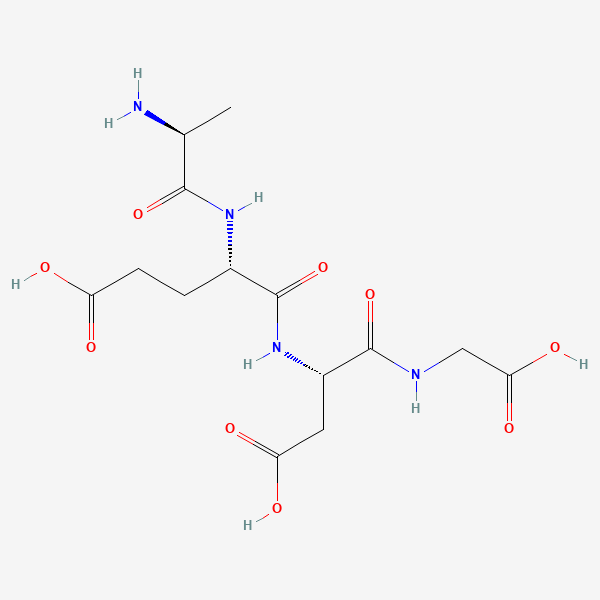
Epithalon is the synthetic linear tetrapeptide Ala-Glu-Asp-Gly (AEDG), all L-residues with free termini and no modifications (C14H22N4O9, about 390.35 g/mol). Its sequence was assembled from the amino-acid composition of epithalamin, a bovine pineal extract, and was detected in a pineal polypeptide complex only in 2017. It has no International Nonproprietary Name and no marketing authorisation; the one regulatory action on record is an FDA orphan-drug designation for retinitis pigmentosa, recorded as designated and withdrawn. No receptor has been identified; the molecular measurements are binding to nucleic acids and histones in solution, and the cellular readouts centre on telomere length. Most of the literature comes from one St Petersburg programme. An independent 2025 study reproduced telomere lengthening in human cells but found it ran through telomerase in normal cells and through recombination in cancer lines, so the mechanism remains open.[1,2,3,4,5,6]
Epithalon regulatory status
No FDA, EMA or Health Canada marketing authorisation was found for epitalon in Drugs@FDA (queried through openFDA), the EMA medicines database or the Health Canada Drug Product Database (searched November 2026); the FDA substance record lists an orphan-drug designation for retinitis pigmentosa as designated and withdrawn, and ClinicalTrials.gov lists the peptide only as one of several ingredients of the intervention in an Early Phase 1 study (NCT07888595). FDA lists epitalon among bulk drug substances nominated for compounding whose nominations were withdrawn (page current as of 22 April 2026), stating that compounded drugs containing it may pose a risk of immunogenicity for certain routes of administration because of the potential for aggregation and peptide-related impurities, and that the agency has not identified safety-related information sufficient to know whether it would cause harm if administered to humans. The 2026 WADA Prohibited List does not name epitalon; its S0 class prohibits at all times any pharmacological substance not addressed elsewhere on the List and with no current approval by a governmental regulatory health authority for human therapeutic use.[7,8,9,2,10,11,12]
Epithalon at a glance
- A linear four-residue peptide, Ala-Glu-Asp-Gly, all L, with free termini and no modification of any kind, and about 390 g/mol. Its registry identity is consistent across PubChem, the FDA substance registry and ChEBI. No experimental structure of it has been deposited: the 3D view here is a computed conformer, and the only published conformational analysis is a molecular-dynamics simulation reporting two intramolecular salt bridges from the alanine nitrogen to the Glu and Asp side chains.[1,2,13,14]
- The sequence was designed from the amino-acid composition of epithalamin, a bovine pineal extract. The peptide itself was reported in a pineal polypeptide complex only in 2017, by mass spectrometry with selective reaction monitoring, which is 17 years after the first lifespan papers on the synthetic material.[3,4,14]
- Telomere length is what this peptide is actually studied for, and the direction has been reproduced while the route has not. The originating programme reported in 2003 that it lengthened telomeres in human fetal fibroblasts by reactivating telomerase. An unconnected group in London measured both in 2025 and split the answer by cell type: in normal epithelial cells and fibroblasts the lengthening tracked a rise in hTERT messenger RNA and in telomerase activity, while in two breast cancer lines telomerase activity did not rise and the lengthening tracked alternative lengthening of telomeres instead, with the C-circle marker of that route up tenfold in one line.[5,15]
- The molecular-level experiments are binding and thermodynamic measurements against nucleic acids and histones rather than receptor pharmacology: no receptor has been identified for this peptide, and the one radioligand test located reported no interaction with mu or delta opioid sites.[16,17,18,14]
- Most of the literature comes from one research programme in St Petersburg and its collaborators, and a great deal of it consists of short reports carrying no replicate counts, no effect sizes and no description of the material used. A finding reported many times by one group is not a replicated finding.[6,14]
What is Epithalon?
Epithalon is a synthetic tetrapeptide. Its sequence was not read off a precursor protein: it was assembled to match the amino-acid composition of epithalamin, a polypeptide preparation extracted from bovine pineal glands, and the synthetic peptide then became the object of study in its own right. The earliest work on it dates from around 2000, when a lifespan experiment in Drosophila melanogaster was published and the MeSH supplementary concept record was created with that paper as its source citation.[4,19,14]
Its claim to be a pineal peptide rather than a designed one rests on a single later report. In 2017 the same group fractionated a pineal polypeptide complex by high-performance liquid chromatography and mass spectrometry, found free amino acids and peptides of two to five residues, and identified AEDG among the tetrapeptides using selective reaction monitoring. That is the one published detection of the sequence in pineal material, and it is a detection in an extract rather than evidence of a regulated endogenous pool.[3]
Its regulatory position is short to state and worth stating here rather than in a footnote. No International Nonproprietary Name was found for this peptide, and no FDA, EMA or Health Canada marketing authorisation. The FDA substance record carries one regulatory action and it reads both ways: an orphan-drug designation for retinitis pigmentosa, number 312010, recorded as designated AND withdrawn. The designation's origin appears to be a 2002 report from the originating programme on retina condition in that disease, cited here bibliographically and for nothing else. The FDA separately lists epitalon among bulk substances nominated for use in compounding whose nominations were withdrawn, stating that compounded drugs containing it may pose a risk of immunogenicity for certain routes because of the potential for aggregation and peptide-related impurities, and that the agency has not identified safety-related information sufficient to know whether the substance would cause harm in people.[2,20,7,8,9,11]
Four terms carry most of the evidence on this page. A telomere is the repetitive DNA cap at each chromosome end, which shortens with each cell division; telomerase is the enzyme that adds those repeats back, and hTERT is the gene for its catalytic subunit, so hTERT messenger RNA measures how much of the enzyme a cell is making rather than how much work the enzyme is doing. TRAP, the telomere repeat amplification protocol, measures that activity directly, which is why one study can find hTERT transcript raised and telomerase activity unchanged in the same cells. ALT, alternative lengthening of telomeres, is a second and telomerase-independent route in which cells extend telomeres by recombination; it is detected by C-circles, small extrachromosomal rings of telomere repeat DNA, and by telomere DNA gathering in PML bodies, the nuclear protein assemblies ALT-positive cells use. That distinction is the whole substance of the disagreement between the 2003 and 2025 reports: both measured longer telomeres, and they identified different routes to them in different cell types.[5,15,14]
It belongs to a family of two to four residue peptides from the same programme, including Lys-Glu (vilon), Glu-Asp-Arg (pinealon), Lys-Glu-Asp (KED) and Ala-Glu-Asp-Leu (bronchogen), which are usually tested as a set in the same assay. That shared design matters for reading the literature in two ways. The peptides behave differently from one another in the binding work, so a result for one is not transferable, and a paper reporting a panel of five peptides is reporting a few data points each rather than a study of this molecule.[17,18,21,22,23]
Two names are routinely confused with it. Epithalamin is the bovine extract, a mixture with no single formula, and a 2026 narrative review deliberately keeps epithalamin studies separate as historical context; PubChem's uncurated synonym list for the tetrapeptide nevertheless carries both Epithalamin and Epithalamine. The sequence isomer Glu-Ala-Asp-Gly has the same formula and the same nominal mass, and was treated as the realistic substitution in an analytical study of two preparations sold as epitalon.[6,1,24,14]
Not to be confused with
- Epithalamin (epithalamine)
- A polypeptide preparation extracted from bovine pineal glands, not a single molecule. The tetrapeptide was designed from that extract's amino-acid composition, and the two are studied as separate materials: a 2026 review states explicitly that it treats epithalamin work as historical context rather than as evidence about the synthetic peptide. PubChem's uncurated synonym list for CID 219042 nevertheless carries Epithalamin and Epithalamine, which is how the extract's literature comes to be read as the peptide's.[6,14,1]
- The pineal polypeptide complex itself
- Mass spectrometry of that complex reported free amino acids, dipeptides, tripeptides, tetrapeptides and pentapeptides, with AEDG identified among the tetrapeptide fraction by selective reaction monitoring. Finding one tetrapeptide inside a mixture does not make the mixture that tetrapeptide.[3]
- Glu-Ala-Asp-Gly (EADG)
- A sequence isomer with the same formula and the same nominal mass, differing only in the order of the first two residues. An analytical study of two preparations sold as epitalon treated EADG as the substitution a mass measurement alone could not exclude, and separated the two by heating: an N-terminal glutamate can cyclise to pyroglutamate and lose mass, while an N-terminal alanine cannot.[24,14]
- Pinealon (Glu-Asp-Arg) and the other Khavinson short peptides
- Different sequences from the same research programme, often tested side by side in the same assays (KED, EDR, Ala-Glu-Asp-Leu, Lys-Glu). In the oligonucleotide binding work the sequences behave differently from one another, so a result for one is not a result for AEDG.[17,18,21]
Epithalon structure and sequence
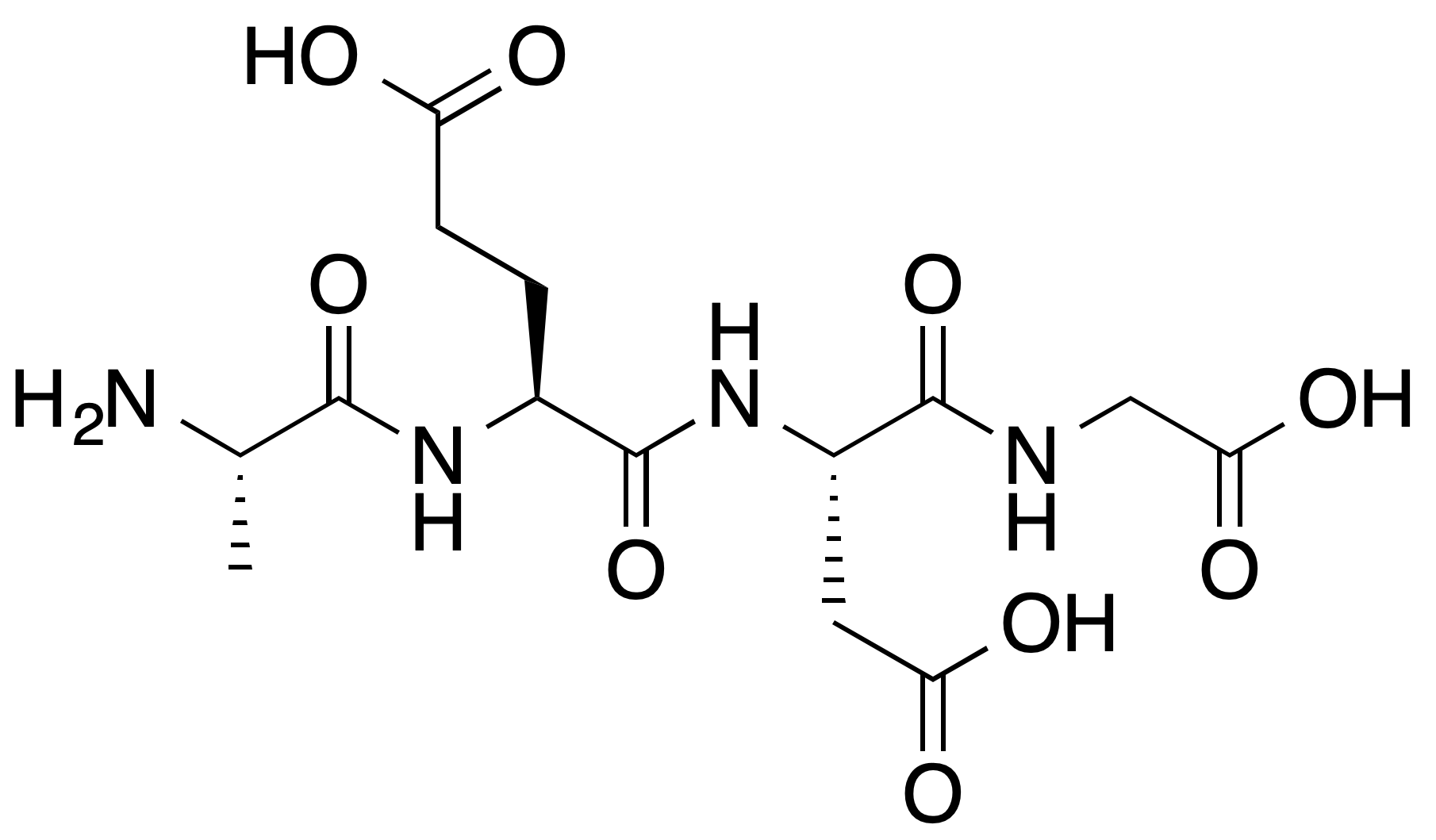
The molecule is about as simple as a peptide gets: alanine, glutamate, aspartate and glycine in that order, joined by three ordinary alpha-peptide bonds, with a free N-terminal amine on the alanine and a free carboxylate on the glycine. The registry names are specific that both acidic residues are alpha-linked, L-alanyl-L-alpha-glutamyl-L-alpha-aspartyl-glycine, which rules out the isopeptide alternatives in which the glutamate's gamma-carboxyl or the aspartate's beta-carboxyl would carry the chain. Those two side chains are therefore free, and with the C-terminal carboxylate they give the molecule three negative charges against one positive at neutral pH.[2,1,13]
There are three stereocentres and all three are L. The FDA record marks the stereochemistry as absolute, and PubChem and ChEBI agree on one InChIKey, HGHOBRRUMWJWCU-FXQIFTODSA-N, so identity at that level is settled. Eight stereoisomers of the sequence are possible; a 2025 review points out that only the all-L form has been studied and that comparing the others is still open work. There is nothing else to specify: no non-proteinogenic residue, no amide or acetyl cap, no disulfide, no ring, no lipid, no sugar and no metal.[2,1,13,14]
The three-dimensional view on this page is a calculation. No experimental structure of the peptide exists: a Protein Data Bank title search for epitalon and a full-text search for the sequence both returned nothing, and PubChem's own 3D record is a computed conformer, one of ten the database lists. The published conformational analysis is likewise computational: a molecular-dynamics run on the zwitterion in explicit water reported a lowest-energy conformer among 120 others and two intramolecular salt bridges, each formed between the alanine nitrogen and one free side-chain carboxylate, which the authors took to restrict how freely the backbone can move. That study is read here through the 2025 review rather than at source. Nothing in either the computed conformer or that simulation says what shape the peptide takes when it is bound to anything.[1,14]
- Ala1
- Glu2
- Asp3
- Gly4
Three stereocentres, at Ala1, Glu2 and Asp3; glycine is achiral. All three are L, which the FDA record marks as absolute stereochemistry and PubChem and ChEBI express as the (2S,4S) pattern in the systematic name and the same InChIKey, HGHOBRRUMWJWCU-FXQIFTODSA-N. Eight stereoisomers of this sequence are therefore possible and only the all-L form is the molecule described here; a review notes that the other seven have not been compared experimentally. There is no cysteine and so no disulfide, no cyclisation, no lipidation, no glycosylation and no metal coordination. At neutral pH the molecule is a zwitterion carrying one ammonium group and three carboxylates, and the molecular-mechanics work was run on that ionisation state.[1,2,13,14]
What studies on Epithalon show
Each card names the experimental system and what was measured. A result in one system is not evidence about another.
Cell-culture study with quantitative PCR telomere measurement, hTERT expression, telomere repeat amplification protocol and C-circle assay · Human 21NT and BT474 breast cancer lines treated for four days; IBR.3 fibroblasts and HMEC mammary epithelial cells treated for three weeks; PC3-hTERT as a telomerase-positive reference and U2OS as an alternative-lengthening reference
Mean telomere length rose in all four cell types, in the cancer lines within four days and in the normal cells only once treatment was extended from four days to three weeks. hTERT messenger RNA rose about twelvefold in 21NT and fivefold in BT474. Telomerase activity rose in the two normal cell types but not significantly in either cancer line, while the C-circle signal rose about tenfold in 21NT and threefold in BT474 with more promyelocytic leukaemia bodies, while in the normal cells it did not rise at all in the fibroblasts and rose only insignificantly in the epithelial cells. The dose response was not monotonic: in BT474 the largest telomere change was at the lowest effective concentration, and the lowest concentration tested shortened telomeres in 21NT.[5]
- Material
- Epitalon obtained from a commercial source, with no identity or purity check reported; assay concentrations 0.1 to 1 microgram per millilitre in the culture medium
- Measured
- Mean telomere length in kilobases by quantitative PCR, hTERT messenger RNA by reverse-transcription quantitative PCR, telomerase enzyme activity by the repeat amplification protocol, alternative-lengthening activity by the C-circle assay, and promyelocytic leukaemia nuclear bodies by immunofluorescence
- Compared with
- Untreated cells of the same line, plus the two reference lines
- Limitation
- Two-dimensional cultures of immortalised and primary human lines, so the study says nothing about a whole organism. Telomere length was measured as an average across all chromosomes, which the authors name as a limit of the method. The peptide was vendor-sourced with no stated verification, so the material is identified by its label. The proposed explanation for the cancer-line result, that the peptide traps histone H1 on DNA and thereby triggers recombination-based lengthening, is stated by the authors as speculation with no data behind it in this paper. The figures were published incorrectly and replaced by an erratum; the corrected versions were used here.
Al-Dulaimi S et al., 2025, Biogerontology
Cell-culture study of telomerase induction · Telomerase-negative human fetal fibroblast culture
All three were reported to increase, which the authors read as reactivation of the telomerase gene in a somatic cell. This is the origin of every later statement that the peptide acts on telomerase.[15]
- Material
- Epithalon peptide added to the culture medium
- Measured
- Expression of the telomerase catalytic subunit, telomerase enzymatic activity and telomere length
- Compared with
- Untreated culture
- Limitation
- A three-page report read here as an abstract only, with no quantities, replicate counts or statistics available at that level, and no information on the identity or purity of the peptide used. One cell type, one laboratory. The 2025 study above reproduced the direction of the telomere result but found telomerase activity unchanged in two cancer lines, so the mechanism asserted here is not settled.
Khavinson VKh et al., 2003, Bulletin of Experimental Biology and Medicine
Serial-passage proliferation study · Primary human pulmonary fibroblasts from a 24-week fetus, carried to the end of their replicative life
Control cultures stopped dividing at passage 34. Treated cultures were reported to lengthen telomeres to a size comparable with passage 10 and to complete ten further divisions, reaching passage 44 and still dividing when reported.[25]
- Material
- Epithalon (Ala-Glu-Asp-Gly) added to ageing cultures
- Measured
- Passage number at which division stopped, and mean telomere size relative to early passages
- Compared with
- Untreated cultures from the same isolate, and the same cells at passage 10
- Limitation
- One isolate from one donor, abstract-only here, with no replicate or statistical detail at that level and no karyotype or transformation check reported for cells pushed past their normal limit. Extending the division count of a fibroblast culture is a statement about that culture.
Khavinson VKh et al., 2004, Bulletin of Experimental Biology and Medicine
Ex vivo human cell study with fluorescence in situ hybridisation · Phytohaemagglutinin-stimulated blood lymphocytes from five men aged 18 to 22 and six men aged 49 to 54
Relative telomere length changed significantly in 7 of 11 individuals: it rose in five (by 41 and 55 per cent in two younger men and by 156, 18 and 76 per cent in three middle-aged men) and fell in two (by 37 and 15 per cent). The authors describe the pattern as a tendency towards the group mean, rising where the starting length was below it and falling where it was above. The mitotic index was unchanged except in one case.[26]
- Material
- Peptide AEDG added to the lymphocyte cultures
- Measured
- Relative length of telomeric regions of metaphase chromosomes by in situ hybridisation with telomere-specific probes, and mitotic index
- Compared with
- Paired untreated cultures from the same individuals
- Limitation
- Eleven donors, no randomisation, and an effect that goes in both directions, which is a pattern that regression to the mean can also produce in paired measurements. Abstract-only here, so the per-cell distributions and the statistical handling were not inspected. Cultured lymphocytes from a blood sample are not a person.
Khavinson VK et al., 2019, Bulletin of Experimental Biology and Medicine
Ultraviolet spectroscopy and melting thermodynamics · Synthetic duplex DNA, poly(dA-dT) paired with poly(dA-dT), in solution
The free duplex melted at 69.5 degrees Celsius with an enthalpy increase of 976.4 kilojoules per mole of base pair, and the peptide-DNA complex melted at 28 degrees Celsius with 444.6 kilojoules per mole, so peptide binding lowered both the melting temperature and the energy needed to separate the strands.[16]
- Material
- Ala-Glu-Asp-Gly peptide titrated against the duplex
- Measured
- Hyperchromic change at the DNA absorbance maximum as a binding isotherm, the melting temperature of the duplex and the enthalpy of the helix to coil transition
- Compared with
- The free duplex under the same conditions
- Limitation
- An alternating AT homopolymer is the easiest duplex to destabilise and is not genomic DNA; nothing here addresses sequence specificity, chromatin, or any cellular consequence. Abstract-only, with the measurement conditions taken from the summary. The companion papers from the same group propose a complementary recognition scheme and a specific binding block in the telomerase promoter region, which is a model built on these measurements rather than an independent result.
Khavinson VKh et al., 2008, Bulletin of Experimental Biology and Medicine
Fluorescence microscopy and fluorescence quenching in vitro · HeLa cells incubated with fluorescein-labelled peptides; separately, labelled single-stranded and double-stranded deoxyribooligonucleotides and DNA-ethidium bromide complexes in solution
Labelled peptide fluorescence was seen in the cytoplasm, the nucleus and the nucleolus, so a four-residue peptide can reach the nuclear compartment. Quenching constants differed by peptide and by oligonucleotide, with epithalon, pinealon and bronchogen quenching preferentially against CNG-containing sequences and epithalon, testagen and pinealon preferentially against CAG, and the constants also differed with the methylation state of the cytosine.[17]
- Material
- Fluorescein isothiocyanate-labelled epithalon (Ala-Glu-Asp-Gly) beside labelled pinealon (Glu-Asp-Arg) and testagen (Lys-Glu-Asp-Gly), and the unlabelled peptides for the quenching work
- Measured
- Distribution of fluorescence between cytoplasm, nucleus and nucleolus, and Stern-Volmer quenching constants for each peptide against each oligonucleotide
- Compared with
- The other peptides in the panel, and oligonucleotides differing in sequence and in cytosine methylation state
- Limitation
- The molecule imaged in cells is the fluorescein conjugate, which is larger than the peptide and differently charged, so the localisation result is about the conjugate. Quenching constants report that an interaction occurred and its relative strength, not a structure, a stoichiometry or an affinity for genomic DNA in a nucleosome. Abstract-only here.
Fedoreyeva LI et al., 2011, Biochemistry (Moscow)
Fluorescence quenching in vitro · Fluorescein-labelled wheat histones H1, H2B, H3 and H4, alone and complexed with deoxyribooligonucleotides or DNA
All six peptides bound all four labelled histone classes, with the constants depending on the histone, on the peptide sequence and on the oligonucleotide present; linker histone H1 bound single-stranded oligonucleotides preferentially while the core histones bound methylated double-stranded ones, and the bound nucleic acid could either increase or decrease peptide binding.[18]
- Material
- Ala-Glu-Asp-Gly beside five other short peptides
- Measured
- Fluorescence quenching constants for peptide binding to each histone and to each histone-oligonucleotide complex
- Compared with
- The other peptides, the four histone classes, and methylated against unmethylated oligonucleotides
- Limitation
- Plant histones, purified and fluorescently labelled, outside any nucleosome. The study establishes that binding happens in that system and ranks it; it identifies no site, and the authors infer the binding motifs rather than locating them. Abstract-only. A later docking study from the related programme proposed H1.3 and H1.6 as the preferred partners, which is a computation and not a measurement.
Fedoreyeva LI et al., 2013, Biochemistry (Moscow)
Pineal gland perifusion, ex vivo · Pineal glands from male Wistar rats aged 9 weeks and 27 months, held in a perifusion device
No significant effect on melatonin secretion at any concentration tested, in young or old animals, and the isoproterenol-stimulated rise in melatonin was not modified by the peptide. The authors conclude that the tetrapeptide does not appear to take part in the control of melatonin secretion by the rat pineal gland, at least in vitro.[27]
- Material
- Synthetic Ala-Glu-Asp-Gly at assay concentrations of 10 to the minus 4 through 10 to the minus 6 molar in the perifusate
- Measured
- Melatonin released into the perifusate
- Compared with
- Untreated glands, and glands stimulated with the beta-adrenergic agonist isoproterenol with and without the peptide
- Limitation
- An isolated-organ preparation at high assay concentrations, so it cannot exclude an effect that needs an intact animal or a longer exposure. It is included because it is one of the few experiments on this peptide published by a group outside the originating programme, and because it disagrees with a later pinealocyte-culture study from that programme in which the peptide was reported to raise melatonin in the medium along with arylalkylamine N-acetyltransferase and phosphorylated CREB. Both are abstract-only here and the disagreement is unresolved.
Djeridane Y et al., 2003, Journal of Endocrinological Investigation
Invertebrate lifespan study · Drosophila melanogaster, wild-type Canton-S strain, with the peptide present in the culture medium only during development from egg to larva and the lifespan of the resulting adult flies then followed
Adult lifespan was 11 to 16 per cent longer than control at medium concentrations from 0.001 x 10^-6 to 5 x 10^-6 weight per cent for males and from 0.01 x 10^-6 to 0.1 x 10^-6 weight per cent for females. The authors state that the increase did NOT depend on concentration, and that the effective concentrations were 16,000 to 80,000,000 times lower than those reported for melatonin.[4]
- Material
- Epitalon (Ala-Glu-Asp-Gly)
- Measured
- Adult lifespan, separately for males and females, across a range of medium concentrations
- Compared with
- Untreated culture medium, with melatonin as the reference geroprotector
- Limitation
- Read as an abstract. An insect, and lifespan is the only endpoint: no molecular measurement of any kind, so the paper cannot say what the peptide did. The two features the authors present as remarkable are the two reasons for caution. An effect flat across a five-thousand-fold concentration range is not a concentration-response relationship, and an effective concentration seven orders of magnitude below a reference compound is a claim that needs independent replication, which this one has not had. The peptide was present only during development, so the adult lifespan measured follows an exposure that had already ended.
Khavinson VK et al., 2000, Mechanisms of Ageing and Development
Rodent lifespan and spontaneous tumour study · Female outbred Swiss-derived SHR mice, 54 per group, followed from the age of 3 months until natural death
Mean lifespan did not change. Neither did food consumption, body weight, or total spontaneous tumour incidence. What did change: the lifespan of the last 10 per cent of survivors was 13.3 per cent longer (p < 0.01), maximum lifespan 12.3 per cent longer, the age-related switching off of oestrous function was slower, chromosome aberrations in bone marrow cells were 17.1 per cent less frequent (p < 0.05), and leukaemia development was inhibited 6.0-fold.[28]
- Material
- Epitalon (Ala-Glu-Asp-Gly)
- Measured
- Food consumption, body weight, mean and maximum lifespan, lifespan of the last 10 per cent of survivors, age-related loss of oestrous function, frequency of chromosome aberrations in bone marrow cells, and total and site-specific spontaneous tumour incidence
- Compared with
- A saline control group of the same size
- Limitation
- Read as an abstract. The null on mean lifespan is the result most often lost when this paper is quoted, and it sits in the same abstract as the positive findings. Maximum lifespan and the last-decile figure are computed from the tail of a single cohort, so they rest on few animals, and the leukaemia figure is one site inside an unchanged total tumour incidence, which is the kind of subgroup result that needs replication. One laboratory, and it is the laboratory that made the peptide; the authors' further conclusion about the safety of long-term exposure is an inference from this one cohort rather than a toxicology finding.
Anisimov VN et al., 2003, Biogerontology
Transgenic tumour model, with a sibling peptide from the same programme as a second arm · Female FVB/N HER-2/neu transgenic mice followed from the age of 2 months; spontaneous mammary tumour development, lung metastases, and HER-2/neu messenger RNA in the tumours
In the epitalon arm the cumulative number and the maximum size of mammary tumours were reduced (p < 0.05), more mice carried a single tumour and fewer carried two or more, the size but not the number of lung metastases was reduced, and the HER-2/neu transcript level in tumours was 3.7-fold lower than in controls. The second arm went the other way: Vilon increased mammary cancer incidence, shortened the mean latent period of tumours and increased the cumulative tumour number, each at p < 0.05.[29]
- Material
- Epitalon (Ala-Glu-Asp-Gly), with Vilon (Lys-Glu) from the same programme in a second arm
- Measured
- Cumulative tumour number, maximum tumour size, the distribution of mice by tumour count, number and size of lung metastases, and HER-2/neu transcript level in mammary tumours
- Compared with
- Saline
- Limitation
- Read as an abstract. One transgenic model in one laboratory, the laboratory that made both peptides, with tumour counts and sizes as endpoints and a single transcript measurement as the only mechanism offered. The Vilon arm is the most useful thing in it for a reader of this page: two closely related peptides from the same programme moved tumour development in opposite directions in the same experiment. It is also the only tumour experiment located for this peptide, and a transgenic tumour model is not a carcinogenicity study.
Anisimov VN et al., 2002, International Journal of Cancer
What has actually been measured about AEDG binding, and what is inferred
There is no identified receptor for this peptide, and the proposed mechanism is not a receptor mechanism. It runs instead through direct binding to nucleic acids and to histones. The measurements behind it are optical and thermodynamic: a hyperchromic binding isotherm against an alternating AT duplex with a large fall in melting temperature and transition enthalpy, fluorescence quenching constants that differ by oligonucleotide sequence and by cytosine methylation state, and quenching against purified labelled histones. Taken together these establish that a four-residue, triply charged peptide interacts with nucleic acids and with histone proteins in solution, and that the interaction is not indifferent to sequence.[16,30,17,18]
What is inferred is larger than what is measured. The same group proposed a complementary recognition scheme in which short peptides read base pairs at the edge of the major groove, nominated a specific block for this peptide and noted that it recurs in the promoter region of the telomerase gene, and later built a molecular-mechanics model of the peptide at promoter sites of several named genes. A separate docking study put the peptide on linker histones H1.3 and H1.6 with calculated binding energies, and another docked it onto the amino-acid transporters LAT1 and LAT2 and the peptide transporter PEPT1 to argue that cell entry is feasible. Every one of those is a calculation or a model. None of them is a structure of a complex, none measures occupancy in a cell, and the step from a promoter-site model to a change in transcription is not covered by any of them.[31,32,33,34]
The reported cellular readouts sit at the far end of that chain. Telomerase catalytic subunit expression, telomerase activity and telomere length were reported to rise in human fibroblast cultures; a quantitative 2025 study found telomere lengthening in four human cell types but a split mechanism, with telomerase activity rising only in the normal cells and a recombination-based lengthening signal rising only in the two cancer lines. Messenger RNA and protein for several neuronal differentiation markers rose in human gingival mesenchymal stem cells in a study whose own molecular-modelling section proposed histone H1 binding as the explanation. These are measured endpoints in named cell systems. The link from them back to the binding chemistry is a hypothesis, and the 2025 study's authors describe their own version of it as speculation. Other measured endpoints sit at the same distance from the chemistry: dendrite number and length rose in induced neurons transdifferentiated from elderly donors' fibroblasts while several other readouts in the same study did not move, chromatin denaturation parameters changed in cultured lymphocytes from donors aged 76 to 80, scratch closure and reactive-oxygen and fibrosis readouts changed in a high-glucose retinal pigment epithelial line, and transcript levels of three plant gene families changed in tobacco callus, which is the same binding-based argument tested where no vertebrate receptor could be invoked at all.[15,5,33,23,35,36,37]
What is still unknown about Epithalon
The literature is concentrated in one programme. A large majority of the roughly 170 indexed works mentioning this peptide come from the St Petersburg Institute of Bioregulation and Gerontology and its collaborators, and a great many are three-page reports whose text carries no replicate counts, no effect sizes and no description of the material used. That is a structural problem rather than a complaint about any one paper: a finding reported ten times by one group is not replicated. The two most useful counterweights located here are the 2003 rat pineal perifusion study, which found no effect on melatonin secretion and is contradicted by a later pinealocyte study from the originating programme, and the 2025 London telomere study, which reproduced the telomere direction and contradicted the telomerase explanation in cancer lines. Independent in vitro reports also exist in mouse and bovine oocytes, each in one species and, in the mouse case, at an assay concentration far above the one used in the human cell work.[6,27,38,5,39,40]
The telomere mechanism is open. The original 2003 report attributed telomere lengthening to telomerase reactivation. The 2025 study measured telomerase activity directly with the repeat amplification protocol and found it unchanged in both breast cancer lines while telomere length and catalytic-subunit messenger RNA both rose, and found the C-circle marker of recombination-based lengthening up tenfold in one of them. Two mechanisms are therefore on the table for one readout, with no structural or biochemical account of how a tetrapeptide would initiate either, and the dose response in that study was not monotonic. The human lymphocyte study moved telomere length in both directions in different donors.[15,5,26]
Material identity is a live question outside the registries. The peptide is cheap to synthesise and its sequence isomer Glu-Ala-Asp-Gly shares its formula and nominal mass, and an analytical study of two preparations sold under this name treated that substitution as the one a mass measurement alone could not exclude, separating the isomers by exploiting the cyclisation of an N-terminal glutamate on heating. Published studies rarely state where their peptide came from or what was done to confirm it: the 2025 telomere study names a vendor and reports no identity or purity check. A paper that does not characterise its material is reporting an effect of something.[24,14,5]
The structural and physico-chemical record is thin, and two reviews say so. No experimental structure of the peptide or of any complex it forms has been deposited; the conformational picture rests on one molecular-dynamics simulation, and the histone and transporter interactions on docking. A 2025 review states that physico-chemical and structural investigation of this peptide remains quite limited and that its mechanism of action is unclear, notes that short peptides of this kind are expected to degrade rapidly and that stabilising modifications have not been tried here, and points out that the seven other stereoisomers of the sequence have never been compared. A 2026 narrative review reaches the same place from the clinical side: biologically active, with pharmacokinetic and long-term data it calls inadequate and no adequately powered randomised trial. The human literature attached to this name is also mostly not about this molecule. The named studies in older adults used epithalamin, the bovine extract, which is a mixture with no single formula, and the 2026 review deliberately keeps those studies separate as historical context; the only trial-registry record naming the peptide is an Early Phase 1 study in which it is one of several ingredients of the intervention. Both reviews are cited here for their assessment of the evidence base, not for any outcome claim.[14,6,1,10]
Two of the measured findings point in opposite directions on tumour biology, and this page states that rather than resolving it. The independent 2025 study reports that in two breast cancer lines the telomere lengthening it measured ran through alternative lengthening of telomeres rather than through telomerase, with the C-circle marker up tenfold in one line against only a minor rise in normal cells, so the route it identifies in cancer cells is one that cancer cells themselves use to escape a replicative limit. The only tumour experiment located for this peptide, in HER-2/neu transgenic mice from the originating programme, reports the other direction: fewer and smaller mammary tumours and a HER-2/neu transcript level 3.7-fold lower than control. Neither is a safety assessment. No carcinogenicity study, no tumour study in a second laboratory and no human tumour data for this peptide was located, and in that same transgenic experiment a two-residue peptide from the same programme increased mammary cancer incidence, shortened the mean latent period and increased the cumulative tumour number, which is the clearest published evidence that this family of peptides cannot be assumed to be inert.[5,29]
Key papers on Epithalon
- Epitalon increases telomere length in human cell lines through telomerase upregulation or ALT activity.
Al-Dulaimi S, Thomas R, Matta S, Roberts T (2025), Biogerontology · Cell-culture study with telomere, hTERT, telomerase and C-circle assays
The most quantitative study of this peptide and the only one from a group with no connection to the originating programme that measures the telomere claim directly, with four cell types and four separate assays. It is also open access, and it disagrees with the received mechanism. Read the erratum beside it: the figures were replaced.
- Overview of Epitalon-Highly Bioactive Pineal Tetrapeptide with Promising Properties.
Araj SK, Brzezik J, Madra-Gackowska K, Szeleszczuk L (2025), International Journal of Molecular Sciences · Narrative review with a physico-chemical section
The one review that goes looking for the chemistry rather than the effects, and reports how little of it there is: the molecular-dynamics conformers and salt bridges, the docking work, the melting measurements, the analytical identification, the eight stereoisomers. Open access, and the fastest way to see the shape of the whole literature.
- Epithalon peptide induces telomerase activity and telomere elongation in human somatic cells.
Khavinson VKh, Bondarev IE, Butyugov AA (2003), Bulletin of Experimental Biology and Medicine · Cell-culture report
The three-page 2003 report that every later telomerase statement traces back to. Worth reading for exactly that reason, and for how little it contains.
- Effect of Epitalon on biomarkers of aging, life span and spontaneous tumor incidence in female Swiss-derived SHR mice.
Anisimov VN, Khavinson VKh, Popovich IG, Zabezhinski MA, Alimova IN, Rosenfeld SV, Zavarzina NY, Semenchenko AV, Yashin AI (2003), Biogerontology · primary-study
The most quoted animal study, read for what it actually reports: no change in mean lifespan, beside a longer maximum lifespan, fewer chromosome aberrations and less leukaemia in one cohort from the originating laboratory.
- Melting of DNA double strand after binding to geroprotective tetrapeptide.
Khavinson VKh, Solovyov AY, Shataeva LK (2008), Bulletin of Experimental Biology and Medicine · Spectroscopy and melting thermodynamics
The clearest single physical measurement on the molecule: a melting temperature and a transition enthalpy for duplex DNA with and without the peptide. If the DNA-binding account rests on anything, it rests here.
- Penetration of short fluorescence-labeled peptides into the nucleus in HeLa cells and in vitro specific interaction of the peptides with deoxyribooligonucleotides and DNA.
Fedoreyeva LI, Kireev II, Khavinson VKh, Vanyushin BF (2011), Biochemistry (Moscow) · Fluorescence microscopy and quenching
Where the sequence preference and the nuclear localisation come from, with the labelling caveat visible in the method: the molecule imaged in cells is a fluorescein conjugate.
- Effect of a synthetic pineal tetrapeptide (Ala-Glu-Asp-GLy) on melatonin secretion by the pineal gland of young and old rats.
Djeridane Y, Khavinson VKh, Anisimov VN, Touitou Y (2003), Journal of Endocrinological Investigation · Ex vivo pineal perifusion
A negative result from an independent group on the pineal claim, and the direct counterpart to a later positive report from the originating programme. Negative results are rare in this literature.
- Identification of Peptide AEDG in the Polypeptide Complex of the Pineal Gland.
Khavinson VK, Kopylov AT, Vaskovsky BV, Ryzhak GA, Lin'kova NS (2017), Bulletin of Experimental Biology and Medicine · Mass spectrometry of a polypeptide complex
The only published detection of the sequence in pineal material, which is the whole basis for calling it a pineal peptide rather than a designed one.
- Epitalon and Epithalamin: A Narrative Review of Mechanistic, Preclinical, and Clinical Evidence.
Jain A, Gallacher DM, Issa MA, Deer TR, Yong RJ, Diwan S, Lee W, Sayed D, Amirdelfan K, Robinson CL (2026), International Journal of Molecular Sciences · Narrative review
A 2026 appraisal of the evidence base by authors with no stake in the compound, useful for its explicit separation of the extract's literature from the synthetic peptide's and for its account of what is missing.
References
- 1.National Center for Biotechnology Information. PubChem Compound Summary for CID 219042, Epitalon. PubChem. source · database record
- 2.U.S. Food and Drug Administration, Global Substance Registration System. Substance record for EPITALON, UNII O65P17785G. FDA GSRS. source · database record
- 3.Khavinson VK, Kopylov AT, Vaskovsky BV, Ryzhak GA, Lin'kova NS. (2017). Identification of Peptide AEDG in the Polypeptide Complex of the Pineal Gland. Bulletin of Experimental Biology and Medicine. 164:41-43. doi:10.1007/s10517-017-3922-8 · abstract only
- 4.Khavinson VK, Izmaylov DM, Obukhova LK, Malinin VV. (2000). Effect of epitalon on the lifespan increase in Drosophila melanogaster. Mechanisms of Ageing and Development. 120:141-149. doi:10.1016/s0047-6374(00)00217-7 · abstract only
- 5.Al-Dulaimi S, Thomas R, Matta S, Roberts T. (2025). Epitalon increases telomere length in human cell lines through telomerase upregulation or ALT activity. Biogerontology. 26:178. doi:10.1007/s10522-025-10315-x · full text read · corrected: An erratum (Biogerontology 2025;27:1, doi 10.1007/s10522-025-10326-8, PMID 41240216) replaced Figures 1, 2 and 3, which had been published in incorrect versions. The text and the reported values were not changed. The figures read here are the corrected ones.
- 6.Jain A, Gallacher DM, Issa MA, Deer TR, Yong RJ, Diwan S, Lee W, Sayed D, Amirdelfan K, Robinson CL. (2026). Epitalon and Epithalamin: A Narrative Review of Mechanistic, Preclinical, and Clinical Evidence. International Journal of Molecular Sciences. 27:8922. doi:10.3390/ijms27198922 · abstract only
- 7.U.S. Food and Drug Administration. (2026). Drugs@FDA data, openFDA drugsfda endpoint, active-ingredient search for EPITALON and EPITHALON (searched November 2026). openFDA. source · database record
- 8.European Medicines Agency. (2026). Medicines data: all centrally processed human and veterinary medicines (JSON report), searched for epitalon and epithalon, retrieved November 2026. European Medicines Agency. source · database record
- 9.Health Canada. (2026). Drug Product Database, active ingredient search for epitalon and epithalon (searched November 2026). Health Canada Drug Product Database. source · database record
- 10.ClinicalTrials.gov. (2026). NCT07888595: registry record of an Early Phase 1 study whose multi-ingredient intervention lists epitalon among several peptides, enrolling by invitation. ClinicalTrials.gov. source · database record
- 11.U.S. Food and Drug Administration. (2026). Certain Bulk Drug Substances for Use in Compounding that May Present Significant Safety Risks (Category 2 of the bulk substances nominated under sections 503A or 503B), content current as of 04/22/2026. U.S. Food and Drug Administration. source · full text read
- 12.World Anti-Doping Agency. (2025). World Anti-Doping Code International Standard: Prohibited List 2026. World Anti-Doping Agency. source · full text read
- 13.ChEBI, European Bioinformatics Institute. Epitalon, CHEBI:230091. ChEBI. source · database record
- 14.Araj SK, Brzezik J, Madra-Gackowska K, Szeleszczuk L. (2025). Overview of Epitalon-Highly Bioactive Pineal Tetrapeptide with Promising Properties. International Journal of Molecular Sciences. 26:2691. doi:10.3390/ijms26062691 · full text read
- 15.Khavinson VKh, Bondarev IE, Butyugov AA. (2003). Epithalon peptide induces telomerase activity and telomere elongation in human somatic cells. Bulletin of Experimental Biology and Medicine. 135:590-592. doi:10.1023/a:1025493705728 · abstract only
- 16.Khavinson VKh, Solovyov AY, Shataeva LK. (2008). Melting of DNA double strand after binding to geroprotective tetrapeptide. Bulletin of Experimental Biology and Medicine. 146:624-626. doi:10.1007/s10517-009-0342-4 · abstract only
- 17.Fedoreyeva LI, Kireev II, Khavinson VKh, Vanyushin BF. (2011). Penetration of short fluorescence-labeled peptides into the nucleus in HeLa cells and in vitro specific interaction of the peptides with deoxyribooligonucleotides and DNA. Biochemistry (Moscow). 76:1210-1219. doi:10.1134/S0006297911110022 · abstract only
- 18.Fedoreyeva LI, Smirnova TA, Kolomijtseva GY, Khavinson VKh, Vanyushin BF. (2013). Interaction of short peptides with FITC-labeled wheat histones and their complexes with deoxyribooligonucleotides. Biochemistry (Moscow). 78:166-175. doi:10.1134/S0006297913020053 · abstract only
- 19.U.S. National Library of Medicine. alanyl-glutamyl-aspartyl-glycine, MeSH supplementary concept record C421253. Medical Subject Headings. source · database record
- 20.Khavinson V, Razumovsky M, Trofimova S, Grigorian R, Razumovskaya A. (2002). Pineal-regulating tetrapeptide epitalon improves eye retina condition in retinitis pigmentosa. Neuroendocrinology Letters. 23:365-368. PMID 12195242 · abstract only
- 21.Sakhenberg E, Linkova N, Kraskovskaya N, Krieger D, Polyakova V, Medvedev D, Krasichkov A, Khotin M, Ryzhak G. (2025). The Influence of Short Peptides on Cell Senescence and Neuronal Differentiation. Current Issues in Molecular Biology. 47:739. doi:10.3390/cimb47090739 · abstract only
- 22.Avolio F, Martinotti S, Khavinson VK, Esposito JE, Giambuzzi G, Marino A, Mironova E, Pulcini R, Robuffo I, Bologna G, Simeone P, Lanuti P, Guarnieri S, Trofimova S, Procopio AD, Toniato E. (2022). Peptides Regulating Proliferative Activity and Inflammatory Pathways in the Monocyte/Macrophage THP-1 Cell Line. International Journal of Molecular Sciences. 23:3607. doi:10.3390/ijms23073607 · abstract only
- 23.Kraskovskaya N, Linkova N, Sakhenberg E, Krieger D, Polyakova V, Medvedev D, Krasichkov A, Khotin M, Ryzhak G. (2024). Short Peptides Protect Fibroblast-Derived Induced Neurons from Age-Related Changes. International Journal of Molecular Sciences. 25:11363. doi:10.3390/ijms252111363 · abstract only
- 24.Vanhee C, Moens G, Van Hoeck E, Deconinck E, De Beer JO. (2015). Identification of the small research tetra peptide Epitalon, assumed to be a potential treatment for cancer, old age and Retinitis Pigmentosa in two illegal pharmaceutical preparations. Drug Testing and Analysis. 7:259-264. doi:10.1002/dta.1771 · abstract only
- 25.Khavinson VKh, Bondarev IE, Butyugov AA, Smirnova TD. (2004). Peptide promotes overcoming of the division limit in human somatic cell. Bulletin of Experimental Biology and Medicine. 137:503-506. doi:10.1023/b:bebm.0000038164.49947.8c · abstract only
- 26.Khavinson VK, Pendina AA, Efimova OA, Tikhonov AV, Koltsova AS, Krapivin MI, Petrovskaia-Kaminskaia AV, Petrova LI, Lin'kova NS, Baranov VS. (2019). Effect of Peptide AEDG on Telomere Length and Mitotic Index of PHA-Stimulated Human Blood Lymphocytes. Bulletin of Experimental Biology and Medicine. 168:141-144. doi:10.1007/s10517-019-04664-0 · abstract only
- 27.Djeridane Y, Khavinson VKh, Anisimov VN, Touitou Y. (2003). Effect of a synthetic pineal tetrapeptide (Ala-Glu-Asp-GLy) on melatonin secretion by the pineal gland of young and old rats. Journal of Endocrinological Investigation. 26:211-215. doi:10.1007/BF03345159 · abstract only
- 28.Anisimov VN, Khavinson VKh, Popovich IG, Zabezhinski MA, Alimova IN, Rosenfeld SV, Zavarzina NY, Semenchenko AV, Yashin AI. (2003). Effect of Epitalon on biomarkers of aging, life span and spontaneous tumor incidence in female Swiss-derived SHR mice. Biogerontology. 4:193-202. doi:10.1023/a:1025114230714 · abstract only
- 29.Anisimov VN, Khavinson VK, Provinciali M, Alimova IN, Baturin DA, Popovich IG, Zabezhinski MA, Imyanitov EN, Mancini R, Franceschi C. (2002). Inhibitory effect of the peptide epitalon on the development of spontaneous mammary tumors in HER-2/neu transgenic mice. International Journal of Cancer. 101:7-10. doi:10.1002/ijc.10570 · abstract only
- 30.Khavinson VKh, Solovyov AY, Shataeva LK. (2006). Molecular mechanism of interaction between oligopeptides and double-stranded DNA. Bulletin of Experimental Biology and Medicine. 141:457-461. doi:10.1007/s10517-006-0198-9 · abstract only
- 31.Khavinson V, Shataeva L, Chernova A. (2005). DNA double-helix binds regulatory peptides similarly to transcription factors. Neuroendocrinology Letters. 26:237-241. PMID 15990728 · abstract only
- 32.Khavinson VKh, Tarnovskaya SI, Linkova NS, Pronyaeva VE, Shataeva LK, Yakutseni PP. (2013). Short cell-penetrating peptides: a model of interactions with gene promoter sites. Bulletin of Experimental Biology and Medicine. 154:403-410. doi:10.1007/s10517-013-1961-3 · abstract only
- 33.Khavinson V, Diomede F, Mironova E, Linkova N, Trofimova S, Trubiani O, Caputi S, Sinjari B. (2020). AEDG Peptide (Epitalon) Stimulates Gene Expression and Protein Synthesis during Neurogenesis: Possible Epigenetic Mechanism. Molecules. 25:609. doi:10.3390/molecules25030609 · abstract only
- 34.Khavinson VK, Linkova NS, Rudskoy AI, Petukhov MG. (2023). Feasibility of Transport of 26 Biologically Active Ultrashort Peptides via LAT and PEPT Family Transporters. Biomolecules. 13:552. doi:10.3390/biom13030552 · abstract only
- 35.Khavinson VKh, Lezhava TA, Monaselidze JR, Jokhadze TA, Dvalishvili NA, Bablishvili NK, Trofimova SV. (2003). Peptide Epitalon activates chromatin at the old age. Neuroendocrinology Letters. 24:329-333. PMID 14647006 · abstract only
- 36.Gatta M, Dovizio M, Milillo C, Ruggieri AG, Sallese M, Antonucci I, Trofimov A, Khavinson V, Trofimova S, Bruno A, Ballerini P. (2025). The Antioxidant Tetrapeptide Epitalon Enhances Delayed Wound Healing in an in Vitro Model of Diabetic Retinopathy. Stem Cell Reviews and Reports. 21:1822-1834. doi:10.1007/s12015-025-10911-x · abstract only
- 37.Fedoreyeva LI, Dilovarova TA, Ashapkin VV, Martirosyan YT, Khavinson VK, Kharchenko PN, Vanyushin BF. (2017). Short Exogenous Peptides Regulate Expression of CLE, KNOX1, and GRF Family Genes in Nicotiana tabacum. Biochemistry (Moscow). 82:521-528. doi:10.1134/S0006297917040149 · abstract only
- 38.Khavinson VKh, Linkova NS, Kvetnoy IM, Kvetnaia TV, Polyakova VO, Korf HW. (2012). Molecular cellular mechanisms of peptide regulation of melatonin synthesis in pinealocyte culture. Bulletin of Experimental Biology and Medicine. 153:255-258. doi:10.1007/s10517-012-1689-5 · abstract only
- 39.Yue X, Liu SL, Guo JN, Meng TG, Zhang XR, Li HX, Song CY, Wang ZB, Schatten H, Sun QY, Guo XP. (2022). Epitalon protects against post-ovulatory aging-related damage of mouse oocytes in vitro. Aging. 14:3191-3202. doi:10.18632/aging.204007 · abstract only
- 40.Ullah S, Haider Z, Perera CD, Lee SH, Idrees M, Park S, Kong IK. (2025). Epitalon-activated telomerase enhance bovine oocyte maturation rate and post-thawed embryo development. Life Sciences. 362:123381. doi:10.1016/j.lfs.2025.123381 · abstract only
- 41.Kozina LS, Arutjunyan AV, Khavinson VKh. (2007). Antioxidant properties of geroprotective peptides of the pineal gland. Archives of Gerontology and Geriatrics. 44 Suppl 1:213-216. doi:10.1016/j.archger.2007.01.029 · abstract only
