igf-1
12 articles tagged with ‘igf-1’
Tesamorelin vs Ipamorelin: Human Evidence, Doses, Safety
Tesamorelin holds FDA approval for HIV-associated lipodystrophy; ipamorelin has none. This page maps the published human dosing data for each and marks the gaps.
Tesamorelin vs Ipamorelin: Evidence, Uses, Risks
This article compares tesamorelin and ipamorelin based on published human evidence, highlighting what is known about their uses and risks and where direct comparative data is missing.
IGF-1 (Insulin-Like Growth Factor 1): Structure, Signaling, and Research Applications
IGF-1 peptide structure, signaling pathways, and preclinical research applications for laboratory investigation.
CJC-1295 vs Sermorelin: Comparing Growth Hormone-Releasing Peptides
Compare CJC-1295 vs Sermorelin for growth hormone release. Analyze mechanisms, preclinical data, and research limitations for these GHRH analogs.
Premium Research Peptides: What Defines Research-Grade Quality
Explore what defines research-grade peptide quality, from purity and characterization to evidence standards and safety considerations.
Peptides vs SARMs: Key Differences in Research Applications
Compare peptides vs SARMs for research: mechanisms, evidence quality, safety profiles, and key differences in preclinical applications.
Hallmarks of Aging Part 2: Mitochondrial Dysfunction, Deregulated Nutrient Sensing, and Telomere Attrition — A Research Overview
Explore mitochondrial dysfunction, nutrient sensing, and telomere attrition in aging research. Preclinical evidence and peptide implications.
Hallmarks of Aging Part 3: Cellular Senescence, Stem Cell Exhaustion, and Altered Intercellular Communication
Explore cellular senescence, stem cell exhaustion, and altered intercellular communication as key aging hallmarks in this in-depth research review.
What Are Peptides? Part 2: Advanced Concepts in Peptide Science
Explore advanced peptide science concepts including mechanisms, preclinical evidence, research limitations, and safety considerations for laboratory research.
Insulin-Like Growth Factors: IGF-1 and IGF-2 Explained
Insulin-like growth factors IGF-1 and IGF-2 play key roles in growth and development. IGF-1, stimulated by growth hormone, rises 2-3 fold during puberty and acts as both endocrine and local growth factors. IGF-2 supports fetal growth and binds distinct receptors, influencing proliferation and survival.
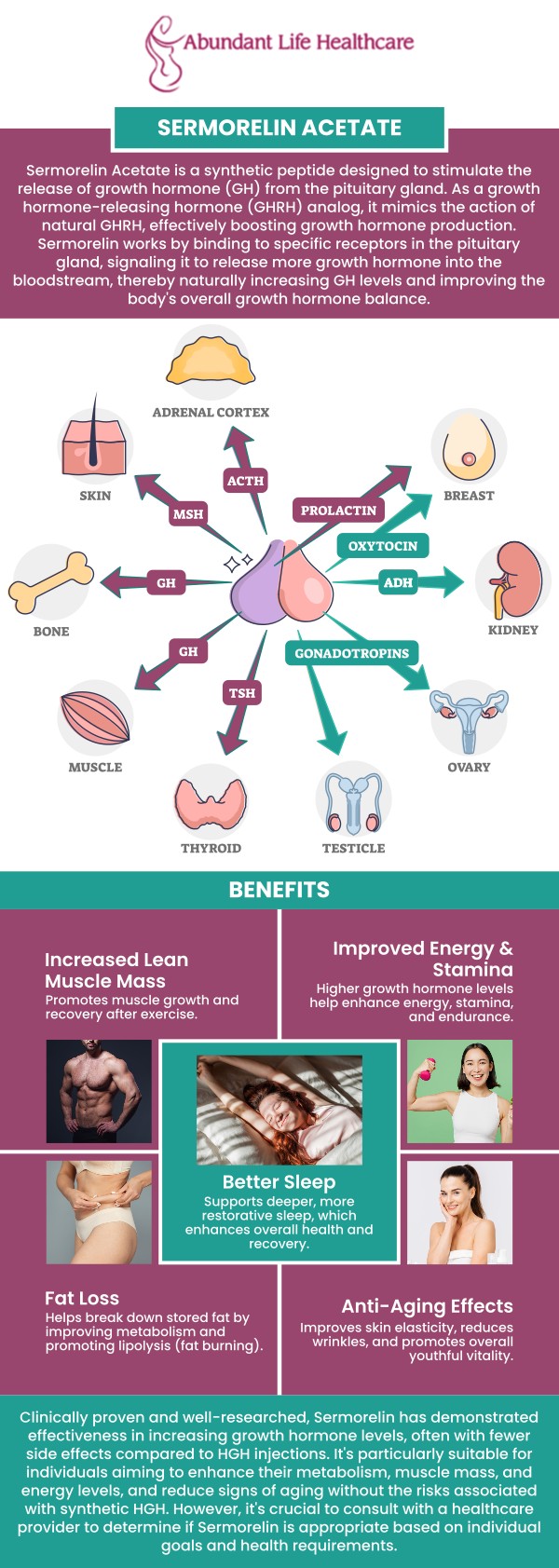
Sermorelin Effects on Pituitary and Testicular Cells
Sermorelin, a 29-amino-acid analog of growth hormone-releasing hormone, activates receptors on anterior pituitary cells to boost hGH secretion roughly twofold, from 1.1 to 2.2 μg/L over 12 hours. Studies show this leads to IGF-1 increases of 27-28% and may enhance testosterone production in Leydig cells via upregulated IGF-1. Lab experiments highlight cAMP-PKA signaling and calcium-dependent mechanisms driving these responses.

Ipamorelin: Selective GH Secretagogue for Clean Pulsatile Release
Ipamorelin, a third-generation GHS-R1a agonist (CAS 170851-70-4), stimulates pulsatile growth hormone release without elevating cortisol or prolactin, unlike earlier GHRPs. This selectivity supports precise research into GH axis effects, IGF-1 pathways, body composition, recovery, and sleep. Studies highlight its role in anabolic processes and synergy with CJC-1295 for enhanced GH output.