Key Takeaways
- •Peptides have emerged as a compelling area of investigation within modern biotechnology and physiological research.
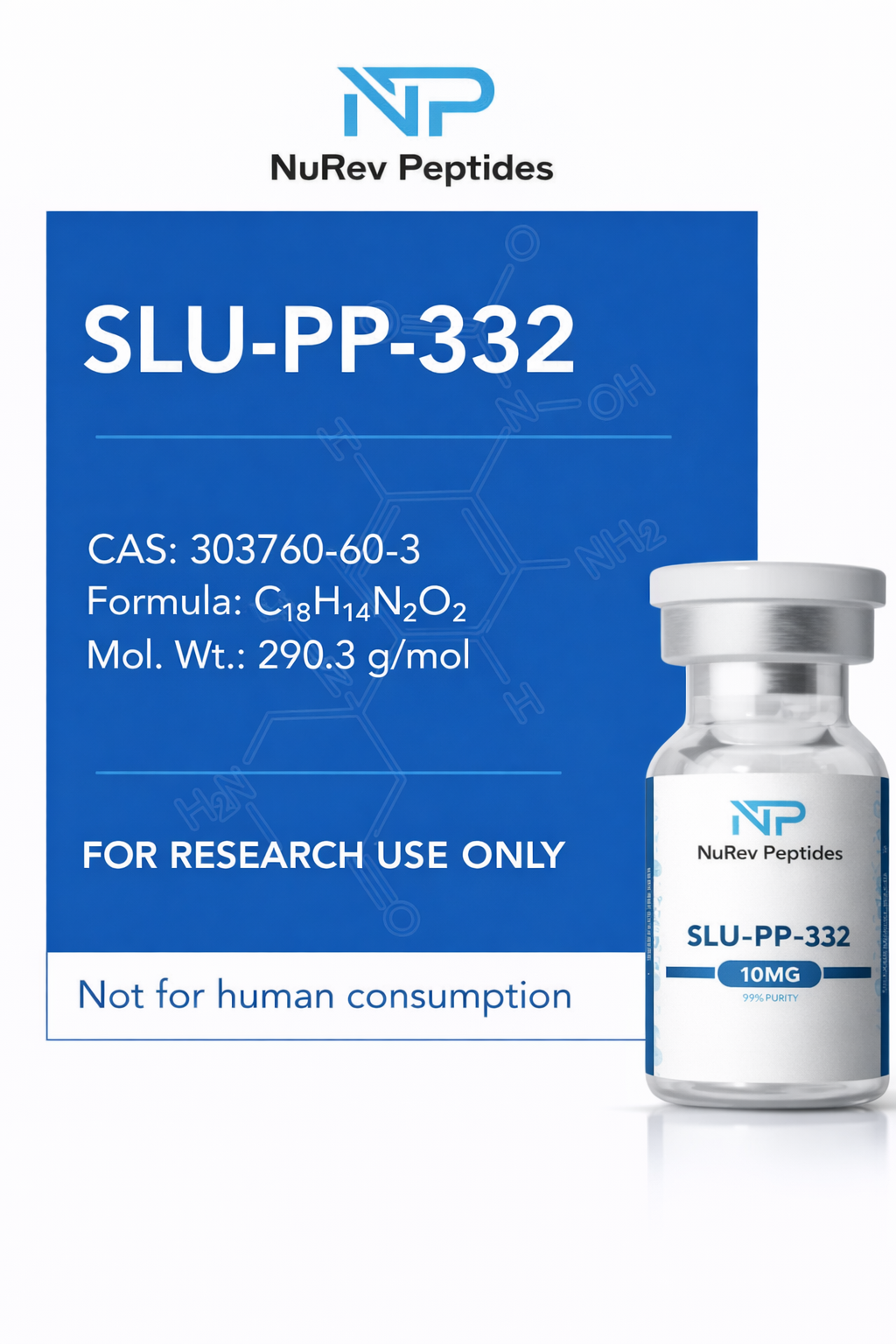
- •SLU-PP-332 is a synthetic small molecule recognized as a potent but non-selective agonist of the estrogen-related receptor (ERR), displaying its strongest activity at ERRα with an EC50 of 98 nM.
- •Molecular Structure
Introduction
Peptides have emerged as a compelling area of investigation within modern biotechnology and physiological research. In contrast to proteins, which consist of extended amino acid chains, peptides are shorter sequences capable of exerting considerable influence over biochemical and physiological processes. While familiar peptides such as collagen peptides for dermal health or creatine peptides for muscular performance are widely recognized, a newer class of specialized compounds is attracting growing scientific interest. Among these, SLU-PP-332 stands out as a promising candidate. Research suggests this synthetic small molecule may exhibit versatility across multiple domains, including supporting skin integrity, contributing to muscle repair, and modulating inflammatory responses. But what precisely is SLU-PP-332, and through what mechanisms does it operate?
SLU-PP-332 is a synthetic small molecule recognized as a potent but non-selective agonist of the estrogen-related receptor (ERR), displaying its strongest activity at ERRα with an EC50 of 98 nM. It has attracted attention in biomedical research for potential applications in metabolic health and exercise mimetics. Synthesized in the early 2000s at Saint Louis University School of Medicine—reflected by the “SLU” prefix—this compound represents a novel category of ERR modulators engineered to selectively engage ERR pathways without exhibiting estrogenic effects.
Chemical and Biological Profile of SLU-PP-332
Molecular Structure
At its core, SLU-PP-332 is a short-chain peptide composed of a handful of amino acids arranged in a sequence that imparts it with unique binding capacities. Although the exact amino acid sequence is typically proprietary, peer-reviewed papers describe it as a medium-length peptide—somewhere between 10 and 30 amino acids in length—featuring subtle structural modifications that may enhance its stability.

Mechanisms of Action
Understanding how SLU-PP-332 exerts its influence on biological systems starts by looking at the interplay between peptides and cell signaling. Like a key fitting into a lock, a peptide’s specific amino acid arrangement allows it to bind to receptors on the surface (or inside) of cells, triggering or modulating various signaling pathways. SLU-PP-332 acts as an agonist for ERRα, enhancing both mitochondrial function and energy metabolism. Through its impact on fat oxidation, glucose utilization, and thermogenesis, it shows promise as a treatment avenue for metabolic disorders. The compound binds to the ligand-binding domain of ERRα, stabilizing the receptor’s active conformation and strengthening its interaction with coactivator proteins—especially PGC-1α (peroxisome proliferator-activated receptor gamma coactivator 1-alpha).
In the case of SLU-PP-332, early in vitro and ex vivo studies suggest several compelling mechanisms:
Receptor Binding for Cellular Regeneration
Peptides can trigger robust cellular responses because their amino acid sequences often fit specific receptors, like keys designed for particular locks. In the case of SLU-PP-332, early research suggests it may bind to receptors involved in tissue repair and regeneration. When the peptide binds to these receptors, it can initiate or amplify intracellular signaling cascades that prompt cells to grow, divide, or produce specialized proteins. This effect may be especially pronounced in tissues with high turnover, such as the skin and skeletal muscle, where fibroblasts and muscle satellite cells are abundant. By potentially mimicking or enhancing the roles of natural growth factors, SLU-PP-332 could create an environment conducive to tissue renewal. If future studies confirm that SLU-PP-332 reliably boosts repair in damaged tissues, it may be applied in areas like wound healing, post-surgical recovery, and even cosmetic treatments aimed at improving skin integrity.
Modulation of Inflammatory Pathways
Inflammation is essential for healing and immune defense, but excessive or chronic inflammation can drive diseases like arthritis, psoriasis, and various metabolic disorders. Preliminary data indicate that SLU-PP-332 may help balance this inflammatory response by regulating the production of pro-inflammatory cytokines, particularly interleukin-6 (IL-6) and tumor necrosis factor-alpha (TNF-α). When these cytokines become overproduced, they can fuel a prolonged inflammatory state. SLU-PP-332 may not only inhibit signaling pathways linked to cytokine release but also fine-tune the immune response in cases where the immune system misfires. By mitigating these upstream triggers, SLU-PP-332 could indirectly reduce oxidative stress and tissue damage. While these findings come from small-scale laboratory studies, they offer an early indication of the potential of this peptide as an anti-inflammatory or immunomodulatory agent.
Support for Collagen Synthesis
Collagen is the structural backbone of many tissues, most visibly in the skin but also in tendons, ligaments, and parts of bone. Researchers are investigating whether SLU-PP-332 can boost collagen production by binding to fibroblasts, the cells responsible for synthesizing collagen and other extracellular matrix components. If the peptide interacts with specific receptors on fibroblasts, it may upregulate genes tied to collagen production, thereby increasing collagen levels in the tissue. Such a mechanism could reduce the appearance of wrinkles, improve skin texture, and potentially accelerate wound healing.
Antioxidant-Like Effects
Another avenue of investigation involves whether SLU-PP-332 possesses any antioxidant capacity. Chronic oxidative stress can accelerate aging and damage cells, so scientists are exploring the potential for SLU-PP-332 to reduce the number of free radicals (reactive oxygen species) within tissues. Certain amino acids, such as cysteine, methionine, or histidine, can scavenge free radicals, and these residues may exist in the peptide’s structure. There is also speculation that SLU-PP-332 could strengthen the body’s own antioxidant pathways by activating proteins that defend against oxidative stress. While these preliminary hints are intriguing, more studies are needed to confirm the precise antioxidant impact and whether it has meaningful therapeutic benefits in human health.
Muscle Repair and Recovery
Muscle injuries often heal slowly due to the complexity of muscle tissue regeneration, and there is growing interest in how SLU-PP-332 might accelerate this process. Early findings from small animal studies indicate that the peptide may help activate satellite cells, specialized stem cells situated along the periphery of muscle fibers. These cells are essential for the formation of new, healthy muscle fibers following injury or strenuous exercise. By potentially enhancing tissue regeneration and controlling inflammation in muscle tissue, SLU-PP-332 could speed up recovery, reduce soreness, and support rehabilitation programs. Although the data are encouraging, clinical research involving human subjects is still limited, making larger-scale trials necessary to fully understand dosing, safety, and long-term outcomes for muscle-related applications.
Core Benefits and Applications
Skin Health and Anti-Aging
- Promotes Collagen Production: As noted, SLU-PP-332 may stimulate fibroblasts to produce more collagen, fostering smoother and more resilient skin. This property is like what has been demonstrated in peptides like GHK-Cu, but early comparisons suggest SLU-PP-332 could be more stable in certain formulations.
Reviewed by the Volta Peptides Research Team