Key Takeaways
- •GLCTLVAML and CLGGLLTMV from Epstein-Barr virus
- •NLVPMVATV from cytomegalovirus
- •GILGFVFTL from influenza A virus
An immunosuppressive tumor microenvironment poses a major obstacle for many immunotherapies. A novel approach called peptide alarm therapy (PAT) has shown potential by injecting viral peptides directly into tumors to reactivate the immune system.
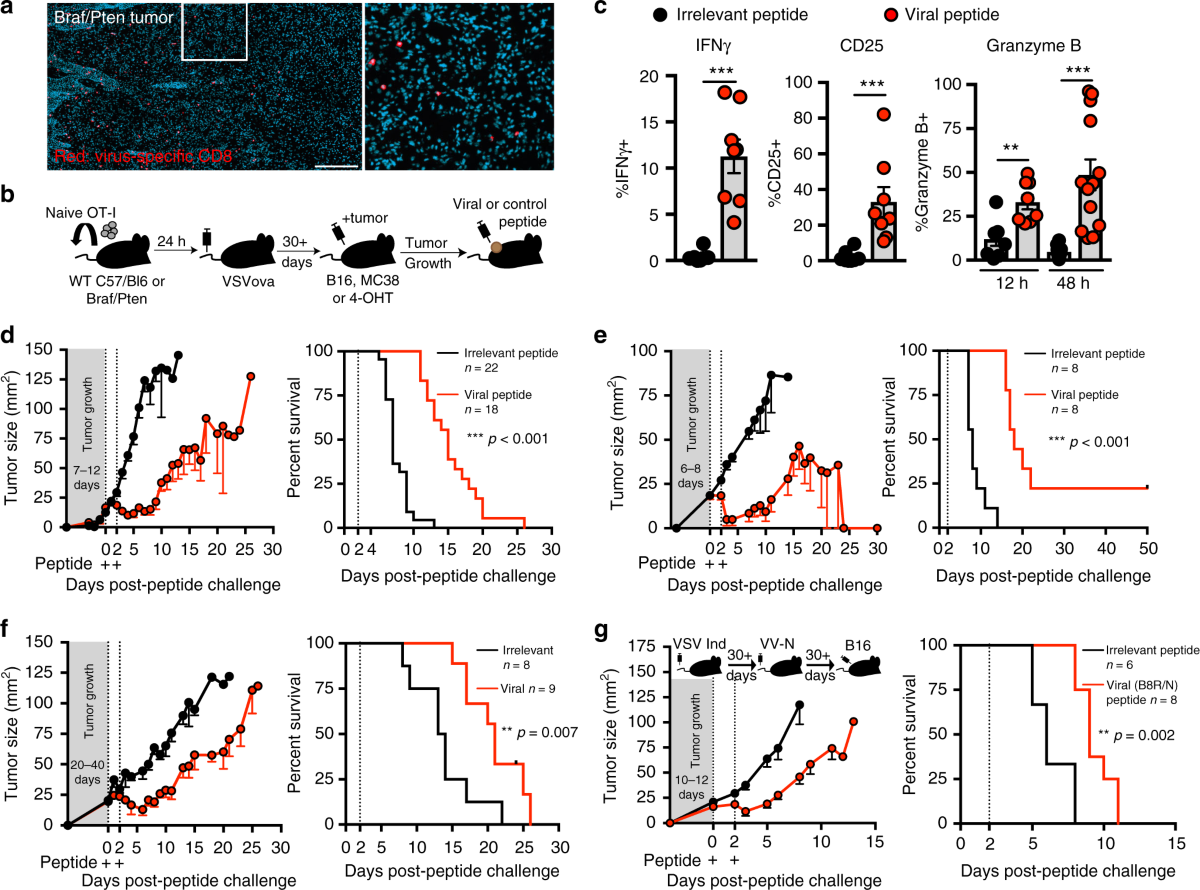
Pamela C. Rosato and her team at the Center for Immunology of the University of Minnesota in Minneapolis, USA, first demonstrated PAT's effectiveness in reducing the growth of checkpoint blockade-resistant melanoma tumors in mouse models. They used virus-specific peptides such as GLCTLVAML and CLGGLLTMV from Epstein-Barr virus, NLVPMVATV from cytomegalovirus, and GILGFVFTL from influenza A virus. The researchers then investigated whether PAT could be applied to treatment-resistant glioblastoma multiforme.
How Peptide Alarm Therapy Works
Peptide alarm therapy activates virus-specific CD8+ T memory cells. These cells remain vigilant throughout the body after an infection and are also present in tumors. They patrol tissue for signs of new infections and rarely return to the bloodstream. When exposed to antigens again, they produce pro-inflammatory cytokines and chemokines. This triggers local immune stimulation and recruits both innate and adaptive immunity to the affected tissue.
Success in Resistant Melanoma Tumors
The scientists successfully reactivated virus-specific T memory cells in a melanoma mouse model by injecting adjuvant-free, non-replicating viral peptides into the tumors. This approach reduced the growth of melanoma tumors that were resistant to checkpoint blockade and had poor immunogenicity. When the scientists combined the tumor alarm therapy with a PD-L1 checkpoint blockade, they were able to completely eliminate the melanoma tumor load.
Investigating Glioblastoma Multiforme
Building on this success, the researchers explored using viral peptides to reactivate T memory cells in glioblastoma multiforme, one of the most aggressive and treatment-resistant forms of cancer. Despite standard treatments such as surgery, radiation, and chemotherapy, glioblastoma multiforme is invariably fatal. The immune system is locally and systemically suppressed in glioblastoma multiforme, making it difficult for immunotherapies that work in other tumor types to be effective.
Virus-Specific CD8+ T Cells in Glioblastoma Tumors
To investigate the presence of virus-specific CD8+ T cells in human glioblastomas, the researchers obtained tumor tissue from patients who underwent surgical resection of solid tumors or tumor metastases. They isolated lymphocytes from the minced tumors and constructed HLA-A*02:01-specific tetramers loaded with the following immunodominant peptides from common viral infections:
- GLCTLVAML and CLGGLLTMV from Epstein-Barr virus
- NLVPMVATV from cytomegalovirus
- GILGFVFTL from influenza A virus
The lymphocytes were stained with PE-conjugated HLA-A*02 tetramers for each of these viral epitopes. The results showed that virus-specific CD8+ T cells were present in all clinical glioblastoma samples examined. Notably, T cells specific for a single viral epitope often accounted for more than 1% of the total CD8+ T cell population in the tumor. The detected memory T cells expressed markers of tissue residency (CD69 and CD103).
Reactivating Memory T Cells with Immunodominant Viral Peptides
The researchers then tested whether they could reactivate the virus-specific T cells in glioblastoma tumors to enable them to assume sensor and alarm functions, thereby reversing the immunosuppressive tumor microenvironment. They created ex vivo organotypic slice cultures from five HLA-A2+ glioblastoma tumors, preserving the tumor environment. The scientists added the viral peptides GLCTLVAML, CLGGLLTMV, NLVPMVATV, and GILGFVFTL or a control to the autologous slice cultures. Nine hours later, they removed the tumor slices and performed RNAseq on the entire tissue. In 4 of the 5 tumors, gene expression differed significantly between control and viral peptide treatment. Further analysis revealed that functions and signaling pathways crucial for antiviral reactions and lymphocyte migration were upregulated.
Conclusion: Triggering Immune Stimulation
Virus-specific memory T cells play a crucial role in the immunological microenvironment of glioblastoma. By reactivating these cells with immunodominant peptides from common viral infections, it is possible to use their activity to overcome the immunosuppressive tumor microenvironment. This study highlights the potential of virus-specific tissue-resident memory T cells for improving treatment outcomes in patients with glioblastoma multiforme.
For researchers interested in exploring peptide-based approaches, Volta Peptides offers a range of tools including a reconstitution calculator and a dosage and cycle planner to assist with experimental design. Additionally, the peptide glossary provides definitions of key terms used in immunotherapy research.