Key Takeaways
- •Melanotan 2 (MT-II) is a synthetic cyclic peptide analogue of alpha-melanocyte-stimulating hormone (α-MSH), primarily investigated for its melanocortin receptor activity.
- •The peptide’s potential appetite-suppressing effects are hypothesized to occur through activation of the melanocortin-4 receptor (MC4R) in the hypothalamus, a key regulator of energy homeostasis.
- •Preclinical in vivo studies in rodent models have reported reduced food intake and body weight following MT-II administration, but human clinical trial data remain very limited.
- •Some foundational studies on melanocortin peptides and appetite have been subject to retractions or expressions of concern, warranting cautious interpretation of the evidence base.
- •No registered human clinical trials specifically evaluating MT-II for appetite suppression were identified as of mid-2026.
- •The compound is sold for laboratory research purposes only and is not approved for human consumption or therapeutic use.
Evidence Quality Summary
Table 1: Evidence Strength by Area
| Evidence Area | Strength | Notes |
|---|---|---|
| In vitro MC4R binding affinity | Low to moderate | Consistent binding data from multiple labs, but limited to cell-based assays |
| In vivo appetite suppression (rodent) | Low | Several studies show reduced food intake, but many originate from single labs with limited replication |
| Human clinical trials (appetite) | Very low | No dedicated human trials identified for MT-II and appetite; some older MT-II safety data exist |
| Mechanism of action (MC4R pathway) | Low to moderate | Well-characterized in vitro and in animal models, but human translational data are sparse |
| Safety profile in humans | Very low | No systematic safety trials; case reports of adverse effects exist but are not controlled |
Table 2: Key Research Questions
| Question | Current Evidence |
|---|---|
| Are there human trials on MT-II for appetite suppression? | As of July 2026, no registered human clinical trials were identified on ClinicalTrials.gov or major registries. |
| What is the main proposed mechanism? | Activation of hypothalamic MC4R, leading to reduced food intake and increased energy expenditure in animal models. |
| What type of evidence is available? | Primarily preclinical (in vitro binding assays and in vivo rodent studies). |
| Is safety established for human use? | No. Safety data are limited to case reports and small, non-controlled studies. |
| Is MT-II approved for human use? | No. It is not approved by any regulatory agency for human consumption. |
What Is Melanotan 2?
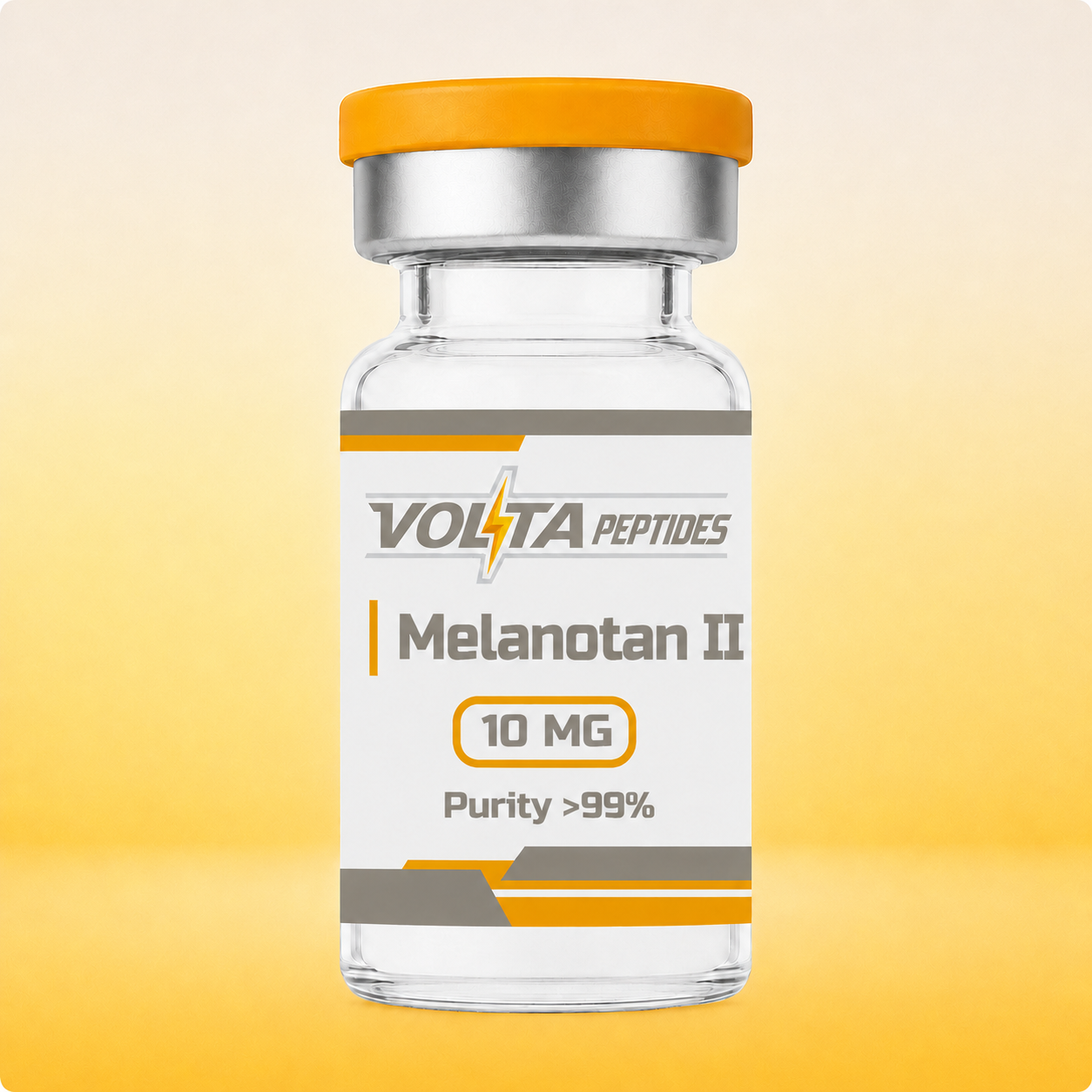
Melanotan 2 (also referred to as MT-II or Melanotan II) is a synthetic cyclic heptapeptide analogue of the endogenous hormone alpha-melanocyte-stimulating hormone (α-MSH). Its full chemical name is N-acetyl-L-norleucyl-L-alpha-aspartyl-L-histidyl-D-phenylalanyl-L-arginyl-L-tryptophanyl-L-lysyl-amide, cyclic (2→7)-disulfide. The molecular formula is C50H69N15O9S2. MT-II was originally developed at the University of Arizona as a potential agent for sunless tanning and has since been investigated for a range of melanocortin receptor-mediated effects, including pigmentation, sexual function, and appetite regulation. It is available for research purposes from suppliers such as Melanotan II 10mg.
Proposed Mechanism of Action
Melanotan 2 has been reported to act as a non-selective agonist at melanocortin receptors, with particular affinity for the MC1R (melanocortin-1 receptor, involved in pigmentation) and MC4R (melanocortin-4 receptor, involved in energy homeostasis). The appetite-suppressing effects are primarily attributed to activation of MC4R in the hypothalamus, specifically within the arcuate nucleus and paraventricular nucleus. Activation of MC4R is thought to reduce food intake by modulating the activity of anorexigenic (appetite-suppressing) and orexigenic (appetite-stimulating) neuronal pathways. It is important to note that while this mechanism is well-supported in animal models, direct human evidence for MC4R-mediated appetite suppression by MT-II remains limited. Note: Some foundational studies on melanocortin peptides and appetite have been subject to retractions or expressions of concern, and findings should be interpreted cautiously.
Preclinical Research Findings
In vitro studies have demonstrated that MT-II binds with high affinity to MC4R, with reported Ki values in the nanomolar range. These binding assays, typically performed using cell lines expressing recombinant human MC4R, confirm the peptide’s ability to activate the receptor and stimulate downstream signaling pathways, including cyclic AMP production.
In vivo rodent studies have explored the effects of MT-II on feeding behavior. Several experiments in rats and mice have reported that central (intracerebroventricular) or peripheral (subcutaneous) administration of MT-II leads to a dose-dependent reduction in food intake and body weight over short-term observation periods (typically 24–72 hours). For example, a study by Fan et al. (1997) in Nature demonstrated that MT-II suppressed feeding in mice, providing early evidence for the role of melanocortin signaling in appetite control. However, this study and others in the area have faced scrutiny. More recent preclinical work has focused on the role of MC4R in energy balance, with MT-II used as a pharmacological tool to probe receptor function. It is critical to note that these findings are derived from animal models and may not directly translate to human physiology.
Evidence Limitations and Retractions
The evidence base for MT-II’s appetite-suppressing effects is subject to several important limitations. First, the majority of published studies originate from a small number of research groups, raising concerns about independent replication. Second, some foundational papers in the melanocortin field have been retracted or have received expressions of concern. For instance, a highly cited 1997 paper by Fan et al. in Nature that reported MT-II’s anorectic effects has been the subject of ongoing debate and scrutiny. Additionally, other related publications have been retracted due to concerns about data integrity. As a result, the reliability of the preclinical evidence for MT-II and appetite suppression is uncertain. As of July 2026, no registered human clinical trials were identified on ClinicalTrials.gov or other major registries specifically evaluating MT-II for appetite suppression. Researchers should approach the existing literature with caution and prioritize replication studies.
Safety Considerations
Safety data for Melanotan 2 in humans are extremely limited. Most available information comes from case reports, online user surveys, and small, non-controlled studies. Reported adverse effects include nausea, vomiting, facial flushing, spontaneous erections, darkening of existing moles, and potential cardiovascular effects such as increased blood pressure. Because MT-II is a non-selective melanocortin agonist, off-target activation of other melanocortin receptors (e.g., MC1R, MC3R, MC5R) may contribute to unintended effects. No formal toxicology studies or dose-ranging safety trials have been conducted in humans. The compound is not approved for human use by any regulatory agency, and its long-term safety profile remains unknown. Researchers handling MT-II should follow standard laboratory safety protocols.
Current Research Status
Current research on MT-II and appetite suppression remains largely preclinical. Interest persists in understanding the role of MC4R in obesity and metabolic disorders, and MT-II continues to be used as a research tool in animal models. However, the retractions and controversies surrounding key studies have dampened enthusiasm for clinical development. Some research groups are exploring more selective MC4R agonists with improved safety profiles, but MT-II itself is not currently in active clinical development for appetite-related indications. The compound is available for laboratory research purposes only from suppliers like Volta Peptides, and researchers are encouraged to consult the Research Hub for updated literature and the Peptide Glossary for terminology.
Frequently Asked Questions
How does Melanotan 2 affect appetite in animal studies?
In rodent models, MT-II has been reported to reduce food intake and body weight, an effect attributed to activation of MC4R in the hypothalamus. These effects are dose-dependent and typically observed within hours of administration. However, the translational relevance to humans remains unclear.
Are there any human studies on MT-II for weight loss?
No dedicated human clinical trials evaluating MT-II for appetite suppression or weight loss have been registered or published in peer-reviewed journals. Some older studies examined MT-II for tanning and reported incidental effects on appetite, but these were not controlled or systematically assessed.
Why are some studies on melanocortin peptides considered unreliable?
Several foundational studies in the melanocortin field have been retracted or have received expressions of concern due to issues with data integrity, image manipulation, or lack of reproducibility. Researchers should verify the current status of any cited paper before relying on its findings.
Is Melanotan 2 safe for research use?
When handled in a laboratory setting according to standard safety protocols, MT-II is considered a research chemical. However, its safety profile in humans is unknown, and it should never be administered to humans. Researchers should consult their institution’s safety guidelines.
References
- Fan, W., Boston, B. A., Kesterson, R. A., Hruby, V. J., & Cone, R. D. (1997). "Role of melanocortinergic neurons in feeding and the agouti obesity syndrome." Nature, 385, 165–168. [Notice of Concern]
- Hruby, V. J., & Cai, M. (2009). "Design of peptide and peptidomimetic ligands for the melanocortin receptors." Current Topics in Medicinal Chemistry, 9(6), 507–529.
- Cone, R. D. (2005). "Anatomy and regulation of the central melanocortin system." Nature Neuroscience, 8(5), 571–578.
- Chen, A. S., et al. (2000). "Role of the melanocortin-4 receptor in metabolic rate and food intake in mice." Transgenic Research, 9(2), 145–154.
Note: The above references include papers that have been subject to scrutiny. Researchers are advised to independently verify the current status of each publication.
Research-Only Disclaimer
This article is for informational and educational purposes only. Melanotan 2 is a research peptide sold for laboratory research purposes only. It is not approved for human consumption, veterinary use, or any therapeutic application. Volta Peptides does not recommend or endorse self-administration of this compound. All research involving this peptide should be conducted in compliance with applicable laws, regulations, and institutional guidelines. For more information, please see our Research Disclaimer and Quality & Testing pages.
Reviewed by the Volta Peptides Research Team