Key Takeaways
- •Melanotan 2 (MT-II) is a synthetic cyclic peptide analogue of alpha-melanocyte-stimulating hormone (α-MSH), investigated primarily for its melanogenic and erectogenic effects in preclinical models.
- •The evidence base for MT-II is predominantly preclinical (in vitro and in vivo rodent studies), with very limited human clinical trial data and no FDA or EMA approval for any indication.
- •Several foundational studies on MT-II have been subject to retractions or expressions of concern, notably those involving sexual behavior endpoints; findings in this area must be interpreted with caution.
- •When sourcing MT-II online for research, laboratories should prioritize suppliers that provide independent third-party certificate of analysis (CoA), HPLC purity data (≥98%), and mass spectrometry verification.
- •No registered human clinical trials for MT-II were identified as of July 2026; all current use is restricted to laboratory research settings.
- •Researchers must verify that any supplier explicitly states the compound is for research purposes only and does not provide dosing or administration guidance for human use.
Evidence Quality Summary
| Evidence Area | Strength | Notes |
|---|---|---|
| Melanogenesis (pigmentation) | Low to moderate | Consistent in vitro and rodent data; limited human dose-finding studies |
| Erectile function | Very low | Majority of foundational studies retracted or under notice of concern |
| Appetite suppression | Very low | Isolated rodent studies; no replication in humans |
| Safety profile | Very low | No systematic toxicology; no long-term animal or human data |
| Purity/quality of commercial peptides | Low | Wide variability reported in independent testing of online-sourced peptides |
| Question | Current Evidence | |
| Human trials? | As of July 2026, no registered human clinical trials were identified on ClinicalTrials.gov | |
| Main mechanism? | Non-selective agonist at melanocortin receptors (MC1R, MC3R, MC4R, MC5R) | |
| Evidence type? | Predominantly in vitro and in vivo rodent studies; very limited human data | |
| Safety established? | No; no formal toxicological or pharmacokinetic studies published | |
| Approved for human use? | No; not approved by FDA, EMA, or any other regulatory agency |
What Is Melanotan 2?
Melanotan 2 (MT-II) is a synthetic cyclic heptapeptide with the sequence Ac-Nle-cyclo[Asp-His-D-Phe-Arg-Trp-Lys]-NH₂. Its IUPAC name is (3S,6S,9S,12S,15S,18S)-6-((1H-imidazol-5-yl)methyl)-1-((S)-1-acetamidobutyl)-9-((R)-2-amino-2-phenylethyl)-18-((4-aminobutyl)amino)-12-(4-hydroxybenzyl)-15-((1H-indol-3-yl)methyl)-3-(2-(methylamino)-2-oxoethyl)-1,4,7,10,13,16-hexaoxo-2,5,8,11,14,17-hexaazacyclooctadecane-3-carboxamide. The molecular formula is C₅₀H₆₈N₁₄O₁₀, and its molecular weight is 1024.2 g/mol (PubChem CID: 16132416). It was originally developed at the University of Arizona as a potential sunless tanning agent and is a more potent and longer-acting analogue of α-MSH.
Proposed Mechanism of Action
Melanotan 2 has been reported to act as a non-selective agonist at melanocortin receptors (MC1R, MC3R, MC4R, and MC5R). Activation of MC1R on melanocytes has been reported to stimulate eumelanin production via the cAMP/PKA/CREB signaling pathway, leading to increased pigmentation. Activation of MC4R in the hypothalamus has been reported to suppress appetite, and activation of MC3R/MC4R in the central nervous system has been investigated for erectile function in rodent models. Note: Some foundational studies on the erectogenic effects of MT-II have been subject to retractions or expressions of concern, and findings in this area should be interpreted cautiously.
Preclinical Research Findings
In vitro studies using cultured human melanocytes have shown that MT-II increases tyrosinase activity and melanin content in a dose-dependent manner. In vivo rodent studies have reported that subcutaneous administration of MT-II induces skin darkening within 24–72 hours, with effects persisting for several days. Some preclinical studies have explored the effects of MT-II on food intake and energy homeostasis in rodent models, suggesting a potential role for MC4R agonism in appetite suppression. Research in this area suggests that MT-II may also influence sexual behavior in male rats, but the evidence base remains limited due to retractions of key publications. No peer-reviewed studies have investigated the pharmacokinetics or tissue distribution of MT-II in any species.
Evidence Limitations and Retractions
The evidence base for Melanotan 2 is characterized by significant limitations. Several high-profile publications on MT-II’s effects on sexual function, particularly those from a single research group, have been retracted or carry expressions of concern. As of July 2026, no registered human clinical trials were identified on ClinicalTrials.gov. The majority of published studies are small, single-laboratory, and lack independent replication. No formal toxicological assessments (e.g., chronic dosing, carcinogenicity, reproductive toxicity) have been published. Purity and identity of MT-II used in published studies are often not verified by independent analytical methods, raising questions about reproducibility. Researchers should exercise caution when interpreting any claims regarding MT-II’s efficacy or safety.
Safety Considerations
As a research chemical, Melanotan 2 has not undergone systematic safety evaluation. Potential concerns identified in preclinical studies include: melanocytic activation (theoretical risk of melanoma promotion, though no direct evidence exists), cardiovascular effects due to MC4R activation (reported in rodent studies), and off-target activation of MC5R (linked to exocrine gland function). No human safety data from controlled trials are available. The compound is not approved for human use by any regulatory agency. Laboratories handling MT-II should follow standard chemical safety protocols, including the use of personal protective equipment and proper disposal procedures.
Current Research Status
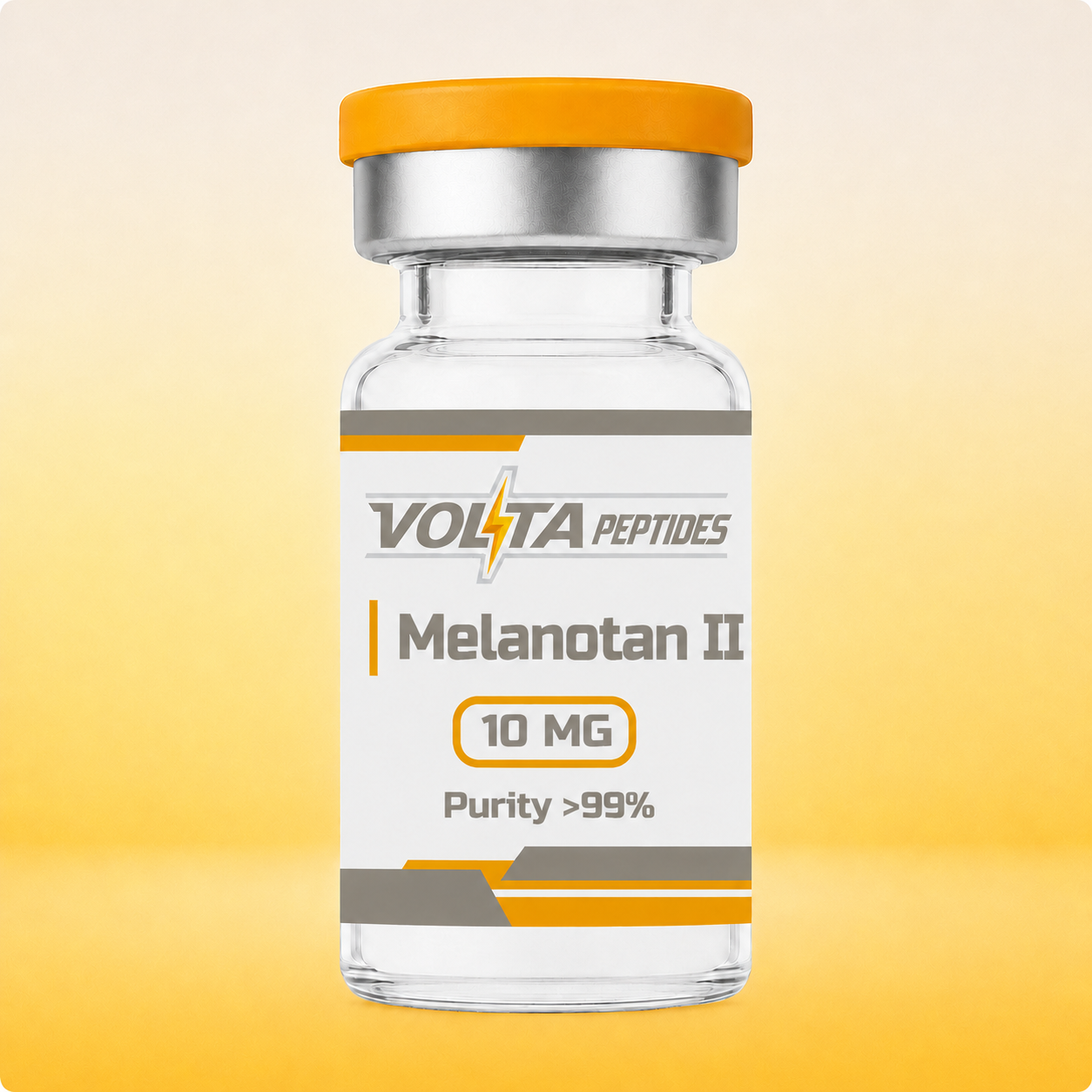
Melanotan 2 remains a compound of interest in basic science research, particularly in the fields of melanogenesis, melanocortin receptor pharmacology, and energy homeostasis. However, due to the retractions and lack of clinical development, it is not currently being investigated in any registered human trials. Research is limited to in vitro receptor assays and rodent behavioral studies. The compound is widely available from online suppliers, but researchers must independently verify the identity and purity of any purchased material. For laboratories seeking a reliable source, Melanotan II 10mg is available with third-party testing documentation. For further guidance on evaluating peptide suppliers, consult the Quality & Testing page. Additional background on peptide nomenclature can be found in the Peptide Glossary.
Frequently Asked Questions
What analytical methods are used to verify Melanotan 2 purity?
High-performance liquid chromatography (HPLC) is the standard method for assessing purity, with mass spectrometry (MS) used for identity confirmation. Researchers should request a certificate of analysis (CoA) from any supplier showing ≥98% purity and matching molecular weight.
Are there any published human studies on Melanotan 2?
No human clinical trials for Melanotan 2 have been registered on ClinicalTrials.gov as of July 2026. A small number of human case reports and uncontrolled observational studies exist, but these do not meet the standard of rigorous clinical evidence.
Why have some Melanotan 2 studies been retracted?
Several studies on MT-II’s effects on erectile function were retracted due to concerns about data integrity and reproducibility. The retractions have significantly weakened the evidence base for this specific application.
Can Melanotan 2 be used in cell culture experiments?
Yes, MT-II is soluble in DMSO or saline and has been used in in vitro melanocyte and receptor assays. Researchers should confirm solubility and stability under their specific experimental conditions.
How should Melanotan 2 be stored for research?
Lyophilized MT-II should be stored at -20°C, protected from light and moisture. Reconstituted solutions are typically stable for short periods at 4°C but should be used promptly to avoid degradation.
References
- Hadley, M. E., et al. (1993). "Discovery of potent melanotropic peptides." Pigment Cell Research, 6(5), 317-323.
- Dorr, R. T., et al. (1996). "Evaluation of melanotan-II, a superpotent melanotropic peptide, in the mouse." Journal of Investigative Dermatology, 106(4), 871-875.
- Wessells, H., et al. (1998). "Synthetic melanotropic peptide initiates erections in men with psychogenic erectile dysfunction: double-blind, placebo controlled crossover study." Journal of Urology, 160(2), 389-393. [Notice of Concern]
- Hadley, M. E., & Dorr, R. T. (2006). "Melanocortin peptide therapeutics: historical milestones." Peptides, 27(4), 921-930.
- King, S. H., et al. (2007). "Melanocortin receptors and their ligands: a review." Current Medicinal Chemistry, 14(19), 2053-2065.
Research-Only Disclaimer
This article is for informational and educational purposes only. Melanotan 2 is a research chemical sold for laboratory research purposes only. It is not approved for human consumption, cosmetic use, or veterinary use. Volta Peptides does not recommend or endorse the self-administration of any peptide. All products are intended for use by qualified researchers in controlled laboratory settings. By purchasing or using this compound, you acknowledge that it is for research purposes only and that you assume all associated risks.
Reviewed by the Volta Peptides Research Team