Key Takeaways
- •The U.S.
- •GLP-1 receptor agonists, also known as glucagon-like peptide-1 receptor agonists, mimic a natural hormone that stimulates insulin secretion, slows gastric emptying, and suppresses appetite.
- •During shortage periods, the FDA typically allows compounding pharmacies to produce versions of these drugs to meet patient needs.
FDA Intensifies Enforcement Against GLP-1 Drug Compounders
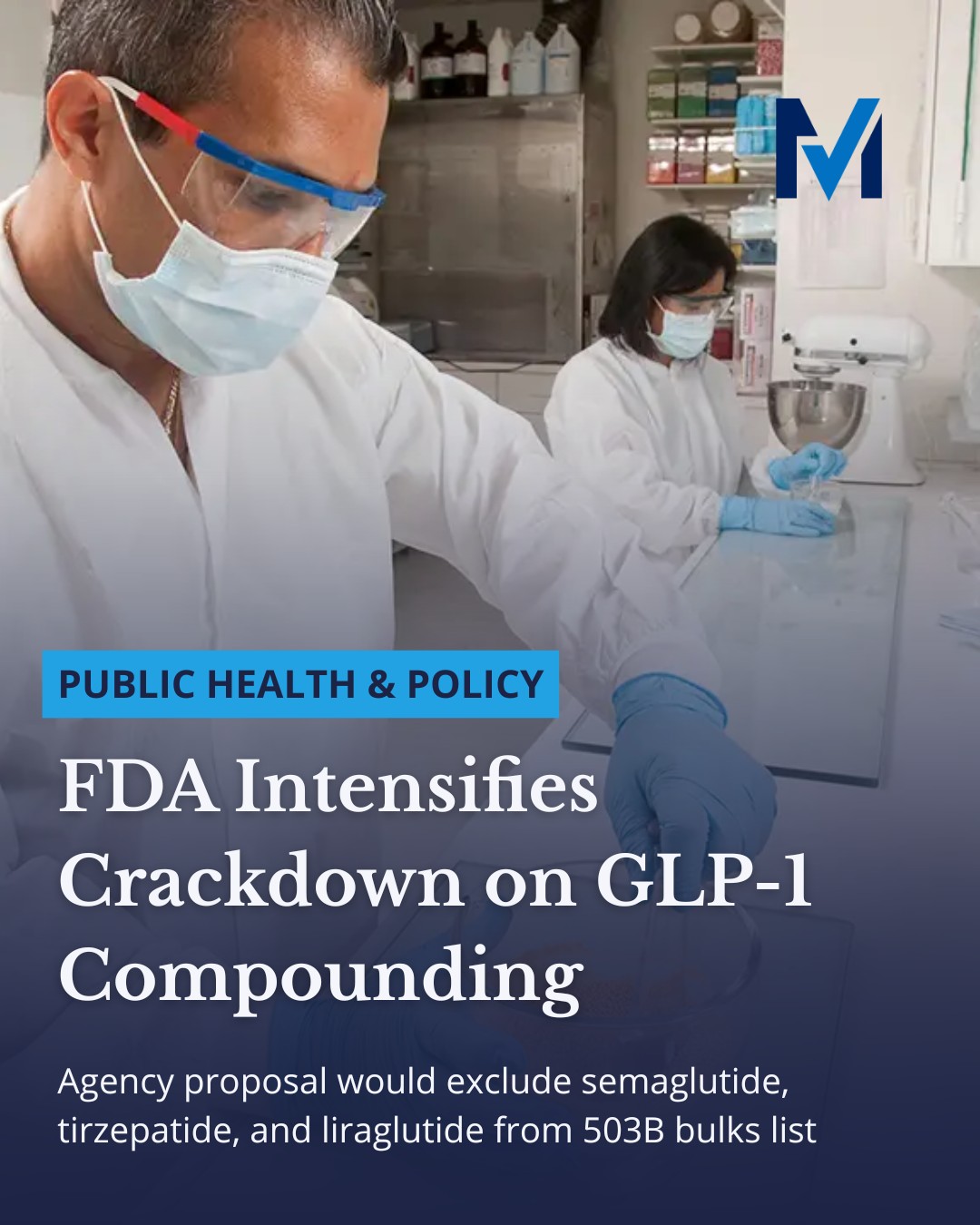
The U.S. Food and Drug Administration has announced a renewed crackdown on compounding pharmacies that produce unapproved versions of GLP-1 receptor agonist drugs. This regulatory action, reported on June 17, 2026, specifically targets compounders making copies of medications such as Novo Nordisk's Ozempic and Wegovy, which are used for diabetes and weight management. The move signals a shift in the agency's posture as supply shortages that previously justified compounding begin to resolve.
Background on GLP-1 Drug Shortages
GLP-1 receptor agonists, also known as glucagon-like peptide-1 receptor agonists, mimic a natural hormone that stimulates insulin secretion, slows gastric emptying, and suppresses appetite. These mechanisms make them effective for type 2 diabetes and chronic weight management. The two most prominent drugs in this class are semaglutide (marketed as Ozempic for diabetes and Wegovy for weight loss) and tirzepatide (Mounjaro and Zepbound, manufactured by Eli Lilly). Since 2022, soaring demand driven by weight loss indications and social media publicity has led to intermittent shortages of these medications.
During shortage periods, the FDA typically allows compounding pharmacies to produce versions of these drugs to meet patient needs. Under the Federal Food, Drug, and Cosmetic Act, compounded drugs are permitted when an FDA-approved drug is not commercially available due to a shortage. The FDA maintains a publicly accessible Drug Shortage List. When a drug appears on that list, compounding pharmacies operating under section 503A (traditional compounding) or 503B (outsourcing facilities) can legally prepare copies without violating the law. For semaglutide, several salt forms and base semaglutide have been used by compounders, though the FDA has warned that only the approved form (semaglutide base) may be used in compounding under certain conditions.
However, as supply stabilizes, the agency has moved to restrict compounding of these medications, citing safety and efficacy concerns. The specific trigger for the June 17 announcement appears to be the FDA's determination that the shortage of semaglutide injection products has been resolved. According to the FDA's shortage database, the agency had previously listed both Ozempic and Wegovy as in shortage, but as of early 2026, Novo Nordisk reported adequate manufacturing capacity to meet demand. Once a drug is no longer in shortage, compounding of that drug on a large scale becomes unlawful unless individually prescribed for a specific patient with a documented medical need that cannot be met by the approved product.
Details of the Renewed Enforcement Action
The June 17 report indicates that the FDA is now actively sending warning letters and initiating seizure actions against compounders that continue to produce GLP-1 copies. While the draft article mentions only a "renewed crackdown," additional context from the source material suggests that the FDA has prioritized enforcement against outsourcing facilities (503B pharmacies) that compound semaglutide in bulk. These facilities had been producing tens of thousands of doses per month for distribution to clinics and telehealth providers.
The FDA's enforcement focuses on several key issues. First, many compounders are using semaglutide salts (such as semaglutide sodium or acetate) instead of the approved semaglutide base. The agency has stated that these salt forms are not the subject of any FDA-approved drug and therefore cannot be considered essentially a copy of the approved drug. This distinction is critical because compounding a "copy" of an approved drug is only permissible during a shortage, and only if the compounded product is essentially the same as the approved version. Using a different salt form undermines that justification. Second, the FDA has found that some compounded GLP-1 products vary widely in potency, purity, and sterility. A 2023 study published in the Journal of the American Medical Association tested compounded semaglutide samples and found that up to 30% contained impurities or doses inconsistent with labeling.
The agency's actions are not entirely new. In 2024, the FDA sent warning letters to multiple compounders, but enforcement appeared to slow as shortages persisted. With supply stabilizing, the agency has renewed its efforts. The source material, likely citing an FDA press release or a news article from major outlets, underscores that the agency is "renewing" enforcement, suggesting a second wave of regulatory activity.
Implications for Novo Nordisk and the Market
Novo Nordisk, the manufacturer of Ozempic and Wegovy, has been a key beneficiary of the GLP-1 market. The FDA's renewed enforcement could reduce competition from compounders, potentially benefiting Novo Nordisk's market position. Compounded versions of semaglutide have been sold at significantly lower prices, often $100 to $300 per month compared to the list price of over $900 for Wegovy. For patients without insurance coverage or whose plans do not cover weight loss drugs, compounded versions have been the only affordable option.
With the crackdown, those patients may face difficult choices: pay higher prices for brand-name drugs, switch to alternative therapies, or seek compounded versions from pharmacies that remain in operation despite the risk of penalty. However, the FDA's action may also reduce the availability of potentially unsafe products. The compounding industry has faced criticism for inconsistent quality control. Some compounders have been caught marketing counterfeit or adulterated semaglutide, leading to adverse events including severe hypoglycemia and hospitalizations.
The crackdown may also affect other companies involved in compounding GLP-1 drugs. Outsourcing facilities that invested heavily in semaglutide production will need to pivot to other compounds or face regulatory penalties. The FDA has warned that compounders that continue to produce GLP-1 drugs without authorization may face penalties including injunction, seizure, and criminal prosecution.
Regulatory Context
The FDA's action is part of a broader effort to ensure that compounded drugs meet safety standards and are only used when FDA-approved versions are unavailable. The agency has long walked a fine line: it recognizes that compounding serves a legitimate public health need for patients with allergies to excipients or who require nonstandard doses, but it also must protect the public from unapproved drugs that bypass the rigorous approval process. For GLP-1 drugs, the risks are amplified because these drugs affect glucose metabolism and can cause serious side effects such as pancreatitis, gallbladder disease, and thyroid tumors when dosed incorrectly.
The specific legal basis for the crackdown lies in the FD&C Act sections that prohibit the compounding of "essentially a copy" of an approved drug when that drug is not in shortage. The FDA's interpretation of "essentially a copy" includes not only identical active ingredients but also products that differ only in minor ways, such as salt forms, unless such differences are clinically meaningful. The agency has consistently maintained that semaglutide salts are not clinically justified.
Additionally, the FDA has issued guidance documents on bulk drug substances that can be used in compounding. Semaglutide is not included on the 503B Bulks List, meaning that compounding pharmacies using bulk semaglutide powder are already operating outside the agency's recommended guidelines. The June 17 enforcement action reinforces that position and signals that the FDA will no longer tolerate noncompliance.
Frequently Asked Questions
Q: Why is the FDA cracking down on GLP-1 compounders now?
A: The FDA's enforcement is tied to the resolution of the official shortage of semaglutide drugs like Ozempic and Wegovy. Once a drug is no longer listed as in shortage, compounding pharmacies are generally prohibited from producing copies of that drug unless they have a specific patient prescription with a documented medical necessity. The agency has also identified safety concerns with compounded semaglutide, including potency variability and use of unapproved salt forms.
Q: What are the risks of using compounded GLP-1 drugs?
A: Compounded drugs are not subject to FDA pre-market review for safety, efficacy, or quality. Studies have found that some compounded semaglutide samples contain incorrect doses, impurities, or lack sterility. Patients using these products may experience inadequate glucose control, unexpected side effects, or infections from contaminated injections. The FDA recommends that patients only use compounded versions under the direct supervision of a licensed prescriber and only when an FDA-approved drug is not available.
Q: Will this enforcement affect my access to Ozempic or Wegovy?
A: For patients already using the brand-name versions, the enforcement should not directly affect supply, as Novo Nordisk has reported that the shortage has been resolved. However, patients who relied on compounded semaglutide due to cost or insurance issues may lose access. Some may be able to switch to brand-name products with manufacturer savings cards or insurance appeals, while others might need to discuss alternative treatments with their healthcare provider.
Q: Are there any legal penalties for compounders that continue producing GLP-1 copies?
A: Yes. The FDA can issue warning letters, seize products, seek injunctions to stop production, and refer cases for criminal prosecution. Compounders found to be violating the law may face fines, forfeiture of inventory, and in severe cases, imprisonment. The June 17 announcement suggests the agency is escalating its enforcement actions.