Key Takeaways
- •Support exists for parenteral drug product development and manufacturing of oligonucleotide drugs, covering stages from preclinical to commercial.
- •Formulation development and analytical teams bring extensive experience in injectable drug development, from preclinical studies through clinical trials to commercial launch.
- •Free peptide tools can assist with related calculations for peptide-inclusive projects.
Comprehensive Parenteral Drug Product Support
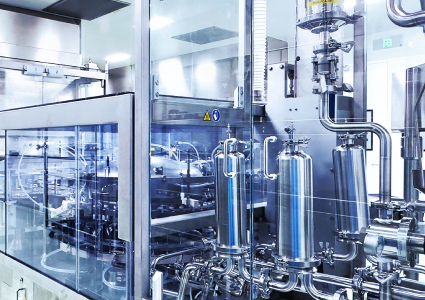
Support exists for parenteral drug product development and manufacturing of oligonucleotide drugs, covering stages from preclinical to commercial. This includes integrated research and development plus manufacturing solutions for synthetic molecules such as small molecules, oligonucleotides, peptides, and complex chemical conjugates. High potency injectable manufacturing lines and sterile lipid nanoparticle plants meet diverse global customer requirements.
Formulation development and analytical teams bring extensive experience in injectable drug development, from preclinical studies through clinical trials to commercial launch. These teams conduct over 85,000 characterization tests each year. Five production lines feature fully enclosed isolation systems and automated filling, achieving a total capacity of 70 million parenteral units annually.
Free peptide tools can assist with related calculations for peptide-inclusive projects.
Supported Drug Types and Dosage Forms
Drug types include oligonucleotides and synthetic conjugates. Dosage forms encompass suspensions or emulsions, lyophilized powders, and advanced formulations like liposomes, lipid nanoparticles, and nanoparticles.
Filling formats cover prefilled syringes, cartridges, and LDPE ampoules. Sterilization methods involve sterile filtration, heat-moist sterilization, and irradiation.
Key capabilities in parenteral formulation and manufacturing include flexible batch sizes, organic solvent compounding with hydrophobic filtration such as DMSO, extreme low fill volumes, high viscosity mixing and filling, elevated or cold temperature mixing, and dissolved oxygen plus headspace control.
Proven Track Record and Expert Support
Experience spans all stages, including multiple phase III and commercial projects, with a 100% success rate in PPQ campaigns. Formulation teams rely on more than a thousand scientists and advanced facilities at integrated drug product research and development plus manufacturing sites.
These sites sit within a 2-hour drive of the oligonucleotide API site, enabling seamless integration of API and formulation development with manufacturing. For peptide components in conjugates, consult the Peptide Glossary for key terms.
Sterile Injectable Capabilities
Injectable formulation development teams, made up of seasoned scientists, handle various dosage forms: solutions, emulsions or suspensions, lyophilized powders, and liposomes in vials, prefilled syringes, or cartridges. Manufacturing lines operate fully automated within isolation systems to reduce human intervention and prevent contamination, ensuring top product quality.
Lipid Nanoparticle Platform
The lipid nanoparticle platform uses a novel multi-channel micro-mixer for reliable scalability and reproducibility. It assembles lipid nanoparticles with different structures through formulation development and process control. Projects scale swiftly from research and development to GMP clinical and commercial manufacturing using established LNP technology and proprietary methods.
Services extend to synthesizing and manufacturing oligonucleotides plus specific functional lipids like ionizable lipids and PEGylated lipids. This forms an end-to-end platform integrating CMC development and manufacturing for drug substance, drug product, and analytical support. Lipid nanoparticles serve as a delivery system for oligonucleotide drugs, protecting against serum nucleases, reducing immune responses, and enabling targeted cell or tissue delivery.
Comprehensive LNP services include lipid discovery, formulation and process development, analytical development, and manufacturing at varied scales. Features cover novel lipid design and synthesis at any scale, robust scalability from 5 ml, small particle sizes of 80 to 100 nm, narrow PDI below 0.10, integrated formulation with analytical and in vitro or in vivo evaluation, and flexible scales from 10 L to 50 L per sub-batch.
Use the Reconstitution Calculator for formulation planning in related projects.
High Potency and Formulation Development
High potency sterile injectable manufacturing operates with an Occupational Exposure Limit of 10 ng/m3. Fully enclosed isolation systems and automated filling machines minimize microbial and cross-contamination risks. Equipped with two 20m2 lyophilizers, the line produces liquid and lyophilized vials in various sizes, filling up to 200 units per minute with over 12 million units annual capacity.
Parenteral pre-formulation, formulation, and analytical teams support projects from preclinical to commercial for synthetic molecules including small molecules, oligonucleotides, peptides, and complex chemical conjugates. High potency injectable labs maintain an OEL of 10 ng/m3 and accommodate all dosage forms and filling formats.
Manufacturing and Clinical Supply Services
State-of-the-art parenteral drug product manufacturing facilities exist in China, with expansion planned to sites in Switzerland and the US. Five production lines support various dosage forms and filling formats from preclinical to commercial scales, including high potency injectables.
Clinical supply services deliver fast, flexible, reliable materials for trials from phase I to IV. Using an integrated CMC platform for drug substance and product development, services provide smooth transitions from process development and pre-formulation to manufacturing, packaging, labeling, and global distribution. In 2023, teams supported open-label and blinded studies across phases I to IV, executing hundreds of clinical protocols for oral and parenteral products with diverse dosage forms and packaging.
The Dosage & Cycle Planner offers utility for dosing in peptide-related clinical planning.