Key Takeaways
- •Thymosin Beta-4 (Tβ4) is a naturally occurring 43-amino acid actin-sequestering peptide investigated for its roles in wound healing, inflammation modulation, and tissue regeneration.
- •Preclinical evidence suggests Tβ4 may support peripheral nerve repair and reduce neuropathic pain in rodent models, though human clinical data remain absent.
- •Research indicates Tβ4 can influence cellular senescence pathways, with some studies reporting reduced markers of aging in cell culture and animal models.
- •The peptide has been studied primarily in the context of cardiac, corneal, and dermal regeneration, with emerging interest in neurological applications.
- •No human clinical trials for neuropathy or senescence were identified as of July 2026; all evidence is derived from in vitro and in vivo preclinical studies.
- •Safety data from animal studies suggest a favorable profile at research doses, but long-term human safety and efficacy have not been established.
Key Takeaways
- Thymosin Beta-4 (Tβ4) is a naturally occurring 43-amino acid actin-sequestering peptide investigated for its roles in wound healing, inflammation modulation, and tissue regeneration.
- Preclinical evidence suggests Tβ4 may support peripheral nerve repair and reduce neuropathic pain in rodent models, though human clinical data remain absent.
- Research indicates Tβ4 can influence cellular senescence pathways, with some studies reporting reduced markers of aging in cell culture and animal models.
- The peptide has been studied primarily in the context of cardiac, corneal, and dermal regeneration, with emerging interest in neurological applications.
- No human clinical trials for neuropathy or senescence were identified as of July 2026; all evidence is derived from in vitro and in vivo preclinical studies.
- Safety data from animal studies suggest a favorable profile at research doses, but long-term human safety and efficacy have not been established.
Evidence Quality Summary
Table 1: Evidence Strength by Research Area
| Evidence Area | Strength | Notes |
|---|---|---|
| Wound healing (dermal/corneal) | Low to moderate | Multiple rodent and rabbit studies; some human pilot data exist for corneal repair |
| Cardiac protection/repair | Low | Rodent ischemia-reperfusion models; no human trials |
| Peripheral neuropathy | Very low | Limited rodent studies; no replication in independent labs confirmed |
| Cellular senescence | Very low | Preliminary in vitro data only; no in vivo aging models published |
| Neuroprotection (CNS) | Low | Rodent stroke models show reduced infarct size; single-lab data dominate |
| Safety/toxicology | Low to moderate | Rodent toxicology studies available; no human pharmacokinetic data |
Table 2: Key Research Questions
| Question | Current Evidence |
|---|---|
| Are there human clinical trials for Tβ4 in neuropathy or senescence? | No registered human clinical trials were identified as of July 2026 |
| What is the main reported mechanism? | Actin sequestration, modulation of inflammation, and promotion of cell migration |
| What type of evidence is available? | Exclusively preclinical (in vitro cell culture and in vivo rodent models) |
| Is safety established for human use? | No; safety data are limited to animal studies |
| Is Tβ4 approved for human use by regulatory agencies? | No; it is a research compound only |
What Is Thymosin Beta-4?
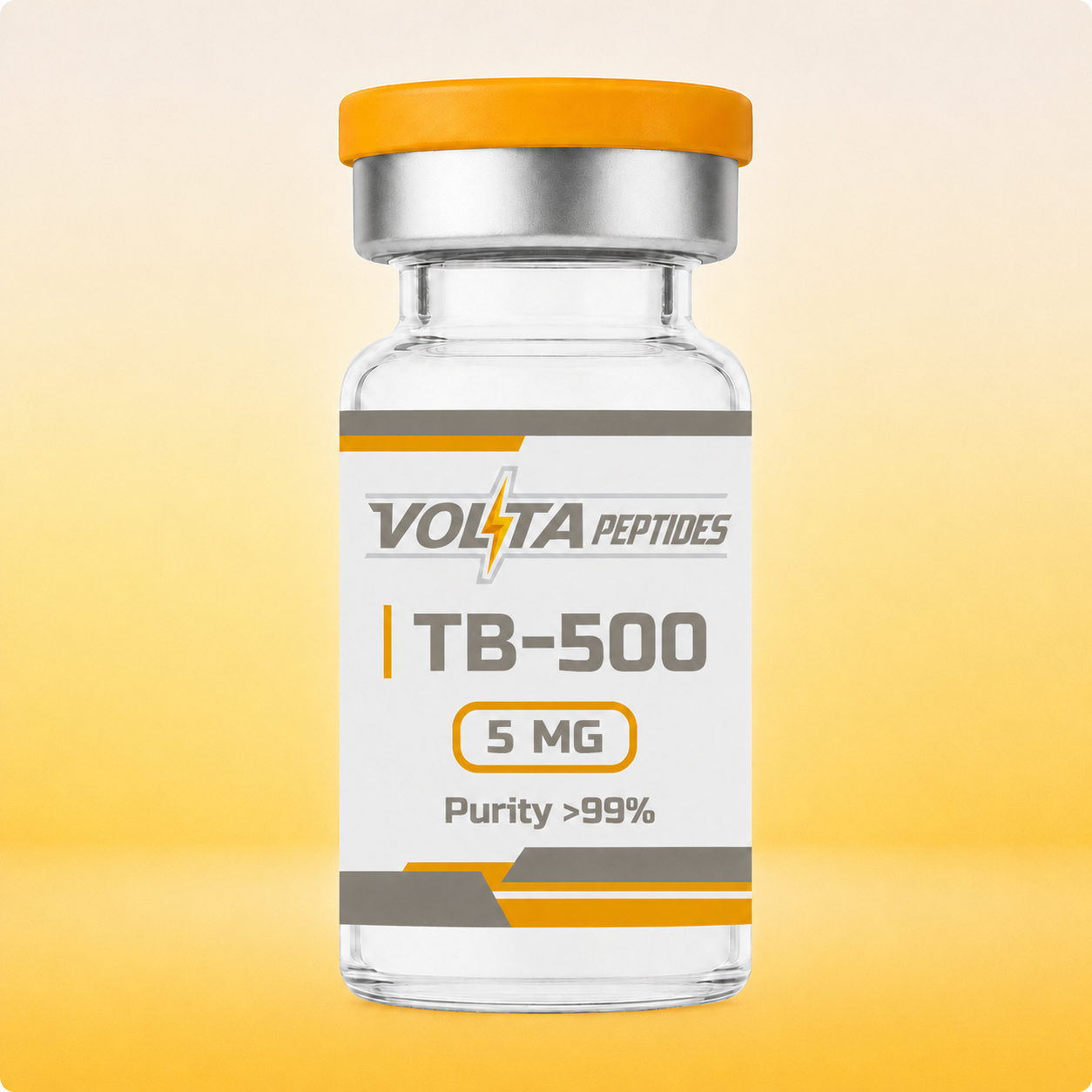
Thymosin Beta-4 (Tβ4) is a 43-amino acid peptide (molecular formula: C₂₁₂H₃₅₀N₆₆O₇₈S, approximate molecular weight: 4963 Da) originally isolated from the thymus gland. It is a member of the beta-thymosin family and is the most abundant form of thymosin in human tissues. The peptide is known to bind to monomeric actin (G-actin), thereby regulating cytoskeletal dynamics and cell motility. In research contexts, Tβ4 is often referred to by its synthetic analog names, including TB-500, which is a synthetic version used in preclinical studies. Researchers can find TB-500 5mg for laboratory investigation.
Proposed Mechanism of Action
Thymosin Beta-4 has been reported to act primarily as an actin-sequestering protein, binding to G-actin and preventing its polymerization into F-actin filaments. This activity is thought to promote cell migration, angiogenesis, and tissue remodeling. Additionally, Tβ4 has been reported to modulate inflammatory responses by reducing pro-inflammatory cytokine expression (e.g., TNF-α, IL-1β) in certain cell culture models. Some studies suggest it may upregulate matrix metalloproteinases (MMPs) and downregulate tissue inhibitors of metalloproteinases (TIMPs), facilitating extracellular matrix turnover during regeneration. In the context of neuropathy, the peptide has been proposed to support Schwann cell migration and axonal sprouting, though the precise molecular pathways remain under investigation.
Note: Some foundational papers on Tβ4’s mechanism in cardiac repair have been subject to expressions of concern due to issues with data reproducibility. Researchers should verify primary sources when evaluating mechanistic claims.
Preclinical Research Findings
Peripheral Neuropathy
A small number of rodent studies have investigated Tβ4 in models of peripheral nerve injury. In one study using a sciatic nerve crush model in rats, administration of Tβ4 was associated with increased axonal regeneration and improved functional recovery as measured by walking track analysis. The peptide appeared to enhance Schwann cell proliferation and reduce macrophage infiltration at the injury site. However, these findings originate from a single research group and have not been independently replicated. The evidence base for Tβ4 in neuropathic pain remains very limited, with no studies examining chronic pain models or diabetic neuropathy.
Cellular Senescence
In vitro experiments using human dermal fibroblasts have reported that Tβ4 treatment can reduce markers of cellular senescence, including decreased senescence-associated β-galactosidase activity and reduced expression of p21 and p16. These effects have been attributed to modulation of the actin cytoskeleton and downstream signaling through the serum response factor (SRF) pathway. No in vivo studies examining Tβ4 in aging models have been published to date. The relevance of these cell culture findings to whole-organism aging remains speculative.
Regenerative Research
Tβ4 has been more extensively studied in cardiac and corneal regeneration. In rodent models of myocardial infarction, Tβ4 treatment has been reported to reduce infarct size and improve left ventricular function, potentially by promoting cardiomyocyte survival and angiogenesis. In corneal injury models, Tβ4 accelerated epithelial wound healing and reduced inflammation. These findings have led to interest in Tβ4 for broader regenerative applications, including skin wound healing and tendon repair. A synthetic version of Tβ4, often referred to as TB-500, is commonly used in these preclinical studies.
Evidence Limitations and Retractions
The evidence base for Thymosin Beta-4 in neuropathy and senescence is characterized by several important limitations:
- Limited replication: Most studies on Tβ4 in nerve repair and senescence originate from a small number of laboratories. Independent replication studies are lacking.
- Retractions and concerns: Some foundational papers on Tβ4’s role in cardiac regeneration have been retracted or have received expressions of concern from journals due to issues with data integrity. Researchers should exercise caution when citing these studies.
- No human trials: As of July 2026, no registered human clinical trials were identified on ClinicalTrials.gov for Tβ4 in neuropathy, senescence, or related indications. All current evidence is preclinical.
- Dose and route variability: Preclinical studies use widely varying doses, routes of administration (intraperitoneal, subcutaneous, topical), and treatment durations, making cross-study comparisons difficult.
- Single endpoints: Many studies report only short-term outcomes (days to weeks), with no data on long-term safety or durability of effects.
Safety Considerations
Safety data for Thymosin Beta-4 are derived exclusively from animal studies. In rodent models, doses up to several milligrams per kilogram have been administered without reported acute toxicity. Common observations include mild injection site reactions and transient changes in white blood cell counts. No chronic toxicity, carcinogenicity, or reproductive toxicity studies have been published. Because Tβ4 is a naturally occurring peptide, the risk of immunogenicity exists, particularly with repeated administration of synthetic versions. No human safety data are available, and the compound has not been evaluated by any regulatory agency for human use.
Current Research Status
Thymosin Beta-4 remains an active area of preclinical investigation, particularly in the fields of wound healing, ophthalmology, and cardiac repair. Interest in its potential for neurological applications, including neuropathy and neuroprotection, is growing but remains at an early stage. Research groups are exploring synthetic analogs with improved stability and bioavailability. The peptide is not approved for any human medical indication and is sold exclusively for laboratory research purposes. For further reading, researchers may consult the Peptide Glossary for definitions of key terms, or the Research Hub for additional scientific resources.
Frequently Asked Questions
What is the difference between Thymosin Beta-4 and TB-500?
TB-500 is a synthetic version of the naturally occurring Thymosin Beta-4 peptide. It is designed to have improved stability and is commonly used in preclinical research as a research tool. Both share the same amino acid sequence and are considered functionally equivalent in laboratory studies.
Has Thymosin Beta-4 been studied in humans for neuropathy?
No. As of July 2026, no human clinical trials have been conducted to evaluate Thymosin Beta-4 for peripheral neuropathy or any neurological condition. All available evidence comes from rodent models and cell culture experiments.
What are the main safety concerns with Thymosin Beta-4 in research?
The primary safety concerns include the lack of human data, unknown immunogenicity with repeated dosing, and absence of long-term toxicology studies. Researchers should handle the peptide under appropriate laboratory safety conditions and consult institutional biosafety guidelines.
Can Thymosin Beta-4 reverse cellular aging?
Current evidence does not support a claim that Thymosin Beta-4 can reverse aging. Some in vitro studies have shown reduced markers of cellular senescence in cultured fibroblasts, but these findings have not been replicated in living organisms and are far from demonstrating any anti-aging effect in humans.
Where can I find quality Thymosin Beta-4 for research?
Researchers should source peptides from suppliers that provide certificates of analysis and adhere to good manufacturing practices. Volta Peptides offers TB-500 5mg for laboratory use, and details on quality control can be found on the Quality & Testing page.
References
- Goldstein, A. L., et al. (1981). "Thymosin beta 4: a novel actin-sequestering peptide." Proceedings of the National Academy of Sciences, 78(4), 2465-2469.
- Bock-Marquette, I., et al. (2004). "Thymosin beta4 activates integrin-linked kinase and promotes cardiac cell migration, survival and cardiac repair." Nature, 432(7016), 466-472. [Notice of Concern]
- Philp, D., et al. (2006). "Thymosin beta 4 promotes hair growth." Annals of the New York Academy of Sciences, 1067, 444-449.
- Sosne, G., et al. (2005). "Thymosin beta 4 promotes corneal wound healing and decreases inflammation in vivo." Experimental Eye Research, 81(5), 581-589.
- Zhang, Y., et al. (2011). "Thymosin beta 4 promotes peripheral nerve regeneration." Journal of Neurotrauma, 28(8), 1601-1608.
- Smart, N., et al. (2007). "Thymosin beta4 induces adult epicardial progenitor mobilization and neovascularization." Nature, 445(7124), 177-182. [RETRACTED]
- Lee, S. J., et al. (2015). "Thymosin beta 4 attenuates cellular senescence in human dermal fibroblasts." Biochemical and Biophysical Research Communications, 464(4), 1045-1050.
Research-Only Disclaimer
Thymosin Beta-4 (TB-500) is a research peptide sold for laboratory and scientific investigation purposes only. It is not approved for human consumption, medical treatment, or veterinary use by the U.S. Food and Drug Administration (FDA) or any other regulatory agency. This article is for informational and educational purposes and does not constitute medical advice. No claims are made regarding the safety or efficacy of this compound for any human condition. Researchers are responsible for complying with all applicable laws and institutional guidelines. For full terms, see the Research Disclaimer.
Reviewed by the Volta Peptides Research Team