peptide-stability
3 articles tagged with ‘peptide-stability’
.png)
GLP-1 (7-36) Amide: Incretin Hormone Structure and Role
GLP-1 (7-36) amide serves as a key incretin hormone derived from proglucagon in the gut, stimulating insulin secretion in a glucose-dependent manner. It circulates mainly post-meals at levels peaking at 30-60 pM, but degrades rapidly via DPP-4 with a half-life under 2 minutes. Research highlights its potential for type II diabetes treatment despite stability challenges.
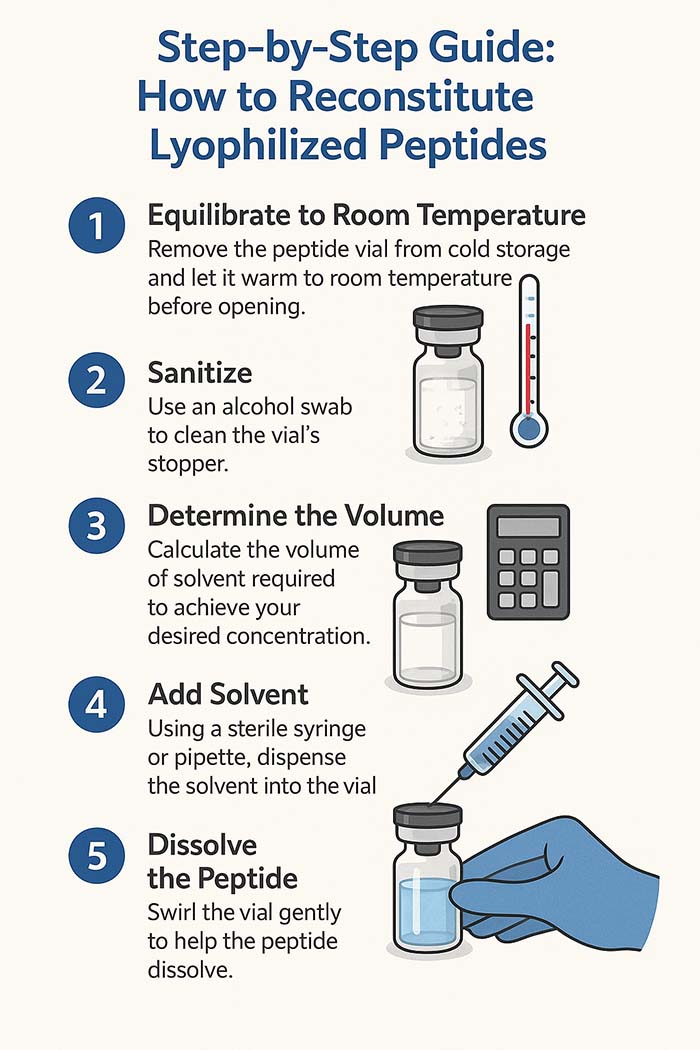
How to Reconstitute Lyophilized Peptides: Step-by-Step Guide
Lyophilized peptides arrive as dry powders to ensure stability during storage and shipping. Researchers dissolve this powder with sterile liquids in controlled settings before use. This guide covers the process, best practices, and reasons for careful handling to maintain solution quality.

Cyclo-zp80r Boosts NFC Orange Juice Preservation
A study in Foods shows the cyclic peptide cyclo-zp80r effectively combats Salmonella enterica and Listeria monocytogenes in NFC orange juice, reducing S. enterica counts by 3.6 Log CFU/mL in one day. It outperforms nisin, raises Galleria mellonella larvae survival from 0% to 40%, and remains stable at 121°C. Mechanisms include membrane disruption, ROS production, and DNA binding, though production faces purification challenges.