peptide synthesis
10 articles tagged with ‘peptide synthesis’

Why 99% Purity Means Something Different on a Tripeptide and a 44-mer
At 99% per coupling a tripeptide comes off the resin 98% correct and a 44-residue chain comes off at 65%. What had to be removed, why deletion sequences are the hardest impurity to separate, and the trifluoroacetate counterion that is in the vial and not on the paperwork.
Peptide Clinical Trial Research: A Practical Guide for Scientists
Research peptides are essential tools in biochemistry, cell biology, and molecular research. This guide covers the fundamentals of peptide science, synthesis, purification, quality control, and stability, providing laboratory scientists with practical guidance for working with research-grade peptides in in vitro and ex vivo applications.
Custom Peptide Libraries: A Guide for Research-Grade Synthesis and Ordering
Custom peptide libraries are essential tools for high-throughput screening and structure-activity relationship studies. This guide explains the key specifications for research-grade libraries, including peptide length, purity, synthesis scale, and modifications, to help researchers request accurate quotes and navigate the ordering process.
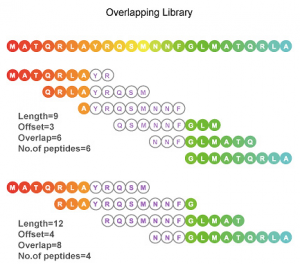
Overlapping Peptide Libraries: Design and Applications
Overlapping peptide libraries consist of peptides that cover the entire length of a target protein through defined sequence parameters like length and offsets. These libraries support research in antigen identification, enzyme substrates, and T cell epitopes. Production involves gene synthesis, phage display, or solid supports, with broad uses in drug development and protein studies.
Ved Srivastava on Peptide Science from Early Days to AI Era
Dr. Ved Srivastava, Chief Scientific Officer at Perpetual Medicines, shares his career in peptide therapeutics. He contributed to drugs like Byetta (exenatide), Bydureon, and Symlin (pramlintide). In a discussion, he covers the field's evolution and 2026 trends including macrocyclic peptides and AI design.
Peptide Synthesis: SPPS Strategies and Peptidomimetics Guide
Solid phase peptide synthesis, pioneered by Bruce Merrifield, revolutionized peptide production by simplifying purification and enabling automation. Key strategies include Boc/Bzl and Fmoc/tBu approaches, each with distinct protecting group mechanisms. Peptidomimetics address drug design challenges like degradation and poor absorption through non-peptidic mimics of peptide structures.

Advanced Cyclic Peptide Synthesis in Drug Discovery
Natural cyclic peptides offer unique structures and potent biological effects, with over forty approved for clinical use in antibiotics, anticancer agents, immunomodulators, and anti-inflammatory drugs. Synthesis faces challenges from structural complexity and scalability needs. Recent studies since 2017 highlight evolving strategies like head-to-tail and side-chain linkages to improve efficiency.

KPV Peptide Research Guide: Synthesis, Uses and Lab Safety
KPV peptide, a tripeptide of lysine, proline and valine with formula C12H22N4O4, shows anti-inflammatory effects in studies on bowel disease and wound healing. Labs produce it mainly via solid-phase peptide synthesis, confirmed pure by HPLC and mass spectrometry. Proper storage, quality checks and regulatory compliance ensure reliable research outcomes.

Key Strategies in Cyclic Peptide Drug Development
Cyclic peptides provide strong target affinity and conformational control, yet development often faces hurdles like permeability issues and metabolic instability. This article outlines modular support from design review to preclinical preparation, including scaffold optimization, synthesis via solid-phase peptide synthesis (SPPS), SAR expansion, and developability assessments. Teams can align workflows to specific stages, such as hit generation or lead refinement, to address common risks effectively.

Cyclic Peptides from Pseudostellaria heterophylla: Design to Scale-Up
Cyclic peptides from the traditional Chinese herb Pseudostellaria heterophylla, or Tai-Zi-Shen, show promise in drug discovery due to their stability and activities like anti-cancer and anti-inflammatory effects. Researchers have isolated 19 such peptides, with heterophyllin A and B standing out for metabolic stability and selectivity. Advances in chemical synthesis and biotechnology aim to move these compounds from lab to industrial production.