pegylation
3 articles tagged with ‘pegylation’

PEGylation Extends Peptide Half-Life from Minutes to Days
PEGylation surrounds peptides with a flexible polyethylene glycol layer to boost half-life from minutes to hours or days. This process increases hydrodynamic size, blocks proteases, and limits renal clearance while preserving receptor affinity. Such changes support less frequent dosing, improve patient adherence, cut costs, and enhance real-world efficacy.
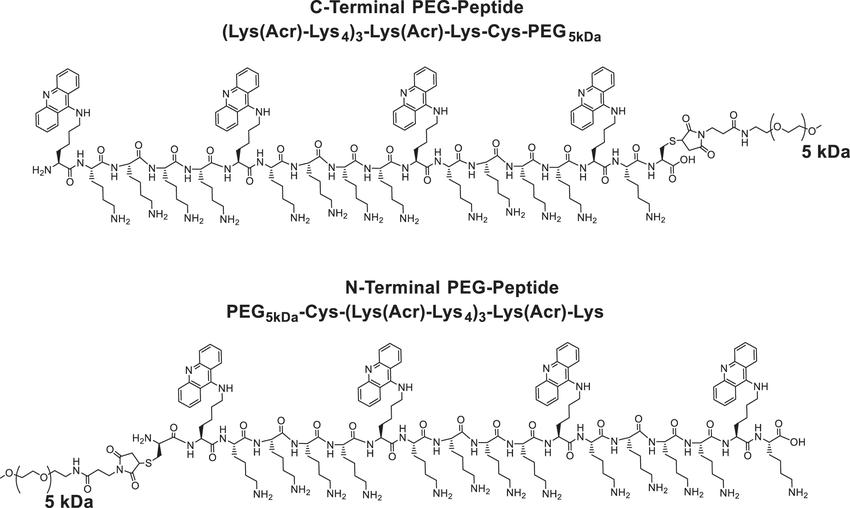
Peptide PEGylation: Boosting Stability and Half-Life
Peptide PEGylation attaches polyethylene glycol chains to peptides, improving solubility, extending circulation half-life, reducing degradation, and lowering immunogenicity. This approach addresses key limitations like rapid enzymatic breakdown and short plasma half-life in peptide therapeutics. It supports research from discovery to preclinical stages with precise synthesis and analysis.

PEGylation Shields Peptides from Immune Recognition
PEGylation covers peptide surfaces with a flexible polyethylene glycol layer that blocks immune detection. This process hides epitopes from antibodies and receptors, prevents breakdown into immunogenic fragments, and boosts hydrodynamic size to evade antigen presentation. As a result, it cuts risks of anti-drug antibodies, hypersensitivity, and clinical failures seen in early peptide drugs.