Key Takeaways
- •No direct efficacy data: No peer-reviewed studies have evaluated KLOW 80mg in any biological model.
- •No safety profile: No toxicological, pharmacokinetic, or pharmacodynamic data are available for this specific blend.
- •No clinical trials: KLOW 80mg has not been tested in human or veterinary clinical settings.
- •No mechanism of action: Any proposed mechanisms are speculative and unsupported by published evidence.
- •HPLC and MS guidelines for peptide characterization (Ph. Eur. general chapters).
Research-Only Notice
KLOW 80mg is a lyophilized research peptide supplied exclusively for laboratory and preclinical investigation purposes. It is not approved for human or veterinary use, is not a medicine, and must not be administered to humans or animals. All handling should follow institutional biosafety protocols for investigational compounds.
Quick Facts
| Attribute | Detail |
|---|---|
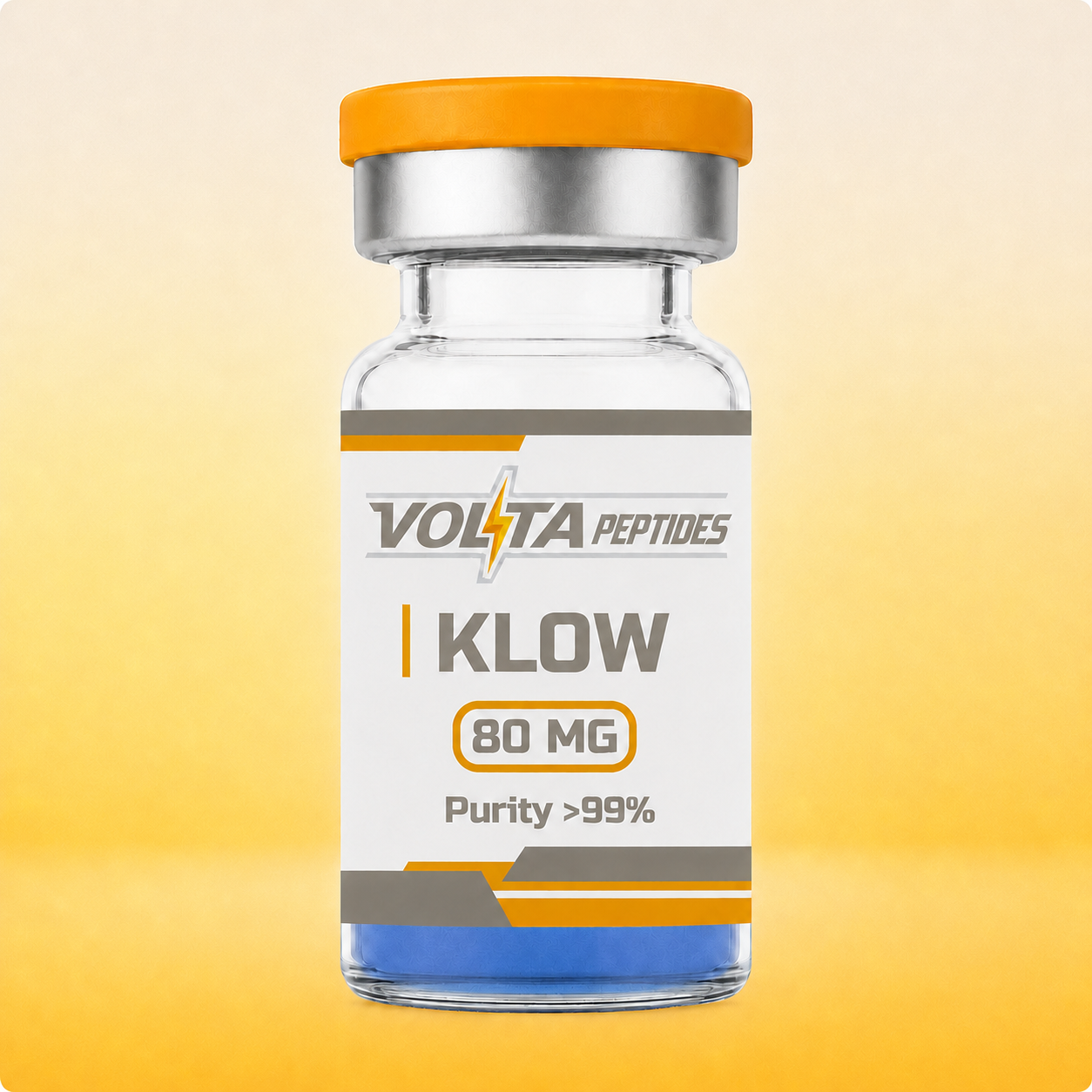
| Peptide name | KLOW 80mg |
| Format | Lyophilized powder |
| Purity | >99% |
| CAS Number | N/A |
| Molecular formula | Proprietary Blend |
| Molecular weight | N/A |
| Research status | Preclinical / investigational |
| Quality markers | HPLC purity, MS identity confirmation |
| Human/veterinary use | Not approved |
Research Material — Not an FDA-approved medicine. Evidence base: No Direct Studies. COA available on product page. Last reviewed: July 2026.
Product Specifications
Published Research Status
Direct peer-reviewed studies specifically evaluating KLOW 80mg peptide were not identified at the time of review. This page focuses on product documentation, analytical verification, and general research-quality standards. No in vivo or in vitro experimental data from independent laboratories have been published under this exact designation. Researchers should treat KLOW 80mg as an undocumented investigational compound.
Component Research Context
Because KLOW 80mg is a proprietary blend, its individual components may have varying levels of published evidence. However, the specific formulation and ratios are not disclosed, making it impossible to extrapolate safety or efficacy from any single component’s literature. Investigators are advised to independently verify the composition via the COA and to consider each component’s known research status separately, with appropriate caveats regarding blend interactions.
What Is Not Established
- No direct efficacy data: No peer-reviewed studies have evaluated KLOW 80mg in any biological model.
- No safety profile: No toxicological, pharmacokinetic, or pharmacodynamic data are available for this specific blend.
- No clinical trials: KLOW 80mg has not been tested in human or veterinary clinical settings.
- No mechanism of action: Any proposed mechanisms are speculative and unsupported by published evidence.


COA and Quality Verification
Each batch of KLOW 80mg is accompanied by a Certificate of Analysis detailing HPLC purity, MS identity confirmation, and residual solvent levels. Researchers should review the COA to confirm lot-specific quality markers. For guidance on interpreting COA data, see our Quality & Testing page.
Storage Considerations
Why Independent Verification Matters
For undocumented compounds like KLOW 80mg, reliance on manufacturer-provided data alone is insufficient. Independent third-party testing—including HPLC, MS, and endotoxin assays—provides critical confirmation of purity, identity, and absence of contaminants. Researchers should consider submitting samples to an accredited analytical laboratory before initiating any experimental work. See our Research Literacy Guide for best practices in evaluating peptide quality.
Frequently Asked Questions
Q: Is KLOW 80mg FDA-approved?
A: No. KLOW 80mg is a research material and is not approved by the FDA or any other regulatory agency for human or veterinary use.
Q: What does “proprietary blend” mean?
A: The exact composition and ratios of the blend are not publicly disclosed. Researchers should request detailed component information from the supplier and verify via COA.
Q: Can I use KLOW 80mg in cell culture?
A: In vitro use may be possible, but no published protocols exist. Researchers must validate solubility, stability, and sterility in their own systems.
Q: How do I interpret the COA?
A: The COA reports HPLC purity (>99%), MS identity match, and residual solvents. For interpretation help, visit our Quality & Testing page.
References
No peptide-specific studies were identified. General methodology references for peptide quality assessment include:
- HPLC and MS guidelines for peptide characterization (Ph. Eur. general chapters).
- ICH Q2(R1) validation of analytical procedures.
- Standard practices for lyophilized peptide storage and handling (e.g., Journal of Peptide Science technical notes).
Research-Only Disclaimer
Reviewed by the Volta Peptides Research Team — July 2026


